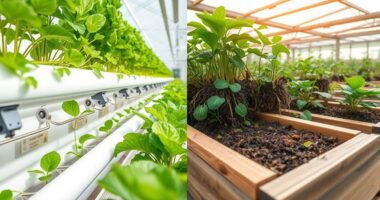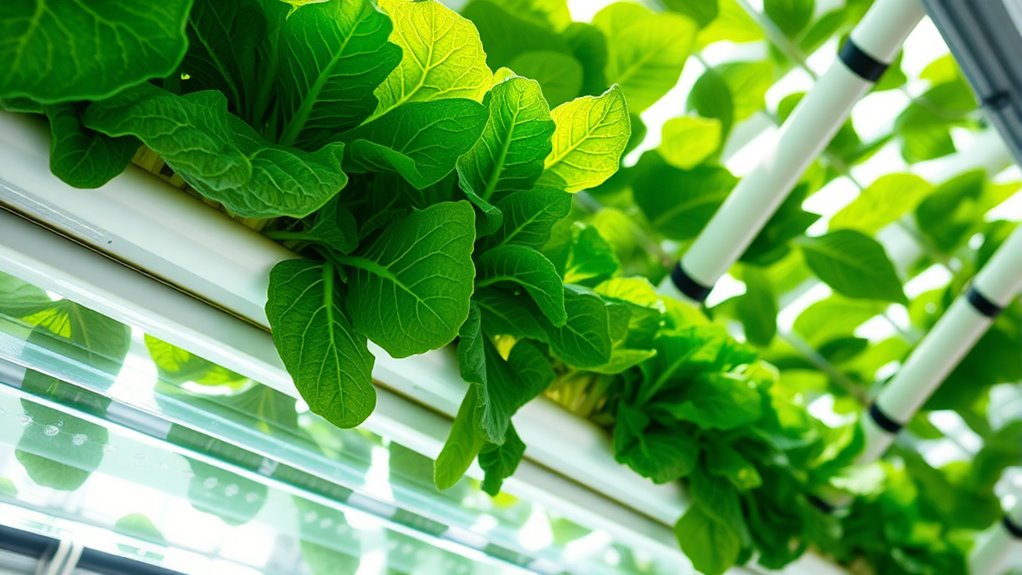

Growing leafy greens hydroponically lets you produce fresh, healthy greens indoors all year without soil. You control lighting, nutrients, and environment to guarantee ideal growth and prevent pests with natural or organic methods. Using automated systems helps maintain nutrient levels and keep conditions consistent, giving you reliable harvests. Proper nutrient management and environment maintenance are key to healthy plants. Keep exploring to discover how to set up and enhance your hydroponic greens system for the best results.
Key Takeaways
- Use a nutrient-rich water solution tailored for leafy greens to promote healthy growth.
- Maintain optimal light, temperature, and humidity levels for year-round indoor cultivation.
- Regularly monitor and adjust pH and EC levels to ensure proper nutrient uptake.
- Implement pest management strategies with natural predators or organic treatments to keep greens healthy.
- Automate system functions for consistent nutrient delivery and environmental control, reducing manual effort.
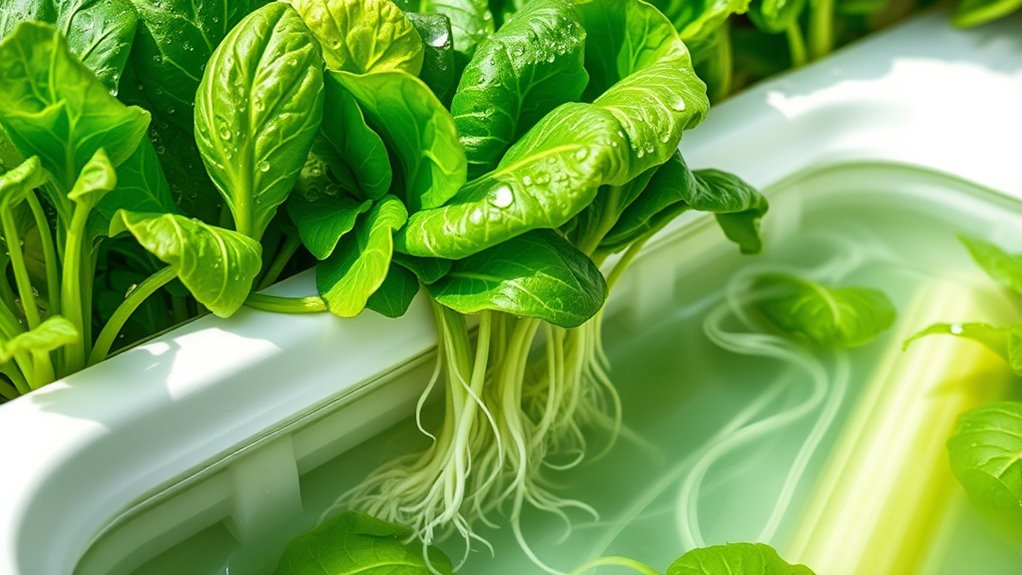
Have you ever wondered how to grow fresh, leafy greens indoors all year round? If so, hydroponic cultivation offers an efficient and reliable way to do just that. When you grow greens hydroponically, you’re essentially providing plants with a nutrient-rich water solution instead of soil. This method allows you to control every aspect of their environment, from light to nutrients, guaranteeing maximum growth regardless of the season outside. One key aspect to successful hydroponic gardening is managing pest problems effectively. Unlike traditional soil gardening, where pests can hide in the soil, hydroponic systems tend to have fewer pest issues, but you still need to stay vigilant. Regular inspections are fundamental to catch any signs of pests early, and using integrated pest management strategies helps keep your greens healthy without resorting to harmful chemicals. You can introduce natural predators or organic treatments to manage pests, ensuring your greens stay clean and safe for consumption. Additionally, maintaining a clean system minimizes the risk of disease.
To further support healthy plant growth, understanding the role of automation in business can inspire you to develop systems that monitor and adjust your nutrient levels automatically, making maintenance more efficient. Another essential component of growing leafy greens hydroponically is selecting the right nutrient solutions. Your plants rely entirely on the solutions you provide, so choosing a balanced, complete mix of macro and micronutrients is indispensable. These solutions typically contain nitrogen, phosphorus, potassium, and trace elements that promote vigorous, lush growth. You’ll want to monitor the electrical conductivity (EC) and pH of your nutrient solution regularly, adjusting as needed to keep conditions ideal. Proper nutrient management ensures your greens develop strong leaves and vibrant color, free from deficiencies or toxicities. Using pre-made nutrient solutions designed specifically for leafy greens simplifies the process, but you can also create your own custom blends if you’re experienced.
Consistently supplying the right amount of nutrients is just as important as controlling pests. Overfeeding can lead to salt buildup, which hampers water uptake and causes root problems, while underfeeding results in weak, pale leaves. Regularly changing or replenishing your nutrient solution prevents imbalances and keeps your system running smoothly. Coupled with good pest management practices, maintaining the correct nutrient solution creates a healthy environment for your leafy greens to thrive indoors. With attention to these details, you’ll enjoy a continuous harvest of crisp, flavorful greens, all grown in the comfort of your home. Growing leafy greens hydroponically is not only practical but also rewarding, giving you fresh produce whenever you want it, regardless of external conditions.
Frequently Asked Questions
What Are the Best LED Lights for Leafy Greens?
You should choose LED lights with a full spectrum that includes blue and red wavelengths, which are ideal for leafy greens. Look for lights with adjustable light intensity so you can optimize growth stages. A good option is LEDs with high PAR output, providing the right LED spectrum and sufficient light intensity to promote healthy, lush leaves. These features guarantee your greens grow strong and vibrant.
How Often Should I Change the Nutrient Solution?
You should change your nutrient solution every 2 to 3 weeks. While it’s tempting to overlook water quality and nutrient concentration, neglecting them can harm your greens’ growth. Regularly revitalizing the solution prevents salt buildup and maintains ideal nutrient levels. Keep an eye on water clarity and electrical conductivity; if they decline, it’s time for a change. This ensures your leafy greens stay healthy and vibrant.
Can Hydroponic Systems Be Scaled for Commercial Farming?
Yes, hydroponic systems can be scaled for commercial farming. To achieve this, focus on system optimization by automating nutrient delivery, irrigation, and environmental controls. Efficient design and management guarantee consistent yields and resource use. As you expand, consider infrastructure costs and labor needs. Properly optimized systems allow you to grow leafy greens commercially, increasing productivity while maintaining quality and sustainability.
What Pests Are Common in Hydroponic Leafy Green Setups?
You might be surprised, but pests like aphids, whiteflies, and spider mites often invade hydroponic leafy greens. To prevent these issues, focus on pest prevention strategies and consider organic treatments like neem oil or insecticidal soap. Keeping your setup clean and monitoring regularly helps catch problems early, ensuring your greens stay healthy and pest-free. Taking these steps can save you time and protect your harvest.
How Do I Prevent Algae Growth in My Hydroponic System?
To prevent algae growth, you should focus on algae control and regular system cleaning. Keep your nutrient solution covered to block light, as algae thrive in light exposure. Clean your system thoroughly and frequently to remove any algae spores and debris. Maintain proper water circulation to prevent stagnation, and monitor nutrient levels, ensuring no excess nutrients encourage algae growth. Consistent maintenance keeps your hydroponic system healthy and algae-free.
Conclusion
Growing leafy greens hydroponically is like tending to a lush, indoor garden that thrives with just water and care. By following these simple steps, you can enjoy fresh, vibrant greens all year round. It’s a rewarding experience that’s easier than you might think—like catching sunlight in a jar. So go ahead, start your hydroponic garden today and watch your greens flourish effortlessly, bringing a touch of nature’s beauty right into your home.