
Adjusting plant spacing in your greenhouse can quickly boost plant health by reducing competition for water, nutrients, and light. Proper spacing improves airflow, which lowers humidity and cuts down on pests, mold, and diseases. It also makes pest monitoring easier and encourages natural predators, strengthening your ecosystem. With better soil access and less stress on plants, growth speeds up. Want to discover more simple tips to create a healthier greenhouse environment? Keep exploring.

Get garden gear delivered free with Prime
- Fast, free delivery on millions of items
- Prime Video, Amazon Music and more included
- Member-only deals all year
Key Takeaways
- Proper spacing enhances airflow, reducing humidity and fungal infections for faster greenhouse health improvement.
- Increased plant access to nutrients and water accelerates growth and resilience.
- Well-spaced plants facilitate early pest detection and targeted control, preventing outbreaks.
- Reduced overcrowding minimizes disease spread and promotes a healthier, more balanced environment.
- Improved resource management leads to quicker recovery and stronger plant development.
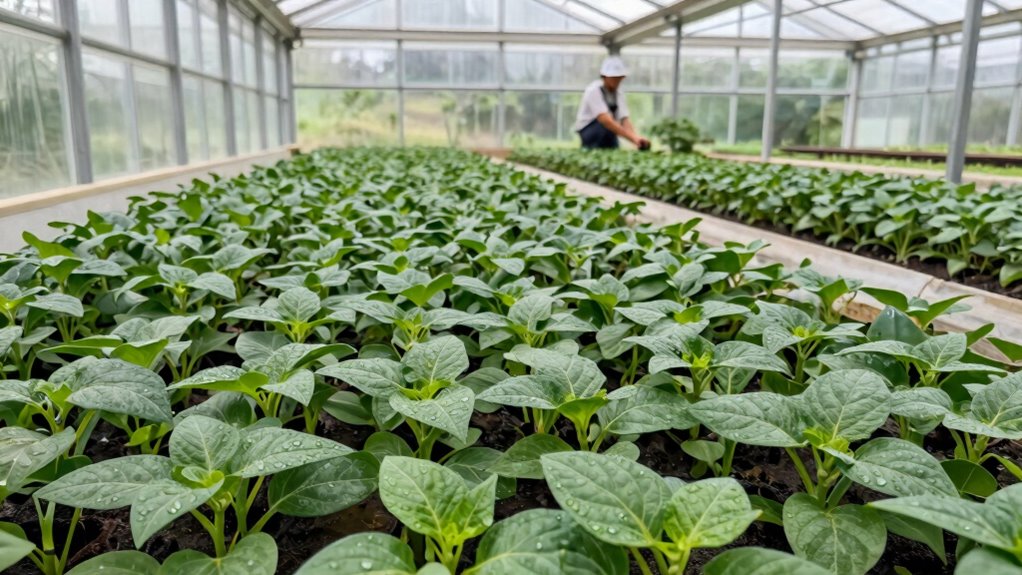
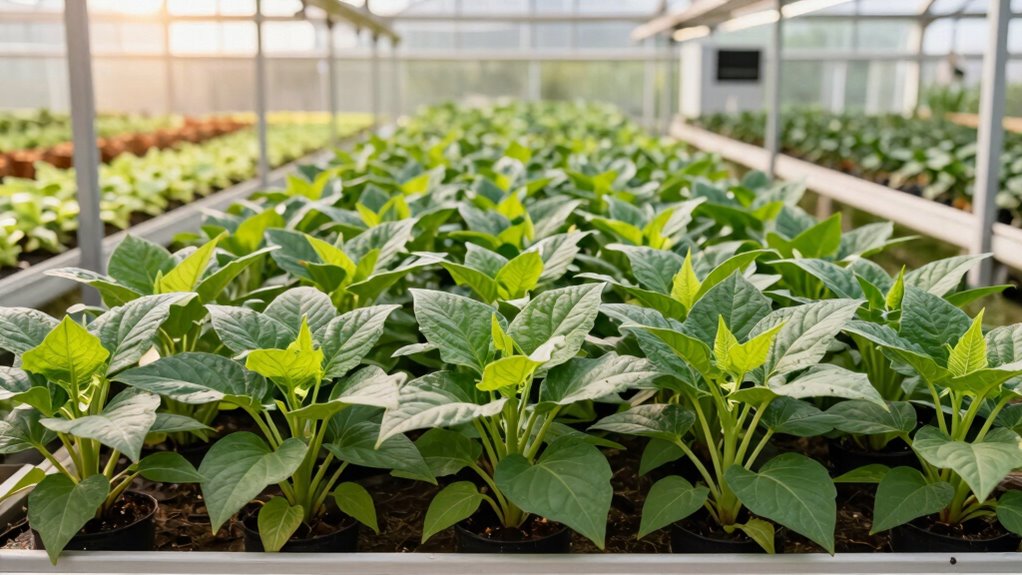
Adjusting plant spacing in your greenhouse can markedly boost plant health and reduce disease risk. When you give your plants enough space, they’re less likely to compete for essential resources like water, nutrients, and light. This improves overall growth and makes them more resilient against pests and diseases. Proper spacing also enhances airflow around your plants, which is fundamental in preventing humidity build-up—a common factor in fungal infections and other diseases. With better airflow, you reduce the chances of mold, mildew, and bacterial outbreaks that can quickly spread if plants are overcrowded.
Proper plant spacing boosts health, airflow, and disease resistance in your greenhouse.
One of the most effective ways to support healthy plant growth through spacing is by paying close attention to soil nutrient management. When plants are too crowded, they tend to deplete soil nutrients quickly, which can lead to deficiencies and stunted growth. By spacing your plants appropriately, you allow roots to access nutrients more efficiently, reducing the need for excessive fertilization and preventing nutrient imbalances. This not only promotes vigorous growth but also minimizes the risk of nutrient-related diseases. Keeping soil properly nourished and well-drained ensures that your plants remain healthy and less vulnerable to pests that often target weakened or stressed plants. Additionally, soil nutrient management can be optimized through proper watering practices that complement spacing strategies.
Reducing plant density also plays a key role in pest control strategies. Overcrowded plants provide ideal hiding spots for pests such as aphids, spider mites, and whiteflies. When plants are spaced correctly, pests have fewer places to hide, making it easier for you to spot and manage infestations early. This proactive approach lessens the need for chemical interventions, which can sometimes harm beneficial insects and disrupt your greenhouse ecosystem. Better spacing encourages natural pest control, as predators like ladybugs and predatory mites can move freely and help keep pest populations in check. Additionally, the air circulation created by proper spacing helps prevent the buildup of moisture that pests and diseases thrive on. Creating the right environment for beneficial insects can further enhance your integrated pest management efforts and reduce reliance on chemical controls.
Furthermore, with well-spaced plants, you can implement targeted pest control strategies more effectively. You can focus your efforts on specific areas without disturbing the entire greenhouse. It also makes monitoring easier, so you catch pest issues before they escalate. Proper spacing reduces stress on plants, making them more resistant to pests and diseases, which in turn reduces the need for chemical treatments and promotes a healthier environment overall. Maintaining optimal biodiversity within your greenhouse through diverse plantings and pest management practices further supports your efforts to keep pests naturally in check.
As an affiliate, we earn on qualifying purchases.
Frequently Asked Questions
How Often Should Plant Spacing Be Adjusted During a Season?
You should adjust plant spacing as needed throughout the season, especially when you notice increased growth density. Regularly monitor plant size and airflow, and increase spacing when plants start to crowd each other. Spacing optimization is essential for healthy growth, preventing disease, and maximizing yield. Typically, make adjustments every few weeks or when plants reach a certain size, ensuring they have enough room to develop without becoming overcrowded.
Does Plant Spacing Affect Pest Control Strategies?
Think of plant spacing as opening the gates to your garden’s immune system. Proper spacing can slow pest migration and reduce disease spread by limiting crowded areas where pests thrive and pathogens spread rapidly. When you keep plants well-spaced, you create a barrier that makes it harder for pests to move and for diseases to take hold. This strategic spacing is a key part of effective pest control and healthy greenhouse management.
Can Spacing Changes Impact Greenhouse Humidity Levels?
Yes, adjusting plant spacing can impact greenhouse humidity levels by enhancing humidity management and airflow maximization. When plants are spaced further apart, better air circulation reduces excess moisture, preventing high humidity that fosters diseases. Conversely, closer spacing may increase humidity, so you need to monitor and modify plant arrangements accordingly. Proper spacing guarantees ideal airflow, keeps humidity levels in check, and promotes healthier plant growth overall.
What Tools Are Best for Measuring Optimal Plant Spacing?
You should use tools like a measuring tape or a plant spacing calculator to determine ideal plant spacing. These tools help you assess plant density and minimize root competition, ensuring each plant gets enough nutrients and space to thrive. By accurately measuring spacing, you prevent overcrowding, reduce disease risk, and promote healthier growth, leading to a more productive greenhouse environment. Proper spacing tools make managing plant health straightforward and effective.
How Does Plant Spacing Influence Pollination in Greenhouses?
Imagine a greenhouse where flowers are perfectly spaced, like stars in a clear night sky. Proper plant spacing boosts pollination efficiency by making flowers accessible to pollinators, such as bees, without overcrowding. When plants are well-spaced, pollinators can move freely, visiting each flower easily. This improves fruit set and yields, while also reducing disease spread, creating a healthier, more productive greenhouse environment.
Conclusion
By adjusting your plant spacing, you’ll see your greenhouse thrive like a well-tuned orchestra—each element working in harmony. Giving your plants plenty of room not only boosts airflow and reduces disease but also encourages healthier growth. Don’t wait for problems to arise; act now and create an environment where your plants can flourish. Just like a garden that breathes freely, your greenhouse will become a vibrant, resilient space, ready to produce its best harvest.
Fall yard work Picks
leaf blowers
As an affiliate, we earn on qualifying purchases.