To maximize pepper yields, focus on training and pruning your plants to promote healthy growth and better airflow. Use stakes or cages to keep plants upright, and prune away dead or overcrowded branches to direct energy toward fruit production. Removing suckers and lower branches improves sunlight exposure and reduces pest hiding spots. Combining these practices with grafting and pest management will boost plant resilience. Keep exploring for more tips on achieving the best harvest.
Key Takeaways
- Regularly prune dead, damaged, or overcrowded branches to promote healthy growth and better airflow.
- Use staking or cages to support plants, encouraging upright growth and easier access for pruning and harvesting.
- Remove suckers and lower branches to direct energy toward fruit production and improve sunlight exposure.
- Incorporate grafting techniques to enhance plant resilience against pests and diseases, boosting yields.
- Maintain a tidy, well-managed plant environment to reduce pest hiding spots and facilitate early pest detection.

Training and pruning pepper plants are essential steps to maximize your harvest and keep your plants healthy. When you take the time to properly train and prune, you improve air circulation, sunlight exposure, and overall plant vigor. This makes it easier to spot issues early and implement effective pest management strategies. One advanced method to boost plant health is grafting techniques, which involve joining a healthy rootstock with a desirable pepper variety. Grafting can enhance resistance to soil-borne diseases and pests, leading to stronger, more productive plants. When you master grafting, you create a resilient plant that can handle stress better and produce higher yields. It’s a valuable skill, especially if you’re growing peppers in areas prone to pests or diseases.
Pruning is equally essential. You want to remove any dead, damaged, or overcrowded branches that can hinder airflow and encourage pest infestations. Regularly snip off suckers—small shoots that grow between the main stem and branches—to direct the plant’s energy toward fruit production rather than unnecessary foliage. By doing this, you not only improve the plant’s structure but also reduce spots where pests can hide. The goal is to maintain a balanced, open shape that allows sunlight to reach all parts of the plant. This sunlight exposure is vital because it stimulates flowering and fruiting, ultimately leading to a higher yield.
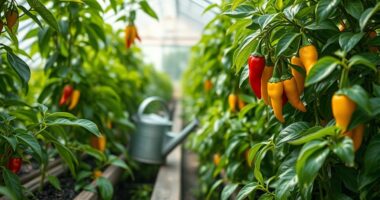
Training your pepper plants involves guiding their growth habits to optimize space and productivity. Using stakes or cages helps keep plants upright, preventing them from sprawling on the ground where pests and diseases are more likely to take hold. As your plants grow, tie the stems loosely to support structures, encouraging a strong, upright posture. This not only makes maintenance easier but also reduces the risk of pest problems, as pests prefer dark, damp hiding spots on tangled or fallen foliage. Proper training also involves selectively pruning to shape the plant, removing lower branches that don’t produce fruit and might be more susceptible to pests. Additionally, incorporating Boho decor ideas such as natural elements around your garden can create a more inviting and beneficial environment for your plants.
Effective pest management is an integral part of training and pruning. When you keep your plants tidy and well-maintained, pests are less likely to find refuge or cause damage. Regular inspections and timely removal of infested or diseased parts prevent pests from spreading. Combining these practices with grafting techniques, which can increase plant resilience, gives you a strong foundation for healthy, high-yielding pepper plants. In the end, consistent training and pruning not only improve your plant’s health but also maximize your harvest potential.
Frequently Asked Questions
When Is the Best Time to Start Pruning Pepper Plants?
You should start pruning pepper plants during the early growth stages, once they develop their first true leaves. Use pruning techniques like removing suckers and dead or crossing branches to encourage healthy growth and better yields. Regular pruning throughout the growing season helps maintain airflow and prevents disease. Keep an eye on your plants, and prune as needed to promote strong, productive plants that produce high-quality peppers.
How Do I Identify Which Branches to Prune?
You identify branches to prune by looking for those that are dead, damaged, or crossing other branches. Focus on branch selection that promotes airflow, light penetration, and plant structure. Use pruning techniques like cutting just above a node or a healthy leaf set, and remove suckers or weak growth. By choosing the right branches, you’ll improve plant health, boost yields, and make maintenance easier.
Can Pruning Increase Pest Resistance in Pepper Plants?
Yes, pruning can increase pest resistance by improving plant health. When you prune your pepper plants, you remove dead or diseased branches, which reduces hiding spots for pests. This also promotes better airflow and sunlight penetration, making it harder for pests to thrive. Healthy, well-maintained plants are less vulnerable to infestations, so regular pruning helps keep pests at bay and supports overall plant resilience.
What Tools Are Safest for Trimming Pepper Plants?
Imagine yourself in a garden, sunlight filtering through leaves, wielding the right pruning tools for plant safety. Use sharp, clean scissors or pruning shears designed for gardening—they’re safest for trimming pepper plants. Avoid dull or makeshift tools, which can damage plants or cause injury. Always sterilize your pruning tools before use to prevent disease spread. Proper tools guarantee healthy cuts, promoting vigorous growth and high yields.
How Does Pruning Affect Pepper Flavor and Quality?
Pruning enhances your pepper flavor and fruit quality by encouraging healthier growth and better airflow. When you remove excess or weak branches, the plant concentrates its energy on producing more flavorful peppers with improved texture and taste. Proper pruning also reduces disease risk, ensuring your peppers stay vibrant and high-quality. Regularly trimming your plants helps you enjoy richer flavor and superior fruit quality in every harvest.
Conclusion
By regularly training and pruning your pepper plants, you can markedly boost your yields. For example, imagine a gardener who pruned their plants early in the season, leading to stronger branches and more fruit. Just like them, you’ll see healthier, more productive plants when you give them the right care. So, stay consistent with your pruning routine, and watch your pepper harvest flourish beyond your expectations. Your success starts with a simple cut!