Pruning and trellising your greenhouse tomatoes help improve airflow, light penetration, and supportplant growth. Remove dead or overcrowded foliage to boost healthy development and prevent diseases. Use trellising systems to keep plants upright, distribute fruit weight evenly, and make maintenance easier. These practices also help your plants stay strong and productive while reducing pest hiding spots. For detailed tips on effective pruning and trellising techniques, keep exploring further.
Key Takeaways
- Regularly prune dead, damaged, or overcrowded leaves to improve airflow and light penetration.
- Use gentle ties to support tomato plants and prevent stem breakage as they grow vertically.
- Remove suckers to direct energy toward fruit production and maintain plant structure.
- Adjust trellising supports to accommodate plant growth, ensuring even weight distribution.
- Combine pruning with proper nutrition to enhance plant health, yield, and disease resistance.
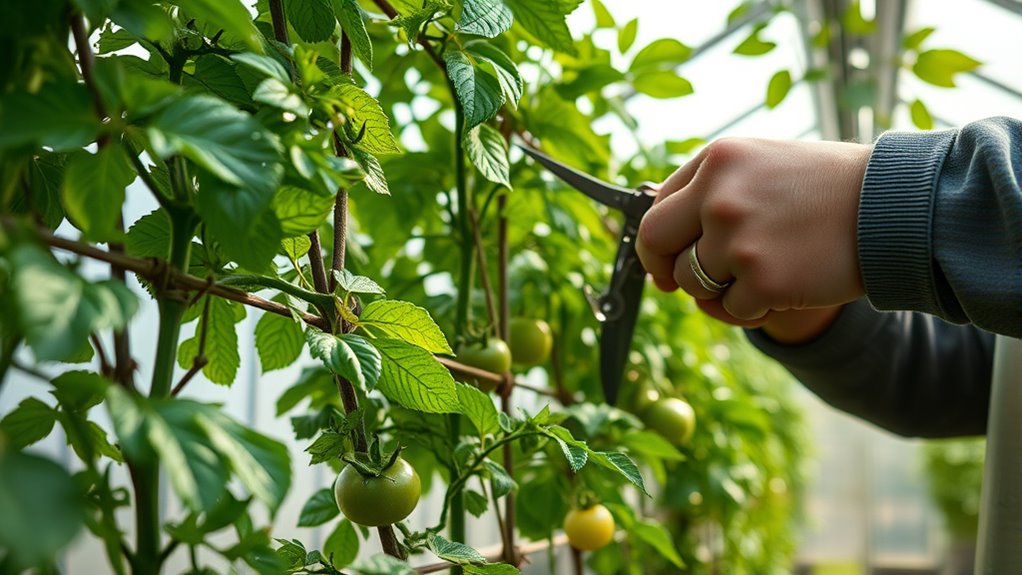
Greenhouse tomatoes require careful pruning and trellising to guarantee healthy growth and maximize yield. When you start managing your plants, it’s essential to understand how pruning influences plant nutrition. By removing unnecessary leaves and suckers, you allow the plant to direct its energy toward producing fruit rather than excess foliage. This process improves airflow and light penetration, which enhances photosynthesis and plant vigor. Proper pruning also helps prevent diseases caused by excess humidity and poor air circulation, making pest management more straightforward. When you keep your plants tidy and well-structured, pests have fewer hiding spots, reducing the risk of infestations that can compromise your crop’s health.
Trellising plays a crucial role in supporting your greenhouse tomatoes, ensuring they grow upright and remain accessible for maintenance. As your plants develop, tying them to trellises helps distribute the weight of the fruit evenly, preventing stems from snapping under the load. This support system also promotes better light exposure across all parts of the plant, which is essential for consistent ripening and optimal plant nutrition. When you use trellising effectively, you facilitate easier inspection for pests and diseases, making pest management less labor-intensive. Plus, a well-structured plant is less prone to fungal issues because air circulates freely around the foliage and fruit. Additionally, understanding the importance of plant nutrition can help you adjust your practices to ensure your tomatoes receive the necessary nutrients for optimal growth.
As you prune, be mindful of maintaining a balance in plant nutrition. Removing too many leaves can hinder photosynthesis, slowing down growth and fruit production. Conversely, leaving excessive foliage can foster humid conditions, encouraging mold and pest problems. Regularly monitor your plants and prune selectively—target dead, damaged, or overcrowded growth—ensuring they stay healthy and productive. When tying plants to trellises, do it gently to avoid damaging stems, and adjust ties as the plant grows to support the natural shape. This not only improves plant health but also makes pest management more efficient because you can quickly spot and address issues on a well-organized plant.
Frequently Asked Questions
How Do I Identify When My Tomatoes Need Pruning?
You should prune your tomatoes when you notice excessive foliage, crowded branches, or signs of poor plant health. Regular pruning helps improve airflow, reducing the risk of pests and diseases. If you see yellowing leaves or weak stems, it’s time to trim. Doing this keeps your plant healthy, encourages better fruit production, and prevents pest problems from taking hold, ensuring a thriving greenhouse tomato crop.
What Tools Are Best for Pruning Greenhouse Tomatoes?
Sure, you’ll want sharp, precise tools to make your pruning easier—think pruning shears or scissors designed for delicate work. For trellising materials, use sturdy twine or specialized tomato cages. These tools help you apply pruning techniques gently and efficiently, preventing damage to your plants. Ironically, the best tools are often simple, but choosing the right ones makes all the difference in keeping your greenhouse tomatoes healthy and productive.
Can Pruning Increase Fruit Size and Yield?
Yes, pruning techniques and trellising methods can boost your tomato plant’s fruit size and yield. When you prune, you remove unnecessary suckers, redirecting energy to the main stems and fruit. Using effective trellising methods supports the plant, preventing breakage and encouraging better air circulation. This combined approach promotes healthier growth, larger fruits, and increased harvests, making your greenhouse tomatoes more productive and your efforts more rewarding.
How Often Should I Prune Greenhouse Tomato Plants?
You should prune greenhouse tomato plants at least once a week to keep them healthy and productive. Regular pruning helps prevent diseases from spreading and guarantees good airflow, which is vital for lush growth. Consistent pruning frequency also encourages bigger fruit and higher yields. Don’t wait until plants become unruly—stay proactive, because neglect can turn your thriving greenhouse into a jungle faster than you’d imagine.
Are There Specific Trellising Systems Recommended for Different Tomato Varieties?
Yes, different tomato varieties benefit from specific trellising systems. For indeterminate varieties, use vertical support like stakes or cages to manage their height and spread. Determinate types may need less support, but trellis materials like twine or wire can still help keep plants upright. Choose a trellising system that matches your plant’s growth habit, ensuring proper airflow and easier harvesting. Tailoring support methods improves plant health and yields.
Conclusion
By pruning and trellising your greenhouse tomatoes, you’re shaping a healthier, more productive plant—like a skilled sculptor refining their masterpiece. These practices improve air circulation, sunlight exposure, and fruit quality, making your efforts worthwhile. Remember, consistent care is key to success. Just as a gardener tends to their plants daily, your dedication will yield a bountiful harvest. Keep up the good work, and watch your tomatoes thrive like a well-tended garden of treasures.