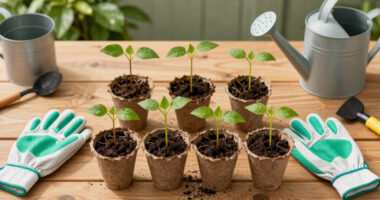
Seedlings collapse mainly due to overwatering, poor drainage, insufficient light, or pests, which weaken their structure and stunt growth. To stop this early, monitor their appearance for signs like wilting or yellowing, and guarantee proper watering routines. Use well-draining soil, provide adequate light, and maintain good airflow. Address issues quickly to keep your seedlings healthy. Continuing will reveal more tips to help you grow strong, resilient seedlings from the start.
Key Takeaways
- Early signs like wilting or yellowing indicate stress; regular monitoring helps detect issues early.
- Overwatering and poor drainage cause root rot and weakness; use well-draining soil and proper watering routines.
- Insufficient light leads to legginess; ensure seedlings receive adequate, balanced light to promote strength.
- Fungal infections and mold weaken seedlings; maintain sanitation, good airflow, and avoid excess moisture.
- Proper transplanting techniques and environmental management strengthen seedlings and prevent collapse.
As an affiliate, we earn on qualifying purchases.
Recognize Early Signs of Seedling Stress or Collapse
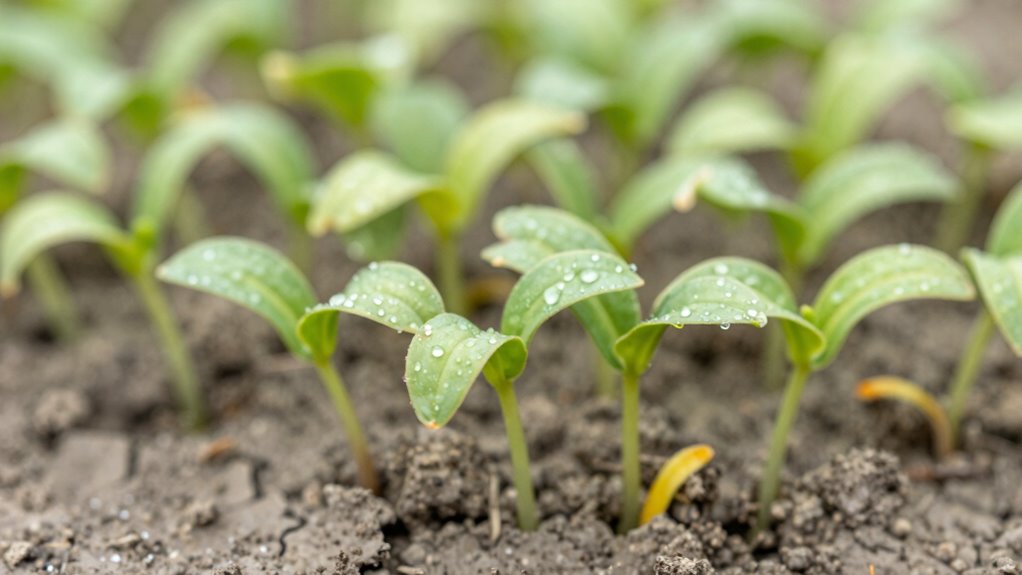
Understanding the early signs of seedling stress or collapse is essential for preventing total failure. You should pay close attention to changes in seedling appearance, such as wilting, yellowing, or stunted growth, which indicate underlying problems. Recognize that seedling genetics can influence resilience; some varieties are more vigorous and resistant to stress. Monitoring for pest activity is vital, as pests can quickly weaken seedlings, leading to collapse. Regular inspection helps you catch issues early, allowing for prompt pest management and supportive adjustments like proper watering or nutrient application. Proper seedling care is crucial for building resilience and ensuring healthy growth from the start. Additionally, understanding the importance of pest management can help you prevent infestations that could compromise seedling health. By staying vigilant and understanding the signs, you can intervene before minor problems escalate into total seedling failure, ensuring healthier, stronger plants from the start.
Why Do Seedlings Collapse? Common Causes Explained
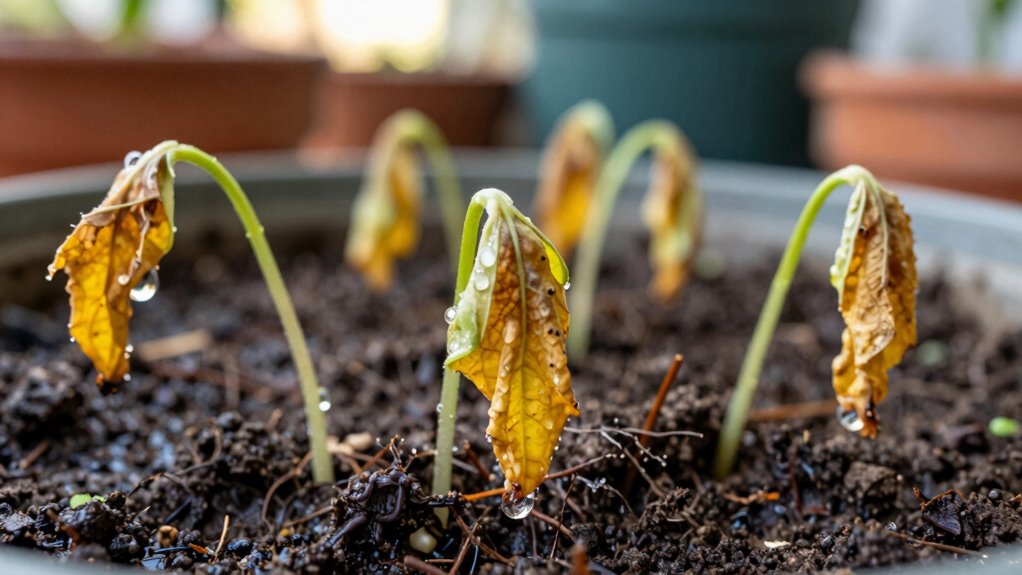
Seedlings often collapse due to overwatering or poor drainage, which can suffocate roots and cause weakness. Insufficient light or airflow also stresses plants, making them more prone to falling over. Recognizing the importance of proper soil quality can further prevent issues and promote strong growth. Additionally, being aware of high-pressure application can help you better manage your gardening or planting budgets, especially when purchasing supplies in bulk. Ensuring the right watering frequency can make a significant difference in keeping seedlings healthy and resilient. Maintaining optimal soil aeration can also help prevent root rot and support robust development.
Overwatering and Drainage Issues
Overwatering is one of the most common reasons seedlings collapse, as excess water can suffocate their roots and prevent oxygen from reaching them. When roots sit in overly wet soil, they can’t absorb crucial nutrients, leading to poor seedling nutrition and increased vulnerability. Poor drainage creates standing water, which fosters root rot and weakens the plant’s structure. To prevent this, ensure your containers have proper drainage holes, and avoid overwatering. Healthy seedlings depend on balanced watering and proper soil moisture. Additionally, overwatering can encourage pests like fungus gnats, which further stress young plants. Effective pest management and watering practices are essential to keep seedlings strong and prevent collapse. Regularly check soil moisture levels to maintain ideal conditions for healthy growth. Proper soil moisture management and contrast ratio in your watering routine can help maintain consistent soil moisture levels and prevent over-saturation. Maintaining appropriate watering practices is key to supporting robust seedling development, and understanding the importance of proper drainage can significantly reduce the risk of collapse. Being attentive to watering frequency and adjusting based on environmental conditions is essential for healthy seedling development.
Insufficient Light and Airflow
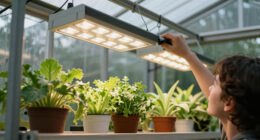
Have you noticed your seedlings suddenly drooping or collapsing despite proper watering? Insufficient light and poor airflow can weaken seedlings quickly. Lack of light causes them to stretch, become leggy, and fragile, making them prone to collapse. Poor airflow increases humidity, encouraging seedling pests and root diseases. To prevent this, make sure your seedlings get enough light—ideally, 12-16 hours daily—and maintain good ventilation. Adjust your grow setup with the table below for better airflow and light distribution:
| Issue | Solution | Result |
|---|---|---|
| Insufficient light | Use grow lights or move seedlings closer | Stronger, healthier growth |
| Poor airflow | Improve ventilation, space plants | Reduced pests & root issues |
| Overcrowding | Thin out seedlings | Less humidity, better health |
Creating an inclusive environment that promotes healthy growth can be supported by understanding diversity in plant care, ensuring all seedlings thrive equally.
How Light and Temperature Affect Seedling Health
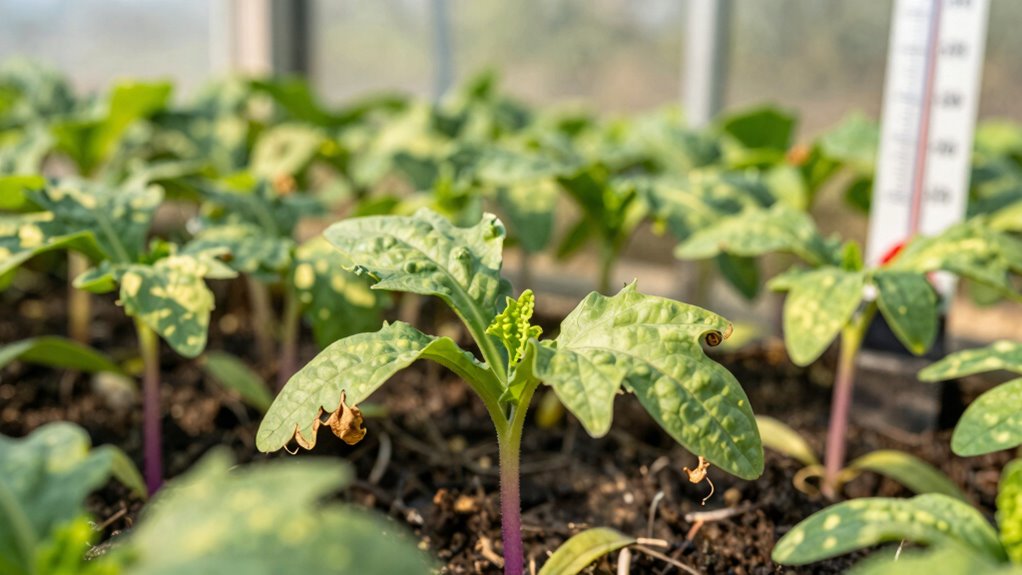
Light and temperature are crucial factors that directly influence the health and growth of your seedlings. Proper lighting ensures they develop strong, healthy stems and vibrant leaves. Too little light causes legginess and weak growth, while too much can scorch delicate tissues. Temperature impacts metabolic processes; too hot or cold, and seedlings may stunt or collapse. To optimize conditions:
- Provide 12-16 hours of bright, indirect light daily
- Keep temperatures between 65–75°F (18–24°C)
- Use grow lights if natural light is insufficient
- Maintain consistent temperature to prevent stress
- Practice soil sterilization to reduce seedling pests
Balancing light and temperature prevents stress, encourages sturdy growth, and reduces the risk of disease. Proper care also supports healthy soil, which is essential for seedlings’ resilience.
Signs of Overwatering and Poor Drainage in Seedlings
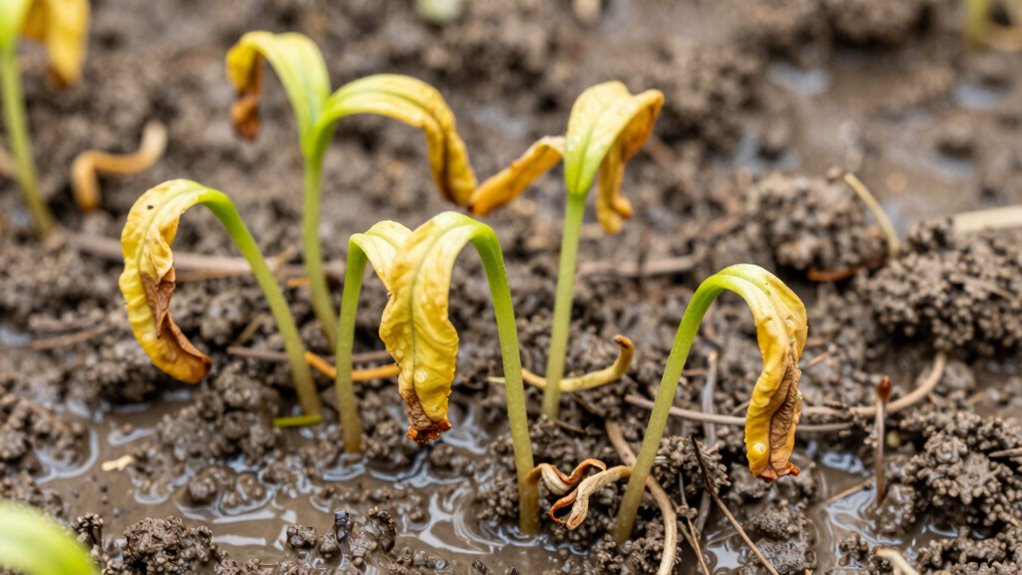
If your seedlings are wilting and their leaves turn yellow, overwatering or poor drainage might be the cause. You may also notice mold or fungus growing on the soil surface, which indicates excess moisture. Addressing these signs early can help prevent further health issues for your seedlings.
Wilting and Yellowing Leaves
Wondering why your seedlings are wilting and their leaves are turning yellow? These signs often indicate overwatering or poor drainage, which hampers root development and can stunt seedling growth. Overwatering drowns roots, limiting oxygen and stressing seedling genetics designed for well-drained conditions. To diagnose, check if the soil feels soggy or stays wet for days. Yellowing leaves and drooping stems are common symptoms. Supporting caregivers’ emotional well-being by understanding these plant signals can help reduce frustration and promote patience during the gardening process. Proper watering and home soundproofing techniques can also help create a stable environment for healthy growth. Ensuring that your soil has proper drainage helps prevent these issues and encourages strong seedling development. Additionally, researching reputable gold IRA markets can provide valuable insights into safeguarding your investments during uncertain economic times. Being aware of indoor air quality factors, such as dust or microplastics, can also contribute to healthier indoor environments for both plants and people.
Mold and Fungus Growth
When seedlings are overwatered or sit in poorly-drained soil, it creates the perfect environment for mold and fungus to thrive. You might notice fuzzy white or gray patches on the soil surface, indicating fungal infections. These fungi can weaken seedlings, making them more susceptible to collapse. To prevent mold growth, guarantee your seedlings have proper drainage and avoid overwatering. Use sterile soil and containers to reduce the risk of fungal contamination. Good air circulation also helps keep humidity levels in check. Regularly inspect seedlings for signs of mold, and remove affected plants immediately. proper drainage is essential for preventing excess moisture that fosters fungal growth. Ensuring consistent moisture levels and avoiding overwatering can significantly reduce the risk of mold development. Maintaining a clean growing environment and practicing good sanitation are also effective measures in mold prevention. Additionally, monitoring humidity levels in your growing area helps prevent conditions conducive to mold growth. Implementing these practices creates an optimal environment for healthy seedlings and minimizes the risk of fungal infections. Mold prevention is crucial to maintaining healthy growth and avoiding collapse. By controlling moisture and promoting good airflow, you can protect your seedlings from these destructive fungal threats.
Managing Soil and Nutrients for Strong Growth
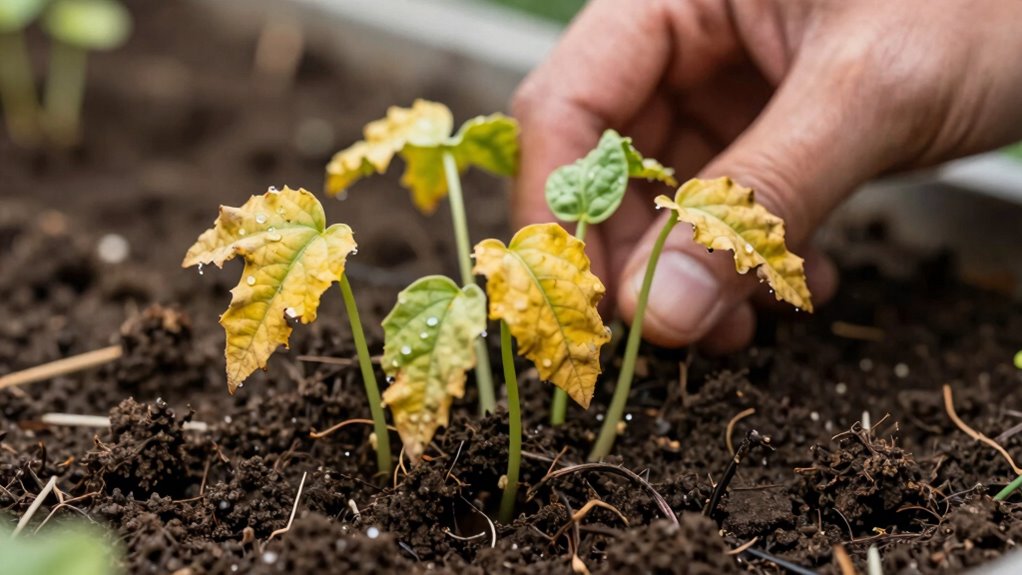
Healthy seedlings depend on well-managed soil and nutrient levels. To support strong growth, you need to monitor soil pH and maintain a proper nutrient balance. Soil pH affects nutrient availability; aim for a slightly acidic to neutral range, around 6.0-7.0. Assure your seedlings receive essential nutrients like nitrogen, phosphorus, and potassium in the right proportions. Regularly test your soil to catch imbalances early. Incorporating AI-powered soil analysis tools can help optimize your soil management practices more efficiently. Choosing the right synthetic lubricants for your gardening equipment can also ensure your tools operate smoothly and last longer, reducing the risk of damage during soil preparation.
Healthy seedlings thrive with balanced soil pH and essential nutrients like nitrogen, phosphorus, and potassium.
Here are key tips:
- Adjust soil pH with lime or sulfur if needed
- Use balanced, all-purpose fertilizers
- Avoid over-fertilizing to prevent nutrient toxicity
- Incorporate organic matter to improve soil health
- Regularly test soil to maintain ideal conditions
Proper management prevents deficiencies and promotes healthy, resilient seedlings.
How to Fix Overwatering and Improve Drainage
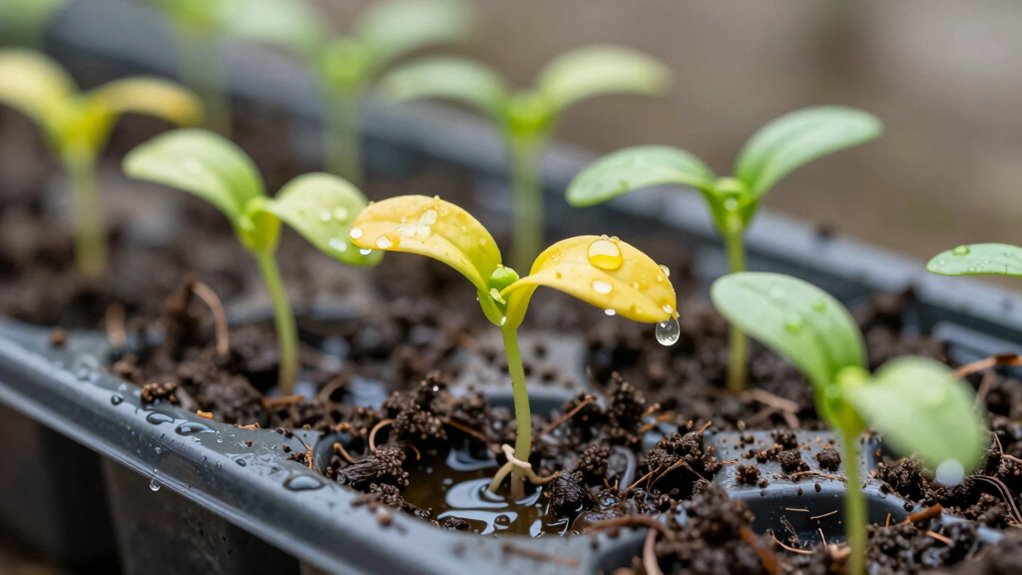
Overwatering can quickly lead to root rot and other problems that weaken your seedlings. To fix this, improve soil drainage by loosening the soil to enhance soil aeration, allowing excess water to escape easily. Use containers with drainage holes or add coarse materials like gravel or perlite at the bottom of pots to prevent water from pooling. Avoid overwatering by checking moisture levels before watering again—wait until the top inch of soil feels dry. Better drainage encourages healthy root development, giving roots room to grow and access oxygen. Proper soil aeration reduces the risk of fungal infections and promotes stronger, more resilient seedlings. Adjust your watering habits accordingly, and ensure your seedlings have a well-draining environment for ideal growth.
Best Practices for Growing Healthy, Strong Seedlings
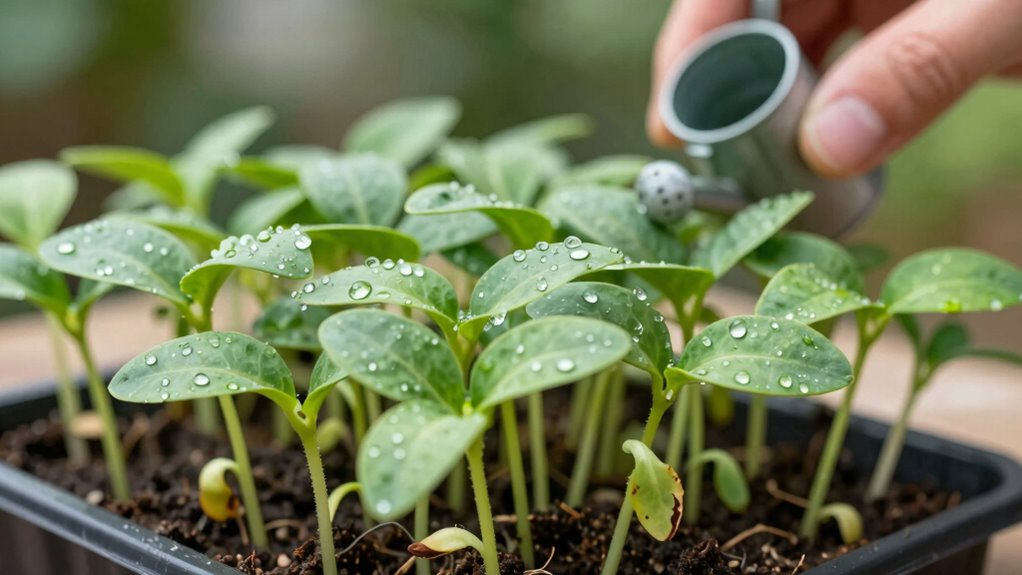
Growing strong, resilient seedlings requires careful attention to their overall care and environment. To promote healthy growth, focus on proper watering, adequate light, and good air circulation. Regular seedling pruning helps shape plants and encourages bushier growth. Keep an eye out for pests and practice pest prevention to avoid infestations that can weaken your seedlings. Confirm your containers have proper drainage to prevent overwatering. Use sterile tools when pruning to minimize infection risk. Maintain consistent temperatures and avoid drafts. Additionally, provide gentle airflow to strengthen stems. Consistent monitoring and proactive care create ideal conditions. Prioritize these practices to foster sturdy seedlings that can withstand future stress and thrive in your garden.
When and How to Transplant Seedlings Successfully

Timing is crucial when transplanting seedlings, as doing it too early or too late can stress or damage your plants. Wait until seedlings have developed at least two sets of true leaves and the roots are well-established but not root-bound. Before transplanting, gently prune any damaged or weak seedlings and consider root pruning to encourage healthy growth and prevent circling roots. When transplanting, handle seedlings carefully by their leaves or root ball to minimize root disturbance. Make sure the new location is prepared with proper soil and spacing. Water thoroughly afterward to help seedlings settle in. Proper timing, combined with seedling pruning and root pruning, ensures your plants adapt quickly and grow strong in their new environment.
Frequently Asked Questions
Can Seedlings Recover After Collapsing?
Yes, seedlings can recover after collapsing if you act quickly. Focus on proper seedling watering—ensure you don’t overwater, which causes root rot—and improve soil drainage to prevent excess moisture. Gently support the collapsing seedlings and keep the environment stable. Providing adequate light and avoiding sudden temperature changes also helps. With prompt care, your seedlings have a good chance of bouncing back and growing strong.
What Are Natural Remedies for Seedling Stress?
Ever wondered how to ease seedling stress naturally? You can use organic foliar sprays or compost teas to boost their health. These remedies deliver essential nutrients directly and improve soil vibrancy, helping seedlings recover and thrive. Why rely solely on chemical solutions when nature offers gentle, effective alternatives? Regular application of these natural remedies strengthens seedlings, reduces stress, and encourages vigorous growth, giving your plants a healthy start in life.
How Do Pests Contribute to Seedling Collapse?
Pests contribute to seedling collapse by feeding on young plants, causing stress and structural damage. You need to identify pests early through pest identification, so you can act quickly. Prevention strategies like maintaining healthy soil, removing debris, and using natural repellents help keep pests at bay. Regular monitoring allows you to catch problems early, reducing the risk of pest-induced stress that can lead to seedling collapse.
Are Certain Seedling Species More Prone to Collapse?
Yes, certain seedling species are more prone to collapse due to differences in seedling resilience and species vulnerability. You’ll notice some species struggle because they lack strong root systems or are sensitive to environmental stresses. To prevent collapse, identify these vulnerable species early and provide targeted care, like ideal watering and protection from pests. Understanding species-specific needs helps you boost seedling resilience and reduces the risk of collapse.
What’s the Ideal Humidity Level for Healthy Seedlings?
You’ll find that maintaining an ideal humidity level of around 60-70% keeps seedlings healthy. Coincidentally, misting techniques can help regulate this, preventing soil moisture from drying out or becoming too damp. By keeping the soil moist but not soaked, you create an environment where seedlings thrive. Regularly misting and monitoring humidity guarantees your young plants don’t collapse due to stress caused by inconsistent moisture levels.
Conclusion
By paying close attention to your seedlings’ needs and promptly addressing signs of stress, you give them the best chance to thrive. Remember, healthy seedlings are the foundation of a fruitful garden—don’t let preventable issues hold them back. Isn’t it worth the effort to nurture strong, resilient plants from the very start? With patience and care, you’ll enjoy lush, vibrant growth that makes all your gardening efforts worthwhile.