
TL;DR

Get garden gear delivered free with Prime
- Fast, free delivery on millions of items
- Prime Video, Amazon Music and more included
- Member-only deals all year
A gardening report highlights mycorrhizal fungi as a soil partner that can extend plants’ access to water and nutrients, potentially helping new shrubs and trees establish. Experts describe benefits including improved nutrient uptake, but the source provides no trial data or guarantee that plants will grow larger.
An Ideal Home gardening report says mycorrhizal fungi may help newly planted shrubs and trees establish by extending plants’ access to water and soil nutrients. The fungi form a network associated with plant roots, but the report’s claims about stronger growth are expert explanations rather than a guarantee or a quantified result for every garden.
Mycorrhizal fungi are fungi that form a symbiotic relationship with plant roots. Their fine filaments, which form a network called mycelium, can reach through soil beyond the roots themselves. According to Envii, this wider network can help plants absorb nutrients including phosphorus and nitrogen, as well as access water.
Envii says the fungi can help plants grow bigger and stronger by improving nutrient intake. Dave The Plantman, speaking in conjunction with Mims Pottery, says the fungi can “almost double the root system” of a plant. The report does not supply study details or measurements supporting that figure, so it should be treated as an attributed claim rather than a result established for all plants.
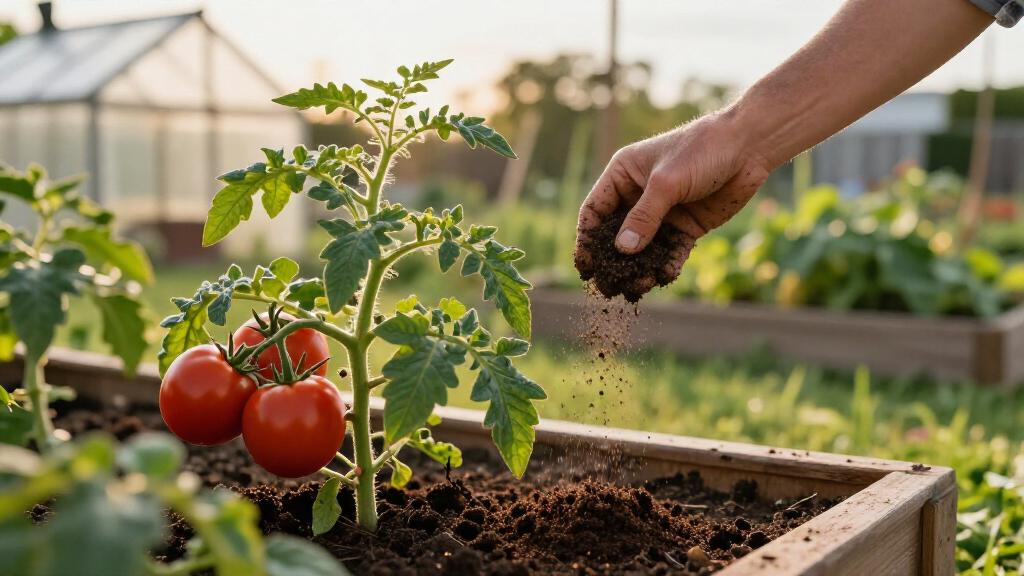
Gardeners commonly apply mycorrhizal products when planting a new shrub or tree, placing the material in the planting hole according to product directions. Andrew Jackson, founder of New Build Manifesto, says the fungi can support root development and improve plants’ access to water and nutrients, helping them establish more successfully. The report also says some products can be used around existing plants, but gardeners should follow their labels.
How Fungi Can Support New Plantings
Establishment is a vulnerable period for a newly planted shrub or tree: its roots must adapt to the surrounding soil while supplying the plant with water and nutrients. A fungal network that extends beyond the roots could help with that access, making mycorrhizal fungi a possible planting aid for gardeners looking to support new growth.
The practical point is not that the fungi replace sound planting or routine care. Rather, they may work alongside roots and soil to improve nutrient and water uptake. If that support helps a plant settle in, it could be useful for gardeners investing in long-lived shrubs and trees. The source, however, does not establish how large the benefit is, how quickly it appears, or whether it applies equally across species and soil conditions.
Envii also says the fungi can contribute to resilience against diseases and toxins. That is a claim about a potential benefit, not evidence that an application will prevent disease or protect a plant from exposure. Gardeners should not treat the product as a substitute for suitable growing conditions or plant-health measures.
As an affiliate, we earn on qualifying purchases.
A Natural Soil Partnership
Mycorrhizal fungi are described in the report as naturally present in soil. The relationship is mutually supportive: fungal filaments help plants reach resources in the soil, while the fungi live in association with plant roots. The report says the networks can extend widely and may connect with other plants, though it gives no specific measurements or independent evidence for the extent of those connections.
Envii says that, in its view, 90% of plant life depends on mycorrhizal fungi. The source does not identify the study or definition behind that percentage, so it is best understood as the company’s stated figure, not a separately verified statistic. The report also says chemicals and fertilisers can damage fungal systems over time, but does not name products, exposure levels or research establishing the effects.
The article names several commercial powders as examples, including Empathy Rootgrow and Envii Root Well. These are product references in the original report, not an endorsement or evidence that one brand works better than another. Its central advice is to consider the fungi when planting shrubs or trees and apply any product as directed.
“Mycorrhizal fungi live in a symbiotic relationship with plants, providing them with essential nutrients and aiding in their growth.”
— Envii
What the Growth Claims Establish
The report does not cite controlled trials, identify the conditions behind the “almost double” root-system claim, or show how much a typical gardener should expect growth to improve. It also does not compare treated and untreated plants or explain how results vary by species, soil, climate or planting method. Benefits are possible, not assured, based on the information supplied.
The source offers no specific evidence for its claims about disease resilience, toxin resistance or the effects of chemicals and fertilisers on fungal networks. It is also unclear which existing plants are likely to benefit from adding a product after planting. Product formulations and application rates may differ, so the advice should not be taken as a single dose or method for every product.
Check the Label Before Planting
For gardeners considering an application, the immediate next step is to check whether the product is intended for the plant and planting situation, then follow its label for placement and quantity. The report gives no universal application rate or timetable. Gardeners can also monitor new plantings over time, while recognizing that observed growth alone cannot establish that fungi caused the change.
No research release, regulatory action or follow-up study is announced in the source material. Further clarity would require published evidence detailing the plants tested, soil conditions, comparison groups and measured outcomes. Until then, mycorrhizal products are best described as a potential support for root establishment, not a guaranteed route to bigger plants.
Key Questions
What are mycorrhizal fungi?
They are fungi that form an association with plant roots. Their fine filaments create a soil network that may help plants access water and nutrients.
Why might gardeners use them for shrubs or trees?
Experts quoted by Ideal Home say the fungi can support root development and nutrient uptake, which may help new plantings establish. The source does not guarantee a particular result.
Do mycorrhizal fungi double a plant’s roots?
Dave The Plantman says they can “almost double” a plant’s root system. The report does not provide study details or measurements to confirm that outcome across plants.
Can the fungi be added to plants already in the garden?
The report says some products can be added around established plants. Use only products labelled for that purpose and follow their instructions.
Are the benefits proven for every plant?
No. The source describes potential benefits but does not provide evidence showing that all plants, soils or gardens respond in the same way.
Source: rss
Halloween Picks
halloween
As an affiliate, we earn on qualifying purchases.