
TL;DR

Get garden gear delivered free with Prime
- Fast, free delivery on millions of items
- Prime Video, Amazon Music and more included
- Member-only deals all year
Borage, or Borago officinalis, is a Mediterranean annual that can add blue, star-shaped flowers and visiting bees to sunny gardens. Grow it from seed in well-drained soil, give plants room to spread, and remove unwanted seedlings before they establish. The plant may contain pyrrolizidine alkaloids, so garden use should not be confused with evidence that its leaves or flowers are safe to eat.
Borage, a blue-flowered annual herb that attracts bees, can be grown from seed in a sunny, well-drained garden, according to a Grow Organic guide. The report describes its planting and self-seeding habits while cautioning that borage may contain pyrrolizidine alkaloids, so traditional culinary uses should not be taken as proof that the plant is safe to eat.
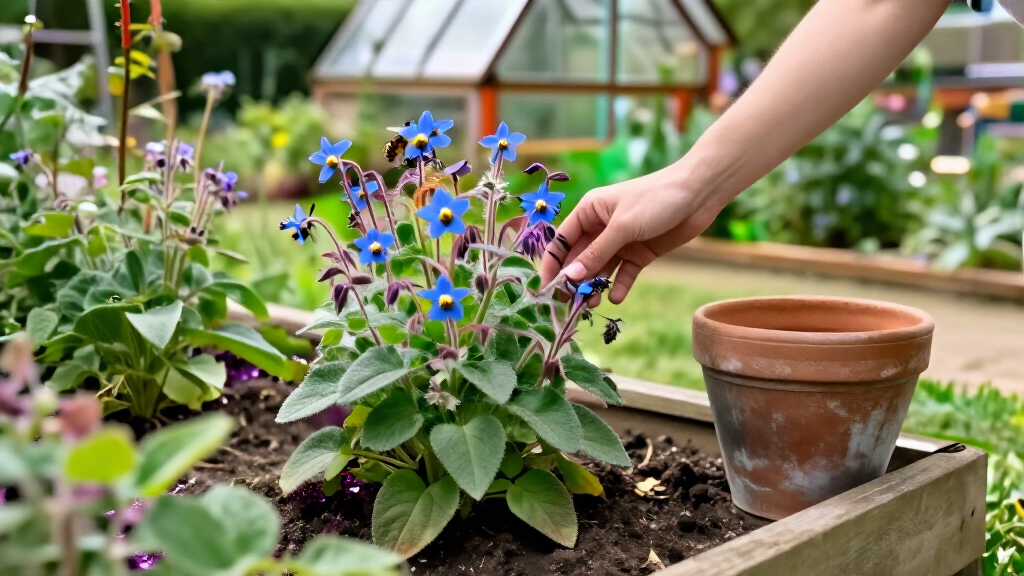
Common borage is Borago officinalis, an annual native to the Mediterranean region. The guide says it often grows two to three feet tall, with hairy stems, rough gray-green leaves and five-pointed flowers that are usually blue; white-flowered forms also exist. Its loose growth and broad leaves can add contrast to vegetable beds, herb plantings and flower borders.
For planting, choose full sun and soil that drains well. Sow seeds outdoors after the risk of frost has passed, following the seed packet’s directions for depth. Keep the soil moist while seeds sprout, then thin seedlings to about 12 inches apart, as directed in the guide. Water young plants as their roots develop, and avoid leaving them in soggy soil; established plants can tolerate some dryness.
Borage often self-seeds. Gardeners who want fewer volunteer plants can remove seedlings while they are small or cut off fading flowers before seeds mature. The guide recommends leaving space for plants to branch, so they do not crowd or shade smaller neighbors. It describes bees visiting borage flowers, but says pest protection and changes to the flavor of nearby crops are not guaranteed.
Flowers, Bees and Garden Space
Borage can offer a practical option for gardeners looking to add seasonal color and flowers visited by bees. Its informal form fits mixed plantings, and its broad, bristly leaves provide a different texture from fine grasses or small-leaved herbs. Pairing it with other flowers that bloom at different times can help maintain a succession of floral resources through the season.
Its habit of dropping seed also affects how it fits into a garden. That may suit gardeners who welcome new plants in later seasons, but those seeking a controlled border will need to remove unwanted seedlings or flowers before seed develops. The source does not establish that borage reliably protects crops from pests or improves their flavor; its stated garden value is chiefly ornamental and pollinator-related.
borage seeds for pollinator garden
As an affiliate, we earn on qualifying purchases.
As an affiliate, we earn on qualifying purchases.
Growing and Managing Borage
The Grow Organic report presents borage as a relatively straightforward herb to raise from seed, provided gardeners account for its eventual size and preference for drainage. Its identification relies on a combination of flowers, foliage and growth habit, not flower color alone. The guide cautions against identifying a plant for eating based only on its blooms.
The source also distinguishes garden enjoyment from food and health claims. Older accounts describe using young leaves in food and freezing flowers in ice cubes, but the report says borage leaves and flowers can contain pyrrolizidine alkaloids, which raise food-safety concerns. It does not recommend borage for health conditions. Borage seed oil, which the source describes as a source of gamma-linolenic acid, is a different preparation from leaves steeped in kitchen oil; interest in either use does not establish that a homemade preparation is safe.
“Borage brings blue stars and bees to sunny gardens.”
— Grow Organic gardening guide
Food Safety and Garden Results
The supplied report does not give a measured safe serving for borage leaves or flowers, and says advice to consume “small amounts” does not establish a safety limit. It warns that the plant may contain pyrrolizidine alkaloids and that drying is not a reliable way to remove the concern. It also does not provide clinical evidence to support using borage for medical conditions.
Garden outcomes can vary with local growing conditions. The guide gives general sowing and spacing advice, but does not specify a planting calendar for individual regions or guarantee that borage will deter pests, improve nearby crops, or attract a particular number of pollinators.
Plan for Seedlings and Blooms
Gardeners can start by checking local frost timing and the seed packet, then choosing a sunny spot with enough room for plants to branch. During the season, monitor soil moisture and remove seedlings or fading flowers if fewer self-sown plants are wanted. Leave some blooms to mature only if volunteer plants next season are welcome.
For ongoing food or medical questions, the guide does not offer a safety recommendation; readers should not treat garden instructions or traditional-use accounts as medical advice. The immediate practical steps are to grow borage for its flowers and garden texture, manage its spread, and avoid assuming that fresh or dried plant parts are safe to eat.
Key Questions
What is borage?
Borage is the common name for Borago officinalis, an annual herb with hairy stems, rough leaves and usually blue, star-shaped flowers.
How do you grow borage?
Sow seeds outdoors after frost danger has passed in a sunny spot with well-drained soil. Follow the packet directions, keep the soil moist while seeds germinate and thin seedlings to about 12 inches apart.
Does borage attract bees?
The Grow Organic guide says bees visit borage flowers and describes their floral resources as the plant’s pollinator value. It does not promise a particular number of visitors.
Is borage safe to eat?
The supplied guide says borage leaves and flowers can contain pyrrolizidine alkaloids and does not establish a safe serving. It cautions that drying is not a reliable way to make the plant safe to eat.
How can I stop borage from spreading?
Borage often self-seeds. Remove unwanted seedlings while they are small, or cut off fading flowers before seeds mature to reduce volunteer plants.
Source: rss
Fall Picks
fall essentials
As an affiliate, we earn on qualifying purchases.