
TL;DR

Get garden gear delivered free with Prime
- Fast, free delivery on millions of items
- Prime Video, Amazon Music and more included
- Member-only deals all year
A Laidback Gardener report published October 3, 2026, explains that walnut roots release juglone, a compound that can hinder some nearby plants. The effects depend on the plants and growing conditions: some tolerate walnut proximity, while blueberries, rhododendrons, apples and pears are described as vulnerable. The report also cautions that damage may take years to appear.
A Laidback Gardener report published October 3, 2026, says walnut trees can hinder the growth of some nearby plants by releasing juglone into the soil, but it challenges the sweeping claim that nothing can grow beneath them. The report names several plants that may tolerate walnut proximity and says the effects can take 10 to 15 years to emerge.
Juglone is a chemical compound found in several parts of walnut trees. The report says roots release it into surrounding soil through root exudation, where it can accumulate in the area around the roots. It describes juglone as interfering with other plants’ cellular respiration and photosynthesis, processes needed for growth and survival.
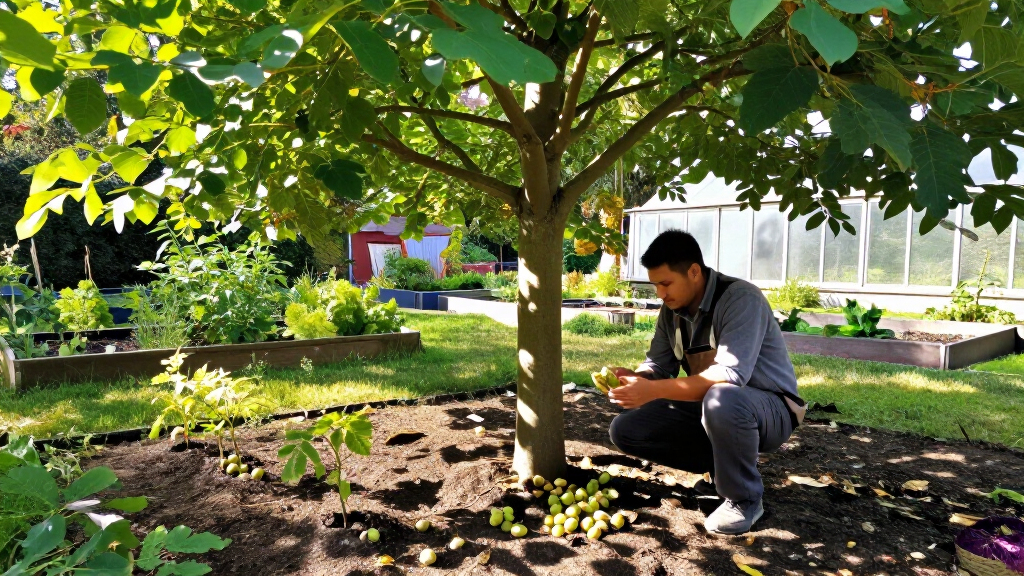
The account says the effect is gradual, and may be more severe in dry soil than in well-irrigated soil. It lists onions, beets and parsnips as plants that can grow under young walnut trees, and says blackcurrants, elderberries and grapevines may tolerate nearby conditions. Ginseng is described as comparatively resistant to juglone.
By contrast, blueberries, cranberries and rhododendrons—members of the Ericaceae family—are identified as especially sensitive. Apple and pear trees are also reported to struggle near walnuts. The article presents these examples as gardening guidance, not as results from a new experiment, and does not supply study details or measurements for each species.
Choosing Plants Near Walnut Roots
For gardeners, the practical point is that a walnut tree does not automatically make its entire surroundings unusable. Plant choice, tree age, moisture and the passage of time may all affect what succeeds. A bed that thrives beside a young tree could change as the tree grows and its shade increases, while juglone exposure may also build gradually.
The report’s distinctions can help gardeners avoid placing particularly sensitive plants where they may struggle and consider alternatives listed as more tolerant. But the article does not quantify safe distances, soil concentrations or the odds that a specific plant will thrive in a particular garden. Its examples should be treated as a starting point rather than a guarantee.
Products Worth Considering

EGO POWER+ 21 Cordless Electric Lawn Mower Kit, Self-Propelled

Husqvarna Power Axe 350i 18-Inch Cordless Chainsaw Kit

Greenworks 48V (24V x 2) 21-inch Self-Propelled Lawn Mower, Battery Kit
As an affiliate, we earn on qualifying purchases.
How Juglone Enters the Soil
The article places walnut effects within the broader concept of allelopathy: one plant influences another through chemical compounds. It says botanist Hans Molisch named the phenomenon in the 1930s, while scientific understanding developed further in later decades. Allelopathy can describe beneficial or harmful interactions, although the term is now often associated with negative effects.
Walnuts are not the only plants discussed in this connection. The report points to rice and eucalyptus as examples associated with allelopathic effects and says oats, sunflowers, clover, garlic mustard and mustard contain compounds that may have such effects. It stresses that the presence of a compound does not mean every plant containing it is toxic to its neighbors.
““Allelopathy is the influence of one plant on another through chemical compounds.””
— Laidback Gardener report
Limits of the Gardening Evidence
The supplied report does not cite particular research papers, experimental methods or soil measurements supporting its plant-by-plant guidance or 10-to-15-year estimate. It also gives no safe distance from a walnut tree, threshold concentration for juglone, or detailed comparison among walnut species. The account refers to black walnut and other members of the Juglans genus, but does not explain whether effects differ by species or site.
It is also not clear how much of a struggling plant’s condition in a real garden can be attributed to juglone rather than shade, moisture, competition or other soil conditions. The report discusses possible research uses of allelopathy, including biopesticides and managing invasive plants, but offers no specific new findings or development timeline.
Research Into Plant Chemical Effects
The report says researchers are continuing to investigate how allelopathy works. Some are exploring whether plant compounds could inform biopesticide development; others are studying whether the effects could help control or slow invasive plants. It does not identify a named study, scheduled release or immediate change to gardening recommendations.
For gardeners, the next step is to observe how plants perform under local conditions and account for changing shade and soil moisture as a walnut matures. The article’s species list offers options to investigate, but its own evidence does not establish a universal planting formula. More detailed research would be needed to clarify how juglone concentrations, distance, walnut species and site conditions shape outcomes.
Key Questions
Can anything grow beneath a walnut tree?
Yes. The report says onions, beets and parsnips can grow under young walnut trees, and identifies blackcurrants, elderberries, grapevines and ginseng as plants that may tolerate nearby conditions. Success can vary with the garden and the tree’s age.
What is juglone?
Juglone is a compound found in parts of walnut trees. The report says roots release it into surrounding soil, where it can affect other plants’ respiration and photosynthesis.
Which plants does the report identify as sensitive?
It names blueberries, cranberries and rhododendrons as particularly sensitive, and says apple and pear trees may struggle near walnuts. The report does not provide a safe-distance measurement.
How long can walnut effects take to appear?
The report gives an estimate of 10 to 15 years before surrounding plants may begin to feel harmful effects. It does not cite the underlying measurements or establish that this timeline applies in every setting.
Source: rss