
TL;DR

Get garden gear delivered free with Prime
- Fast, free delivery on millions of items
- Prime Video, Amazon Music and more included
- Member-only deals all year
CocoTerra founder Nate Saal reports growing cacao trees in Northern California, where indoor cultivation is needed to avoid cold winters. The company’s guide recommends fresh seeds, warm conditions, filtered light, consistently moist, well-draining soil and progressively larger pots; it does not establish that home-grown trees will reliably produce pods or chocolate.
CocoTerra’s home-growing guide outlines how to raise a cacao tree indoors or in a suitable warm climate, citing founder Nate Saal’s reported success growing trees in Northern California. The advice matters to people hoping to cultivate their own chocolate ingredients, but growing a tree is a long-term project: cacao needs steady warmth and humidity, and the guide says it can take several years to mature and produce pods.
The guide recommends beginning with fresh cacao seeds or a seedling, a warm growing location, filtered light, pots, and nutrient-rich soil that drains well. It gives an ideal temperature range of 65 to 85 degrees Fahrenheit and warns that colder conditions can kill the plant. In colder regions, it recommends indoor growing; in warm climates, outdoor planting may be possible if the tree is protected from wind and intense sun, particularly while young.
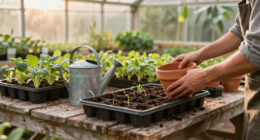
For seed starting, CocoTerra says fresh seeds should still have their white pulp. The pulp can be washed away, after which seeds may be soaked in water for one to two days, until a root begins to emerge. The guide cautions against soaking them longer because they may rot. It recommends planting root-side down in well-draining soil, with about half the seed left above the soil surface, and keeping the medium warm and consistently moist while germination proceeds over several weeks.
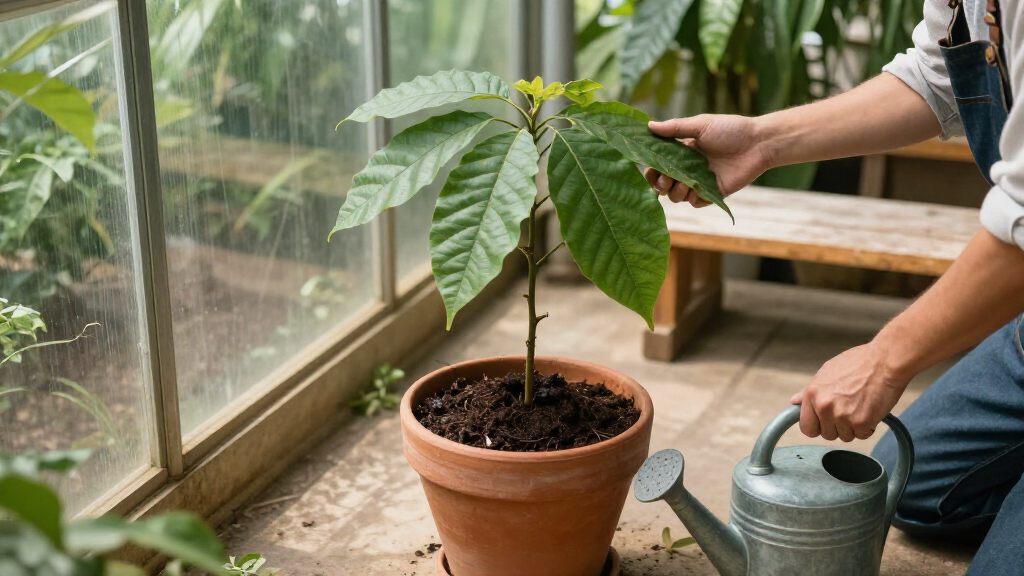
Once seedlings have several leaves, the guide advises moving them to larger containers and continuing to provide regular water and humidity. It suggests soil with substantial perlite or coarse sand for drainage and says cacao prefers slightly acidic soil. As the tree grows, it should be repotted into increasingly large pots; the guide identifies a container at least 20 inches in diameter as a later-stage option. It also says cacao trees develop a branching structure as they mature and advises against topping or pruning to force that shape.
The Conditions Cacao Needs
The guide shows that home cacao growing is possible as a plant-care project, but does not make it a straightforward route to homemade chocolate. A tree must survive for years before flowering and fruiting, and its tropical preferences can be difficult to reproduce in a typical home, especially where winter temperatures fall well below the recommended range.
Pollination is another practical constraint. CocoTerra says growers should check whether their chosen variety is self-fertile; if it is not, the guide recommends growing at least two trees for cross-pollination. That means a successful harvest may depend on more than keeping one healthy plant alive. The source provides cultivation instructions, not evidence that every indoor tree will flower, set fruit or yield enough cacao for chocolate-making.
Products Worth Considering

Orbit B-hyve XR Smart Indoor/Outdoor Sprinkler Controller, 16 Zones

Orbit B-hyve Smart Indoor/Outdoor 12-Zone Sprinkler Controller
Orbit B-hyve XR 8-Zone Indoor/Outdoor Smart Sprinkler Controller
As an affiliate, we earn on qualifying purchases.
Indoor Growing in Cooler Regions
Cacao trees are native to warm, humid conditions and are commonly associated with tropical regions near the equator. CocoTerra’s guide frames indoor cultivation as an option for gardeners outside those climates, using the San Francisco Bay Area as an example: the company says winter temperatures there can approach freezing, making outdoor growing unsuitable. Saal’s reported Northern California experience is presented as an example of raising trees under those constraints, not as a guarantee of fruit production.
The guide distinguishes the needs of seedlings from those of more established trees. Young plants should not be exposed to intense direct sunlight, while mature trees can tolerate full sun or partial shade, according to the company. It also highlights vulnerability to wind and the need for steady moisture and humidity. Its watering suggestion—about twice a week during germination—is guidance from the source, not a universal schedule; conditions such as pot size, temperature and drainage affect how quickly soil dries.
“Temperatures between 65-85 F are ideal for cacao trees.”
— CocoTerra’s guide
Harvest Prospects Remain Unclear
The supplied guide does not give a precise time to first flowers or harvest, a likely pod yield, or the amount of fruit needed to make a batch of chocolate. It says cacao takes several years to reach maturity, but the timing will depend on growing conditions and the individual tree. Saal’s reported success establishes that cacao trees were grown in Northern California; the material does not specify whether those trees fruited or produced a usable harvest.
It is also unclear which cultivars are best suited to indoor containers or how indoor growers should manage pollination in detail. The source advises checking fertility and, where needed, keeping two trees, but does not provide measured results or a guarantee that flowers will set fruit at home. Its watering and soil suggestions should be treated as general guidance rather than a fixed prescription for every household.
From Seedling to Mature Tree
For growers following the guide, the next steps are to identify a reliable source of fresh seeds or a seedling, check the chosen variety’s pollination needs, and prepare a consistently warm, humid location with good drainage. During germination and early growth, the plant’s condition—not a fixed calendar—will determine when it is ready for a larger pot. Gardeners should monitor temperature, soil moisture and light, adjusting care to their indoor environment.
The longer-term milestone is whether the tree flowers and produces pods after reaching maturity. The guide offers no confirmed timeline or harvest forecast for home growers, so fruiting remains an outcome to watch rather than a promised result. CocoTerra’s account of Saal’s trees may encourage experimentation, but readers should distinguish the reported growing achievement from any unverified claim of home chocolate production.
Key Questions
Can cacao grow indoors?
Yes, according to CocoTerra’s guide, indoor growing can suit people in colder regions if they can provide warmth, humidity and appropriate light. The guide gives an ideal temperature range of 65 to 85 degrees Fahrenheit.
How do I start cacao from seed?
Use fresh seeds, wash off the pulp, and soak them for one to two days until a root begins to emerge. Plant root-side down in warm, well-draining soil, leaving roughly half the seed above the surface, and keep the soil consistently moist.
Does a cacao tree need another tree to produce pods?
That depends on the variety. CocoTerra advises checking whether a cultivar is self-fertile; it says growers may need at least two trees for cross-pollination if it is not.
How long does it take to get cacao pods?
The guide says cacao takes several years to reach maturity, but it does not provide a specific first-harvest timeline or promise that an indoor tree will produce pods.
What size pot will a mature potted cacao tree need?
CocoTerra recommends moving the tree into progressively larger containers and identifies a pot 20 inches or more in diameter as a later-stage option for a tree kept in a pot.
Source: cocoterra.com