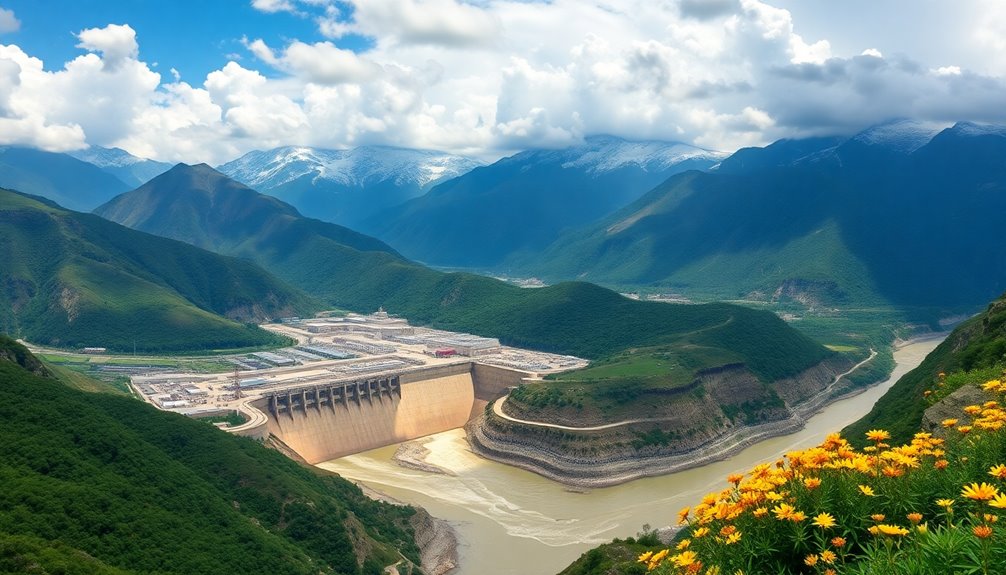

Bold hydropower initiatives in the Hindu-Kush Himalaya region can significantly raise greenhouse gas emissions, worsening the effects of climate change in an already vulnerable area. The rapid development might lead to increased methane and carbon dioxide emissions, primarily from submerged vegetation decomposition. You need to understand that effective management and sustainable practices are crucial to balancing energy needs with environmental impacts. There's a lot more to explore about how these dynamics affect the region's climate future.

Get garden gear delivered free with Prime
- Fast, free delivery on millions of items
- Prime Video, Amazon Music and more included
- Member-only deals all year
Key Takeaways
- Rapid hydropower development in the Hindu-Kush Himalaya may increase greenhouse gas emissions, particularly methane and carbon dioxide.
- Submerged vegetation decomposition in reservoirs significantly contributes to emissions, especially in warmer climates.
- Careful management of water levels and understanding methane dynamics can mitigate emissions from hydropower projects.
- International agencies emphasize the urgent need for sustainable practices to balance energy generation and environmental impact in this vulnerable region.
- Increased methane emissions from hydropower threaten global net-zero targets and climate goals, necessitating immediate action.
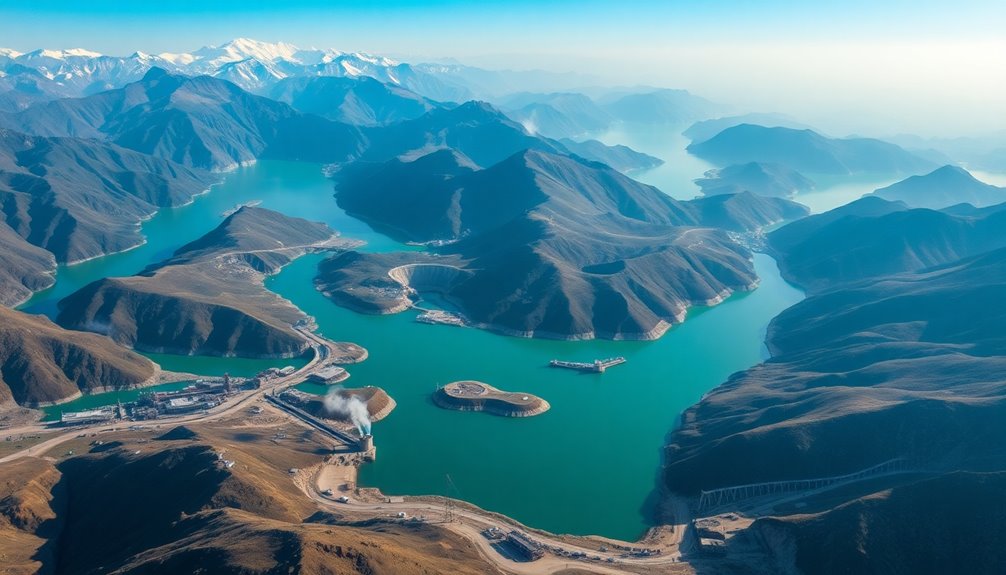
As you explore the role of hydropower in the global energy mix, you'll find that it accounts for about two-thirds of renewable energy generation. However, while it's often celebrated for its green credentials, hydropower can also produce significant greenhouse gas emissions, primarily methane and carbon dioxide.
Hydropower, while a major player in renewable energy, also poses greenhouse gas emission challenges that cannot be overlooked.
In the Hindu-Kush Himalaya region, this duality becomes particularly concerning as new hydropower projects emerge. If not managed properly, these initiatives could exacerbate greenhouse gas emissions in an area already vulnerable to climate change.
You might be surprised to learn that hydropower emissions can vary widely, with estimates ranging from 0.14% to 6.6% of global greenhouse gas emissions. Factors like reservoir characteristics, the decomposition of submerged vegetation, and regional climate conditions all influence these emissions. Accurate accounting of emissions is crucial for understanding the full impact of hydropower projects.
For instance, warmer temperatures accelerate microbial decomposition, leading to increased methane release. If developers aren't aware of these dynamics, they risk amplifying the environmental impact of new projects.
In the Hindu-Kush Himalaya, the rapid growth of hydropower development raises alarms. As international agencies like GRID-Arendal study the climate impacts in this region, they highlight the urgent need for sustainable practices.
With the potential for increased emissions looming, it's essential to adopt measures that mitigate the environmental effects of hydropower. Practices such as careful water level management could play a crucial role in reducing gas emissions.
Understanding the mechanisms behind greenhouse gas emissions is vital too. Methane and carbon dioxide are released through processes like diffusion and ebullition in reservoirs, and water passing through turbines can further release methane downstream.
Given methane's high warming potential, addressing these emissions is critical for achieving net-zero targets by 2050.
hydropower environmental impact monitor
As an affiliate, we earn on qualifying purchases.
As an affiliate, we earn on qualifying purchases.
Frequently Asked Questions
How Do Hydropower Projects Affect Local Communities in the Region?
Hydropower projects significantly impact local communities by providing job opportunities and improving infrastructure, which enhances connectivity.
You'll notice micro-hydropower stations empower off-grid areas, boosting economic prospects.
However, these projects can also disrupt local ecosystems, affecting biodiversity and displacing communities due to reservoir flooding.
Often, community engagement is lacking, leading to mixed perceptions about these initiatives.
When managed properly, hydropower can improve living standards and offer consistent energy access to residents.
What Are the Potential Climate Impacts of Deforestation Due to Hydropower?
Deforestation from hydropower projects can significantly impact the climate in your region.
You'll notice altered rainfall patterns and increased flash floods due to reduced water retention.
The loss of forests destabilizes slopes, leading to landslides that threaten local ecosystems.
As habitats disappear, biodiversity declines, affecting species crucial for your local environment.
Ultimately, these changes can disrupt your community's agricultural productivity and water availability, creating long-term challenges for your livelihoods and overall well-being.
Are There Alternative Renewable Energy Sources Being Considered?
Imagine a mountain village waking up to the sun's first rays, illuminating solar panels that power homes and farms.
Alternative renewable energy sources like solar, wind, and biomass are gaining traction. You might find that decentralized solar systems boost agricultural productivity, while wind energy offers potential despite technical challenges.
Biomass can provide local energy solutions, but balancing food security is crucial.
Exploring these options can pave the way for a sustainable energy future.
How Do Hydropower Initiatives Influence Biodiversity in the Himalayas?
Hydropower initiatives significantly impact biodiversity in the Himalayas.
When you build dams, they alter land cover, leading to habitat loss and fragmentation. This destruction results in declining species richness and even extinction of certain taxa.
With high dam density, you affect the ecosystem dynamics, disrupting community structures and reducing tree density.
If you're not careful with site selection and planning, these initiatives could exacerbate the loss of vital biodiversity in these regions.
What Measures Can Mitigate Greenhouse Gas Emissions From Hydropower Projects?
To mitigate greenhouse gas emissions from hydropower projects, you can focus on several key measures.
Implement efficient reservoir management to reduce organic matter decomposition, maintain vegetation around reservoirs, and invest in technology upgrades for better turbine efficiency.
Regularly monitor and report emissions to ensure accountability, and adapt operations based on environmental conditions.
Lastly, integrate emissions assessments into your project planning to identify and minimize potential impacts early on.
Conclusion
In conclusion, while bold hydropower initiatives promise energy solutions, they could inadvertently increase greenhouse gas emissions in the Hindu-Kush Himalaya region. Did you know that studies suggest these projects can release up to 25% more emissions than previously estimated due to sediment buildup and organic matter decomposition in reservoirs? This highlights the need for careful planning and sustainable practices to truly benefit the environment. Let's prioritize solutions that protect both our energy needs and the planet's health.
Fall yard work Picks
leaf blowers
As an affiliate, we earn on qualifying purchases.