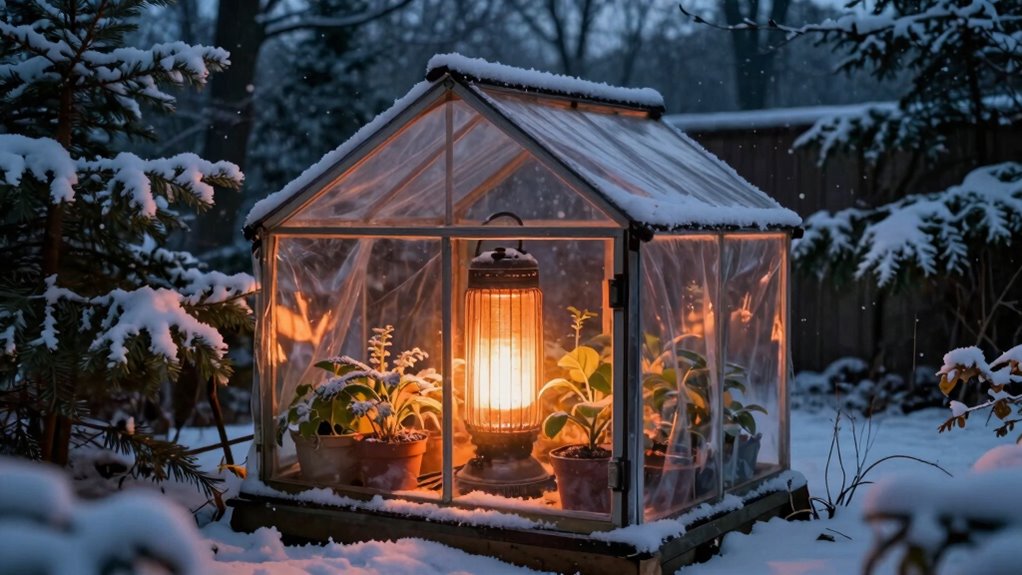

To save both your plants and energy on cold nights, insulate your potted and ground plants with blankets, burlap, or straw overnight. This creates a warm barrier, preventing drastic temperature drops and reducing the need to crank up your thermostat. Removing the covers in the morning helps prevent moisture buildup. By adopting this simple habit, you’ll protect your greenery while lowering energy bills—discover more effective tips for outdoor and indoor plant care below.
Key Takeaways
- Insulate potted and ground plants overnight with blankets, burlap, or straw to retain warmth without increasing indoor heating.
- Cover plants before sunset and remove covers in the morning to prevent moisture buildup and adapt to weather changes.
- Use insulation techniques to protect plants, reducing the need for excessive heating and lowering energy bills.
- Maintain proper ventilation and monitor weather to decide when to keep insulation longer or remove it.
- Prioritize native plants and soil temperature to naturally withstand cold nights, minimizing additional heating needs.
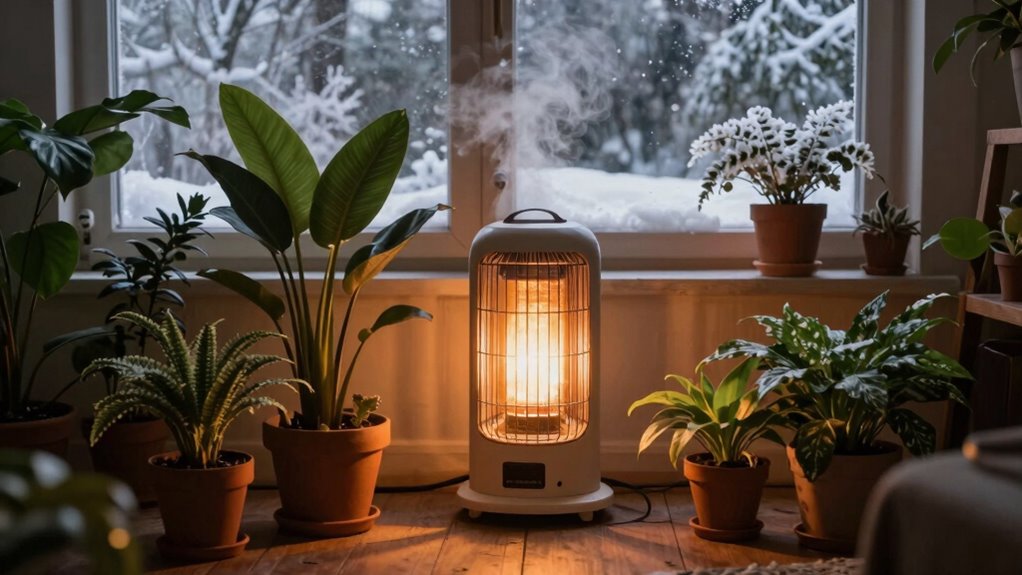
During colder months, many people crank up the heat without considering the impact on their plants or energy bills. You might think that increasing the thermostat is the easiest way to keep your house comfortable, but it often leads to unnecessary energy consumption and can harm your plants. Instead, you can adopt a simple heating habit that benefits both your greenery and your energy efficiency: using plant insulation overnight. This involves creating a protective barrier around your plants to retain warmth and prevent cold damage, reducing the need for excessive heating indoors.
When you focus on plant insulation, you’re actively helping your plants stay warm through the night. You can wrap potted plants with blankets, burlap, or bubble wrap, especially those that are sensitive to cold. For plants in the ground, covering them with straw, mulch, or frost cloths offers similar protection. Not only does this keep the plants from experiencing rapid temperature drops, but it also minimizes the heat loss from your home. Applying insulation techniques can further enhance the effectiveness of this method, ensuring your plants remain protected and your energy use stays efficient. As a result, your heating system doesn’t need to work as hard overnight, which directly improves your energy efficiency. Proper indoor air quality and ventilation can also support healthier plant environments and reduce mold risk around insulated areas. Additionally, selecting native plants that are adapted to local climates can naturally reduce the need for supplemental heating. Using insulation strategies can also help maintain consistent soil temperatures, promoting healthier root development.
Implementing this habit is straightforward. Before going to bed, gather materials like old blankets or specialized plant covers and carefully wrap or shield your plants. Make sure to secure the covers well, but avoid damaging the plants. When morning comes, remove the insulation to prevent moisture buildup and mold, but keep an eye on the forecast—if a cold snap is expected, leave the covers on longer. This simple step creates an extra layer of protection that reduces the need to crank up the heat unnecessarily, especially during the night when the house might be cooler anyway.
plant insulation blankets for outdoor plants
As an affiliate, we earn on qualifying purchases.
As an affiliate, we earn on qualifying purchases.
Frequently Asked Questions
Can Cold-Night Heating Harm Sensitive Plants?
Cold-night heating can harm sensitive plants if not managed properly, but it’s generally beneficial when you understand plant adaptation. By providing just enough warmth, you prevent cold stress, helping plants maintain their health. Avoid overheating, which may cause dehydration or stress, and guarantee your plants are suited for cold conditions. Properly managing cold-night heating supports plant resilience while conserving energy, promoting healthy growth without risking damage from extreme cold.
What Types of Plants Benefit Most From This Habit?
You’ll find that plants with higher plant hardiness levels, such as perennials and hardy shrubs, benefit most from cold-night heating habits. These plants typically need frost protection, especially in early spring or late fall. By maintaining a slightly warmer environment at night, you help prevent frost damage, ensuring their roots stay healthy and promoting better growth. This habit is particularly useful for protecting sensitive or borderline hardy plants from cold stress.
How Much Energy Can Be Saved Annually?
You can save up to 15% on your energy bill annually by adopting this habit. Think of your home as a fortress, where each cold night is a shield that keeps warmth in without overworking your heater. This simple act boosts energy conservation and results in significant cost savings. Over time, these small nightly decisions add up, turning your home into an efficient, cost-effective sanctuary that cares for both your wallet and the environment.
Are There Specific Temperature Ranges Recommended?
You should aim for a temperature range of around 55-60°F during cold nights to support plant resilience and effective temperature regulation. Keeping temperatures within this range helps prevent stress and damage to your plants while conserving energy. Adjust your heating as needed based on your specific plants’ needs and local climate. Consistently maintaining this temperature range guarantees your plants stay healthy and your energy use remains efficient.
Is This Heating Method Suitable for Indoor Plants?
Yes, this heating method suits indoor plants, acting as a gentle lullaby for their survival. You’re guiding their plant adaptation, helping them adjust without stress. As you manage temperature swings, keep humidity control in mind to prevent dryness. Like a soothing breeze, this approach nurtures your plants’ health, ensuring they thrive through colder nights while conserving energy. Your attentive care creates a cozy microclimate, fostering resilient, happy indoor greenery.
Conclusion
By adopting the cold-night heating habit, you not only protect your plants from harsh temperature drops but also save energy. It might seem counterintuitive, but allowing your plants a cooler night mimics their natural environment, promoting resilience. Plus, you’ll reduce your energy bills and lessen your carbon footprint. Give this simple routine a try—your plants and the planet will thank you. Sometimes, the best solutions are the easiest ones you’d never think of!