Thermal mass provides a science-backed way to keep your winter greenhouse stable without guesswork. It absorbs heat during the day and slowly releases it at night, preventing temperature swings that cause stress to your plants. Materials like water, concrete, or clay work best when positioned for maximum sunlight. Since it relies on proven principles of heat transfer, thermal mass offers consistent, reliable warmth. Keep exploring to discover how this smart solution can transform your greenhouse climate control.

Get garden gear delivered free with Prime
- Fast, free delivery on millions of items
- Prime Video, Amazon Music and more included
- Member-only deals all year
Key Takeaways
- Thermal mass provides consistent, predictable heat regulation, reducing reliance on guesswork and manual adjustments.
- It absorbs excess heat during the day and releases it at night, stabilizing greenhouse temperatures naturally.
- Proper placement and material choice optimize thermal performance, unlike arbitrary or guess-based methods.
- Incorporating thermal mass minimizes temperature swings, ensuring better plant health and reducing pest risks.
- Using thermal mass enhances energy efficiency, lowering the need for supplemental heating and relying on science rather than guesswork.
As an affiliate, we earn on qualifying purchases.
Why Maintaining Consistent Temperatures Is a Challenge in Winter Greenhouses
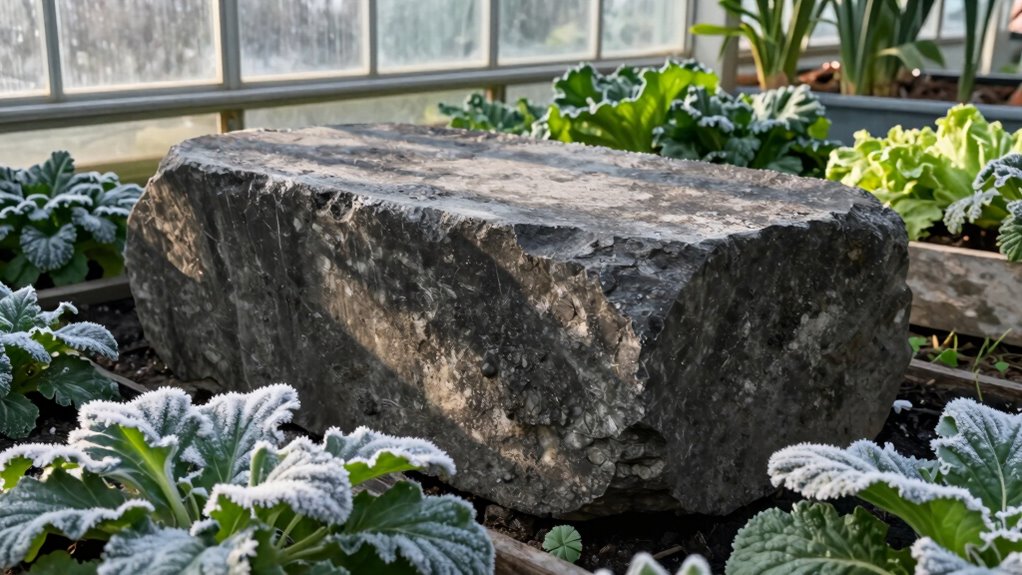
Maintaining consistent temperatures in winter greenhouses can be difficult because outside conditions fluctuate widely, often unpredictably. Shorter daylight hours and weaker sunlight create lighting challenges, making it hard to keep plants warm without overexposing them or wasting energy. Sudden temperature drops can stress plants, encouraging pests and diseases that thrive in unstable environments. You may find yourself constantly adjusting heating systems, but without proper insulation or thermal mass, these efforts can be ineffective. Incorporating thermal mass techniques can help absorb and gradually release heat, providing a more stable environment. Understanding the importance of thermal mass in climate regulation can lead to more effective temperature management. Pest control becomes trickier when temperature swings create favorable conditions for pests to breed or hide. The unpredictable nature of winter weather demands a more reliable approach to temperature management, which is why understanding and implementing thermal mass can help stabilize conditions and reduce the guesswork. Additionally, insulation strategies can further enhance temperature stability by reducing heat loss. Incorporating urban greening techniques can also contribute to better microclimate regulation within your greenhouse.
Understanding How Thermal Mass Keeps Your Greenhouse Warm
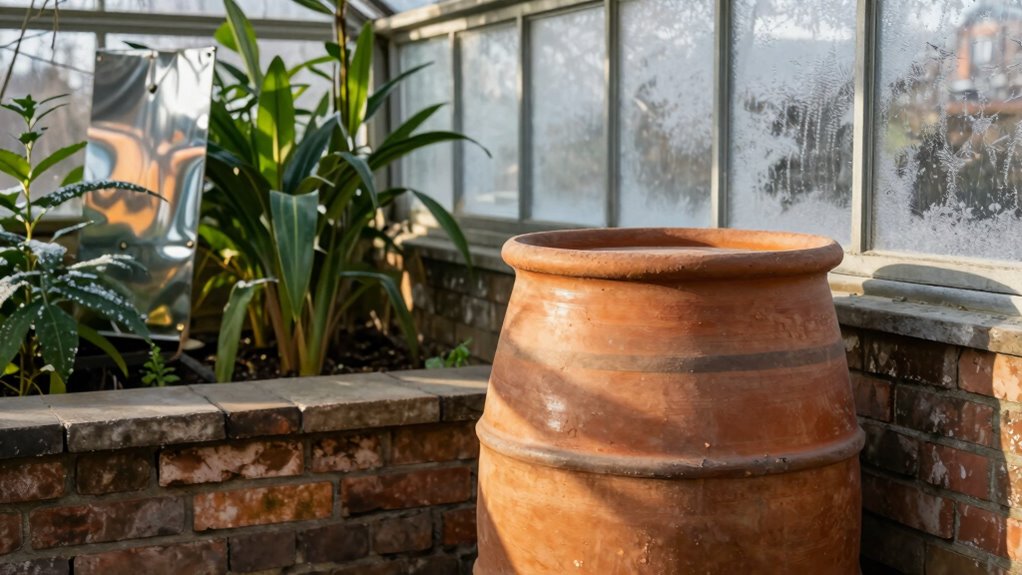
Have you ever wondered how some greenhouses stay warm even during the coldest winter nights? Thermal mass plays a key role by absorbing heat during the day and releasing it at night. To maximize this effect, insulation techniques are essential—adding materials like foam or double-glazed panels reduces heat loss. Proper ventilation strategies also matter; they help regulate temperature and prevent overheating during sunny days, ensuring heat isn’t lost too quickly. When you combine insulation with strategic ventilation, the thermal mass can work more efficiently, maintaining a steady temperature inside your greenhouse. Additionally, understanding the importance of insulation and how it works with thermal mass can significantly improve your greenhouse’s ability to retain heat. Incorporating energy-efficient materials can further enhance heat retention and reduce energy costs. This approach minimizes temperature swings and reduces the need for supplemental heating. Recognizing the role of cabling solutions in greenhouse setup can also ensure your heating and ventilation systems operate seamlessly. Properly managing heat transfer mechanisms is crucial for optimizing thermal mass effectiveness. Understanding and applying these techniques allows your greenhouse to stay warmer naturally, leveraging thermal mass effectively.
Top Thermal Mass Options for Greenhouses and How to Use Them

Choosing the right thermal mass options can substantially boost your greenhouse’s ability to retain heat during cold weather. When selecting materials, consider these top options:
- Water barrels – They offer excellent thermal storage thanks to their high specific heat. Choose color options like dark colors to absorb more heat, and opt for durable materials like plastic or metal to withstand weather.
- Concrete or stone walls – These provide steady heat release. Select durable materials with color options that absorb sunlight effectively, such as dark hues.
- Clay or ceramic pots – These are portable and versatile. Pick materials with high durability and colors that enhance heat absorption.
Use these options strategically placed within your greenhouse to maximize thermal mass effectiveness and maintain consistent temperatures.
How to Incorporate Thermal Mass Into Your Greenhouse Design
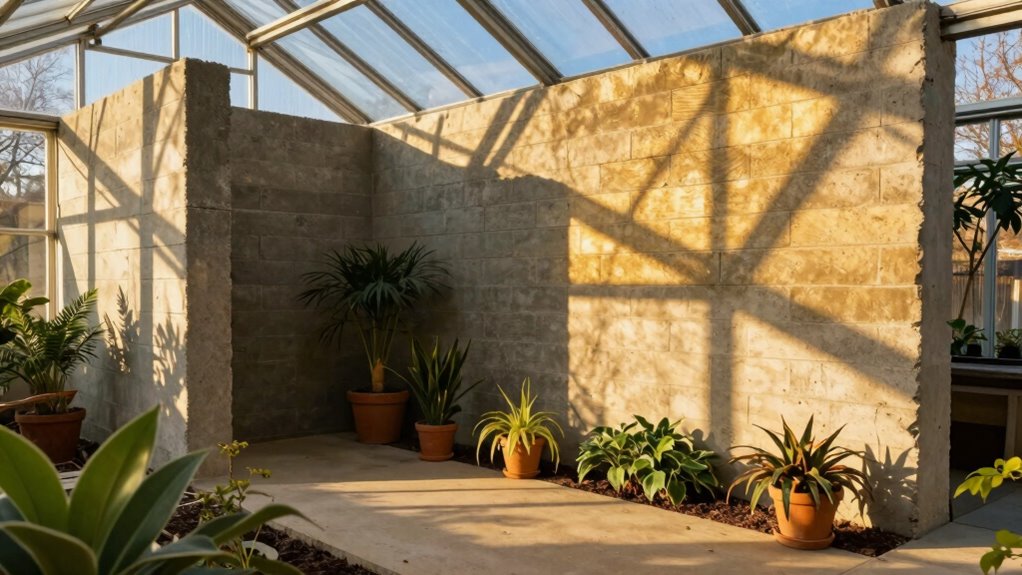
Incorporating thermal mass into your greenhouse design involves strategic placement and thoughtful planning to maximize heat retention. Start with material selection—choose dense materials like concrete, brick, or water containers, which absorb and store heat effectively. Consider integrating thermal mass directly into the structure, such as placing water barrels along the south-facing wall or embedding concrete slabs beneath planting beds. Design integration is key; position thermal mass where it will receive ample sunlight during the day and release heat slowly at night. Proper placement and material choice will create a balanced system that moderates temperature fluctuations naturally, reducing reliance on supplemental heating. Utilizing indoor air quality considerations can also help optimize the overall environment for plant growth, and understanding the contrast ratio of your materials can influence how effectively heat is retained and radiated. Additionally, selecting materials with suitable thermal properties can further enhance heat storage and release efficiency. Paying attention to insulation techniques can further prevent heat loss and improve the system’s overall performance. Incorporating thermal mass into your greenhouse design not only stabilizes temperatures but also contributes to energy efficiency and sustainable gardening practices.
Troubleshooting Thermal Mass: Tips to Maximize Its Effectiveness
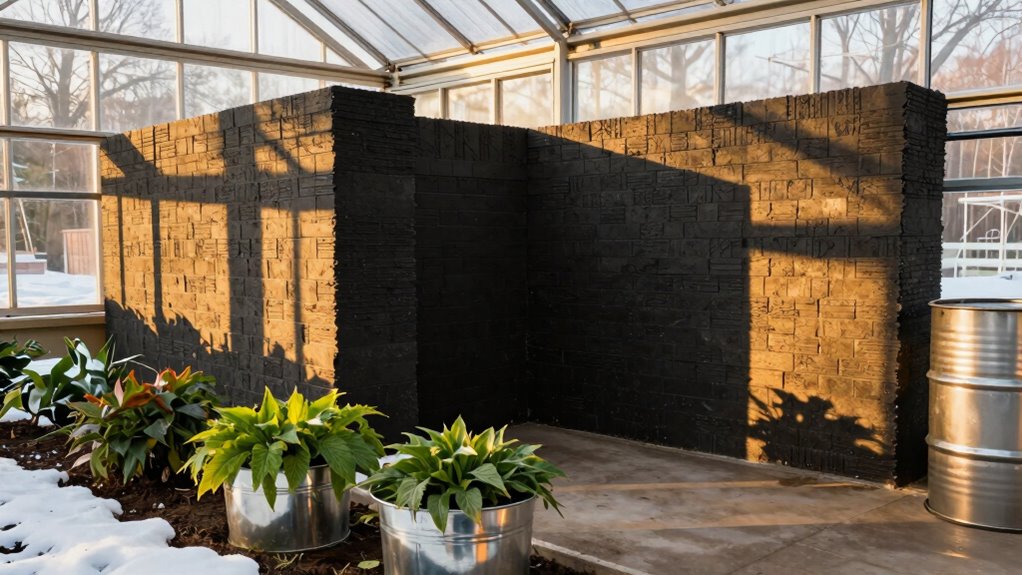
Even with well-planned thermal mass, you might find that its performance isn’t meeting expectations. To troubleshoot effectively, consider these tips:
- Check your thermal mass materials—ensure they’re dense and have high heat capacity to absorb and release heat during seasonal temperature fluctuations.
- Optimize placement—position thermal mass where it can absorb maximum sunlight during the day and radiate heat at night, such as on the south side of the greenhouse.
- Adjust insulation—insulate around thermal mass to prevent heat loss during cold nights and improve its ability to regulate temperature consistently.
- Monitor solar gain—assessing solar system safety and effective placement can help maximize how much sunlight your thermal mass receives, boosting its thermal performance. Additionally, understanding the thermal properties of materials can guide you in selecting the best substances for your specific climate.
Frequently Asked Questions
Can Thermal Mass Replace Traditional Heating in Greenhouses?
Thermal mass can’t fully replace traditional heating in greenhouses, but it considerably reduces reliance on it. By strategically using seasonal insulation and placing plants thoughtfully, you can maximize thermal mass‘s benefits. It absorbs heat during the day and releases it at night, maintaining a more stable temperature. While not a complete substitute, combining thermal mass with insulation and smart plant placement enhances your greenhouse’s winter resilience.
What Materials Are Best for Thermal Mass in Cold Climates?
In cold climates, you’ll want dense materials like concrete, brick, or stone for thermal mass, contrasting with lightweight insulation techniques. These materials absorb heat during the day and release it at night, creating a warm, stable environment. Choosing the right material guarantees effective heat retention, while proper insulation minimizes heat loss. Your goal is to balance thermal mass with insulation to keep your greenhouse cozy year-round.
How Does Thermal Mass Affect Humidity Levels in Winter Greenhouses?
Thermal mass helps regulate humidity in winter greenhouses by maintaining stable temperatures, which reduces rapid moisture loss or excess. As it absorbs heat during the day and releases it at night, it encourages consistent humidity levels, aiding moisture retention. This steady environment prevents extremes that can stress plants, ensuring ideal growth conditions. So, incorporating thermal mass improves humidity regulation and promotes healthy, thriving plants during cold months.
Is Thermal Mass Effective During Extremely Cold Winter Nights?
Think of thermal mass as your greenhouse’s secret weapon, even during the coldest nights. It’s quite effective because it boosts thermal efficiency by absorbing and slowly releasing heat. While you might feel like a modern-day alchemist, adding thermal mass also enhances insulation, helping maintain consistent temperatures. So yes, thermal mass works during extremely cold winter nights, making your greenhouse more resilient and reducing the need for extra heating.
Can Small-Scale Greenhouses Benefit From Thermal Mass Strategies?
Yes, small-scale greenhouses can benefit from thermal mass strategies. Incorporate insulation techniques to retain heat and keep the environment stable. Use ventilation strategies to prevent overheating during the day and conserve warmth at night. By combining these with thermal mass, you create a more consistent temperature, reducing temperature fluctuations. This approach helps your plants thrive, even during cold winter nights, making your greenhouse more efficient and productive.
Conclusion
Don’t rely on guesswork to keep your greenhouse warm—thermal mass provides a proven, consistent solution. Yes, it might seem simple, but it’s highly effective at maintaining steady temperatures and extending your growing season. Some worry it’s not enough on its own, but when combined with proper design and insulation, it transforms your winter gardening experience. Embrace thermal mass, and you’ll enjoy healthier plants and less stress, even on the coldest days.
Halloween Picks
halloween
As an affiliate, we earn on qualifying purchases.