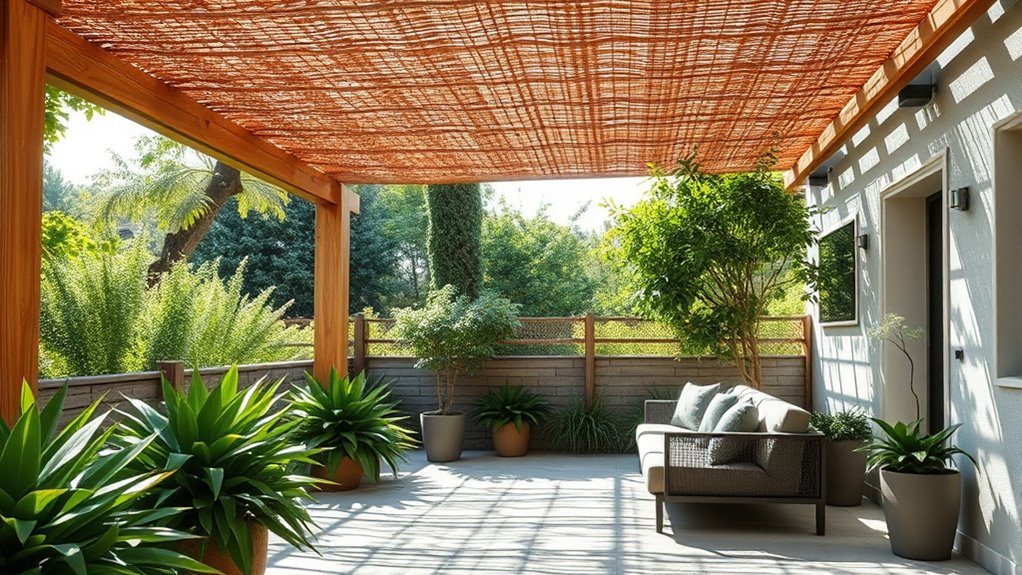

Using natural shade structures like trees, shrubs, and climbing plants can effectively cool your outdoor spaces, cut energy costs, and improve air quality. Planting fast-growing, low-maintenance species suited to your climate guarantees quick shade coverage and minimal upkeep. Strategically positioning larger trees during peak heat hours and incorporating greenery into your design enhances cooling and aesthetics. Keep in mind, maintaining these plants boosts their benefits—continue exploring how you can maximize their environmental and comfort advantages.

Get garden gear delivered free with Prime
- Fast, free delivery on millions of items
- Prime Video, Amazon Music and more included
- Member-only deals all year
Key Takeaways
- Plant tall trees with wide canopies, like oaks or maples, to provide natural, effective shade during peak heat hours.
- Incorporate climbing plants on trellises or pergolas to create shaded walkways and sitting areas quickly and aesthetically.
- Layer diverse plant types to increase shade coverage, enhance cooling, and improve outdoor environment.
- Position and select shade trees strategically to maximize cooling benefits and reduce outdoor ambient temperatures.
- Maintain and prune shade plants regularly to ensure continuous coverage, health, and optimal cooling effects.
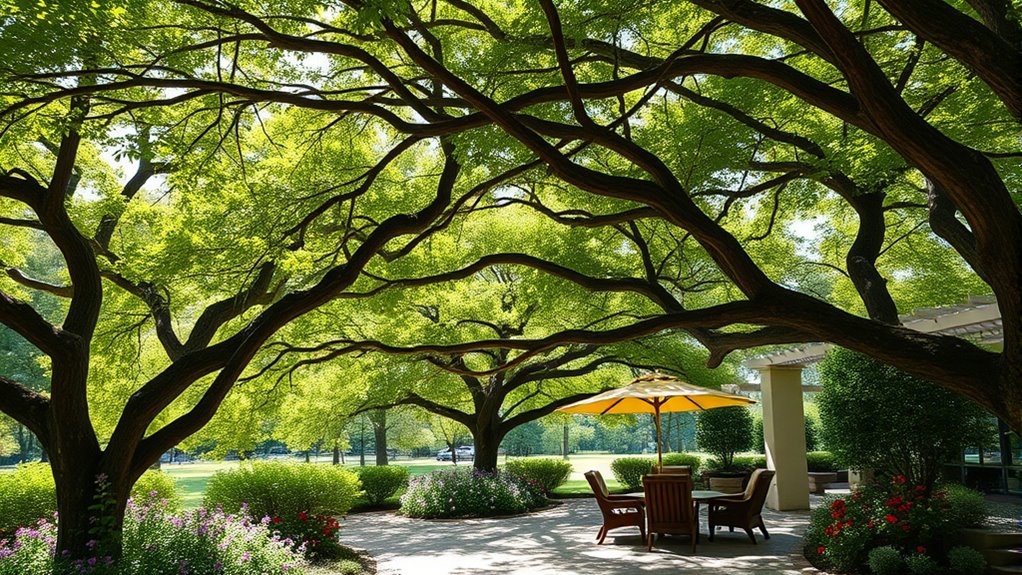
During hot weather, natural shade structures offer an effective way to stay cool without relying on energy-intensive air conditioning. One of the smartest strategies is choosing the right plants for shade, as their selection directly influences how well your outdoor space cools down and benefits the environment. When selecting plants, focus on species that thrive locally, require minimal maintenance, and grow quickly to provide immediate relief from the sun’s harsh rays. Trees with wide canopies, such as oaks or maples, are excellent options because they cast broad shadows and adapt well to various climates. Incorporating shrubs and climbing plants like ivy or wisteria can also enhance your shade structure while adding aesthetic appeal.
Plant selection isn’t just about creating shade; it also offers significant environmental benefits. Trees and plants naturally cool their surroundings through transpiration, releasing moisture into the air and reducing ambient temperatures. This process can lower the temperature around your home or garden by several degrees, easing the burden on your cooling systems and reducing energy costs. Additionally, strategically placed greenery improves air quality by filtering pollutants and absorbing carbon dioxide. They also support local ecosystems by providing habitat for birds, bees, and other pollinators, fostering biodiversity right in your yard.
When planning your natural shade structure, consider the placement of your plants to maximize their environmental benefits. Position taller trees where they can block the sun’s most intense rays during peak heat hours, usually midday. Use climbing plants on trellises or pergolas to create shaded walkways or sitting areas, making outdoor spaces more comfortable and inviting. Layering different plant types can also enhance shade coverage and create a lush, cooling environment. Remember, healthy plants need proper watering, soil preparation, and occasional pruning, so plan for ongoing care to keep your shade structures effective and attractive.
Frequently Asked Questions
How Long Do Natural Shade Structures Typically Last?
Natural shade structures usually last between 5 to 15 years, depending on the material and maintenance. For example, wooden structures may have a shorter durability lifespan due to weathering, while those made from durable materials like bamboo or certain fabrics can last longer. To maximize material longevity, you should regularly inspect, clean, and perform necessary repairs. Proper care guarantees you get the most out of your natural shade structure over its lifespan.
Are Natural Shade Structures Effective in Extreme Heat?
In the face of extreme heat, natural shade structures serve as your sanctuary, symbolizing resilience and harmony with nature. They can be quite effective, especially when designed with durable materials, ensuring shade durability even in harsh conditions. Plus, they’re cost-efficient, helping you save on cooling costs while offering eco-friendly relief. You’ll find that their nourishing canopy shields you, turning the sun’s fury into a gentle, natural embrace.
What Maintenance Is Required for Natural Shade Structures?
You need to regularly inspect your natural shade structures for shade maintenance and structural durability. Trim overgrown plants or branches to prevent damage and guarantee ideal shading. Clean any debris and check for signs of wear or decay in the materials, especially if made from natural elements like wood or vines. Address any issues promptly to maintain their effectiveness and longevity, keeping your cooling benefits consistent and reliable.
Can Natural Shade Structures Be Used in Commercial Settings?
Yes, natural shade structures can be effectively used in commercial settings. While urban integration and aesthetic appeal often seem at odds with practicality, these structures blend seamlessly into cityscapes, providing both functional cooling and visual charm. You’ll find them enhance outdoor spaces, attract customers, and promote eco-friendly branding. Their versatility and natural cooling benefits make them a smart, attractive addition to any commercial environment, creating inviting spaces that serve both form and function.
Are There Environmental Benefits to Natural Shade Structures?
Yes, natural shade structures offer significant environmental benefits. They help with carbon sequestration by absorbing CO₂, reducing greenhouse gases. Additionally, they enhance biodiversity by creating habitats and supporting various plant and animal species. When you incorporate natural shade, you promote a healthier ecosystem, lower your carbon footprint, and contribute to climate change mitigation. These structures are eco-friendly solutions that boost environmental resilience and sustainability in your area.
Conclusion
As you explore natural shade structures, you might be surprised how their cooling effects seamlessly blend into your surroundings. It’s no coincidence that these eco-friendly solutions often appear where you least expect, quietly working to keep things comfortable. By embracing natural shade, you not only stay cool but also connect with nature in a way that feels almost serendipitous. Sometimes, the simplest ideas—like a well-placed tree or canopy—turn out to be the coolest secrets for beating the heat.
Columbus Day / Indigenous Peoples' Day Picks
long weekend sales
As an affiliate, we earn on qualifying purchases.