To help your greenhouse run smoother, focus on passive strategies like optimizing soil health, natural ventilation, and thermal mass. Healthy, organic-rich soils promote strong plants and natural pest control, reducing the need for chemicals. Proper ventilation and shading maintain a stable internal climate, while thermal mass helps regulate temperature fluctuations. Combining these methods creates a balanced environment that minimizes energy use and maximizes plant health. Keep exploring to discover more ways to enhance your greenhouse’s passive climate control.

Get garden gear delivered free with Prime
- Fast, free delivery on millions of items
- Prime Video, Amazon Music and more included
- Member-only deals all year
Key Takeaways
- Proper natural ventilation maintains consistent internal temperatures and reduces reliance on mechanical climate control.
- Incorporating thermal mass buffers temperature fluctuations, stabilizing greenhouse microclimates.
- Using shading and reflective surfaces prevents overheating, enhancing climate stability.
- Healthy soil with organic matter promotes strong plants and beneficial organisms, reducing pest issues.
- Integrating soil health with passive environmental controls creates a balanced, efficient greenhouse environment.
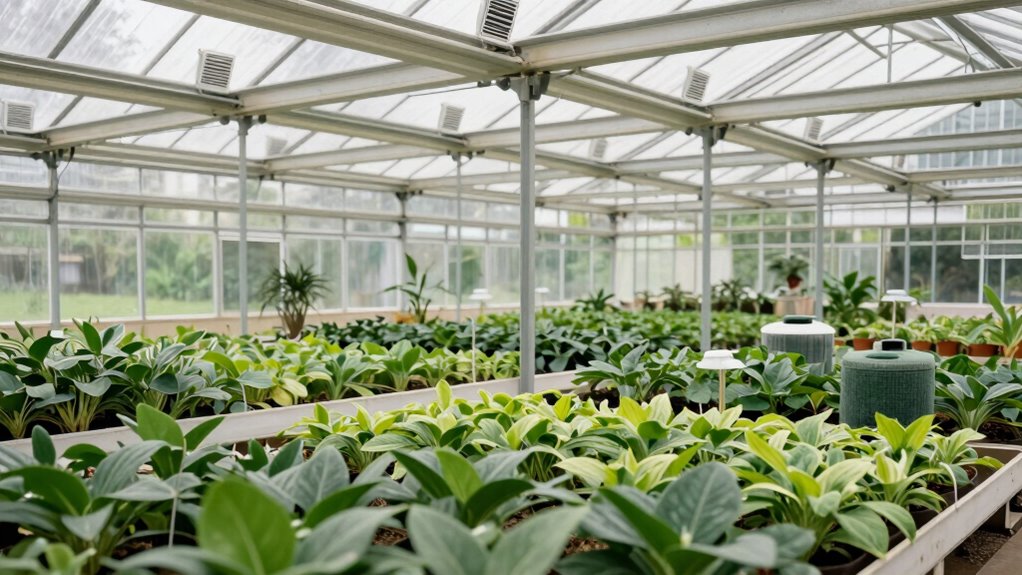
Have you ever considered how passive strategies can naturally regulate temperature and humidity in greenhouses? By harnessing the environment’s own features, you can create a more sustainable and efficient growing space. One key aspect of this is maintaining healthy soil. When your soil is rich in organic matter and well-drained, it acts as a natural buffer against temperature fluctuations. Healthy soil retains moisture better, reducing the need for artificial watering and helping to keep humidity levels stable. Additionally, good soil health promotes strong plant growth, which in turn strengthens your plants’ natural defenses against pests. This reduces your reliance on chemical pest management, making your greenhouse a healthier environment for both plants and workers.
Healthy, organic-rich soil stabilizes temperature and humidity while boosting plant defenses naturally.
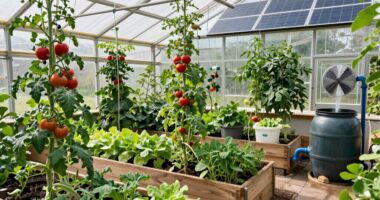
Passive strategies also include the effective use of natural ventilation and insulation. Proper design allows cool air to enter during the day and warm air to escape at night, maintaining a consistent climate without the need for mechanical cooling or heating. When combined with well-placed shading and reflective surfaces, these methods help stabilize internal conditions, minimizing temperature swings that can stress plants and lead to pest outbreaks. Stable conditions improve plant vigor, which naturally enhances pest resistance, further reducing the need for chemical interventions. Recognizing the importance of microclimate management can help optimize these passive techniques for your specific environmental conditions. Understanding how soil health influences pest management can lead to more targeted and effective strategies. Incorporating passive cooling techniques into your greenhouse design can further enhance energy efficiency and environmental sustainability. Furthermore, implementing thermal mass elements such as water barrels or stone structures can help stabilize temperature fluctuations over the course of the day.
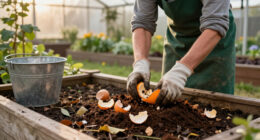
Soil health directly influences pest management. Healthy soil fosters robust plant growth, making plants less vulnerable to pests and diseases. When the soil is nutrient-rich and free of pathogens, your plants develop stronger immune responses. That means fewer infestations and less need for pesticides. Incorporating compost and organic matter into your soil not only boosts its health but also encourages beneficial organisms like earthworms and predatory insects that naturally keep pest populations in check. This biological control complements passive environmental strategies, creating an integrated approach to pest management that’s more sustainable and less labor-intensive.
Using passive strategies effectively requires understanding your greenhouse’s specific climate and conditions. For example, in warmer months, natural shading and ventilation help prevent overheating, while in cooler periods, insulation and thermal mass retain warmth. By paying attention to soil health and leveraging the environment’s natural cooling and heating capabilities, you can create a balanced microclimate that fosters healthy plants and minimizes pest issues. Ultimately, these passive methods work together to make your greenhouse run smoother, reducing energy costs, chemical inputs, and environmental impact—allowing your plants to thrive naturally and consistently.
greenhouse passive ventilation system
As an affiliate, we earn on qualifying purchases.
As an affiliate, we earn on qualifying purchases.
Frequently Asked Questions
How Does the Passive Strategy Impact Greenhouse Energy Costs?
Implementing a passive strategy considerably impacts your greenhouse energy costs by boosting energy savings and reducing expenses. You’ll use natural sunlight and insulation to maintain ideal temperatures, decreasing reliance on artificial heating and cooling systems. This approach lowers energy consumption, resulting in cost reduction over time. By enhancing passive design elements, you can efficiently manage your greenhouse environment, saving money while promoting a more sustainable operation.
Can Passive Strategies Be Customized for Different Greenhouse Sizes?
Like tailoring a suit to fit perfectly, passive strategies can be customized for different greenhouse sizes through custom design and size adaptability. You can adapt insulation, ventilation, and shading methods to suit your greenhouse’s dimensions. This guarantees ideal climate control, no matter the scale. By focusing on your specific needs, you make your greenhouse more energy-efficient and comfortable, just as a well-made suit offers comfort and style for every wearer.
What Are the Initial Setup Requirements for Passive Systems?
You need to start with a solid passive design that leverages natural climate adaptation. This means evaluating your site’s local climate, choosing appropriate insulation, ventilation, and shading techniques. Installing thermal mass like concrete or water containers helps regulate temperature fluctuations. Additionally, consider strategic placement of windows and vents for ideal airflow. These initial setup steps ensure your greenhouse efficiently adapts to climate changes, reducing energy use and maintaining stable conditions.
How Do Passive Strategies Affect Plant Growth Rates?
You might think passive strategies slow down plant growth, but they actually optimize conditions, leading to healthier, faster-growing plants. By implementing these strategies, you control temperature, humidity, and airflow naturally, reducing stress on your plants. This approach creates a stable environment that promotes consistent growth rates. Over time, you’ll notice improved plant development, increased yields, and overall efficiency—making passive strategies a smart choice for sustainable, successful greenhouse management.
Are Passive Strategies Effective in All Climate Zones?
Passive strategies are quite effective across various climate zones because they offer climate adaptability and design flexibility. You can tailor insulation, ventilation, and shading techniques to suit your specific environment, making your greenhouse more resilient to temperature fluctuations and weather changes. This adaptability helps optimize plant growth regardless of external conditions, ensuring consistent results. With proper planning, passive strategies become a versatile solution that supports sustainable, efficient greenhouse operation in any climate zone.
Conclusion
Implementing passive strategies in your greenhouse can profoundly boost efficiency and sustainability. Did you know that passive design techniques can reduce energy use by up to 50%? By harnessing natural sunlight, ventilation, and insulation, you create a more stable environment for your plants and lower operational costs. Embracing these strategies not only benefits your greenhouse but also contributes to a greener future. Start integrating passive methods today, and enjoy a smoother, more cost-effective growing season.
Halloween Picks
halloween
As an affiliate, we earn on qualifying purchases.