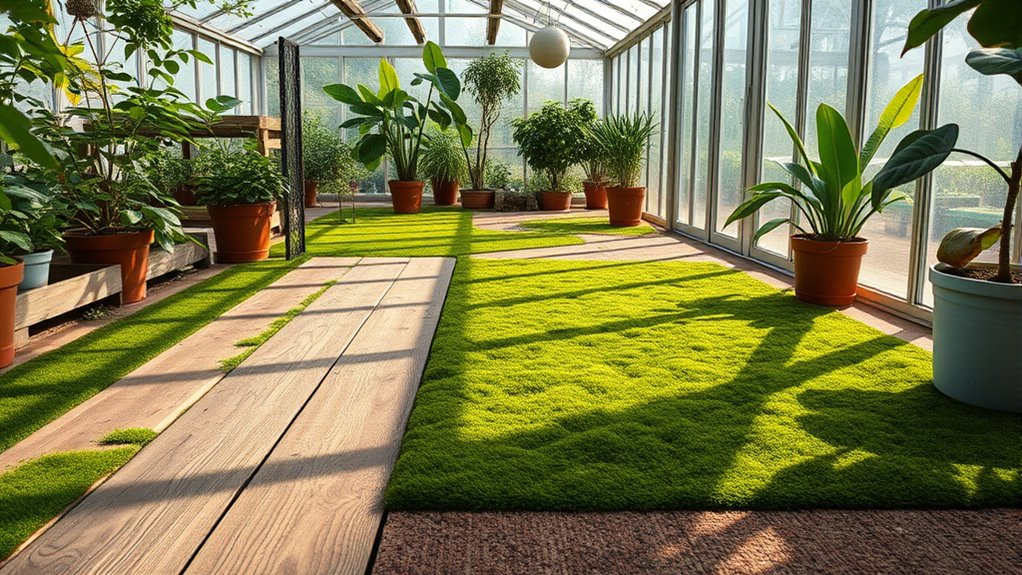

To choose sustainable flooring options for your greenhouse, consider eco-friendly materials like recycled rubber, reclaimed wood, or recycled metal tiles, which reduce waste and support circular use. You can also opt for bamboo or cork, as they’re fast-growing, renewable, and easy to install with simple systems. Eco-conscious installation methods, such as floating floors and low-VOC adhesives, further minimize environmental impact. Keep exploring to discover more ways to create a greener, healthier greenhouse environment.

Get garden gear delivered free — and shop member deals
- Fast, free delivery on millions of items
- Access to Prime Big Deal Days deals on October 6–7
- Prime Video, Amazon Music and more included
Key Takeaways
- Recycled rubber, reclaimed wood, and recycled metal tiles offer durable, eco-friendly flooring options for greenhouses.
- Sustainable materials like bamboo and cork provide renewable, lightweight, and easy-to-install flooring solutions.
- Eco-conscious installation methods, such as click-lock systems and low-VOC adhesives, minimize waste and indoor pollution.
- Choosing recyclable and reusable materials supports circular economy principles and reduces environmental impact.
- Long-lasting, eco-friendly flooring enhances the greenhouse’s sustainability and aligns with environmentally responsible practices.

Are you looking for flooring options that are both stylish and environmentally friendly? If so, you’re in the right place. Choosing sustainable flooring for your greenhouse isn’t just about reducing your carbon footprint; it’s about creating a space that supports eco-conscious practices from the ground up. Recyclable materials play a significant role here, allowing you to select products that can be repurposed or reused at the end of their life cycle. Options like recycled rubber, reclaimed wood, and recycled metal tiles are excellent choices. These materials help you minimize waste and guarantee your greenhouse remains as eco-friendly as possible. When you opt for recyclable materials, you’re also supporting the circular economy, where products are designed to be reused rather than discarded.
Choose eco-friendly, recyclable flooring options like reclaimed wood and recycled rubber to support sustainability and reduce waste.
In addition to selecting the right materials, eco friendly installation methods are vital. Many sustainable flooring options are designed with ease of installation in mind, reducing environmental impact during the setup process. For instance, floating floors that don’t require adhesives or extensive cutting generate less waste and avoid harmful chemicals. Using low-VOC adhesives or mechanical fasteners further minimizes indoor air pollution, making the environment inside your greenhouse healthier for plants and people alike. Eco conscious installation methods also mean choosing suppliers and installers who prioritize sustainability, ensuring that the entire process aligns with your green goals. Additionally, selecting materials with a durable finish can extend the lifespan of your flooring, reducing the need for replacements and waste over time.
You’ll find that some flooring options, such as bamboo or cork, naturally lend themselves to eco friendly installation because of their lightweight and straightforward placement. Bamboo, a fast-growing grass, can be harvested sustainably and processed into durable flooring with minimal chemical treatments. Cork, harvested from the bark of cork oak trees, regenerates naturally without harming the tree, making it a renewable resource. Both materials can be installed using simple click-lock systems or adhesives that are low in volatile organic compounds, further reducing environmental impact. These choices not only support your sustainability goals but also contribute to a healthier greenhouse environment by limiting off-gassing and chemical runoff. By choosing materials that are easy to install, you can also reduce the overall environmental footprint of your project.
Ultimately, selecting sustainable flooring for your greenhouse involves balancing durability, aesthetics, and eco-conscious practices. By prioritizing recyclable materials and eco friendly installation methods, you create a space where plants thrive and your environmental values are reflected in every aspect of your setup. You’re not just choosing a floor—you’re making a statement about your commitment to sustainability and responsible resource use. With careful planning, you can enjoy a beautiful, functional, and eco-friendly greenhouse that stands the test of time while reducing your ecological footprint. Incorporating bike maintenance skills into your routine can also help you maintain your equipment efficiently, ensuring longevity and performance.
recycled rubber greenhouse flooring
As an affiliate, we earn on qualifying purchases.
As an affiliate, we earn on qualifying purchases.
Frequently Asked Questions
How Do Sustainable Floors Impact Greenhouse Temperature Regulation?
Sustainable floors improve greenhouse temperature regulation by providing better thermal insulation, helping to keep heat inside during colder months and reducing energy costs. They also enhance moisture control, preventing excess humidity that can affect plant health. You’ll notice more stable temperatures and healthier plants, while also supporting eco-friendly practices. Choosing the right sustainable flooring makes a significant difference in maintaining ideal conditions and reducing your environmental footprint.
Are Eco-Friendly Flooring Materials Cost-Effective Long-Term?
You’ll find eco-friendly flooring materials quite cost-effective long-term, especially when considering their durability and low maintenance. While the initial cost comparison might seem higher, their resilience reduces replacement expenses over time. Plus, choosing sustainable options helps protect the environment, creating a more welcoming space for your plants. Ultimately, investing in durable, eco-conscious flooring supports your greenhouse’s efficiency and longevity, making it a wise, heartfelt choice.
What Maintenance Is Required for Sustainable Greenhouse Flooring?
You’ll need to regularly perform floor cleaning to keep your sustainable greenhouse flooring in good shape. Sweeping and mopping help remove dirt, debris, and prevent mold. Additionally, inspect for pests and use eco-friendly pest control methods when necessary to safeguard your plants and flooring. Proper maintenance ensures durability, reduces long-term costs, and keeps your greenhouse environment healthy and sustainable.
How Do Flooring Choices Influence Plant Health?
Your flooring choices can greatly impact plant health by improving soil drainage and suppressing pathogens. Imagine a surface that keeps excess water flowing away, preventing root rot and creating a healthier environment. Well-chosen flooring reduces standing water, minimizes disease risks, and promotes strong, vigorous plants. By selecting materials that support proper drainage and pathogen control, you guarantee your greenhouse fosters ideal growth and resilience for your plants.
Can Sustainable Flooring Be Recycled or Repurposed Easily?
Yes, sustainable flooring can be recycled or repurposed easily if designed with recycling processes and material durability in mind. You should look for options made from recyclable materials like reclaimed wood or recycled rubber, which withstand wear and tear. These materials allow for straightforward recycling or repurposing at the end of their lifespan, reducing waste and supporting eco-friendly practices in your greenhouse.
Conclusion
Choosing sustainable flooring for your greenhouse not only benefits the environment but also creates a healthier space for your plants. For example, recycled rubber tiles can last up to 20 years, reducing waste and replacement costs. Did you know that greenhouses with eco-friendly flooring can lower energy costs by up to 15%? By selecting eco-conscious materials, you contribute to a greener future while enjoying a durable, cost-effective solution for your gardening needs.
Fall yard work Picks
leaf blowers
As an affiliate, we earn on qualifying purchases.