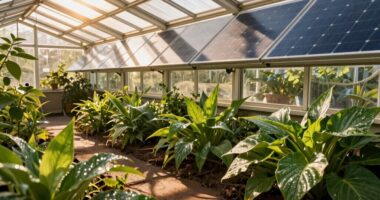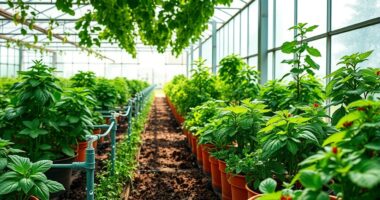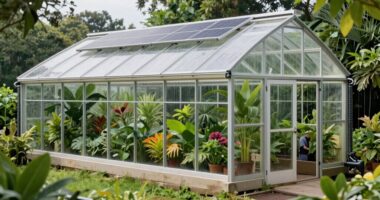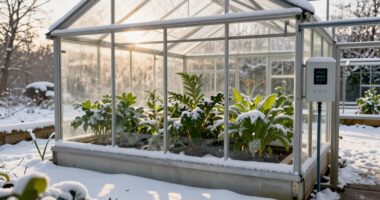

To reduce plastic use in your DIY greenhouse without sacrificing durability, opt for eco-friendly materials like glass, acrylic, or recycled plastics that last long and resist weather. Reuse and upcycle old wood, metal, or glass parts for framing and structure, minimizing waste. Choose biodegradable options like plant-based films or natural glazing materials to replace plastic sheeting. Maintaining and inspecting your greenhouse regularly guarantees it stays durable with eco-conscious choices. If you explore further, you’ll discover even more sustainable solutions.

Get garden gear delivered free with Prime
- Fast, free delivery on millions of items
- Prime Video, Amazon Music and more included
- Member-only deals all year
Key Takeaways
- Choose biodegradable and recycled plastics to reduce environmental impact while maintaining durability.
- Incorporate upcycled materials like reclaimed wood and metal for structural components.
- Use natural glazing options such as glass or acrylic panels for long-lasting, eco-friendly coverage.
- Prioritize eco-conscious materials that support the greenhouse’s lifespan and sustainability goals.
- Regularly maintain and inspect materials to ensure durability without reliance on single-use plastics.
As an affiliate, we earn on qualifying purchases.
Why Reducing Plastic in Your Greenhouse Supports Sustainability
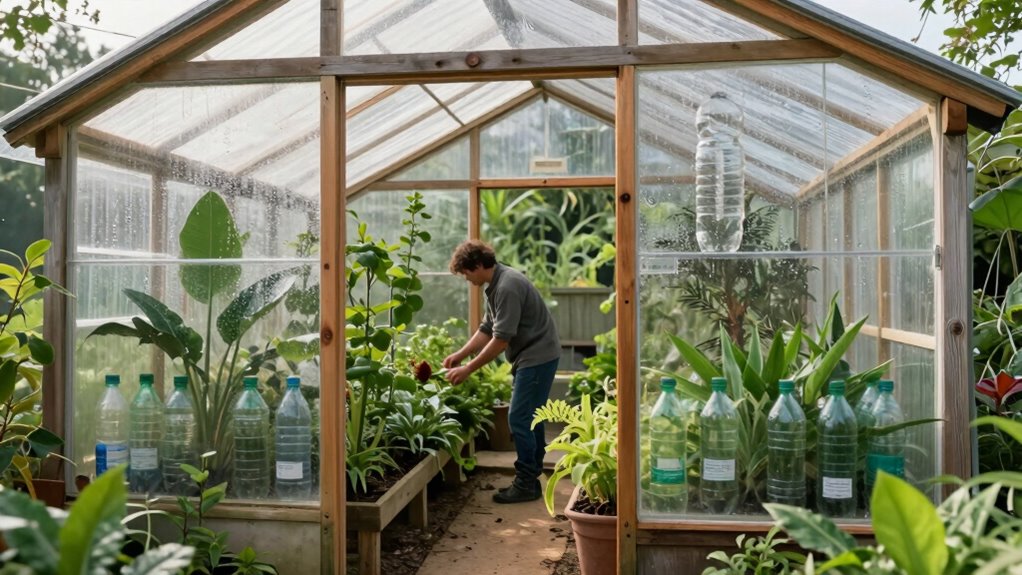
Have you ever considered how reducing plastic in your greenhouse can benefit the environment? Plastic pollution is a major contributor to environmental impact, harming wildlife, contaminating soil, and polluting waterways. When you cut back on plastic, you help prevent these issues, supporting sustainability. Using less plastic means fewer materials end up in landfills and oceans, where they can take hundreds of years to decompose. This reduction also lowers your carbon footprint, since manufacturing and disposing of plastic consume significant energy. By making conscious choices to minimize plastic use, you’re actively contributing to a healthier planet. Incorporating practical tools and evidence-based insights can make this transition easier and more effective, especially when considering eco-friendly materials that can replace traditional plastics in gardening and greenhouse setups. Additionally, utilizing natural alternatives like biodegradable or compostable plastics can help maintain durability without compromising environmental integrity. Adopting sustainable practices can further enhance the longevity of your greenhouse while reducing reliance on non-renewable resources.
What Are the Best Eco-Friendly Materials to Replace Plastic?
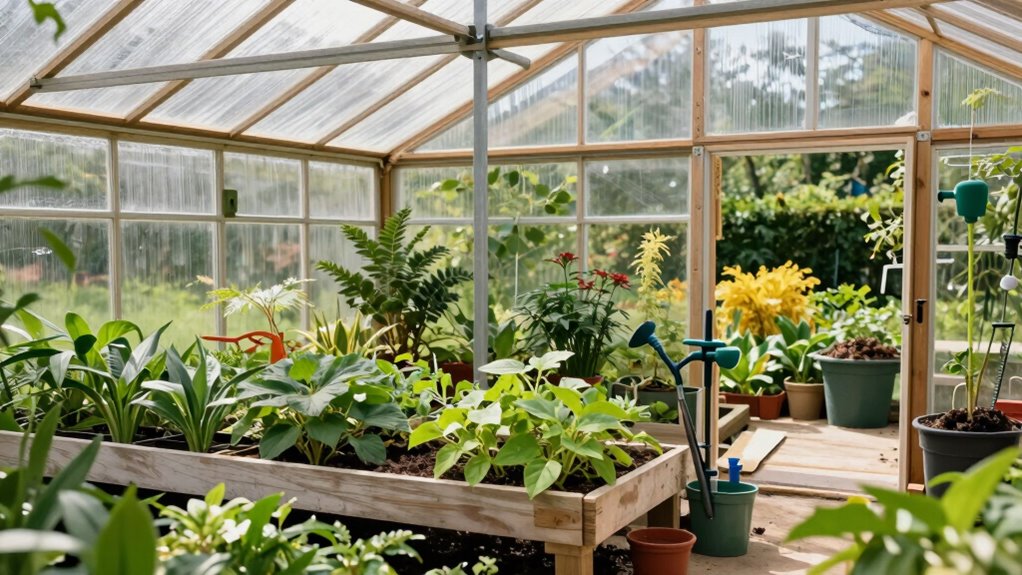
Switching to eco-friendly materials is a smart way to replace plastic in your DIY greenhouse. Biodegradable options, like plant-based films and biodegradable plastics, break down naturally, reducing environmental impact. These materials are durable enough for greenhouse uses and don’t leave harmful residues. Recycled plastics are also a great choice; they reuse waste materials, lowering the demand for new plastic production. Look for recycled polyethylene or polypropylene, which can be repurposed for panels, trays, or watering systems. Both biodegradable options and recycled plastics help you cut down on plastic waste while maintaining the durability needed for your greenhouse. Incorporating sustainable materials can also make your greenhouse more usable for everyone and ensure safety for all users. Additionally, choosing materials with proven longevity ensures your greenhouse remains durable over time, minimizing the need for frequent replacements. Using environmentally friendly options can further enhance the sustainability of your project and reduce your ecological footprint. Considering fabric technology innovations, such as fabric coatings that enhance durability and reduce pollution, can also benefit your greenhouse design. Exploring biodegradable plastics can provide even more options for environmentally conscious construction.
How to Repurpose Old Materials for a Durable Greenhouse Frame

Repurposing old materials for your greenhouse frame not only saves money but also reduces waste and environmental impact. Upcycling wooden pallets provides a sturdy, rustic option; you can disassemble them and use the planks for framing or shelving. Be sure to treat the wood for weather resistance to increase durability. Repurposing metal pipes offers a strong, long-lasting structure; look for pipes from old fencing or plumbing that can be cleaned and reinforced. Connecting these materials with appropriate fasteners creates a resilient frame that withstands the elements. Using recycled or reclaimed components minimizes plastic waste and adds character to your greenhouse. Incorporating natural light and sustainable practices can inspire unique design ideas for your project. With careful planning, old wood and metal can form a durable, eco-friendly foundation that supports your gardening goals. Additionally, choosing materials with long-term durability ensures your greenhouse remains functional and environmentally friendly over time. Considering the environmental impact of your choices can further enhance the sustainability of your project. Utilizing upcycling techniques can also help extend the life of materials and reduce the need for new resources.
What Are Good Alternatives to Plastic Sheeting for Greenhouse Glazing?
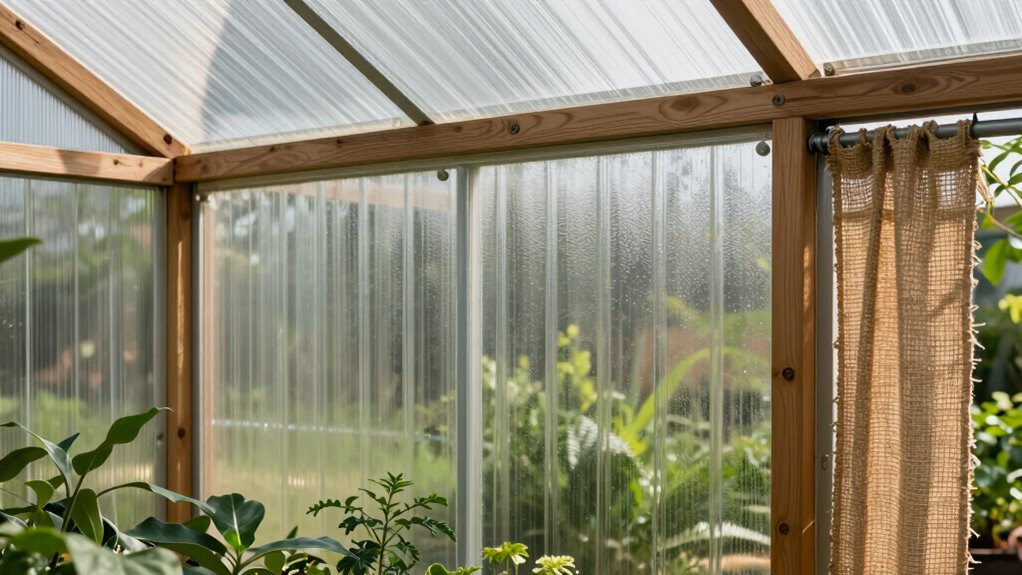
When considering alternatives to plastic sheeting for greenhouse glazing, natural and sustainable materials often come to mind first. Biodegradable alternatives, like cellulose films or plant-based plastics, break down more easily and reduce environmental impact. Natural glazing options, such as glass or acrylic panels, provide durability and excellent light transmission. Glass is long-lasting and offers good insulation, though it’s heavier and more fragile. Acrylic sheets are lightweight and impact-resistant, making them a popular choice for DIY projects. You might also explore polycarbonate panels, which combine durability with better environmental credentials. These options help you create a greenhouse that’s both eco-friendly and resilient, reducing reliance on traditional plastic sheeting without sacrificing performance or longevity.
How to Maintain Greenhouse Durability Without Relying on Plastic Components

Maintaining your greenhouse’s durability without relying on plastic components requires careful selection of sturdy, long-lasting materials and proactive upkeep. Instead of traditional plastics, consider using biodegradable plastics that break down naturally over time, reducing environmental impact. Recycled plastic options also offer a durable alternative, repurposing waste materials into strong, usable components that withstand weather and wear. Regular inspections help identify potential issues early, allowing you to reinforce or replace parts before damage occurs. Using natural or treated wood, metal frames, or glass for structural elements can further enhance durability. Incorporating eco-friendly materials and proper maintenance ensures your greenhouse remains resilient over years, all while minimizing reliance on single-use plastics and promoting eco-friendly practices.
Simple Strategies to Minimize Plastic Waste During Your Greenhouse Project
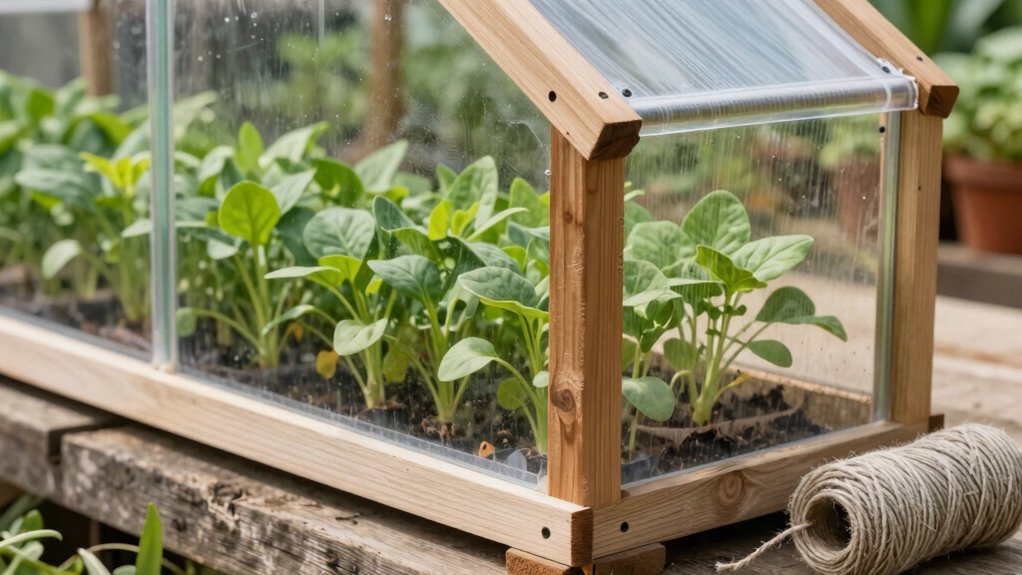
To minimize plastic waste during your greenhouse project, focus on planning ahead and choosing sustainable materials from the start. Research eco-conscious sourcing options to select durable, low-impact plastics or alternative materials that can be reused or recycled. Incorporate recycling programs into your plan, guaranteeing any plastic waste generated can be properly processed and repurposed. Avoid single-use plastics by opting for long-lasting, reusable components like sturdy containers or panels. Prioritize natural or recycled materials where possible, and consider DIY solutions that reduce plastic use altogether. Being intentional with your choices assures you minimize waste and environmental impact without sacrificing the greenhouse’s durability. Exploring pool features & accessories can also inspire innovative ways to incorporate eco-friendly elements into your gardening setup. Embracing virtue and thoughtful planning from the outset helps you build sustainably and contributes to a greener, more responsible gardening project. Additionally, exploring chemical innovations can provide advanced materials or treatments that enhance durability while reducing environmental footprint. Incorporating eco-conscious materials early in your planning process helps ensure your project remains environmentally friendly throughout its lifespan.
Frequently Asked Questions
How Long Do Eco-Friendly Greenhouse Materials Typically Last?
Eco-friendly greenhouse materials typically last between 5 to 15 years, depending on the type and exposure. Recycled plastics and sustainably sourced materials offer great recycling benefits, extending their lifespan through proper maintenance. Choosing durable, high-quality options enhances material sustainability, ensuring your greenhouse remains functional longer. Regular cleaning and protective coatings can also prolong their life, making eco-friendly choices both cost-effective and environmentally responsible in the long run.
Can Natural Materials Provide Insulation Comparable to Plastic?
You might find that natural materials can hold a candle to plastic in insulation, especially when you focus on natural insulation options like straw, wool, or hemp. These materials offer sustainable durability, helping your greenhouse stay warm without sacrificing eco-friendliness. While they may not match plastic’s transparency, they’re effective at maintaining temperature and moisture. With proper installation, natural insulation can be a reliable, green alternative that keeps your project both eco and effective.
Are There Cost Differences Between Plastic and Sustainable Greenhouse Options?
You’ll find that eco-friendly, sustainable greenhouse options often cost more upfront than traditional plastic. However, the cost comparison changes over time because eco-friendly materials usually last longer and require less maintenance, leading to eco-friendly savings. While initial investments might be higher, you benefit from durability and reduced environmental impact. So, prioritize long-term value and sustainability, knowing you’re making a smarter, greener choice that pays off in the end.
How Do I Ensure Weather Resistance With Eco-Friendly Materials?
Did you know eco-friendly materials can last over 10 years with proper care? To guarantee weather resistance, apply biodegradable coatings to your greenhouse’s plastic parts, which protect against UV rays and moisture. Incorporate a windproof design with sturdy anchoring and reinforced frames, reducing damage during storms. These steps help your sustainable greenhouse withstand harsh weather, making it durable while keeping your environmental impact low.
What Are the Best Practices for Maintaining a Plastic-Free Greenhouse?
To maintain a plastic-free greenhouse, you should regularly recycle any plastic components you use, preventing waste and promoting sustainability. Opt for alternative framing materials like wood, bamboo, or metal, which are durable and eco-friendly. Keep these materials in good condition through routine inspections, cleaning, and repairs. By recycling plastic when necessary and choosing sustainable framing options, you guarantee your greenhouse remains eco-conscious and long-lasting.
Conclusion
By choosing eco-friendly materials and repurposing old ones, you can build a sturdy, sustainable greenhouse that blends seamlessly into your garden. Imagine sunlight filtering through glass or recycled panels, casting a warm glow on your thriving plants. With mindful choices, your greenhouse becomes a haven of growth and green innovation—proof that durability and sustainability can grow side by side. Embrace these strategies, and watch your eco-friendly oasis flourish with life and purpose.
Fall yard work Picks
leaf blowers
As an affiliate, we earn on qualifying purchases.