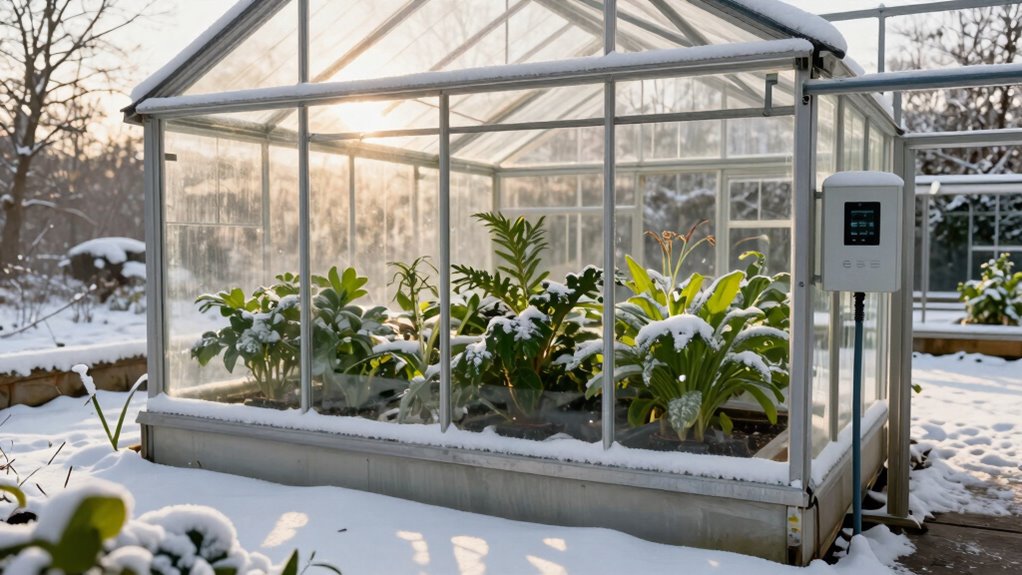

To slash your winter greenhouse costs fast, focus on maximizing solar efficiency and insulation. Position your greenhouse to catch maximum sunlight, use high-quality glazing, and add reflective surfaces to boost solar gain. Seal gaps, insulate windows, and insulate the foundation to retain heat. Combining these strategies produces a warmer, more cost-effective environment, reducing reliance on heating. Keep exploring to uncover even more ways to optimize your greenhouse for winter success.
Key Takeaways
- Implement high-quality glazing and reflective surfaces to maximize solar gain and reduce reliance on supplemental heating.
- Seal gaps and insulate windows, floors, and foundations to retain heat and lower energy costs quickly.
- Use thermal mass like water barrels or stone to absorb daytime heat and release it overnight.
- Incorporate thermal curtains and plant covers to retain warmth during cold nights.
- Design the greenhouse for optimal sunlight exposure and natural airflow, minimizing the need for artificial heating.
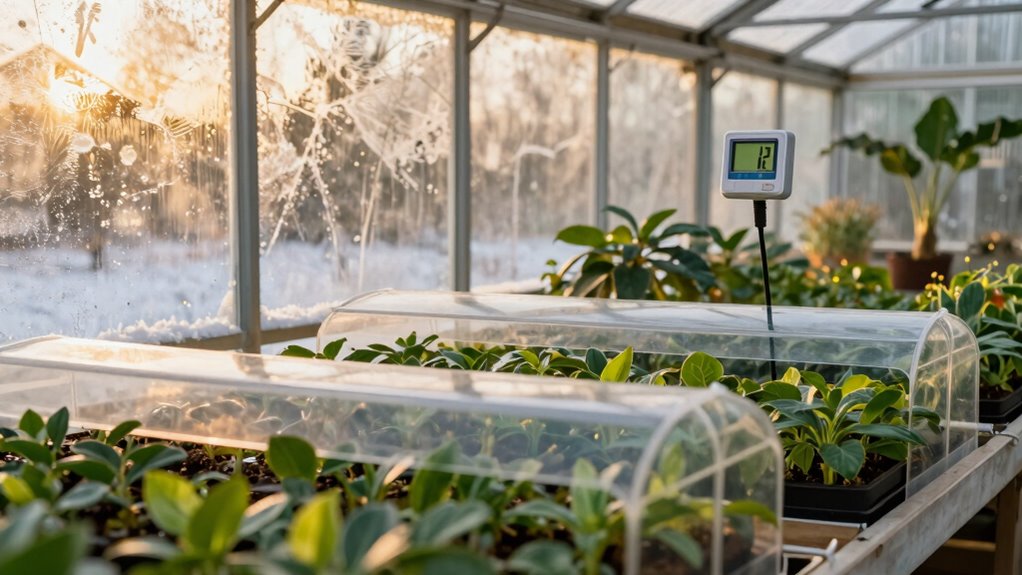
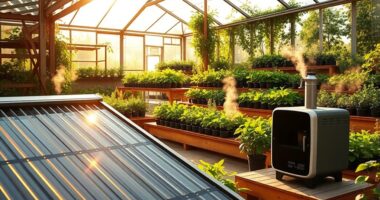
Making the right energy decision can considerably reduce your winter greenhouse costs, guaranteeing your plants stay healthy without breaking the bank. One of the most effective ways to do this is by optimizing your solar efficiency. During winter, maximizing sunlight is essential because it provides free, natural warmth that can significantly lower your heating needs. Position your greenhouse to capture the maximum amount of sunlight throughout the day. Use transparent, high-quality glazing that allows more sunlight to enter and stay trapped inside, increasing the greenhouse’s ability to harness solar energy. Installing reflective surfaces or using thermal mass like water barrels or stone can further boost solar efficiency by absorbing heat during the day and releasing it slowly at night.
In addition to leveraging solar energy, implementing robust insulation strategies plays a key role in reducing winter costs. Proper insulation minimizes heat loss, meaning you need less energy to keep your greenhouse warm. Start by sealing all gaps, cracks, and leaks around doors, windows, and vents to prevent cold drafts from entering. You can also invest in insulated panels or double-glazing on windows to improve thermal retention. Insulating the foundation or floor with materials like foam boards or insulating mats can stop heat from escaping through the ground. Don’t forget to add thermal curtains or shades at night to keep the warmth inside, especially during colder months when temperatures drop sharply. Incorporating solar efficiency principles into your design can further enhance your greenhouse’s warmth retention and energy savings. Understanding the importance of insulation can help you make more informed choices for your greenhouse setup. Additionally, choosing the right insulation materials can significantly influence the overall effectiveness of your thermal retention strategies. Implementing insulation techniques tailored specifically to winter conditions can provide even greater energy savings and climate control. Being aware of climate-specific insulation methods can help optimize your setup further.
Combining these two approaches—enhancing solar efficiency and strengthening insulation strategies—creates a powerful synergy that can drastically cut your energy expenses. When your greenhouse efficiently captures sunlight and keeps heat in, your reliance on supplemental heating diminishes. This not only saves money but also creates a more stable environment for your plants, reducing stress and boosting growth. Remember, small adjustments like opening vents during sunny days or covering plants during the coldest nights can further optimize your energy use without substantial additional costs.
Ultimately, making informed decisions about your greenhouse’s energy management can transform your winter gardening experience. By focusing on improving solar efficiency and adopting effective insulation strategies, you guarantee your plants thrive in colder months while your energy bills stay manageable. It’s about working smarter, not harder—using natural resources wisely and sealing your greenhouse to retain warmth. These investments pay off quickly, providing a warmer, more cost-effective environment that supports healthy plants all winter long.
winter greenhouse insulation kits
As an affiliate, we earn on qualifying purchases.
As an affiliate, we earn on qualifying purchases.
Frequently Asked Questions
How Much Can I Save Annually With This Energy Decision?
You can save up to several hundred dollars annually by making this energy decision. Efficiency improvements in your greenhouse’s insulation, heating, and ventilation systems substantially cut costs. Conduct a detailed cost analysis to see how these upgrades reduce your energy consumption and bills. By optimizing your system, you’ll not only lower expenses but also enjoy a more sustainable and productive winter greenhouse, making the investment well worth it.
Are There Any Government Incentives for Upgrading Greenhouse Energy Systems?
Yes, you can take advantage of government incentives like policy incentives and subsidy programs to upgrade your greenhouse energy systems. These programs often align with your upgrade timeline, making it easier to access financial support. By applying for these incentives, you reduce upfront costs and accelerate your project. Keep an eye on local and federal programs, as they frequently update, ensuring you don’t miss out on valuable opportunities to improve energy efficiency.
What Is the Typical Payback Period for This Investment?
The typical payback period for upgrading your greenhouse energy system ranges from 3 to 7 years, depending on your specific setup and energy savings. Conducting a thorough cost analysis helps you understand the investment timeline and potential returns. By weighing initial costs against ongoing savings, you can determine when the upgrade becomes cost-effective, ensuring your decision aligns with your long-term profitability goals.
Does This Decision Affect Greenhouse Plant Growth Rates?
Yes, this decision can influence your greenhouse plant growth rates. By optimizing energy use, you improve plant health, leading to faster growth speed. Efficient energy management guarantees consistent warmth and light, reducing stress on your plants. As a result, you’ll likely see healthier plants with quicker development, making your greenhouse more productive. Adjusting energy strategies directly impacts plant growth, helping you achieve better yields and healthier crops more efficiently.
How Does Weather Variability Impact the Effectiveness of This Energy Change?
Weather variability can dramatically impact your greenhouse’s energy efficiency, making it harder to maintain consistent conditions. Shifting weather patterns, like unexpected cold snaps or warm spells, can challenge your energy management strategies, reducing effectiveness. You might find that your energy decisions become as unpredictable as the weather itself, requiring you to adapt quickly. Staying flexible and optimizing insulation and heating systems are essential to counteract these fluctuations and keep your greenhouse thriving regardless of unpredictable weather.
Conclusion
Imagine your greenhouse glowing warmly through the winter’s chill, each decision you make lighting the way to lower costs. By choosing smarter energy options, you’re not just cutting expenses—you’re creating a cozy haven where plants thrive despite the cold. Your careful choices transform a harsh winter landscape into a lush, vibrant oasis. With each energy decision, you’re painting a brighter, more sustainable future, turning winter’s icy grip into a season of growth and promise.