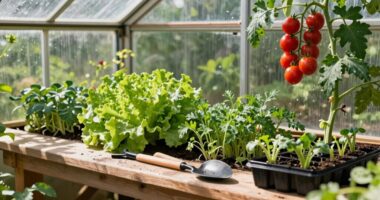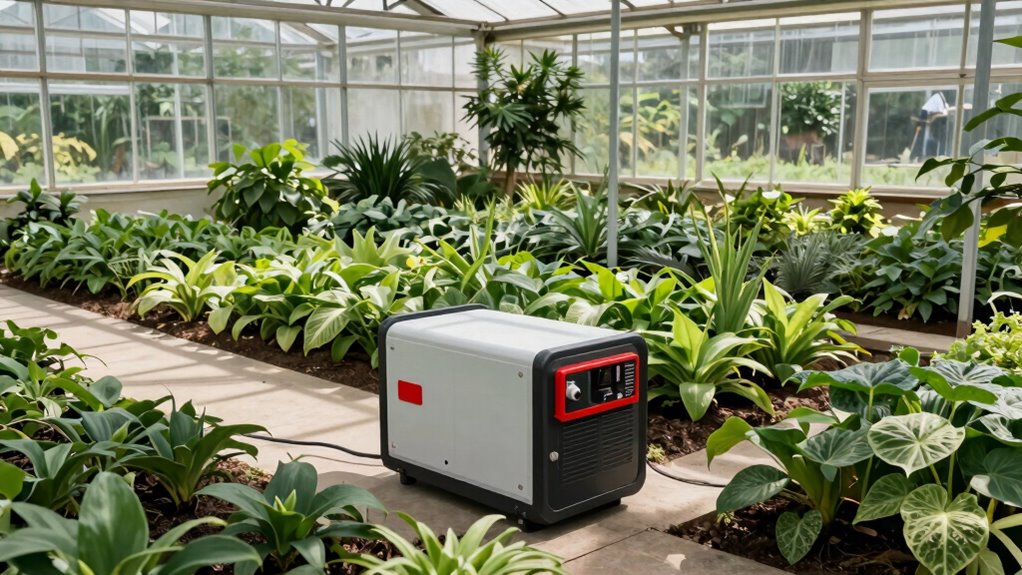

Even in mostly passive greenhouses, backup power is crucial to prevent crop damage during outages. It guarantees essential systems like ventilation, heating, and lighting keep functioning, protecting your plants from extreme temperature swings, humidity issues, and stress. Without backup power, your crops remain vulnerable, risking loss and reduced productivity. Staying prepared with reliable backup solutions can boost your greenhouse’s resilience and sustainability. Explore more to discover how to strengthen your greenhouse’s defenses and ensure consistent growth.
Key Takeaways
- Even passive greenhouses rely on systems like irrigation and ventilation that require backup power to prevent crop damage.
- Power outages can cause temperature and humidity fluctuations harmful to plants, regardless of greenhouse passivity.
- Backup power ensures continuous operation of essential equipment, minimizing crop loss during unforeseen outages.
- Incorporating renewable energy sources enhances sustainability and resilience in passive greenhouse operations.
- Long-term, backup power protects crop health, reduces manual intervention, and promotes environmental responsibility.
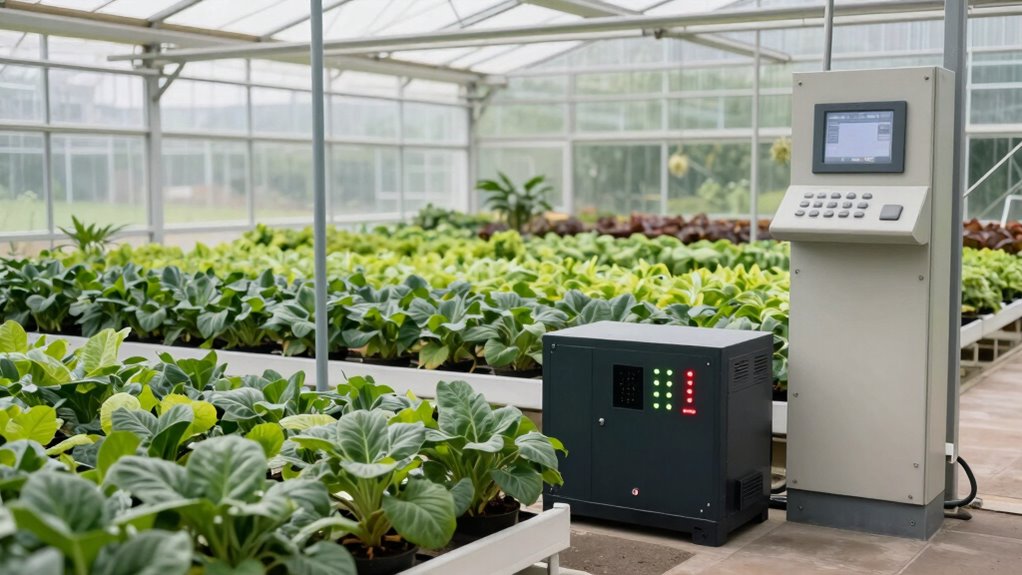
Have you ever considered what happens to your greenhouse plants during a power outage? Even if your greenhouse is mostly passive—relying on natural ventilation, shading, and insulation—losing power can still pose serious risks. Without backup power, essential systems like fans, heating, or lighting might shut down unexpectedly, leading to temperature swings, humidity issues, or inadequate lighting that can damage your crops. That’s why backup power isn’t just for high-tech greenhouses; it’s a crucial component of emergency preparedness, ensuring your plants stay healthy and productive regardless of external disruptions.
Implementing backup power supplies demonstrates your commitment to sustainable energy practices. Instead of relying solely on grid power, you can incorporate renewable energy sources such as solar panels or wind turbines to generate electricity on-site. These systems can be designed to automatically activate during power outages, providing a clean, dependable energy source that reduces your carbon footprint. By integrating sustainable energy solutions, you not only protect your plants but also contribute to a greener future, aligning with the principles of environmentally responsible gardening and farming.
Using solar or wind energy for backup power supports sustainable gardening and protects your greenhouse during outages.
Having a backup power system in place means you can respond swiftly to emergencies, minimizing potential damage and crop loss. For example, if a storm knocks out the grid, your greenhouse can continue to operate as usual—maintaining ideal temperature and humidity levels—without manual intervention. This resilience translates into higher yields, better quality plants, and less stress during unpredictable weather events. Additionally, emergency preparedness can help you stay compliant with safety standards and industry best practices, further securing your operation’s longevity. Recognizing the importance of reliable energy sources, such as solar or wind, is essential for long-term sustainability and operational stability.
Moreover, backup power enhances your overall operational stability. It allows you to run essential equipment like irrigation systems, sensors, or climate control devices without interruption. This not only benefits your plants but also streamlines management, saving time and reducing labor costs associated with manual adjustments during outages. With reliable backup power, you gain peace of mind, knowing your greenhouse can withstand power disruptions and continue to thrive.
In the end, even in mostly passive greenhouses, backup power plays a crucial role in maintaining a healthy environment for your plants. It’s a practical step toward resilient, sustainable energy use and a strategic move for emergency preparedness. By investing in a dependable backup system, you ensure your greenhouse remains a productive, sustainable space—regardless of what unforeseen challenges come your way.
solar backup power system for greenhouses
As an affiliate, we earn on qualifying purchases.
As an affiliate, we earn on qualifying purchases.
Frequently Asked Questions
How Does Backup Power Impact Crop Quality in Greenhouses?
Backup power directly impacts your crop quality by ensuring consistent conditions for healthy plant growth, even during power outages. It prevents temperature fluctuations and maintains proper humidity, which are essential for crop health. With reliable backup power, you avoid stress on your plants, reduce disease risks, and promote ideal growth. This stability helps produce higher-quality yields, ensuring your greenhouse operates efficiently and your crops stay healthy and vibrant.
What Are the Most Cost-Effective Backup Power Options?
You should consider cost-effective backup power options like portable generators and solar-powered systems. Regular generator maintenance guarantees reliable operation when needed, while proper fuel storage prevents shortages during power outages. Solar options, although initial investment might be higher, reduce ongoing costs and are eco-friendly. Combining these methods offers a balance of affordability and dependability, helping you maintain crop quality without overspending.
How Often Should Backup Systems Be Tested and Maintained?
You should test and maintain your backup systems at least twice a year to guarantee reliability. Regular testing helps identify issues like battery lifespan decline or calibration errors early. During maintenance, check battery health, replace aging components, and recalibrate the system if necessary. Proper upkeep guarantees your backup power remains ready to activate when needed, preventing disruptions that could harm your greenhouse’s environment and plant health.
Can Backup Power Systems Be Integrated With Renewable Energy Sources?
Yes, backup power systems can be integrated with renewable energy sources. You can incorporate renewable integration by connecting solar panels or wind turbines to your backup energy storage, ensuring a reliable power supply even during outages. This setup allows you to maximize renewable energy use, reduce reliance on grid power, and enhance sustainability. Proper integration requires careful planning and compatible systems, but it considerably boosts your greenhouse’s resilience and eco-friendliness.
What Are the Environmental Impacts of Backup Power Solutions?
Backup power solutions can have environmental impacts, especially if they rely on fossil fuels, releasing greenhouse gases. However, integrating energy storage with renewable sources improves power durability while reducing emissions. For instance, using lithium-ion batteries minimizes ecological harm compared to traditional generators. By choosing eco-friendly backup options, you support sustainable energy use, lowering your greenhouse footprint and promoting a healthier environment for future generations.
Conclusion
Just like Icarus relied on wings to reach the sun, your greenhouse depends on backup power to soar beyond challenges. Without it, a sudden outage can turn your thriving oasis into a lifeless shadow. Remember, even in passive greenhouses, a steady power source keeps your plants thriving and your dreams alive. So, don’t let the sun set on your efforts—prepare with backup power and keep your green sanctuary resilient, no matter what storms may come.