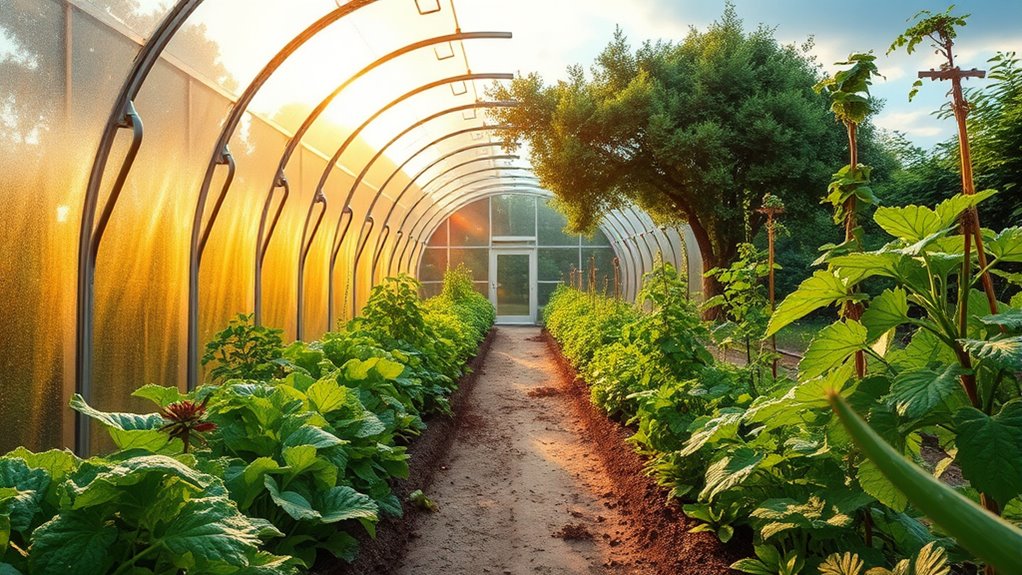

Using a greenhouse helps you adapt to climate change by creating a controlled environment that shields your plants from unpredictable weather and extreme conditions. It extends your growing seasons, protects crops from frost or heat, and allows you to regulate temperature, humidity, and light. Incorporating greenhouses alongside resilient practices like renewable mulching and soilless systems can guarantee consistent yields and healthier plants year-round. Stay with us to explore how combining these strategies can make your garden more resilient.
Key Takeaways
- Greenhouses create controlled environments that protect plants from unpredictable weather patterns.
- They extend growing seasons, allowing cultivation despite climate extremes.
- Integrating soilless systems within greenhouses enhances crop resilience and yields.
- Renewable mulching inside greenhouses helps regulate soil temperature and moisture.
- Combining greenhouses with resilient practices ensures consistent, healthy harvests year-round.
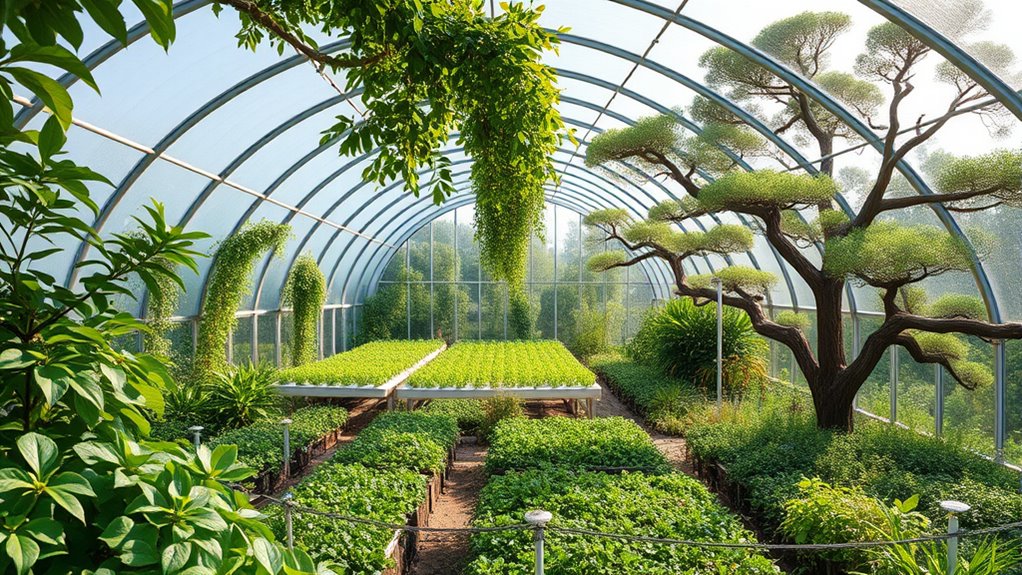
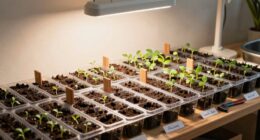
As climate patterns become more unpredictable, adopting climate-resilient gardening practices is essential for maintaining healthy, productive gardens. One effective approach is using greenhouses, which create a controlled environment that shields your plants from extreme weather fluctuations. Within this setup, innovative techniques like soilless agriculture can be employed to optimize growth and reduce reliance on traditional soil, which may be vulnerable to erosion, pests, or drought. Soilless systems, such as hydroponics or aeroponics, allow you to precisely manage nutrients and water, leading to faster growth and higher yields regardless of external conditions. This method also minimizes soil-borne diseases and minimizes the need for chemical interventions, making your gardening more sustainable and resilient against climate disruptions.
In addition to soilless agriculture, renewable mulching plays a crucial role in climate-resilient gardening. Instead of synthetic mulches that can break down or leach chemicals into the environment, renewable mulching materials like straw, wood chips, or composted plant matter provide eco-friendly alternatives. These mulches help regulate soil temperature, retain moisture, and suppress weeds, creating a stable microclimate that’s less affected by droughts or heavy rains. By reducing water evaporation and maintaining consistent soil conditions, renewable mulching supports plant health during unpredictable weather patterns. Plus, as these materials decompose, they enrich the soil with organic matter, boosting its resilience and fertility over time.
Greenhouses combined with these practices give you greater control over your gardening environment, making it possible to extend growing seasons and protect sensitive plants from frost or excessive heat. When you integrate soilless agriculture inside a greenhouse, you gain the flexibility to cultivate a wide variety of crops even in challenging climates. Meanwhile, renewable mulching acts as a natural buffer, helping your plants withstand sudden temperature swings and moisture fluctuations. This synergy enhances your garden’s ability to adapt to climate variability, ensuring more consistent harvests and healthier plants year-round.
Frequently Asked Questions
What Are the Initial Costs of Setting up a Greenhouse?
When considering the initial costs of setting up a greenhouse, you should do a thorough cost analysis to understand all expenses involved. The price varies depending on size, materials, and features, so financial planning is essential. Expect to spend on structure, glazing, ventilation, and climate control systems. While costs can range from a few hundred to several thousand dollars, planning ahead helps you stay within your budget and guarantees a successful setup.
How Do Greenhouses Impact Local Biodiversity?
Greenhouses can impact local biodiversity by providing pollinator habitats, supporting beneficial insects, and promoting plant diversity. They also help control invasive species by creating controlled environments, preventing unwanted plants from spreading. However, if not managed carefully, greenhouses might introduce invasive species or disrupt native ecosystems. You should monitor plant choices and maintain habitat balance to guarantee greenhouses support biodiversity without causing harm.
Are Greenhouses Suitable for All Climate Zones?
Some believe greenhouses suit every climate zone, but that’s not entirely true. You need to consider climate zone adaptability and regional design considerations to determine if a greenhouse will work for you. In colder zones, you might need extra insulation or heating, while in warmer areas, ventilation is essential. Assess your local conditions carefully, and adapt your greenhouse design accordingly, ensuring it supports your gardening goals year-round.
What Are the Best Sustainable Materials for Greenhouse Construction?
When choosing sustainable materials for your greenhouse, consider recycled plastics for panels and insulation, as they reduce waste and energy use. Bamboo framing is an excellent eco-friendly option due to its rapid growth and strength. These materials help you build a durable, environmentally conscious greenhouse that minimizes your carbon footprint while providing ideal growing conditions. Switching to sustainable options ensures your gardening efforts support a healthier planet.
How Can Greenhouses Be Integrated Into Urban Gardening?
You can integrate greenhouses into urban gardening by incorporating vertical farming techniques, maximizing limited space and increasing crop yield. Engage your community by hosting workshops and collaborative projects, fostering a sense of ownership and shared responsibility. This approach not only boosts local food production but also promotes sustainability and education. Greenhouses become vibrant hubs where urban residents connect, learn, and grow fresh produce together, making city environments greener and more self-sufficient.
Conclusion
As you step into your greenhouse, imagine the lush, vibrant plants thriving despite outside chaos. With every controlled breeze and carefully maintained temperature, you create a sanctuary against unpredictable weather. Your garden becomes a resilient oasis, a proof to your adaptability. By harnessing greenhouses, you transform uncertainty into opportunity, turning your gardening passion into a sustainable haven. Embrace this green refuge, and let it remind you that even in a changing climate, growth and hope flourish.