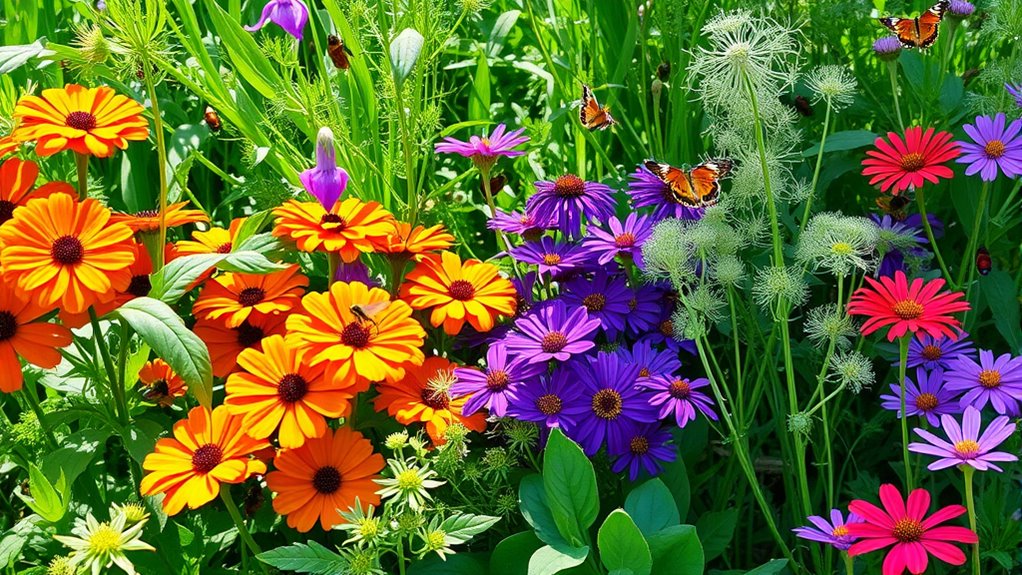

By using native plants in your companion planting, you attract pollinators like bees, butterflies, and hummingbirds that have evolved alongside these species. Combining nectar-rich flowers with pest-repelling native plants creates a balanced environment that supports beneficial insects naturally. This approach reduces your need for chemicals and improves plant health and resilience. Keep exploring ways to boost your garden’s ecosystem, and you’ll discover more techniques to encourage a thriving, balanced landscape.

Get garden gear delivered free with Prime
- Fast, free delivery on millions of items
- Prime Video, Amazon Music and more included
- Member-only deals all year
Key Takeaways
- Combine native flowering plants with pest-repelling species to attract pollinators and promote beneficial insect activity.
- Use native plants with strong scents, like marigolds and sage, to naturally deter pests while inviting pollinators.
- Incorporate a variety of nectar-rich native flowers to support diverse pollinator populations and beneficial insects.
- Strategically place companion plants to create a balanced environment that enhances pest control naturally.
- Select native plants that support beneficial insects, reducing the need for chemical pest management and encouraging ecosystem health.
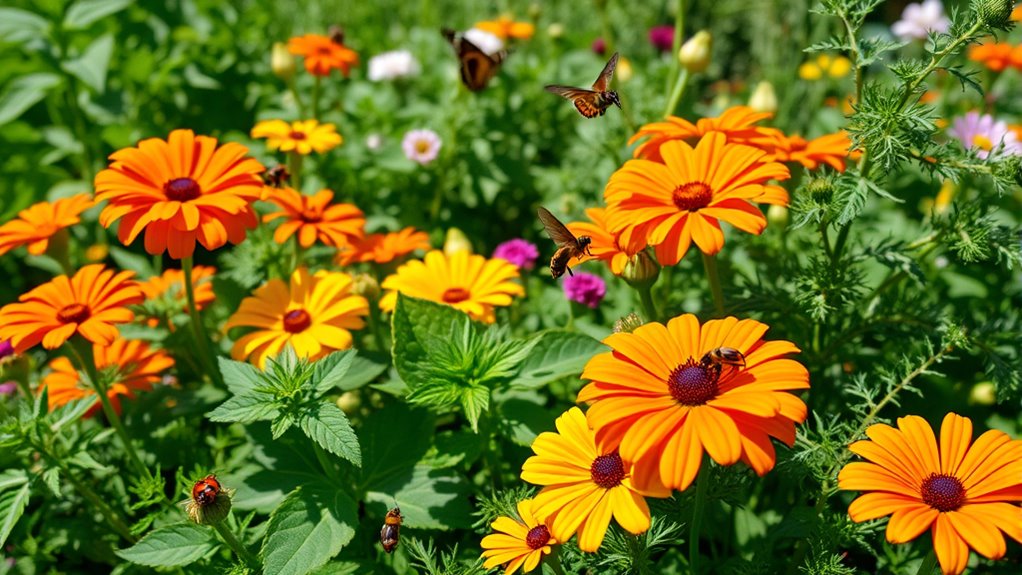
Have you ever wondered how certain plants thrive better together? The secret often lies in companion planting, a technique that boosts pollinator activity and naturally manages pests. When you choose native plantings for your garden, you’re tapping into a design that’s already well-suited to your local ecosystem. Native plants attract the right pollinators—bees, butterflies, and hummingbirds—because they’ve evolved alongside these insects. By incorporating native plantings, you create a harmonious environment where beneficial insects flourish, improving pollination and plant health naturally.
Native plants attract beneficial pollinators and support a thriving, balanced garden ecosystem.
Native plantings also serve as excellent pest deterrents. Many native plants produce compounds or scents that repel common garden pests, reducing your need for chemical interventions. For example, plants like sage or marigolds emit strong odors that keep away harmful insects while attracting beneficial ones. When you combine these with other native species, you not only enhance the beauty of your garden but also establish a natural pest management system. This approach decreases the likelihood of pest outbreaks, saving you time and resources while fostering a healthier garden ecosystem.
Furthermore, pairing plants that support pollinators with pest-deterring native species creates a balanced environment. For instance, planting nectar-rich flowers alongside plants that emit pest-repelling scents offers dual benefits. Pollinators get ample food sources, which encourages their presence, while pests are kept at bay. This synergy helps maintain a diverse insect population that naturally controls pest numbers. You’ll notice that this balance promotes stronger plants, better yields, and a vibrant garden that requires fewer chemical inputs.
In addition to attracting pollinators and deterring pests, native plantings often require less water and maintenance once established. They’re adapted to your local climate, making them resilient and easier to care for. By strategically selecting native plants that support beneficial insects and serve as pest deterrents, you’re creating a self-sustaining garden system. This not only benefits your plants but also supports local biodiversity, helping sustain the insects and animals that rely on these native species.
Additionally, understanding the cosmic connections between astrology and personal traits can sometimes influence how you select plants for your garden, aligning your planting choices with your own natural energies. Ultimately, your choice to incorporate native plantings and companion plants that deter pests transforms your garden into a thriving, balanced ecosystem. You’ll enjoy more abundant pollination, fewer pest problems, and a garden that’s healthier and more sustainable without relying heavily on chemical treatments. It’s a simple yet powerful way to work with nature, encouraging beneficial insects to do the hard work for you, all while creating a beautiful, resilient landscape.
native pollinator attracting plants
As an affiliate, we earn on qualifying purchases.
As an affiliate, we earn on qualifying purchases.
Frequently Asked Questions
Which Plants Attract the Most Pollinators?
You’ll attract the most pollinators by planting native bee plants and butterfly attractors. Native bee plants provide essential nectar and pollen, encouraging local bee populations to thrive. Butterfly attractors like milkweed and lantana draw in butterflies, ensuring pollination and pest control. These plants are highly effective in boosting pollinator activity around your garden, creating a vibrant, healthy ecosystem. Keep your garden diverse and colorful to maximize the number of pollinators visiting your space.
How Do I Choose Companion Plants for My Garden?
You should choose companion plants based on plant pairing strategies and seasonal planting schedules. Focus on pairing plants that attract pollinators and beneficial insects, like flowers with bright colors and nectar. Consider planting early, mid, and late-season bloomers to ensure continuous insect activity. Match your plant choices to your garden’s climate and soil conditions, and plan your schedule so that different plants emerge at different times, maximizing pollinator support throughout the growing season.
Are There Plants That Repel Pests Naturally?
Yes, you can use natural pest repellents like garlic, marigolds, and basil to keep pests at bay. These plants not only repel harmful insects but also attract beneficial insect attractants that help control pests naturally. By planting these around your garden, you create a balanced ecosystem that reduces the need for chemical pesticides. Incorporate them strategically to protect your crops while encouraging healthy, beneficial insects to thrive.
Can Companion Planting Increase Flower and Fruit Yields?
Yes, companion planting can increase your flower and fruit yields. By planting a diverse range of flowers, you attract beneficial insects that help with pest control, reducing damage to your crops. This flower diversity also encourages pollinators, which improve pollination rates. As a result, your plants thrive, produce more flowers, and yield better fruits, creating a healthier, more productive garden ecosystem.
How Do I Maintain Biodiversity With Companion Planting?
You need to keep your biodiversity thriving, and it’s true that variety is the spice of life. To do this, you should focus on improving soil health and planting a diverse range of species. Mix different flowers, herbs, and vegetables to attract beneficial insects and pollinators. This balanced approach guarantees a resilient ecosystem, helping your garden flourish while maintaining a rich tapestry of plant life.
Conclusion
By choosing the right companions, you invite pollinators and beneficial insects into your garden, transforming it into a thriving ecosystem. While some plants attract pests, others draw in helpful allies, creating a natural balance. Think of your garden as a bustling community—each plant plays a role. When you embrace companion planting, you foster harmony, turning your garden into both a sanctuary for pollinators and a resilient haven for your crops.
Fall Picks
fall essentials
As an affiliate, we earn on qualifying purchases.