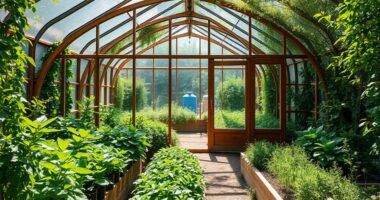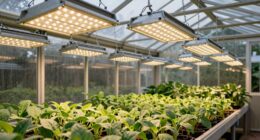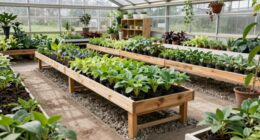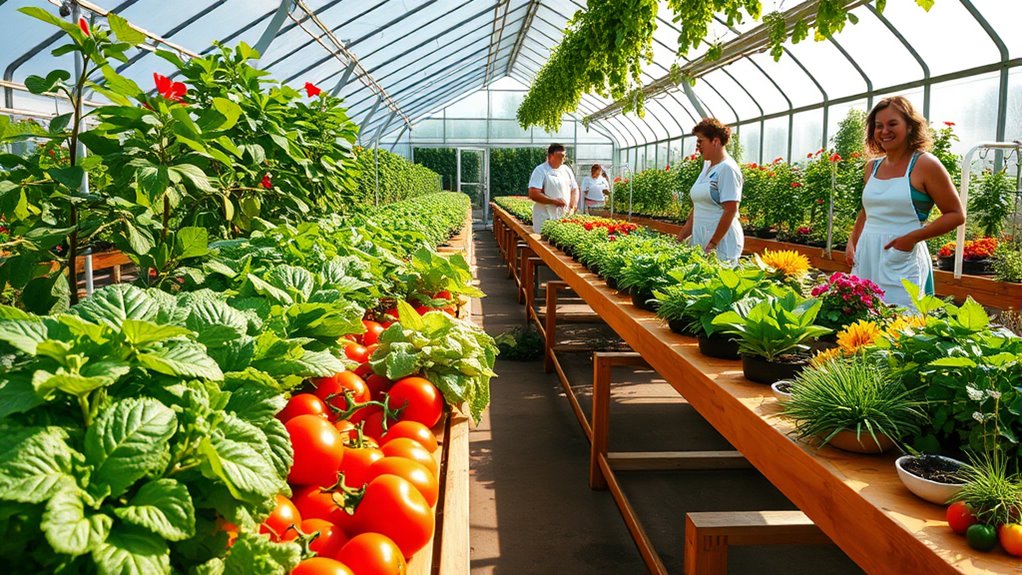

Using a greenhouse at your local food bank can boost year-round fresh produce, ensuring food security even during harsh weather. It involves community members, promoting skills and pride while fostering sustainable farming practices. Greenhouses also serve as community hubs for education and social bonding. By localizing food production, you reduce transportation emissions and strengthen community resilience. Curious to see how these greenhouses can transform your neighborhood? Keep exploring for more ways to make a difference.
Key Takeaways
- Greenhouses enable year-round fresh produce production, ensuring consistent food supplies for food banks.
- They promote local food growth, reducing dependence on external supply chains and transportation emissions.
- Greenhouses serve as educational hubs, engaging communities in sustainable farming and food security efforts.
- They foster community involvement, empowering residents through skills development and shared ownership.
- Greenhouses support environmentally friendly practices, enhancing sustainability and ecological health in local food systems.

Have you ever wondered how greenhouses can support food banks and address hunger? It’s a question that gets at the heart of innovative solutions to food insecurity. Greenhouses offer a unique way to boost local food production, especially in areas where traditional farming faces obstacles like harsh weather or limited land. By integrating greenhouses into community efforts, you can promote sustainable farming practices that not only produce fresh food but also empower the community to take control of their food sources. When you focus on sustainable farming within greenhouses, you minimize environmental impacts, reduce transportation emissions, and create a resilient local food system that benefits everyone.
Greenhouses boost local food production, empower communities, and promote sustainable farming to combat hunger and improve food security.
One of the key advantages of using greenhouses for food banks is the ability to grow fresh produce year-round, regardless of external conditions. This consistency ensures that food banks can provide nutritious options consistently, helping to meet the dietary needs of those they serve. When your community invests in greenhouse infrastructure, it fosters community empowerment. Local residents can participate directly in food production, gaining skills and confidence in sustainable farming techniques. This active involvement transforms food aid from a one-way donation into an opportunity for education, self-reliance, and economic development.
Supporting community empowerment through greenhouse projects also encourages partnerships between local organizations, schools, and volunteers. These collaborations can generate a sense of ownership and pride, motivating ongoing participation. As community members learn to grow their own food, they develop a deeper understanding of food systems and sustainability. This knowledge can inspire more sustainable habits beyond the greenhouse, creating a ripple effect that benefits the environment and local economy. Additionally, community-led greenhouse initiatives often prioritize organic practices and resource efficiency, aligning with broader goals of sustainable farming.
Greenhouses can also serve as hubs for workshops and training sessions, further reinforcing community empowerment. When you involve local residents in designing and managing these projects, they’re more likely to see the value in maintaining the system and sharing their knowledge. This collective effort not only increases food security but also fosters social cohesion, giving people a sense of purpose and connection. By supporting greenhouses that focus on sustainable farming, you help create a resilient, self-sufficient community capable of addressing hunger in a way that’s environmentally friendly and socially inclusive. Promoting sustainable farming practices within greenhouses further enhances environmental benefits and community resilience.
Frequently Asked Questions
How Do Greenhouses Affect Local Food Bank Budgets Long-Term?
Greenhouses positively impact your local food bank budgets long-term by providing cost savings on food production. They allow you to grow fresh produce year-round, reducing reliance on external sources and lowering costs. This boosts community impact, ensuring more nutritious food reaches those in need. Over time, the greenhouse’s efficiency helps your food bank serve more people without increasing expenses, creating a sustainable and supportive environment for your community.
What Are the Best Crops to Grow for Donation Purposes?
Perfectly picking productive produce, you’ll want to focus on crop varieties with high yield and shelf stability for donation impact. Leafy greens like lettuce and spinach grow quickly, while tomatoes and peppers offer versatile, nutrient-rich options. These crops are easy to cultivate in greenhouses, ensuring you provide plentiful, perishable produce that makes a meaningful donation, helping food banks meet their needs efficiently and effectively long-term.
How Can Volunteers Be Involved in Greenhouse Food Production?
You can involve volunteers in greenhouse food production by organizing community engagement events and providing volunteer training. Encourage them to help with planting, watering, and harvesting crops, ensuring they understand best practices. This hands-on involvement boosts community spirit and helps produce more food for local food banks. With proper training, volunteers become valuable team members, making the greenhouse more efficient and fostering a sense of shared purpose in supporting those in need.
Are There Specific Climate Conditions Needed for Successful Greenhouse Farming?
Think of your greenhouse as a modern Ark, needing precise climate adaptability to thrive. You’ll want to control environmental factors like temperature, humidity, and light to mimic ideal conditions for your crops. While specific climate needs vary by plant, maintaining steady, excellent conditions ensures successful growth year-round. With good environmental control, your greenhouse becomes a resilient haven, capable of supporting local food banks regardless of outside weather changes.
How Is the Quality of Greenhouse-Grown Produce Maintained for Donation?
You guarantee the quality of greenhouse-grown produce for donation by maintaining strict pest control and nutrient management. Regularly inspecting plants helps catch pests early, preventing damage, while balanced fertilization keeps produce healthy and nutritious. You also monitor environmental conditions, such as humidity and temperature, to optimize growth. Proper sanitation and harvesting practices further preserve quality, ensuring the donated produce is safe, fresh, and nutritious for those in need.
Conclusion
By using a greenhouse to support your local food bank, you’re planting seeds of hope that grow into fresh, nourishing food. Just like a warm sun nurtures young plants, your efforts can help communities flourish. Every vegetable you grow becomes a beacon of support, shining brightly in times of need. Together, you can turn a simple greenhouse into a thriving oasis—proof that small actions, like tending to plants, can make a big difference.