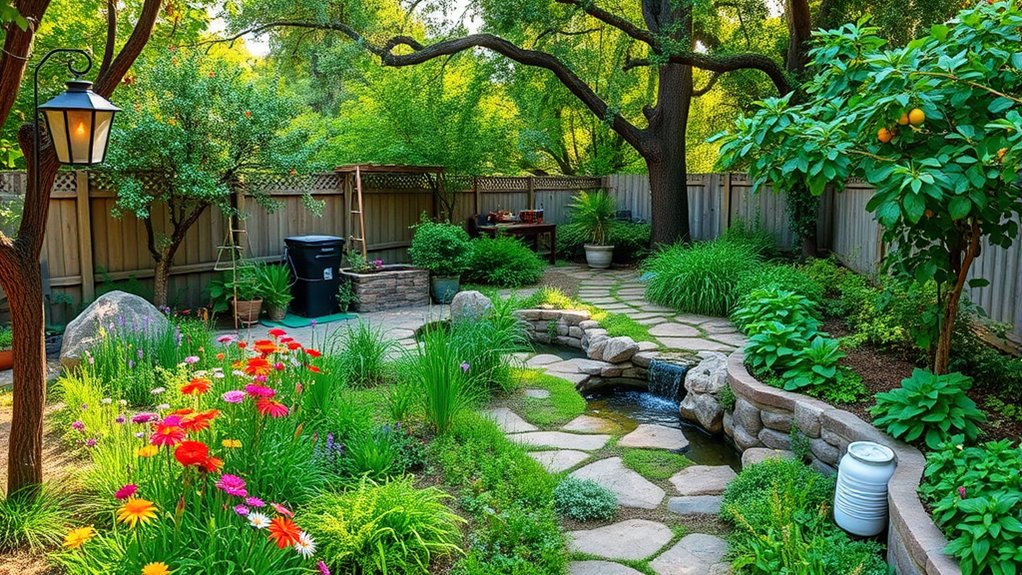

Creating an eco-friendly garden oasis starts by using native plants that are adapted to your local climate and soil, which require less water and chemicals while supporting pollinators and wildlife. Combine this with rainwater harvesting to reduce water bills and manage stormwater naturally. Incorporate sustainable practices such as mulching, composting, and grouping plants by water needs to make your landscape resilient and low-maintenance. Keep exploring to discover how these strategies can transform your backyard into a sustainable paradise.
Key Takeaways
- Incorporate native plants to reduce water use, support biodiversity, and minimize maintenance needs.
- Implement rainwater harvesting systems to efficiently irrigate and manage stormwater runoff.
- Design the landscape with grouped plants based on their sunlight and water requirements for ease of care.
- Use organic mulching and composting to improve soil health naturally and reduce chemical inputs.
- Create a self-sustaining ecosystem by combining native species, rainwater collection, and sustainable gardening practices.
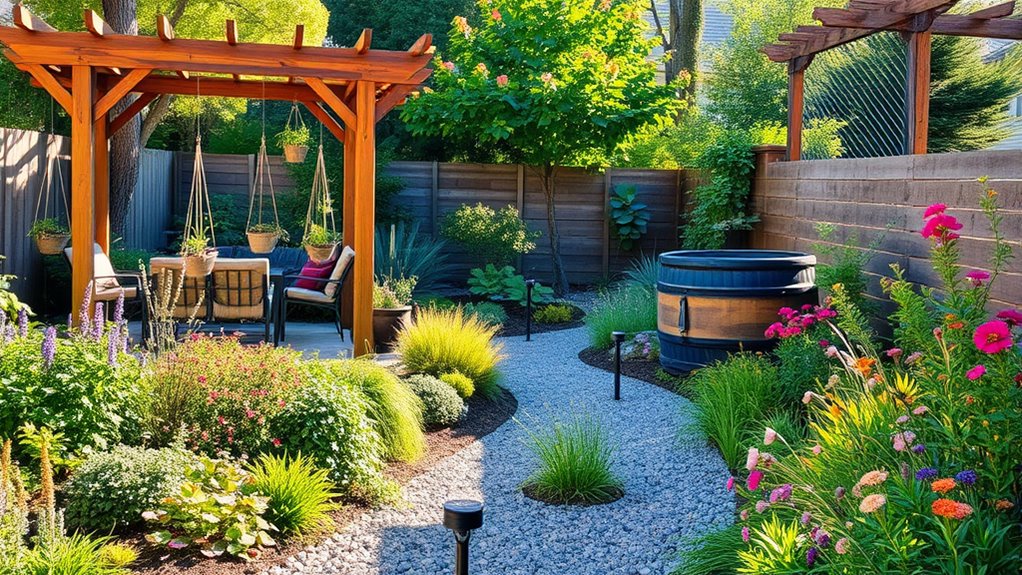
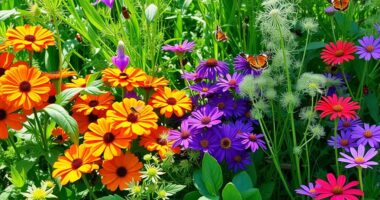
Creating a sustainable backyard not only benefits the environment but also transforms your outdoor space into a healthier, more vibrant area. One of the most effective ways to achieve this is by incorporating native plantings into your landscape. Native plants are adapted to your local climate and soil conditions, so they require less water, fertilizers, and pesticides. They thrive naturally and support local wildlife, attracting pollinators like bees, butterflies, and birds. By planting native species, you create a resilient garden that needs minimal maintenance, saving you time and resources while enhancing biodiversity. These plants also tend to be more resistant to pests and diseases, reducing the need for chemical interventions that can harm the environment.
Native plants create a resilient, low-maintenance garden that supports local wildlife and requires fewer resources.
Alongside native plantings, implementing rainwater harvesting systems can markedly reduce your reliance on municipal water supplies. Rainwater harvesting involves collecting and storing rainwater from your roof or other surfaces for later use. This water can be employed to irrigate your garden, which is especially beneficial during dry seasons or drought conditions. Installing a simple rain barrel or more advanced collection system helps you manage stormwater runoff effectively, preventing erosion and water pooling while conserving a valuable resource. With rainwater harvesting, you cut down on your water bills and lessen the strain on local water sources, making your backyard more sustainable overall.
When designing your eco-friendly backyard, think about positioning native plants strategically to create a natural, low-maintenance landscape. Grouping plants with similar water and sunlight needs ensures they thrive without extra watering or fuss. Use mulch around your plants to retain soil moisture, suppress weeds, and improve soil health. This approach minimizes watering requirements and promotes a healthy, thriving garden.
Incorporating rainwater harvesting and native plantings doesn’t mean sacrificing beauty or comfort; rather, it enhances the aesthetic and ecological value of your outdoor space. You can select native species with vibrant flowers or interesting foliage to add color and texture. Combining these with sustainable practices like composting your organic waste further enriches your soil, creating a self-sustaining cycle. Over time, your backyard becomes a vibrant, eco-friendly oasis that requires less maintenance, saves resources, and supports local ecosystems. As you embrace these practices, you’ll enjoy a lush, thriving garden that reflects your commitment to environmental stewardship while providing a peaceful retreat for you and your family.
Frequently Asked Questions
How Can I Attract Native Pollinators to My Garden?
To attract native pollinators, you should create native bee habitats and plant butterfly host plants. Provide undisturbed ground for ground-nesting bees and leave some areas wild or mulched. Incorporate native plants that serve as butterfly hosts, offering nectar and habitat. Avoid pesticides and choose diverse flowering plants for year-round blooms. These steps will make your garden inviting for native pollinators, boosting local biodiversity naturally.
What Are the Best Drought-Tolerant Plants for My Climate?
Did you know that over 50% of residential water use goes to landscaping? For your climate, drought-tolerant plants like xeriscape landscaping and drought-resistant groundcovers are your best options. These plants survive with minimal water, saving you money and conserving resources. Choose native succulents or ornamental grasses, which thrive in dry conditions and add beauty to your garden, creating an eco-friendly, low-maintenance oasis.
How Do I Compost Effectively in Small Spaces?
To compost effectively in small spaces, choose a compact compost bin and place it in a well-drained, shaded spot to control odors and heat. Use a mix of composting materials like fruit scraps, coffee grounds, and yard waste, balancing greens and browns. Turn the compost regularly to aerate it, and keep it moist. This approach helps you create nutrient-rich soil without taking up too much space.
What Eco-Friendly Pest Control Methods Work Best?
Think of your garden as a peaceful kingdom where natural pest barriers act like vigilant guards, protecting your crops without harm. You can encourage beneficial insect habitats by planting nectar-rich flowers and providing shelter, turning pests into guests rather than invaders. These eco-friendly methods keep your garden healthy, reducing chemical use. Embrace this harmony, and you’ll enjoy a thriving, balanced ecosystem where pests are managed naturally and sustainably.
How Can I Incorporate Renewable Energy Into My Backyard?
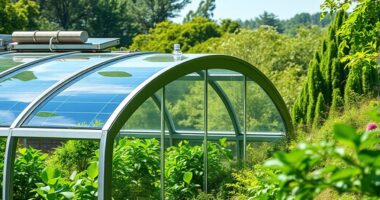
You can incorporate renewable energy into your backyard by installing solar panels and small wind turbines. Solar panels harness sunlight to generate electricity, powering outdoor lights or garden features. Wind turbines, if space allows, capture wind energy to produce power. Both options reduce your carbon footprint and lower energy costs. Combine these with energy-efficient appliances for a fully eco-friendly backyard, creating a sustainable and cost-effective outdoor space that benefits the environment.
Conclusion
By embracing sustainable backyard design, you’re planting seeds for a thriving, eco-friendly oasis that nurtures both nature and your soul. Your garden becomes a vibrant symphony of life, where every leaf and bloom contributes to a harmonious balance. As you tend this green sanctuary, you’re weaving a timeless tapestry of sustainability—an enduring legacy rooted in mindful choices. Together, you and your garden will flourish, blooming into a lush, resilient haven for generations to come.