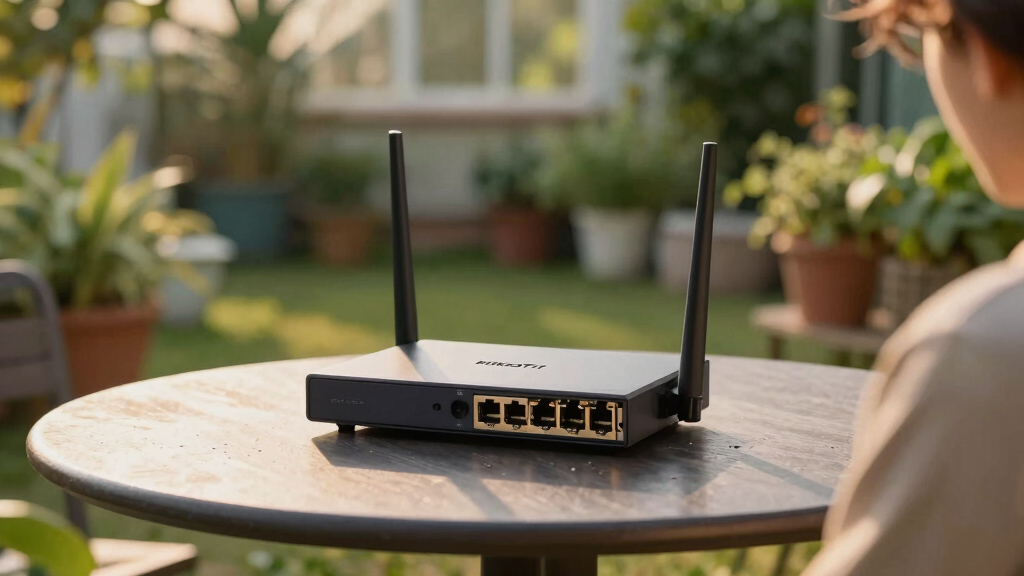

Finding the best MikroTik home router in 2026 depends on your specific needs, whether it’s maximum speed, advanced features, or budget-friendly options. The MikroTik hAP ax S Wi-Fi 6 Router stands out for its cutting-edge Wi-Fi 6 support and solid performance, making it a top overall choice. For those prioritizing extensive wired connectivity, the MikroTik RB4011iGS+RM offers impressive routing capacity. Meanwhile, the Mikrotik hEX 5 Port Gigabit Router provides a simple, reliable solution for basic networks. Keep reading to see how these and other picks compare, along with what factors should influence your decision.

Get garden gear delivered free with Prime
- Fast, free delivery on millions of items
- Prime Video, Amazon Music and more included
- Member-only deals all year
Complete the kit


Key Takeaways
- Wi-Fi 6 support with the MikroTik hAP ax S greatly enhances wireless performance for modern devices.
- The RB4011iGS+RM stands out for its high routing capacity and multiple Ethernet ports ideal for complex setups.
- Price and feature sets vary widely, with premium models offering advanced capabilities and budget options focusing on simplicity.
- Ease of setup and user interface can be a challenge on some MikroTik models, especially for beginners.
- Power options like PoE and multi-Gig ports are increasingly common, but not all models support them, affecting future-proofing.
| MikroTik hAP ax S Wi-Fi 6 Router |  | Best Overall Home Router for Wi-Fi 6 Performance | Wi-Fi Standard: Wi-Fi 6 (802.11ax) | Frequency Band: Tri-Band | Number of Ports: 5 | VIEW LATEST PRICE | See Our Full Breakdown |
| MikroTik RB4011iGS+RM Ethernet 10-Port Gigabit Router |  | Best High-Performance Router for Professional Networks | Number of Ports: 10 Gigabit ports | SFP+ Interface: Yes, 10Gbps | CPU: Quad-core Cortex A15 | VIEW LATEST PRICE | See Our Full Breakdown |
| MikroTik RouterBOARD 5009UG+S+ with Marvell Armada ARMv8 CPU |  | Best Enterprise-Grade Router for Heavy-Duty Networking | CPU: Marvell Armada ARMv8, 4 cores, 1.4GHz | RAM: 1GB DDR4 | Number of Ethernet Ports: Multiple | VIEW LATEST PRICE | See Our Full Breakdown |
| Mikrotik hEX 5 Port Gigabit Router (E50UG) |  | Best Budget Wired Router for Small Networks | Number of Ports: 5 | Data Transfer Rate: 1 Gbps | CPU: Modern ARM | VIEW LATEST PRICE | See Our Full Breakdown |
| Mikrotik hAP ac³ RBD53iG-5HacD2HnD-US Wireless Dual-Band Router |  | Best Dual-Band Home Wi-Fi Router with External Antennas | Wireless Standards: 802.11ac, Wi-Fi 4, Wi-Fi 5 | Number of Ethernet Ports: 5 | Antenna Type: External high gain | VIEW LATEST PRICE | See Our Full Breakdown |
| Mikrotik hEX RB750Gr3 5-Port Ethernet Gigabit Router |  | Best Budget Wired Router with Enterprise Features | Number of Ports: 5 Gigabit Ethernet ports | CPU: Dual-core 880MHz | RAM: 256MB | VIEW LATEST PRICE | See Our Full Breakdown |
| MikroTik hEX S (2025) E60iUGS Wired Router with 2.5G SFP, 5 Gigabit Ethernet Ports, PoE Out, USB, Dual-Core CPU |  | Best High-Speed Wired Router with Versatile Connectivity | Product code: E60iUGS | Architecture: ARM | CPU: EN7562CT, 950 MHz, 2 cores | VIEW LATEST PRICE | See Our Full Breakdown |
| MikroTik home router | CPU | Number of Ports | RAM |
|---|---|---|---|
| MikroTik hAP ax S Wi-Fi 6 Rout | — | 5 | — |
| MikroTik RB4011iGS+RM Ethernet | Quad-core Cortex A15 | 10 Gigabit ports | 1GB |
| MikroTik RouterBOARD 5009UG+S+ | Marvell Armada ARMv8, 4 cores, 1.4GHz | — | 1GB DDR4 |
| Mikrotik hEX 5 Port Gigabit Ro | Modern ARM | 5 | — |
| Mikrotik hAP ac³ RBD53iG-5HacD | — | — | — |
| Mikrotik hEX RB750Gr3 5-Port E | Dual-core 880MHz | 5 Gigabit Ethernet ports | 256MB |
| MikroTik hEX S | EN7562CT, 950 MHz, 2 cores | — | 512 MB |
More Details on Our Top Picks
MikroTik hAP ax S Wi-Fi 6 Router
The MikroTik hAP ax S shines as the best overall choice for those seeking the latest Wi-Fi 6 technology in a home or small office setup. Its tri-band design and dual antennas provide strong, stable coverage, surpassing older Wi-Fi 5 models like the hAP ac³. While it excels in speed and multi-device handling, it doesn’t function as a modem, requiring an external device, and relies on a mobile app for management, which might not appeal to tech enthusiasts who prefer web interfaces. This router is ideal for users wanting cutting-edge wireless speeds without complex configurations, but it isn’t suited for those needing integrated modem capabilities or advanced security features built-in.
Pros:- Supports the latest Wi-Fi 6 standard for faster speeds and more efficient connectivity.
- Tri-band design ensures broad, stable wireless coverage across multiple devices.
- Multiple ports provide flexible wired device connections.
Cons:- No modem functionality, requiring an external modem for internet access.
- App-based control may be less appealing to users who prefer web interfaces.
- Limited information on advanced security features.
Best for: Home users and small offices prioritizing Wi-Fi 6 performance and seamless coverage.
Not ideal for: Users who need a combined modem/router or prefer traditional web-based management.
- Wi-Fi Standard:Wi-Fi 6 (802.11ax)
- Frequency Band:Tri-Band
- Number of Ports:5
- Data Transfer Rate:4132.4 Mbps
- LAN Port Bandwidth:1000 Mbps
- Wireless Compatibility:802.11ax
Our verdict“This router is perfect for those seeking top-tier Wi-Fi 6 speeds and coverage in a compact, easy-to-manage setup.”
MikroTik RB4011iGS+RM Ethernet 10-Port Gigabit Router
The MikroTik RB4011iGS+RM stands out for its robust hardware, making it suitable for demanding network environments. With ten Gigabit ports and a 10Gbps SFP+ interface, it outperforms typical consumer routers like the hEX 5 Port, which focus primarily on wired connections. Its quad-core Cortex A15 CPU and hardware IPsec acceleration deliver high throughput for secure, intensive tasks. However, its complexity can be overwhelming for casual users, and it requires compatible power supplies if using PoE, limiting plug-and-play convenience. This model is best suited for users who need a reliable, high-capacity wired network, but it’s overkill for simple home setups without advanced networking needs.
Pros:- Ten Gigabit Ethernet ports enable extensive wired device connectivity.
- Hardware acceleration for IPsec boosts VPN performance and security.
- Durable metal enclosure suitable for rack mounting or fixed installations.
Cons:- Requires compatible power supply for PoE operation.
- Configuration can be complex for users unfamiliar with advanced networking.
- Limited RAM for multitasking with very large networks.
Best for: Small businesses or tech-savvy users needing high throughput and extensive wired connectivity.
Not ideal for: Beginners or users seeking an easy, plug-and-play home router with Wi-Fi capabilities.
- Number of Ports:10 Gigabit ports
- SFP+ Interface:Yes, 10Gbps
- CPU:Quad-core Cortex A15
- RAM:1GB
- Max Power Consumption:33 W
- Enclosure:Solid metal
Our verdict“Ideal for professional environments needing high-speed wired connections and robust security, but too complex for typical home use.”
MikroTik RouterBOARD 5009UG+S+ with Marvell Armada ARMv8 CPU
The RouterBOARD 5009UG+S+ offers high reliability for complex network architectures, with a quad-core Marvell Armada ARMv8 CPU at 1.4GHz per core and 1GB DDR4 RAM. It surpasses simpler setups like the hEX 5 Port in processing power, making it suitable for demanding tasks such as multiple VPN tunnels or high-volume routing. Its multiple Ethernet ports support versatile network configurations, but the limited RAM might restrict scalability for very large networks. The lack of detailed user reviews makes it harder to gauge real-world performance, yet its hardware specs suggest a focus on stability over ease of use. This device is perfect for technical users building robust infrastructure but overkill for basic home needs.
Pros:- Powerful quad-core CPU handles demanding routing tasks efficiently.
- Reliable performance with dedicated hardware for high throughput.
- Multiple Ethernet ports support flexible network architecture.
Cons:- Limited RAM for scaling large networks or numerous simultaneous processes.
- Absence of detailed user feedback complicates performance expectations.
- Designed more for infrastructure than straightforward home use.
Best for: Advanced users deploying high-performance, multi-service network environments.
Not ideal for: Casual users seeking a simple, easy-to-configure router for everyday internet access.
- CPU:Marvell Armada ARMv8, 4 cores, 1.4GHz
- RAM:1GB DDR4
- Number of Ethernet Ports:Multiple
- Model:RB5009UG+S+
- Power:Depends on setup
- Designed for:High-end network infrastructure
Our verdict“Best suited for network professionals needing a stable backbone for complex setups, not for casual or residential users.”
Mikrotik hEX 5 Port Gigabit Router (E50UG)
The Mikrotik hEX E50UG offers solid wired performance at an affordable price, making it a good choice for small offices or home users who prioritize wired connections over Wi-Fi. Its five Gigabit Ethernet ports and modern ARM CPU provide reliable throughput without the complexity of advanced features found in higher-end models like the RB4011iGS+RM. The compact, lightweight design and straightforward setup appeal to users with basic networking needs, but its lack of Wi-Fi makes it unsuitable for households seeking wireless coverage. Without included accessories or mounting options, it’s best for users comfortable with simple, wired network setups.
Pros:- Fast Gigabit Ethernet ports support seamless wired connections.
- Affordable price point for basic networking tasks.
- Compact, lightweight design suitable for limited space.
Cons:- No Wi-Fi capabilities, limiting versatility for wireless needs.
- Basic features may not meet advanced or future networking demands.
- No included mounting or accessories for flexible installation.
Best for: Small offices or homes needing reliable wired connectivity, not wireless coverage.
Not ideal for: Home users seeking integrated Wi-Fi or those requiring wireless flexibility.
- Number of Ports:5
- Data Transfer Rate:1 Gbps
- CPU:Modern ARM
- Form Factor:Small, lightweight
- Designed for:Small business or home wired networks
- Wireless:None
Our verdict“A practical choice for wired-only setups where budget and simplicity matter most.”
Mikrotik hAP ac³ RBD53iG-5HacD2HnD-US Wireless Dual-Band Router
The hAP ac³ offers versatile dual-band Wi-Fi coverage with external high-gain antennas, making it suitable for larger homes with challenging signal areas. Its dual-band support combined with WPA3 security provides a good balance of speed and security, outperforming older Wi-Fi 4 models like the hEX E50UG in wireless capabilities. While it includes a quad-core CPU and multiple Ethernet ports, setup can be complex for beginners, especially with advanced features like PoE for some ports. This router makes sense for households needing reliable Wi-Fi coverage across multiple rooms, but it’s less suitable for users who want integrated modem functionality or simplicity.
Pros:- External high-gain antennas improve coverage and signal strength.
- Supports PoE for flexible power options and installation.
- Dual-band Wi-Fi with WPA3 enhances speed and security.
Cons:- Setup may be challenging for users unfamiliar with MikroTik’s interface.
- No built-in modem functionality, requiring separate internet device.
- Limited to indoor use, with potential complexity for simple users.
Best for: Households seeking extensive Wi-Fi coverage with flexible mounting and good security.
Not ideal for: Users who prefer simple setups or need integrated modem features out of the box.
- Wireless Standards:802.11ac, Wi-Fi 4, Wi-Fi 5
- Number of Ethernet Ports:5
- Antenna Type:External high gain
- Security Protocols:WPA2-PSK, WPA-PSK, WPA3
- Control Method:App
- Max Data Rate:1000 Gbps
Our verdict“This router is ideal for demanding households needing strong Wi-Fi with flexible installation options, but not for those seeking plug-and-play simplicity.”
Mikrotik hEX RB750Gr3 5-Port Ethernet Gigabit Router
The Mikrotik hEX RB750Gr3 stands out for offering a powerful dual-core CPU and hardware encryption at a budget-friendly price. Compared to the Mikrotik hEX S, this model lacks the 2.5G SFP port, but it compensates with a compact form factor and a microSD slot for storage expansion. Its passive PoE input provides flexible power options, making it ideal for wired setups where simplicity and affordability matter most. However, it doesn’t include wireless capabilities, which limits its use for wireless households or small offices. Setup can be daunting for non-technical users because of RouterOS’s advanced features, and storage is limited to microSD. Still, this model delivers enterprise-grade features in a small package, perfect for wired network segments in cost-conscious environments.
Pros:- Powerful dual-core CPU with hardware encryption
- Includes microSD slot for flexible storage options
- Compact, affordable design suitable for wired setups
- Passive PoE input for flexible power solutions
Cons:- No built-in wireless connectivity
- Limited storage capacity with only 16MB microSD slot
- Requires technical knowledge for optimal setup
Best for: Small businesses or technical home users needing a reliable wired router with advanced security features
Not ideal for: Home users seeking wireless connectivity or plug-and-play ease
- Number of Ports:5 Gigabit Ethernet ports
- CPU:Dual-core 880MHz
- RAM:256MB
- Storage:16MB microSD slot
- PoE:Passive PoE (PoE in)
- Dimensions:113x89x28mm
- Features:IPsec hardware encryption, The Dude server, temperature and voltage monitors
Our verdict“This router makes the most sense for wired-only environments where budget and security are priorities, not wireless connectivity.”
MikroTik hEX S (2025) E60iUGS Wired Router with 2.5G SFP, 5 Gigabit Ethernet Ports, PoE Out, USB, Dual-Core CPU
The MikroTik hEX S (2025) elevates wired networking with its support for a 2.5G SFP port and PoE out, making it a more flexible choice than the Mikrotik hEX RB750Gr3. While the hEX RB750Gr3 is ideal for simple, budget-conscious wired setups, this model caters to users needing higher throughput and power options for connected devices. Its dual-core ARM CPU and 512MB RAM handle complex configurations smoothly, and the USB port adds expandability. However, it’s strictly wired, with no wireless capabilities, and setup can be complex for those unfamiliar with RouterOS. Its power consumption of 23W also makes it less suitable for energy-conscious environments. This router is perfect for demanding wired networks that require high-speed links and device power via PoE, but less so for basic or wireless needs.
Pros:- Supports 2.5G SFP and Gigabit Ethernet ports for high-speed connectivity
- Includes PoE out to power other network devices
- Dual-core ARM CPU with 512MB RAM for complex configurations
- USB port for additional expansion
Cons:- No wireless connectivity, limiting flexibility
- Setup complexity may be a barrier for less experienced users
- Higher power consumption compared to simpler routers
Best for: Tech-savvy users seeking a high-speed, wired router with PoE power delivery and advanced management
Not ideal for: Home users needing Wi-Fi or less complex setup requirements
- Product code:E60iUGS
- Architecture:ARM
- CPU:EN7562CT, 950 MHz, 2 cores
- RAM:512 MB
- Storage:128 MB NAND
- Number of Ethernet ports:5
- Ethernet speed:Gigabit
- SFP ports:1 (2.5G supported)
- PoE out ports:Ether5
Our verdict“This router makes the most sense for advanced wired networks that demand high throughput and device powering, not for basic or wireless setups.”
How We Picked
These products were selected based on a combination of performance metrics, build quality, feature set, and value for home users. Priority was given to routers that deliver reliable Wi-Fi coverage, high-speed wired connections, and user-friendly interfaces, where applicable. We also considered the expandability of each device, such as support for advanced routing features or PoE. The ranking reflects a balance between price and capabilities, ensuring options for different budgets and technical levels. Devices that offer comprehensive firmware customization and good community support scored higher, as they provide more flexibility for home networking needs.| MikroTik home router | CPU |
|---|---|
| MikroTik hAP ax S Wi-Fi 6 Rout | — |
| MikroTik RB4011iGS+RM Ethernet | Quad-core Cortex A15 |
| MikroTik RouterBOARD 5009UG+S+ | Marvell Armada ARMv8, 4 cores, 1.4GHz |
| Mikrotik hEX 5 Port Gigabit Ro | Modern ARM |
| Mikrotik hAP ac³ RBD53iG-5HacD | — |
| Mikrotik hEX RB750Gr3 5-Port E | Dual-core 880MHz |
| MikroTik hEX S | EN7562CT, 950 MHz, 2 cores |
Factors to Consider When Choosing Best MikroTik Home Routers
Choosing the right MikroTik router involves more than just specs; understanding your home network’s specific needs and future plans is key. Consider factors like speed, coverage, and ease of management to find a model that fits both your current setup and potential upgrades. Paying attention to hardware features such as ports, Wi-Fi standards, and power options can help prevent bottlenecks later on. It’s also worth noting that MikroTik’s interface can be less intuitive than consumer brands, so compatibility with your technical comfort level matters. Carefully evaluating these factors helps avoid overspending on features you don’t need or missing out on essential capabilities.Performance and Speed
Speed is crucial for ensuring your network can handle multiple devices, streaming, gaming, and smart home integrations. Look for routers supporting the latest Wi-Fi standards like Wi-Fi 6, which offers higher throughput and better efficiency in congested environments. For wired connections, multi-Gig ports allow faster data transfer and future-proofing. Keep in mind that a high-performance router also depends on your internet plan—buying a router with capabilities far exceeding your service speed might not add noticeable benefits.Coverage and Wi-Fi Range
Coverage depends on both the router’s antenna design and the placement within your home. Larger homes or multi-floor setups often require more powerful devices or mesh-compatible models. Although MikroTik routers generally excel in wired connections, their Wi-Fi coverage varies. Consider models with multiple antennas or dual-band support to improve range and reduce dead spots. Positioning is also key; even the most capable router benefits from strategic placement away from interference sources.Ease of Use and Management
MikroTik’s RouterOS offers extensive customization, but this can be intimidating for less technical users. Some models provide simplified interfaces or mobile apps, which lower the barrier to entry. For users who prefer straightforward setup, choosing a model with clear documentation and community support makes a big difference. Advanced users may appreciate the detailed control and scripting options, but beginners should weigh this against potential setup complexity.Number and Type of Ports
Consider how many wired devices you plan to connect now and in the future. Gigabit Ethernet ports are standard, but some models also include multi-Gig ports or PoE support, which are useful for powering access points or cameras without additional adapters. If you have a large wired network, look for routers with multiple ports or the ability to expand via switches. Overlooking port count can lead to bottlenecks or the need for additional hardware down the line.Price and Future-Proofing
While it’s tempting to opt for the lowest-priced model, investing in a slightly more capable router can extend its usefulness. Features like multi-Gig ports, Wi-Fi 6, or higher processing power contribute to longevity. Be cautious about models with limited firmware updates or poor community support, as these can hinder security and feature upgrades. Balancing cost against your future needs will help you avoid quick obsolescence or costly replacements.Power Options and Expandability
Features like Power over Ethernet (PoE) can simplify installation and reduce clutter, especially in larger setups. Additionally, some models support USB ports for network storage or 4G/5G backup connections. Future-proofing your network means considering these expandability options, which can be vital if your requirements grow or change. Not all MikroTik routers include these features, so check your priorities carefully before purchasing.Frequently Asked Questions
Is a MikroTik router suitable for a beginner home user?
MikroTik routers are known for their powerful features and customization options, but they can be intimidating for beginners due to their complex interface. However, some models offer simplified management options, and there is a strong community and extensive documentation to help new users. If you are comfortable with technology or willing to learn, MikroTik can be a good choice for a flexible, scalable home network. For absolute beginners seeking plug-and-play simplicity, a different brand might be more appropriate, unless you’re eager to explore advanced networking features.
Can MikroTik routers handle multiple devices and high traffic?
Yes, many MikroTik models are designed to support high traffic loads and numerous devices, especially those with Wi-Fi 6 support and multiple Gigabit ports. Devices like the RB4011iGS+RM excel in routing capacity, making them suitable for busy households or small offices. However, actual performance depends on your internet speed, device placement, and network configuration. Properly configuring Quality of Service (QoS) settings can also enhance the experience for high-demand applications like streaming and gaming.
Are MikroTik routers future-proof for upgrades?
Many MikroTik routers include features like Wi-Fi 6, multi-Gig ports, and PoE support, which contribute to their longevity. Investing in models with these capabilities can help your network adapt to increasing data demands and new devices. Nevertheless, firmware updates are essential for security and performance; choosing models with active support communities and regular updates is wise. Keep in mind that hardware limitations, such as port counts and processing power, may eventually require an upgrade as your needs grow.
What should I consider regarding security with MikroTik routers?
MikroTik’s RouterOS offers many security features, but they require proper configuration to be effective. Defaults may not be secure, so changing default passwords and disabling unnecessary services is essential. Regular firmware updates are critical to patch vulnerabilities. Additionally, advanced users can leverage features like VPN, firewall rules, and intrusion detection, but these may be complex to set up correctly. If security is a priority and you’re not comfortable with detailed configuration, consider models with more user-friendly interfaces or additional security documentation.
Is it worth paying more for a MikroTik router with advanced features?
Paying more for a MikroTik router often means access to higher processing power, more ports, Wi-Fi 6 support, and expandability options like PoE. These features can extend the router’s useful lifespan and improve network performance, especially in larger or more demanding environments. However, if your home network is simple, a cheaper model may suffice without sacrificing essential functionality. The decision depends on your current needs and whether you anticipate expanding or upgrading your network soon.
Conclusion
The best overall choice for most users in 2026 is the MikroTik hAP ax S Wi-Fi 6 Router, thanks to its combination of speed, coverage, and future-proof features. If you prioritize value and straightforward wired performance, the MikroTik hEX 5 Port Gigabit Router offers a reliable, budget-friendly option. For advanced users or those with larger networks, the MikroTik RB4011iGS+RM stands out for its scalability and high capacity. Beginners or less technical users should consider models with simpler interfaces, while power users can benefit from the customization options of higher-end models. Your choice should align with your current needs and future plans, ensuring your network remains robust and adaptable.