
TL;DR

Get garden gear delivered free with Prime
- Fast, free delivery on millions of items
- Prime Video, Amazon Music and more included
- Member-only deals all year
Country Living reports that gardeners can preserve coleus through winter by rooting cuttings indoors before frost arrives. Cuttings typically develop roots in two to three weeks and can then be planted in soil as houseplants; move them outdoors in spring when soil temperatures are above 60°F.
Gardeners can keep coleus plants through winter by taking cuttings before the first frost, rooting them in water and growing them indoors, according to a Country Living gardening report. The method offers a way to preserve plants for spring rather than relying on new plants or seeds after frost damages outdoor coleus.
The report recommends taking a 4- to 6-inch cutting while the weather is still warm and before a frosty night. Use sharp scissors cleaned with rubbing alcohol, remove the leaves from the lower portion of the stem, and place the cutting in water so the lower, leaf-stripped section is submerged. Rooting hormone is optional, the report says.
Roots should form in about two to three weeks, according to the article. Once rooted, the cutting can be planted in soil and kept indoors as a houseplant over winter. The report advises waiting until soil temperatures are above 60°F before moving the plant outside in spring.
The method is presented as a way to carry coleus from one growing season into the next. It does not preserve the outdoor plant in place: gardeners take and root new cuttings, then grow those plants indoors until conditions allow them to return outside.
Keeping Coleus for Spring
Because coleus is treated as an annual in the report, frost puts outdoor plants at risk of dying back. Taking cuttings before cold weather provides gardeners with a practical option to retain the plant rather than start over with purchased plants or seed in spring.
The advice is especially relevant to gardeners with coleus in shady beds or containers. The indoor approach depends on having a place to grow the cuttings through winter; the source does not give detailed requirements for indoor light, watering or temperature.
Products Worth Considering

Orbit B-hyve XR 8-Zone Indoor/Outdoor Smart Sprinkler Controller

Orbit B-hyve Smart Indoor/Outdoor 12-Zone Sprinkler Controller

AMERLIFE 34 x 10 x 7 ft Walk-In Tunnel Greenhouse with Watering System
As an affiliate, we earn on qualifying purchases.
From Garden Cutting to Houseplant
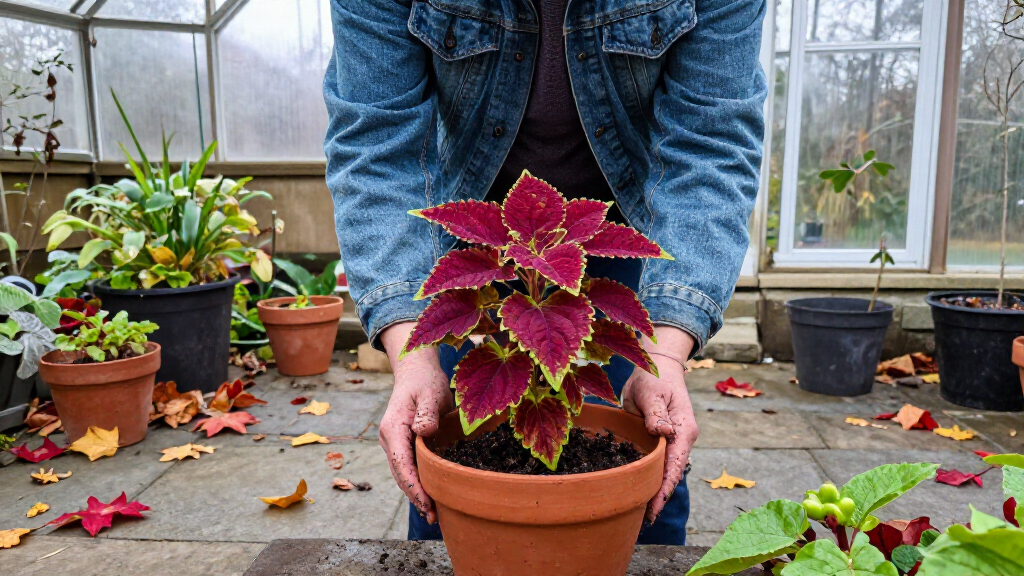
Coleus is a fast-growing ornamental plant grown for its varied leaf colors, including in shaded gardens and containers. The Country Living report describes its square stems and leaf arrangement as features that can remind gardeners of mint, noting that coleus belongs to the mint family.
The seasonal sequence in the report is straightforward: take cuttings while it is still warm, root them in water, move rooted cuttings into soil, and keep them indoors over winter. Outdoor planting should wait until soil temperatures exceed 60°F, rather than being based only on the arrival of a particular date.
“The new plant should have developed roots within about 2 to 3 weeks.”
— Country Living report
Indoor Growing Details Not Specified
The report does not specify how much light or water an indoor cutting needs, what indoor temperature is best, or whether every cutting will root within the stated two-to-three-week estimate. That period is a general expectation, not a guarantee for each plant or growing space.
It also does not give a region-specific frost date or explain how to measure soil temperature. Gardeners will need to use local conditions and check their planting site before returning coleus outdoors.
Root Cuttings Before Frost
Gardeners hoping to keep coleus should take cuttings before the first frost, then watch for roots over the following weeks. After roots form, they can transplant the cuttings into soil and maintain them indoors through winter.
In spring, the next step is to wait until soil temperatures are above 60°F before moving the plants outside, as the report advises. The source gives no further schedule for acclimating indoor plants to outdoor conditions.
Key Questions
When should I take coleus cuttings?
Take them while it is still warm and before the first frost, according to the Country Living report.
How long does coleus take to root in water?
The report says roots should develop in about two to three weeks. The timing may vary, and the source does not promise that every cutting will root.
Do I need rooting hormone?
No. The report says rooting hormone may be used, but it is not necessary for this method.
When can I plant the rooted coleus outdoors again?
Keep rooted cuttings indoors over winter, then move them outside in spring when soil temperatures are above 60°F, according to the report.
Source: rss