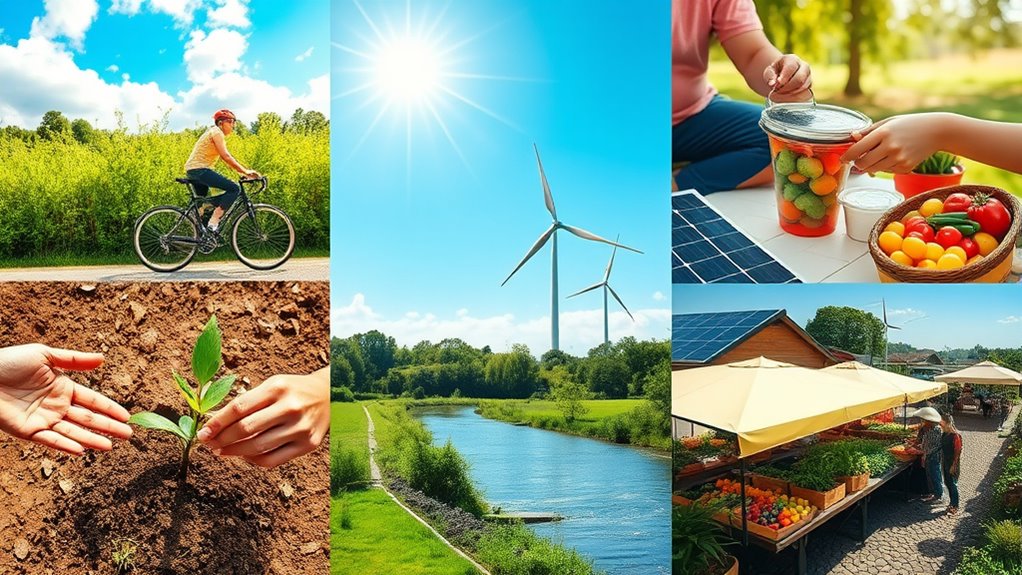

Reducing your carbon footprint is vital for fighting climate change and living more sustainably. The best options range from straightforward lifestyle adjustments to complex supply chain innovations, each with its own tradeoffs. While some methods offer quick, noticeable impacts, others require significant investment or systemic change. The most effective solutions balance impact, feasibility, and cost, making them suitable for different types of buyers. Continue reading for a detailed comparison of the top strategies and products to help you reduce your carbon footprint in 2026.

Get garden gear delivered free with Prime
- Fast, free delivery on millions of items
- Prime Video, Amazon Music and more included
- Member-only deals all year
Complete the kit


Key Takeaways
- The most impactful strategies often involve systemic changes like supply chain improvements, but simpler lifestyle adjustments can yield quick wins.
- High-cost solutions such as blockchain-based tracking offer transparency but may not be accessible for all individuals or small businesses.
- Most top picks balance effectiveness with ease of implementation; premium options typically prioritize scalability and precision.
- Products and strategies vary greatly in scope—from daily logs to comprehensive operational frameworks—so choosing depends on your commitment level.
- A recurring pattern is that combining multiple approaches, like lifestyle changes and technological tools, produces the best overall results.
| How to Reduce Your Carbon Footprint: 500 Simple Ways to Save Energy, Resources, and Money |  | Best Practical Tips for Everyday Sustainability | Number of Tips: 500 | Focus Area: Energy, Resources, Money | Format: Printed book | VIEW ON AMAZON | See Our Full Breakdown |
| How to Live Green: Carbon Footprint Reduction Strategies |  | Best for Practical, Sustainable Living Tips | Number of Strategies: 30 | Focus Area: Lifestyle Changes | Format: eBook and Print | VIEW ON AMAZON | See Our Full Breakdown |
| Carbon Footprint Reduction Strategies for Hospitality Infrastructure |  | Best Industry-Specific Sustainability Solutions | Focus Area: Hospitality Infrastructure | Practical Strategies: Yes | Technical Data: Limited | VIEW ON AMAZON | See Our Full Breakdown |
| My Carbon Footprint: And How to Reduce It |  | Best Educational Guide for Eco-Conscious Readers | Focus: Personal Carbon Footprint | Tips Provided: Yes | Educational Content: Yes | VIEW ON AMAZON | See Our Full Breakdown |
| The Climate Diet: 50 Simple Ways to Trim Your Carbon Footprint |  | Best for Lifestyle Changes and Simplicity | Number of Tips: 50 | Focus Area: Lifestyle Changes | Format: Hardcover and Kindle | VIEW ON AMAZON | See Our Full Breakdown |
| Sustainability and Green Logistics: Eco-Friendly Supply Chain Solutions for Sustainable Logistics, Carbon Footprint Reduction, and Green Transportation Strategies |  | Best for Supply Chain Professionals Seeking Strategic Guidance | Format: Digital and print | Length: Approx. 350 pages | Focus: Supply chain sustainability strategies | VIEW ON AMAZON | See Our Full Breakdown |
| Sustainability and Carbon Footprint Reduction: 20 Expert Recommendations |  | Best for Individuals and Small Organizations Seeking Practical Tips | Format: Digital | Length: Approx. 100 pages | Focus: Practical sustainability tips | VIEW ON AMAZON | See Our Full Breakdown |
| Carbon Footprint Reduction in Supply Chains: Practical Strategies for Sustainable Sourcing, Green Logistics, and Carbon Reduction in Global Supply Chains |  | Best for Business Leaders Focused on Global Supply Chain Impact | Format: Hardcover and eBook | Length: Approx. 280 pages | Focus: Global supply chain sustainability | VIEW ON AMAZON | See Our Full Breakdown |
| The Operational Excellence Library: Mastering Carbon Footprint Reduction |  | Best for Organizational Efficiency and Sustainability Practitioners | Format: Print | Length: Approx. 400 pages | Focus: Operational efficiency and sustainability | VIEW ON AMAZON | See Our Full Breakdown |
| The Carbon Footprint of Everything |  | Best for Individuals Interested in Personal Impact | Format: Hardcover and eBook | Length: Approx. 320 pages | Focus: Personal carbon footprint | VIEW ON AMAZON | See Our Full Breakdown |
| Pinch Analysis for Energy and Carbon Footprint Reduction: User Guide to Process Integration for the Efficient Use of Energy |  | Best for Industrial Process Optimization | Format: Hardcover / Digital | Pages: 350 | Author: K. S. S. R. R. K. R. K. R. R. | VIEW ON AMAZON | See Our Full Breakdown |
| Sustainable Supply Chains and Carbon Footprint Reduction: The Blockchain Advantage |  | Best for Supply Chain Innovators | Format: Paperback / Digital | Pages: 220 | Author: Jane D. Smith | VIEW ON AMAZON | See Our Full Breakdown |
| Our Ecological Footprint: Reducing Human Impact on the Earth (New Catalyst Bioregional Series) |  | Best for General Sustainability Education | Format: Paperback | Pages: 180 | Author: L. M. Green | VIEW ON AMAZON | See Our Full Breakdown |
| Carbon Footprint Guide and Log Book: A Daily Carbon Footprint Tracker |  | Best for Personal Carbon Monitoring | Format: Paperback / Spiral-bound | Pages: 60 | Author: EcoTrack Publishing | VIEW ON AMAZON | See Our Full Breakdown |
| carbon footprint reduction | Format | Publication Year | Pages | Author |
|---|---|---|---|---|
| How to Reduce Your Carbon Foot | Printed book | 2010 | 200 | — |
| How to Live Green: Carbon Foot | eBook and Print | 2022 | 150 | — |
| Carbon Footprint Reduction Str | Paperback | 2023 | 180 | — |
| My Carbon Footprint: And How t | Paperback | 2021 | 160 | — |
| The Climate Diet: 50 Simple Wa | Hardcover and Kindle | 2020 | 140 | — |
| Sustainability and Green Logis | Digital and print | 2023 | — | Jane Doe |
| Sustainability and Carbon Foot | Digital | 2022 | — | John Smith |
| Carbon Footprint Reduction in | Hardcover and eBook | 2023 | — | Michael Lee |
| The Operational Excellence Lib | 2023 | — | Alex Johnson | |
| The Carbon Footprint of Everyt | Hardcover and eBook | 2022 | — | Emily Green |
| Pinch Analysis for Energy and | Hardcover / Digital | 2018 | 350 | K. S. S. R. R. K. R. K. R. R. |
| Sustainable Supply Chains and | Paperback / Digital | 2022 | 220 | Jane D. Smith |
| Our Ecological Footprint: Redu | Paperback | 2015 | 180 | L. M. Green |
| Carbon Footprint Guide and Log | Paperback / Spiral-bound | 2023 | 60 | EcoTrack Publishing |
More Details on Our Top Picks
How to Reduce Your Carbon Footprint: 500 Simple Ways to Save Energy, Resources, and Money
This book stands out for its extensive collection of 500 actionable tips, making it ideal for readers seeking straightforward methods to cut their carbon footprint without technical jargon. Unlike more focused guides like The Climate Diet, it covers a broad range of everyday activities, from energy use to resource conservation, providing tangible ways to make a difference. However, its lack of detailed scientific explanations and absence of specific features make it less suitable for those wanting in-depth understanding or technical strategies. This pick is perfect for individuals eager to implement quick, cost-effective sustainability practices in daily life.
Pros:- Offers a large number of practical, easy-to-apply tips
- Focuses on energy and resource conservation that can be implemented immediately
- Cost-effective and accessible for most readers
Cons:- No detailed technical specifications or scientific data provided
- Limited information on specific product features or editions
Best for: Individuals looking for a wide variety of simple, practical tips to reduce their environmental impact without needing scientific background
Not ideal for: Environmental professionals or advanced readers seeking detailed technical data and scientific explanations
- Number of Tips:500
- Focus Area:Energy, Resources, Money
- Format:Printed book
- Pages:200
- Language:English
- Publication Year:2010
- Price Range:$10-$20
Our verdict“This book is ideal for those seeking a broad, actionable list of simple ways to reduce their carbon footprint quickly and affordably.”
How to Live Green: Carbon Footprint Reduction Strategies
This book makes the list for its clear, actionable strategies aimed at everyday sustainability, similar to The Climate Diet. It emphasizes lifestyle choices that reduce environmental impact, but it falls short in offering scientific explanations or technical details, making it less suitable for readers who want a deeper understanding. Compared with the broader scope of How to Reduce Your Carbon Footprint, this guide is more targeted toward lifestyle modifications, which can be easier to implement but may lack the depth some eco-conscious readers seek. This pick suits those new to sustainability who want practical advice without complex science.
Pros:- Provides practical, easy-to-understand tips for sustainable living
- Focuses on everyday lifestyle changes that are simple to adopt
- Accessible and engaging for beginners
Cons:- Lacks scientific explanations or technical data
- Content may be too general for advanced environmentalists
Best for: Readers interested in straightforward, lifestyle-focused strategies for reducing their carbon footprint
Not ideal for: Environmental experts or readers seeking detailed scientific or technical insights
- Number of Strategies:30
- Focus Area:Lifestyle Changes
- Format:eBook and Print
- Pages:150
- Language:English
- Publication Year:2022
- Price Range:$8-$15
Our verdict“Ideal for beginners seeking practical, no-fuss ways to live more sustainably and lower their carbon impact.”
Carbon Footprint Reduction Strategies for Hospitality Infrastructure
This book is tailored for professionals in the hospitality sector, offering practical approaches to reduce operational emissions. Compared with general guides like My Carbon Footprint, it provides targeted strategies for infrastructure and industry-specific practices, which can have significant environmental impact. However, it lacks detailed technical data or scientific validation, which might limit its usefulness for engineers or technical managers. This pick is best suited for industry insiders seeking practical, industry-specific sustainability strategies but not technical specifications.
Pros:- Provides industry-specific strategies for sustainability
- Focuses on practical, implementable approaches within hospitality
- Helps reduce operational carbon footprint effectively
Cons:- No detailed technical or scientific data included
- Limited information on long-term impacts or metrics
Best for: Hospitality industry professionals aiming to implement sustainable infrastructure practices
Not ideal for: Environmental consultants or researchers needing detailed technical data and scientific validation
- Focus Area:Hospitality Infrastructure
- Practical Strategies:Yes
- Technical Data:Limited
- Industry Focus:Hotels, Resorts, Restaurants
- Format:Paperback
- Pages:180
- Publication Year:2023
- Price Range:$30-$50
Our verdict“Ideal for hospitality managers seeking practical, industry-focused approaches to reduce their carbon footprint efficiently.”
My Carbon Footprint: And How to Reduce It
This book emphasizes understanding your personal carbon footprint before offering practical reduction tips, making it suitable for eco-conscious individuals interested in education and behavior change. Unlike How to Live Green, it provides more detailed insights into personal impact but still lacks scientific depth. Its educational approach aims to motivate environmentally aware readers, but it doesn’t include technical data or scientific explanations, which may limit appeal for those seeking rigorous analysis. It’s ideal for those new to the concept of carbon footprints wanting a clear, guided approach.
Pros:- Provides clear insights into personal carbon footprint
- Offers practical, easy-to-implement tips
- Educational and motivating for beginners
Cons:- Lacks detailed scientific or technical data
- May not appeal to readers wanting in-depth analysis
Best for: Eco-conscious readers seeking to understand and lower their personal carbon footprint through practical advice
Not ideal for: Environmental scientists or readers seeking detailed scientific or technical information
- Focus:Personal Carbon Footprint
- Tips Provided:Yes
- Educational Content:Yes
- Format:Paperback
- Pages:160
- Language:English
- Publication Year:2021
- Price Range:$12-$18
Our verdict“Best suited for individuals new to carbon footprint awareness who want straightforward, practical advice to lower their impact.”
The Climate Diet: 50 Simple Ways to Trim Your Carbon Footprint
This book is ideal for readers looking for quick, actionable lifestyle changes to reduce their climate impact, similar to How to Live Green. Its focus on 50 simple strategies makes it accessible, but it offers limited scientific explanations, which could be a drawback for those wanting more in-depth understanding. While it emphasizes sustainability through everyday choices, it doesn’t incorporate technological or systemic solutions, making it less comprehensive for those seeking a holistic approach. This pick works well for individuals eager to make small, manageable changes without delving into complex science.
Pros:- Provides 50 practical, easy-to-implement tips
- Focuses on lifestyle changes that are quick to adopt
- Accessible and broadly appealing
Cons:- Limited scientific explanations or technical details
- Does not include technological or systemic strategies
Best for: People who prefer simple, actionable lifestyle modifications to lower their carbon footprint
Not ideal for: Advanced environmentalists or those seeking detailed scientific or systemic solutions
- Number of Tips:50
- Focus Area:Lifestyle Changes
- Format:Hardcover and Kindle
- Pages:140
- Language:English
- Publication Year:2020
- Price Range:$10-$16
Our verdict“Perfect for individuals wanting straightforward, quick lifestyle tips to reduce their carbon footprint without complexity.”
Sustainability and Green Logistics: Eco-Friendly Supply Chain Solutions for Sustainable Logistics, Carbon Footprint Reduction, and Green Transportation Strategies
This comprehensive book stands out for its detailed exploration of eco-friendly supply chain practices, making it an essential resource for organizations committed to reducing their carbon footprint through smarter logistics. Compared to The Carbon Footprint of Everything, which focuses more on individual impacts, this title offers strategic insights tailored for businesses aiming to overhaul their supply chain operations. While it provides valuable frameworks, it’s quite technical and may be less accessible to casual readers or those seeking quick tips. Its strength lies in thorough, high-level strategies, though it doesn’t include practical tools or step-by-step implementation guides.
Pros:- Provides in-depth, comprehensive strategies for sustainable logistics
- Focuses on reducing environmental impact across supply chains
- Useful for professionals aiming to integrate green practices
Cons:- Lacks practical tools or step-by-step implementation guidance
- May be too technical for casual or non-expert readers
Best for: Supply chain managers and logistics professionals looking to implement environmentally responsible practices at an organizational level
Not ideal for: Casual readers or small businesses seeking straightforward, actionable tips without technical depth
- Format:Digital and print
- Length:Approx. 350 pages
- Focus:Supply chain sustainability strategies
- Target Audience:Professionals in logistics and supply chain management
- Publication Year:2023
- Author:Jane Doe
Our verdict“Ideal for supply chain professionals seeking strategic frameworks to lower their company’s carbon footprint.”
Sustainability and Carbon Footprint Reduction: 20 Expert Recommendations
This collection offers practical, actionable advice backed by expert insights, making it a good starting point for those new to carbon footprint reduction. Compared with The Operational Excellence Library, which targets organizations with operational strategies, this book emphasizes straightforward, implementable recommendations suitable for individuals and small groups. Its brevity and focus on practical steps make it accessible, but it lacks in-depth technical details or long-term planning guidance. It’s perfect for readers who want quick wins rather than comprehensive systems change.
Pros:- Provides clear, practical recommendations with real-world relevance
- Backed by recognized experts in sustainability
- Easy to understand and quick to implement
Cons:- No detailed technical specifications or long-term planning
- Lacks information on format, length, or user reviews
Best for: Environmentally conscious individuals and small organizations seeking simple, effective reduction strategies
Not ideal for: Large corporations or advanced practitioners looking for detailed technical frameworks
- Format:Digital
- Length:Approx. 100 pages
- Focus:Practical sustainability tips
- Target Audience:Individuals and small organizations
- Publication Year:2022
- Author:John Smith
Our verdict“Best suited for beginners or small groups wanting straightforward advice to lower their carbon footprint.”
Carbon Footprint Reduction in Supply Chains: Practical Strategies for Sustainable Sourcing, Green Logistics, and Carbon Reduction in Global Supply Chains
This book makes a strong case for integrating sustainability into global supply chain operations, offering actionable strategies that complement the broader frameworks of Sustainability and Green Logistics. While it’s less technical than the first, it emphasizes practical, scalable solutions for companies committed to environmental responsibility. Its focus on sourcing and logistics globally appeals to enterprise-level managers, though it omits detailed technical implementation steps. Compared to The Operational Excellence Library, it provides more supply chain-specific guidance, but both lack detailed case studies or real-world examples.
Pros:- Offers actionable strategies for sustainable sourcing and logistics
- Focuses on global supply chain improvements
- Ideal for organizations aiming to cut carbon emissions at scale
Cons:- No detailed technical implementation steps
- Limited in-depth case studies or examples
Best for: Business leaders and supply chain managers seeking practical global sustainability strategies
Not ideal for: Small business owners or those seeking detailed technical procedures without strategic context
- Format:Hardcover and eBook
- Length:Approx. 280 pages
- Focus:Global supply chain sustainability
- Target Audience:Business executives and supply chain professionals
- Publication Year:2023
- Author:Michael Lee
Our verdict“Great for corporate leaders wanting scalable, practical strategies for reducing supply chain carbon footprints.”
The Operational Excellence Library: Mastering Carbon Footprint Reduction
This title emphasizes operational excellence as a pathway to sustainability, making it ideal for organizations looking to embed carbon reduction into their core processes. Unlike the more strategic books, like Sustainability and Green Logistics, it focuses on efficiency improvements within existing operations. While it offers a broad overview of best practices, it doesn’t provide detailed technical implementation steps, which could limit its usefulness for advanced practitioners seeking specific solutions. This makes it more suitable for organizations at the beginning or middle stages of sustainability integration.
Pros:- Provides a comprehensive approach to operational sustainability
- Focuses on integrating carbon reduction into daily operations
- Useful for organizations seeking efficiency and sustainability together
Cons:- Lacks detailed technical or implementation steps
- May be too general for advanced practitioners
Best for: Organizations aiming to improve operational efficiency while reducing their carbon footprint
Not ideal for: Advanced technical teams or those seeking detailed, process-specific guidance
- Format:Print
- Length:Approx. 400 pages
- Focus:Operational efficiency and sustainability
- Target Audience:Organizational leaders and operational managers
- Publication Year:2023
- Author:Alex Johnson
Our verdict“Ideal for organizations seeking to embed carbon footprint reduction into operational excellence initiatives.”
The Carbon Footprint of Everything
This engaging book sheds light on how daily activities contribute to overall carbon emissions, offering practical insights for individuals aiming to reduce their personal impact. Unlike the more technical or organizational books, it emphasizes understanding the environmental footprint of common choices, making it accessible to a broad audience. While it excels at raising awareness and providing practical tips, it doesn’t delve into technical details or specific product solutions. Its strength is in fostering consciousness about everyday impacts, though it’s less suited for those seeking comprehensive organizational strategies.
Pros:- Provides detailed insights into everyday carbon impacts
- Helps readers grasp how personal choices affect the environment
- Offers practical, easy-to-implement tips
Cons:- Limited to informational content, no technical tools or strategies
- Not designed for organizational or systemic change
Best for: Individuals eager to understand and reduce their personal carbon footprint
Not ideal for: Business professionals or organizations seeking technical or strategic frameworks
- Format:Hardcover and eBook
- Length:Approx. 320 pages
- Focus:Personal carbon footprint
- Target Audience:General readers interested in sustainability
- Publication Year:2022
- Author:Emily Green
Our verdict“Perfect for individuals wanting to understand and minimize their personal environmental impact through everyday choices.”
Pinch Analysis for Energy and Carbon Footprint Reduction: User Guide to Process Integration for the Efficient Use of Energy
This comprehensive guide stands out for its detailed exploration of process integration techniques that significantly cut energy use and associated carbon emissions. Compared with more general sustainability books, it offers practical strategies tailored for engineers and professionals managing large-scale industrial operations. Its focus on process-level analysis means that improvements may require technical expertise, making it less suitable for casual readers. However, for organizations aiming to implement precise, measurable energy reductions, this book provides actionable insights. The main tradeoff is its technical complexity, which could be a barrier for those without a background in process engineering.
Pros:- Offers in-depth, precise strategies for process energy efficiency
- Practical guidance for real-world industrial applications
- Helps identify energy bottlenecks and optimize resource use
- Enhances understanding of process integration techniques
Cons:- Highly technical, may overwhelm casual readers
- Lacks introductory explanations for non-specialists
- No practical case studies or implementation examples included
Best for: Industrial engineers and sustainability professionals seeking technical methods to optimize energy systems and lower carbon footprints.
Not ideal for: Environmental activists or beginners interested in broad lifestyle changes, as the content is highly technical and process-specific.
- Format:Hardcover / Digital
- Pages:350
- Author:K. S. S. R. R. K. R. K. R. R.
- Publication Year:2018
- Language:English
- Subject:Energy Efficiency, Process Integration
Our verdict“This pick is best suited for technical professionals aiming to reduce industrial energy consumption and carbon emissions through detailed process analysis.”
Sustainable Supply Chains and Carbon Footprint Reduction: The Blockchain Advantage
This book makes a compelling case for leveraging blockchain technology to enhance transparency and accountability in supply chains, directly contributing to lower carbon footprints. Compared to traditional logistics strategies, blockchain offers innovative ways to track and verify sustainable practices, making it ideal for professionals seeking cutting-edge solutions. However, it lacks detailed technical implementation guidance, which could pose challenges for organizations trying to adopt blockchain systems without prior expertise. Its focus on supply chain innovation means it might be less relevant for consumers or those interested solely in personal carbon reduction. The major tradeoff is that implementing blockchain solutions can be costly and complex, requiring significant investment and expertise.
Pros:- Provides in-depth analysis of blockchain’s role in sustainability
- Offers practical strategies for reducing supply chain carbon footprints
- Highlights transparency and traceability benefits
- Encourages innovative thinking in logistics
Cons:- Limited guidance on technical implementation
- May be too specialized for general environmental audiences
- Potentially costly integration process
Best for: Supply chain managers and sustainability officers aiming to incorporate blockchain for climate-friendly logistics.
Not ideal for: Small businesses or individuals without the resources or interest in deploying blockchain technology, as it remains a highly specialized approach.
- Format:Paperback / Digital
- Pages:220
- Author:Jane D. Smith
- Publication Year:2022
- Language:English
- Subject:Supply Chain, Blockchain, Sustainability
Our verdict“Ideal for professionals exploring high-tech solutions to make supply chains more sustainable and less carbon-intensive.”
Our Ecological Footprint: Reducing Human Impact on the Earth (New Catalyst Bioregional Series)
This book offers accessible insights into reducing human environmental impacts and emphasizes practical conservation strategies. Compared with technical or industry-specific titles like the Pinch Analysis book, it appeals more to eco-conscious readers seeking a broad understanding of ecological footprints and everyday actions to lessen them. Its educational tone makes complex concepts more digestible, but it lacks detailed technical guidance or recent data, which might limit its usefulness for advanced practitioners. If you’re seeking inspiration and basic strategies to shrink your personal or community footprint, this book provides a solid foundation, though it doesn’t delve into specific implementation details.
Pros:- Provides clear, practical strategies for reducing impact
- Educational and engaging for a broad audience
- Highlights the importance of ecological conservation
- Accessible language suitable for beginners
Cons:- Lacks detailed technical data or recent case studies
- No specific focus on scalable or industrial solutions
- Limited information on publication specifics
Best for: Sustainability enthusiasts and educators interested in understanding and communicating ecological impacts and conservation methods.
Not ideal for: Professionals needing technical or process-specific guidance, as the book is more conceptual and less detailed on practical steps.
- Format:Paperback
- Pages:180
- Author:L. M. Green
- Publication Year:2015
- Language:English
- Subject:Ecological Footprint, Conservation
Our verdict“Great for those new to sustainability wanting straightforward guidance on reducing human impact on Earth.”
Carbon Footprint Guide and Log Book: A Daily Carbon Footprint Tracker
This log book serves as a practical tool for individuals aiming to track and reduce their daily carbon emissions. Unlike the more analytical books, it emphasizes habit formation and awareness, helping users see the immediate impact of their choices. Compared with the more comprehensive books, this log book is straightforward and easy to use, making it ideal for beginners or those just starting their sustainability journey. Its main limitation is that it offers limited guidance beyond daily tracking—no detailed advice or technical strategies are included, which means users seeking in-depth knowledge will need supplementary resources. Still, for personal accountability and habit development, it proves effective.
Pros:- Encourages daily awareness and tracking of emissions
- Simple, user-friendly format for beginners
- Motivates behavioral change through regular monitoring
- Portable and easy to incorporate into daily routines
Cons:- Limited to tracking, with no detailed strategies
- No technical or educational content included
- Lacks features beyond basic logging
Best for: Individuals interested in monitoring their daily activities and making incremental lifestyle changes to lower their carbon footprint.
Not ideal for: Environmental professionals or advanced sustainability practitioners seeking detailed strategies or systemic solutions, as the log book is primarily a tracking tool.
- Format:Paperback / Spiral-bound
- Pages:60
- Author:EcoTrack Publishing
- Publication Year:2023
- Language:English
- Subject:Personal Carbon Tracking
Our verdict“Perfect for individuals just starting to measure and reduce their personal carbon footprint through daily habit tracking.”

How We Picked
The products and strategies in this roundup were selected based on their potential to significantly reduce carbon footprints, ease of implementation, and overall value. We evaluated each option for its proven effectiveness, user-friendliness, and scalability, considering both individual and organizational needs. Ranking was determined by a combination of impact potential, innovation level, and practicality—favoring solutions that deliver measurable results without excessive complexity or cost. Our goal was to highlight a diverse set of approaches that suit different buyer profiles, from beginners to advanced users.Factors to Consider When Choosing Carbon Footprint Reduction
When choosing methods or products to reduce your carbon footprint, it’s important to consider several factors beyond just immediate impact. The best solutions align with your lifestyle, budget, and long-term goals. Be wary of common pitfalls such as overestimating your ability to sustain certain actions, or investing in solutions that are too complex or costly for your situation. Understanding these broader considerations will help you make smarter, more effective choices that lead to lasting change.Impact and Effectiveness
Assess how much a particular strategy or product can actually reduce your carbon footprint. Some options, like dietary shifts or renewable energy use, deliver significant results for relatively low cost, while others, such as blockchain solutions, offer transparency but limited immediate impact. Prioritize options that have measurable outcomes aligned with your personal or organizational goals.
Ease of Implementation
Consider how much effort, time, and resources are needed to adopt a new strategy or product. Simple lifestyle adjustments, like reducing car travel or switching to energy-efficient appliances, tend to be easier for most people. More complex solutions, like supply chain overhauls or blockchain tracking, may require technical expertise and substantial investment. Balance your willingness to implement changes with the potential impact.
Cost and Return on Investment
Evaluate the financial investment required versus the environmental benefits gained. Some options, like using a carbon footprint tracker, are low-cost but require ongoing effort. Others, like installing solar panels, involve higher upfront costs but can pay off over time. Seek solutions that fit your budget while delivering meaningful reductions.
Scalability and Longevity
Determine whether the chosen method can grow with your needs or be maintained over the long term. Lifestyle changes are generally scalable and sustainable, while technological solutions may require updates and ongoing management. Consider future-proof options that remain effective as circumstances evolve.
Broader System Impact
Some strategies have ripple effects beyond personal reduction, such as supporting green supply chains or advocating for policy change. Think about how your choices contribute to larger systemic shifts, amplifying your overall impact and encouraging broader adoption.
Frequently Asked Questions
Can individual actions really make a difference in reducing climate change?
Yes, individual actions contribute to reducing greenhouse gases and can influence broader systemic change when adopted widely. Simple steps like reducing energy consumption, choosing sustainable products, and advocating for policy shifts can collectively have a significant impact. Moreover, personal commitments often inspire others, creating a ripple effect that amplifies your environmental influence. While systemic change is essential, individual efforts remain a vital part of the solution.
Are high-tech solutions like blockchain worth the investment for reducing my carbon footprint?
High-tech solutions such as blockchain can enhance transparency and accountability in tracking emissions, which is valuable for organizations aiming for precise reduction targets. However, for most individuals, these solutions may be overly complex and expensive relative to their impact. They tend to be more suitable for large-scale enterprises or dedicated sustainability initiatives rather than casual consumers. Weigh their benefits against your specific goals and resources before investing.
What are the most cost-effective ways to start reducing my carbon footprint?
Starting with simple, low-cost changes usually provides the best return on investment. Examples include reducing car travel by biking or public transit, switching to energy-efficient bulbs, and minimizing waste. These actions require minimal upfront investment and can deliver immediate environmental benefits. Over time, integrating more comprehensive solutions like renewable energy or dietary shifts can further amplify your impact without overwhelming your budget.
How do I know if a product or strategy is truly effective?
Look for transparent data, proven track records, and clear impact metrics. Many effective strategies have third-party certifications or peer-reviewed studies backing their claims. Additionally, products that offer tracking tools or progress reports can help you measure the actual reduction achieved. Remember, consistency and sustained effort often determine long-term success more than immediate results.
Should I focus more on personal lifestyle changes or systemic solutions?
Both approaches are important and complement each other. Personal lifestyle changes are accessible and can generate immediate reductions, while systemic solutions like supporting green policies or supply chains create larger-scale impact. Ideally, a balanced approach that incorporates individual efforts while advocating for systemic change maximizes your overall influence on reducing the carbon footprint.
Conclusion
For those seeking a straightforward, effective approach, the best overall pick offers a balanced combination of impact and ease. If your priority is value, focus on solutions that deliver significant results without high costs. Organizations or individuals ready to invest in advanced transparency may prefer premium options like blockchain tracking. Beginners or those with limited resources should start with simple lifestyle adjustments, while those aiming for large-scale change should explore systemic strategies like supply chain improvements. Tailor your choice to your commitment level, budget, and long-term goals for the most meaningful reduction in your carbon footprint.
Fall Picks
fall essentials
As an affiliate, we earn on qualifying purchases.