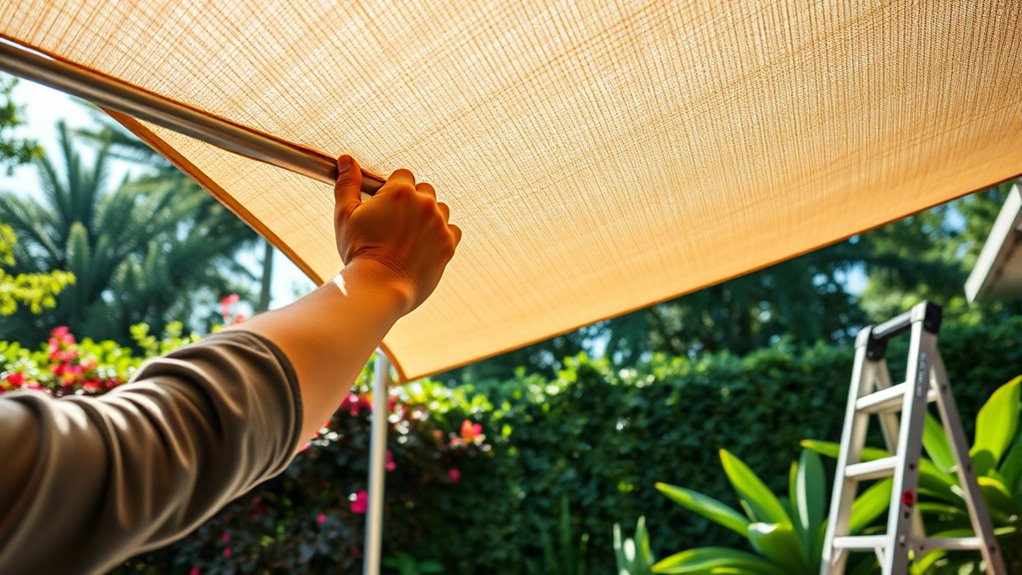

When installing shade cloth, choose a type with at least 80% UV protection that suits your wind resistance needs, such as tightly woven or reinforced fabrics. Secure it firmly to sturdy posts or frames, ensuring it’s tightly tensioned to prevent flapping or damage. Use durable grommets and strong fasteners for best stability. Proper height and angle improve airflow and effectiveness. Keep these tips in mind, and you’ll guarantee your shade cloth performs well and lasts longer. More helpful details follow.
Key Takeaways
- Choose the appropriate shade cloth type based on UV protection, wind resistance, and weather durability needs.
- Install the shade cloth slightly above plants or seating areas to improve airflow and shading effectiveness.
- Secure the cloth with reinforced edges, grommets, and sturdy fasteners to prevent wind damage and flapping.
- Ensure proper tensioning to avoid sagging or acting like a sail, reducing the risk of tear or dislodgement.
- Regularly inspect and maintain the installation for wear, tears, or loose fasteners to prolong lifespan and performance.
Are you ready to protect your plants or outdoor space from harsh sun and heat? Installing shade cloth is an effective way to do it, but choosing the right type and ensuring proper installation are essential for best results. One of the key factors to think about is UV protection. Not all shade cloths are created equal—some block more UV rays than others, which is crucial for safeguarding delicate plants from sunburn and damage. When shopping, look for shade cloths labeled with high UV protection ratings, typically around 80% or higher, to guarantee your plants receive adequate shielding. This not only prolongs their health but also reduces stress caused by intense sunlight.
Choose shade cloths with at least 80% UV protection to safeguard delicate plants from sun damage.
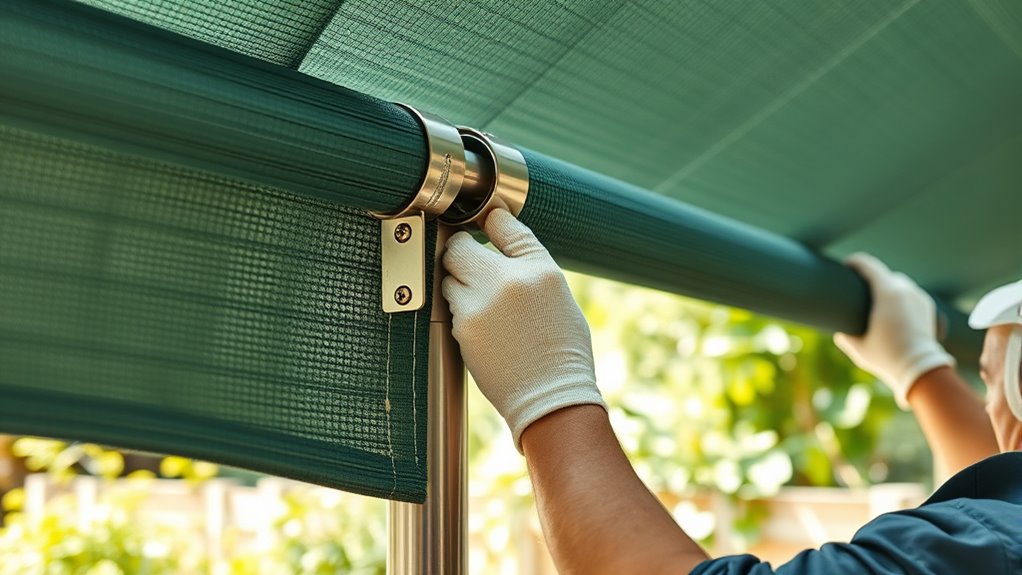
Wind resistance is another important aspect to ponder when selecting shade cloth. Outdoor environments can be unpredictable, with gusts that can rip or loosen your shade structure if it’s not properly secured. A well-designed shade cloth should have reinforced edges and grommets, allowing you to secure it tightly to your frame or support structure. This prevents it from flapping excessively in the wind, which can cause tears or damage over time. Opt for a durable, tightly woven material that offers high wind resistance, and make sure your installation method includes strong fasteners or ties. Proper tensioning is also essential; a loosely fitted shade cloth can act like a sail in the wind, increasing the risk of damage.
Additionally, understanding the durability of shade cloth material can help you choose a product that withstands harsh weather conditions over time. When installing your shade cloth, think about the height and angle at which it’s mounted. Raising it slightly above your plants or seating area can improve airflow, reducing heat buildup and making the shade more effective. Attaching the cloth securely to sturdy posts or a frame guarantees it remains in place even during strong winds. Regular checks and maintenance will help prolong its lifespan; look for signs of wear, tears, or fraying, and replace or repair sections as needed. Proper installation and choosing a high-quality shade cloth with excellent UV protection and wind resistance will give you peace of mind, knowing your outdoor space is well-shielded from the sun’s harsh rays and gusty conditions.
Ultimately, investing in the right shade cloth and installing it correctly can transform your outdoor environment into a cooler, more comfortable area. You’ll enjoy your outdoor space longer, whether for relaxing, entertaining, or protecting sensitive plants. With attention to UV protection and wind resistance, your shade cloth will serve you well through changing seasons and weather patterns, providing reliable coverage and peace of mind.
Frequently Asked Questions
How Long Does Shade Cloth Typically Last Outdoors?
Shade cloth typically lasts between 5 to 10 years outdoors, depending on UV resistance and material durability. If you choose high-quality fabric with strong UV resistance, it’ll withstand sun exposure longer without fading or tearing. Regular maintenance, like cleaning and checking for wear, can also extend its lifespan. Keep in mind, exposure to harsh weather conditions may shorten its durability, so select a durable material suited for your climate.
Can Shade Cloth Be Used for Privacy Purposes?
Yes, shade cloth can be used for privacy purposes. It offers privacy benefits by providing effective visual screening, blocking the view from neighbors or passersby. You can choose a denser weave for more privacy or a lighter one for some visibility. Installing shade cloth along fences or outdoor structures creates a private retreat, giving you a sense of seclusion while still enjoying outdoor space.
Is Shade Cloth Suitable for Windy Locations?
Shade cloth can be suitable for windy locations if you choose one with good wind resistance and durable material. Look for high-quality, tightly woven fabrics designed to withstand strong gusts. Secure the cloth firmly using sturdy eyelets and strong fasteners, and consider installing additional support structures like posts or braces. Proper installation guarantees your shade cloth stays in place, providing effective coverage without tearing or shifting in windy conditions.
How Does Shade Percentage Affect Light and Heat Reduction?
Higher shade percentages block more light transmission, considerably reducing sunlight and heat. For example, a 70-80% shade cloth provides better heat mitigation and minimizes glare, making your space cooler and more comfortable. Conversely, lower percentages like 30-50% allow more light through, offering some heat reduction but maintaining brightness. Choose your shade percentage based on how much light and heat you want to block for ideal comfort and energy efficiency.
Are There Eco-Friendly or Biodegradable Shade Cloth Options?
You’ll be amazed how eco-friendly options can make a difference; biodegradable shade cloths are like the superheroes of sustainability. These options are made from biodegradable materials that break down naturally, leaving no harmful residue. You can confidently choose eco-friendly options, knowing they’re better for the environment. By selecting biodegradable materials, you reduce your carbon footprint and contribute to a greener planet, all while enjoying effective shade and heat reduction.
Conclusion
As you weave your shade cloth into place, think of it as planting a protective canopy over your space—a shield against harsh sun and relentless heat. With each secure attachment, you’re crafting a sanctuary, a gentle embrace that nurtures growth and comfort. Remember, your careful installation is like tending a garden: patience and precision will yield a shaded oasis where life thrives beneath your watchful care. Your effort transforms open space into a haven of cool, shaded serenity.