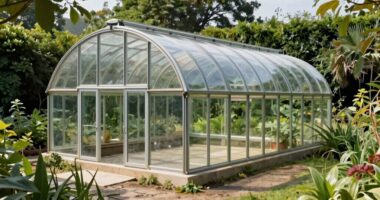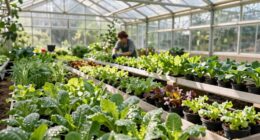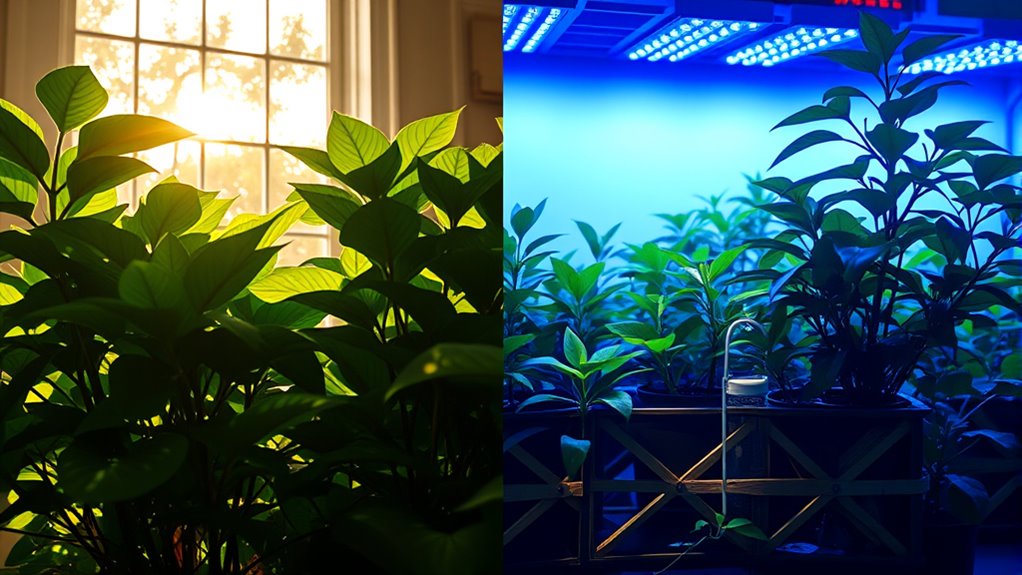

Natural light offers a full spectrum and is the most energy-efficient way to grow plants, but it’s not always available indoors or in low-light areas. Supplemental grow lights, especially LED options, fill in the gaps, providing specific wavelengths like blue for vegetative growth and red for flowering. Balancing natural and artificial light guarantees healthy, vibrant plants while reducing energy use. Keep exploring to discover how to optimize your lighting setup effectively.

Get garden gear delivered free — and shop member deals
- Fast, free delivery on millions of items
- Access to Prime Big Deal Days deals on October 6–7
- Prime Video, Amazon Music and more included
Key Takeaways
- Natural light offers a full spectrum, supporting plant growth without energy costs, while supplemental grow lights fill light gaps indoors.
- Grow lights, especially LEDs, can be tailored to emit specific wavelengths like blue and red for optimal plant development.
- Natural light is the most energy-efficient option, but supplemental lights are essential indoors or in low-light conditions.
- Proper use of supplemental grow lights enhances plant health, especially when natural light is insufficient or inconsistent.
- Combining natural light with energy-efficient grow lights creates a balanced, sustainable environment for healthy plant growth.
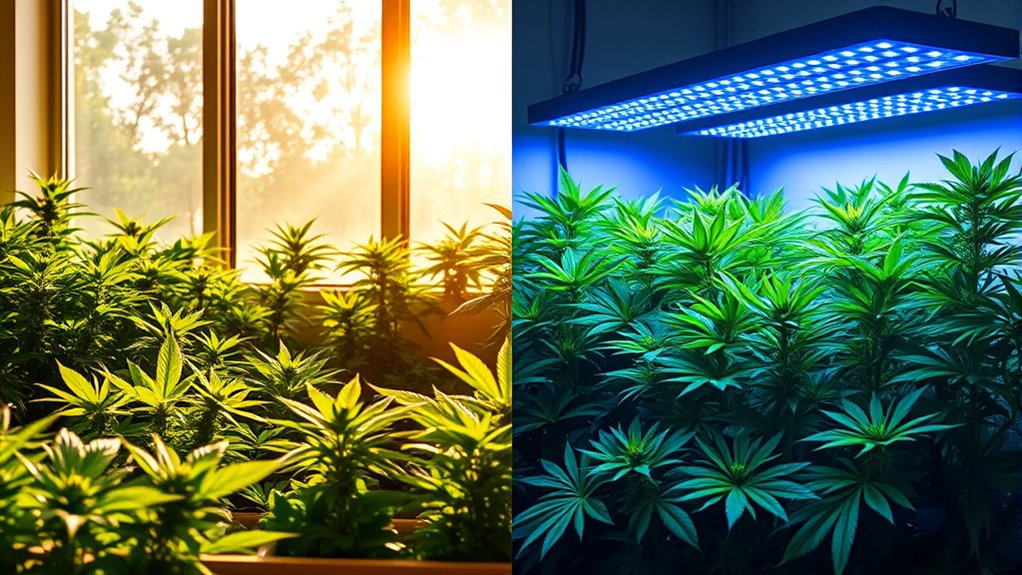
Have you ever wondered how lighting can transform a space? Lighting is more than just illuminating a room; it shapes how you perceive your environment and impacts the growth and health of plants, especially when using supplemental grow lights. When considering lighting options, it’s essential to understand the role of the light spectrum and energy efficiency. The light spectrum refers to the range of wavelengths emitted by a light source, and different spectrums influence everything from plant growth to mood. Natural light provides a full spectrum, offering a balanced range of wavelengths that support plants’ photosynthesis and your well-being. However, when natural light isn’t sufficient, supplemental grow lights step in to fill the gaps, and choosing the right type depends heavily on understanding the light spectrum they emit.
Lighting transforms spaces by shaping perception, supporting plant growth, and enhancing well-being through the right spectrum and energy-efficient choices.
Choosing grow lights with a broad light spectrum ensures your plants receive the necessary wavelengths for healthy development. Full-spectrum LED grow lights, for example, mimic natural sunlight more closely than traditional options, offering a balanced mix of blue, red, and other wavelengths. This spectrum is essential because blue light encourages vegetative growth, while red light promotes flowering and fruiting. When you pick the right spectrum, your plants grow stronger and more vibrant, and you maximize the benefits of your lighting setup. Additionally, understanding energy efficiency is critical. Modern grow lights, especially LEDs, are designed to consume less power while delivering high-intensity light, meaning you get more effective illumination with less electricity. This efficiency not only reduces your energy bills but also minimizes your environmental impact.
Natural light remains the most energy-efficient source, since it requires no electricity and provides a full spectrum naturally. However, its availability varies by season, weather, and your geographical location. When natural light isn’t enough, supplemental grow lights become essential, but it’s important to select ones that optimize energy efficiency. LED grow lights are a popular choice because they convert electrical energy into usable light more effectively than older technologies like fluorescent or HID lights. This means you use less power to achieve the same, or better, lighting results. Furthermore, energy-efficient grow lights generate less heat, which reduces cooling costs and creates a safer environment for your plants.
Understanding the importance of spectral quality in grow lights is key to maximizing plant health and productivity. In essence, the key to effective lighting lies in balancing the light spectrum with energy efficiency. Natural light offers the ideal full spectrum at no cost, but supplemental grow lights can bridge the gaps when sunlight isn’t enough. By choosing lights that emit the right spectrum and prioritize energy efficiency, you guarantee your plants thrive while keeping your energy consumption manageable. Understanding these aspects allows you to create a lighting environment that’s both sustainable and tailored to your needs, whether you’re growing indoors or just seeking better illumination for your space.
full spectrum LED grow lights for plants
As an affiliate, we earn on qualifying purchases.
As an affiliate, we earn on qualifying purchases.
Frequently Asked Questions
How Does Light Spectrum Affect Plant Growth?
The light spectrum directly impacts your plant growth by influencing photosynthesis and overall health. A full spectrum improves light quality, ensuring your plants receive the right wavelengths for ideal development. Blue light promotes vegetative growth, while red light enhances flowering. By providing the appropriate light spectrum, you help maximize photosynthesis, leading to healthier, faster-growing plants. Adjusting your grow lights to match these spectra can considerably boost your gardening success.
Can Supplemental Grow Lights Replace Natural Sunlight Completely?
You might think supplemental grow lights could totally replace natural sunlight, but that’s an exaggeration. While they provide essential light, they can’t fully mimic the full spectrum or intensity of sunlight, especially considering issues like light pollution and the right light duration plants need. Natural sunlight offers a balanced, continuous spectrum, making it irreplaceable for ideal growth. So, while helpful, grow lights aren’t a complete substitute.
Which Grow Light Type Is Most Energy-Efficient?
You’ll find LED grow lights are the most energy-efficient option available. Their efficiency comparison shows they consume less power while providing ideal light for your plants, leading to significant energy savings. Unlike traditional HID or fluorescent lights, LEDs produce less heat and use less electricity, making them cost-effective and environmentally friendly. Choosing LED grow lights helps you maximize energy efficiency and reduces your overall energy consumption for healthier, thriving plants.
How Do I Determine the Right Light Intensity for My Plants?
You might worry about overexposing your plants, but using light measurement tools can help. To determine the right light intensity, monitor your plants’ response, noting leaf color and growth rate. Adjust your supplemental grow lights based on the photoperiod control settings, ensuring your plants receive consistent, ideal light for healthy development. Regularly measuring and fine-tuning creates a balanced environment that maximizes growth without stress.
What Are Common Troubleshooting Issues With Grow Lights?
You might face troubleshooting issues like uneven light distribution, which can be corrected through proper light fixture maintenance. If plants aren’t thriving, check if your light cycle adjustments align with their growth stage. Ensure your grow lights are functioning correctly, and replace any faulty bulbs. Regularly clean fixtures and reflectors, and tweak light duration and intensity as needed to optimize growth and prevent issues like stretch or weak stems.
Conclusion
Think of your grow space as a garden needing sunlight to flourish. Natural light is like a warm, golden sunrise—beautiful and free, but sometimes limited. Supplemental grow lights are your reliable moonlight, shining steadily when nature’s offering falls short. By understanding and blending both, you’ll nurture your plants into a vibrant, thriving oasis. Remember, mastering this balance is like tending a delicate symphony—each note playing a essential role in creating harmony and growth.
Halloween Picks
halloween
As an affiliate, we earn on qualifying purchases.