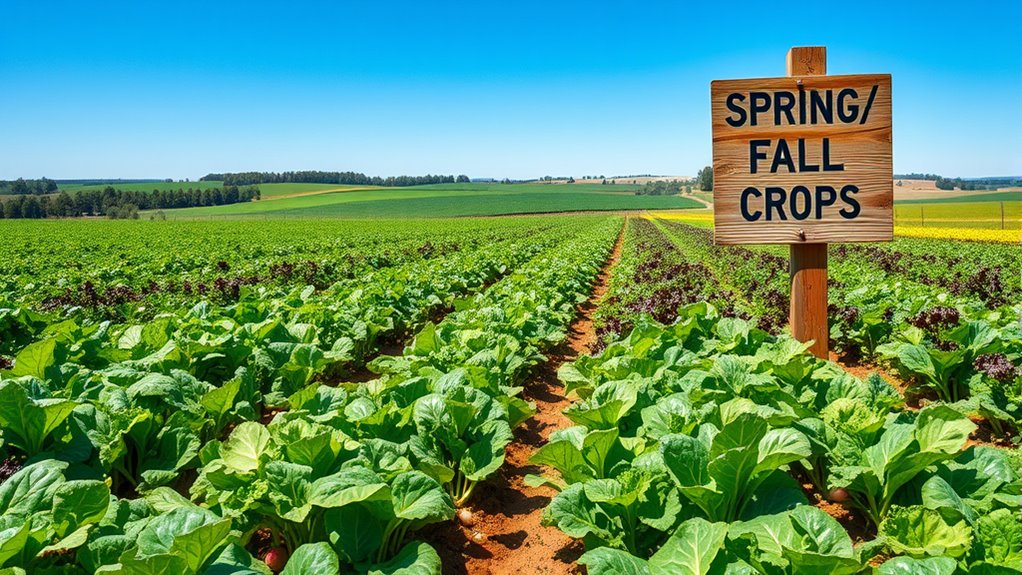

To choose crops for shoulder seasons like spring and fall, focus on hardy vegetables that tolerate cooler weather, such as kale, carrots, Brussels sprouts, and root vegetables. Prepare your soil in advance with compost, and mulch to protect from cold temperatures. Timing is key: plant early enough in fall or spring so crops can establish before frost. If you want effective tips for selecting the best crops and maximizing your garden’s productivity, keep exploring more.
Key Takeaways
- Select hardy crops like kale, Brussels sprouts, and carrots that tolerate frost and cooler temperatures.
- Prepare well-drained, nutrient-rich soil with compost and adjust pH for optimal growth.
- Time planting early in fall or spring to allow crops to establish before frost or warm-up.
- Use mulching to insulate roots, conserve moisture, and protect plants from temperature extremes.
- Incorporate cover crops to improve soil health, suppress weeds, and enhance sustainability during transitional seasons.
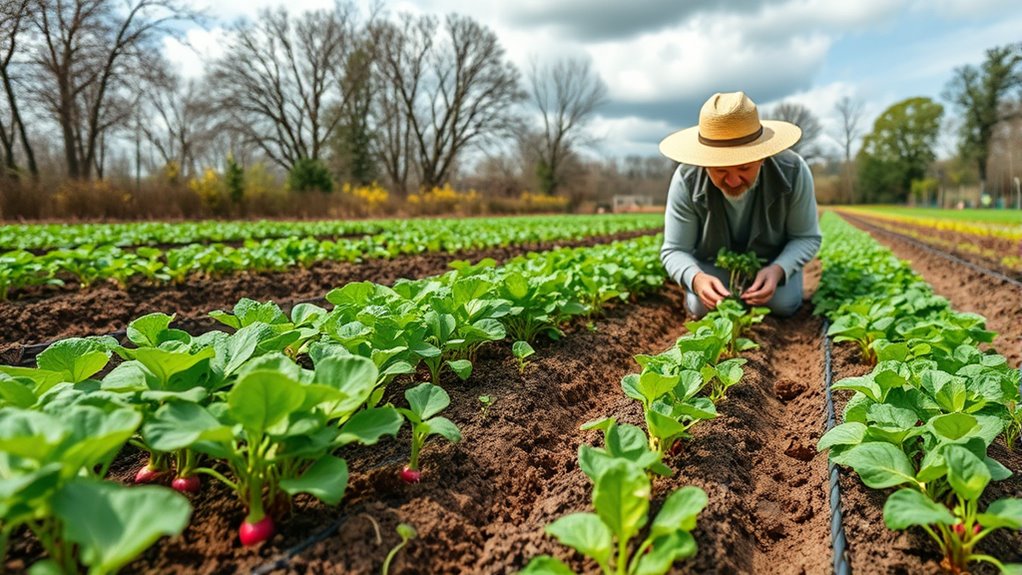
As the growing season shifts between summer and winter, selecting the right crops for shoulder seasons becomes essential to maintain productivity and extend your harvest. During these transitional periods, your goal is to choose crops that can thrive in cooler temperatures and shorter days, ensuring your garden continues to produce even when the weather isn’t at its peak. Winter crops are a great option for fall and early spring planting, and proper soil preparation is fundamental to their success. Before seeding or transplanting, you need to assess your soil’s condition. Clear out any debris, weeds, or old plant material, and incorporate organic matter like compost or well-rotted manure to boost soil fertility. This step not only improves nutrient availability but also enhances soil structure, drainage, and aeration—key factors for winter crops to establish strong roots and withstand colder conditions.
Winter crops often include hardy vegetables such as kale, Brussels sprouts, carrots, and root vegetables, which can tolerate frost and even benefit from a light freeze. To maximize growth, you should focus on soil preparation by ensuring the pH is balanced and the soil is loose enough for roots to penetrate easily. Adding a layer of mulch can also help regulate soil temperature, conserve moisture, and protect roots from extreme cold snaps. Mulching is especially beneficial when planting in fall, as it insulates the soil and keeps it at a more consistent temperature, giving winter crops a better start.
Timing is vital for shoulder season planting. For fall, plant your winter crops early enough so they can establish before the first hard frost hits. In spring, prepare your soil in advance, so once the weather warms, you’re ready to plant immediately. Cover crops can also be an excellent addition during these seasons; they improve soil health by fixing nitrogen, suppress weeds, and prevent erosion. When soil preparation is thorough, your winter crops will have a solid foundation to grow healthily despite the cooler weather.
hardy shoulder season vegetable seeds
As an affiliate, we earn on qualifying purchases.
As an affiliate, we earn on qualifying purchases.
Frequently Asked Questions
How Do I Protect Shoulder Season Crops From Unexpected Frosts?
To protect shoulder season crops from unexpected frosts, you should use season extension and frost protection techniques. Cover your plants with row covers, blankets, or plastic sheeting overnight to trap heat and insulate them. You can also use cloches or cold frames to create a barrier against frost. Keep an eye on weather forecasts and remove covers during the day to prevent overheating, ensuring your crops stay safe.
What Are the Best Soil Amendments for Shoulder Season Planting?
Think of your soil as a vibrant canvas that needs nourishing colors to thrive. To boost soil health and maintain nutrient balance, add compost, well-rotted manure, or organic matter. These amendments enrich your soil, improve drainage, and provide steady nutrients for your shoulder season crops. With healthy, balanced soil, your plants will root deeply and withstand unpredictable weather, giving you a resilient, productive garden even in cooler months.
Can I Extend My Shoulder Season Harvests With Row Covers?
Yes, you can extend your shoulder season harvests with row covers. They provide season extension by trapping heat and protecting crops from cold snaps, allowing you to grow more delicate plants longer. By carefully selecting crops suited for cooler temperatures, you maximize your season extension. Use row covers proactively to shield your plants from frost and wind, giving you a longer, more productive harvest window in spring and fall.
How Do Daylight Hours Affect Crop Selection for Spring and Fall?
Did you know daylight hours vary from 12 to 16 hours during spring and fall? This affects your crop choices because longer daylight boosts photosynthesis efficiency, helping plants grow faster. In spring, opt for crops that thrive in increasing daylight, like leafy greens. In fall, choose varieties that tolerate shorter days, such as root vegetables. Understanding daylight duration helps you select crops that maximize growth during shoulder seasons.
Are There Specific Pest Management Strategies for Shoulder Season Crops?
You should use pest management strategies like planting pest-resistant varieties and practicing crop rotation strategies. These approaches help reduce pest infestations during shoulder seasons when pests are active but weather conditions are unpredictable. By rotating crops, you disrupt pest life cycles, and pest-resistant varieties decrease the need for chemical controls. This integrated approach keeps your shoulder season crops healthy, minimizes pest damage, and promotes sustainable farming practices.
Conclusion
By selecting the right crops for spring and fall, you set the stage for a bountiful harvest year-round. Think of shoulder seasons as a bridge—connecting your growing seasons like a seamless dance. With careful planning and smart choices, you’ll keep your garden thriving even when the weather’s at its trickiest. Embrace these *interim* times as opportunities to grow more, harvest longer, and turn your garden into a continuous symphony of life and abundance.