To practice sustainable seed saving at home, make certain you isolate different plant varieties by spacing them or using barriers to prevent cross-pollination. Harvest seeds at full maturity and dry them thoroughly in a well-ventilated area. Clean seeds carefully to remove debris and mold, then store them in airtight containers in cool, dark, dry conditions with proper labeling. If you follow these steps, you’ll maintain healthy seeds and preserve crop diversity—discover more techniques that can boost your seed-saving success.
Key Takeaways
- Use physical isolation techniques like spacing, barriers, and timing to prevent cross-pollination and maintain genetic purity.
- Harvest and dry seeds thoroughly in well-ventilated areas to ensure seed quality and longevity.
- Clean seeds by removing debris and damaged material to enhance germination rates and reduce disease risk.
- Store seeds in airtight, cool, dark environments with desiccants, and label containers for proper identification and viability.
- Incorporate sustainable practices such as saving seeds from heirloom varieties and avoiding chemical treatments to promote biodiversity.

Saving seeds at home is a practical way to guarantee a steady supply of your favorite plants while conserving money and maintaining control over your garden’s genetics. To do this effectively, you need to understand the significance of plant isolation. If you want your saved seeds to produce plants true to the parent, you must prevent cross-pollination from related species or varieties. This means isolating plants either physically by spacing them apart or using barriers like row covers. For example, if you’re saving seeds from tomatoes, you might cage or cover the plants to keep bees and other pollinators from bringing pollen from different varieties. Proper plant isolation ensures the quality and consistency of your seeds, giving you plants that grow as expected.
Once you’ve harvested your mature seeds, seed cleaning becomes a vital step. Seed cleaning involves removing any remaining plant debris, chaff, or damaged seeds, which can hinder germination or introduce disease. It’s best to start by drying your seeds thoroughly in a well-ventilated area. After drying, you should carefully sort through them, discarding any shriveled, moldy, or empty seeds. For small seeds like lettuce or carrots, you can use a fine sieve or a gentle blow to remove lighter chaff. Larger seeds, such as beans or peas, can be cleaned by hand, rubbing off any remaining pulp or debris. Proper seed cleaning not only improves germination rates but also prolongs seed storage life.
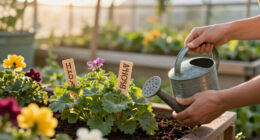
To maximize your seed’s viability, store them in a cool, dry, and dark place. Use airtight containers like glass jars or sealed plastic bags, and consider adding a silica gel packet or a desiccant to absorb excess moisture. Label your containers with the plant variety and harvest date, so you can track your seed’s age and health. Keep in mind that some seeds, like those from tomatoes, require a different cleaning process involving fermentation to remove gelatinous coatings before drying and storing. Understanding the evolution of AI technology can provide insights into how innovative tools might assist in seed preservation and data management.
Incorporating plant isolation and seed cleaning into your home seed-saving routine ensures your seeds stay healthy, true to type, and ready for planting season after season. These steps help you take full control of your garden’s genetic diversity, reduce reliance on commercial seed sources, and foster a more sustainable gardening practice. With patience and attention to detail, you’ll develop a dependable seed bank that supports your gardening goals while promoting biodiversity and self-sufficiency.
seed drying racks for home seed saving
As an affiliate, we earn on qualifying purchases.
As an affiliate, we earn on qualifying purchases.
Frequently Asked Questions
How Do I Prevent Cross-Pollination Between Different Plant Varieties?
To prevent cross-pollination between different plant varieties, you should use pollination barriers like physical separation or barriers such as row covers. Additionally, applying seed isolation techniques like planting varieties at different times or in separate containers helps maintain purity. By combining these methods, you guarantee that each plant’s seed remains true to its variety, reducing unwanted cross-pollination and preserving your home seed saving goals effectively.
What Are the Best Storage Conditions for Preserving Saved Seeds?
Like a treasure chest waiting to be opened, your seeds need the right conditions to stay viable. Keep seeds cool, dry, and dark, ideally between 32-41°F with low humidity. Use airtight storage materials, such as glass jars or vacuum-sealed bags, to prevent moisture and pests. Proper seed cleaning before storage removes debris and reduces mold risk, ensuring your saved seeds remain healthy and ready for planting season after season.
How Can I Tell When Seeds Are Fully Mature for Harvesting?
You can tell seeds are fully mature by observing seed maturity indicators like color change, dryness, and firmness. For example, sunflower seeds turn brown and feel hard, while beans become dry and brittle. Timing your harvest correctly guarantees seed viability and good germination rates. Keep an eye on the plant’s seed heads or pods, and harvest when seeds are fully developed but before they shatter for ideal harvest timing.
Are There Specific Plants That Are Easier to Save Seeds From?
Ever wondered which plants are easiest for seed saving? Herbs like basil and cilantro are great choices because they have high plant compatibility and produce seeds that are simple to harvest. Vegetables such as beans and peas also work well. To guarantee good seed quality, use effective seed cleaning techniques to remove debris and mold. These plants make home seed saving accessible, enjoyable, and rewarding!
How Long Can I Store Home-Saved Seeds Without Losing Viability?
You can store home-saved seeds for about 1 to 5 years, but seed viability decreases over time due to seed dormancy and aging. To guarantee they remain viable, perform seed viability testing before planting. Keep seeds in a cool, dark, and dry place to slow down seed dormancy breakage. Proper storage extends seed life, giving you better success with your home garden year after year.
Conclusion
By adopting sustainable seed saving methods, you not only preserve your favorite plant varieties but also contribute to a healthier planet. Did you know that saving seeds can reduce your household waste by up to 30%? So, start collecting, drying, and storing seeds today—your garden and the environment will thank you. Embrace these simple practices, and you’ll enjoy a more resilient, eco-friendly garden for years to come.