Choosing the right foundation is key to your greenhouse’s stability, longevity, and resistance to weather. You need to take into account your soil type, climate, budget, and structure needs. A solid foundation prevents issues like uneven settling, water damage, and pests, ensuring your greenhouse stays strong and sustainable for years. Different options like concrete slabs, gravel beds, or pier foundations suit various conditions. Keep learning more to find out how to select and install the best foundation for your project.

Get garden gear delivered free with Prime
- Fast, free delivery on millions of items
- Prime Video, Amazon Music and more included
- Member-only deals all year
Key Takeaways
- Selecting the right foundation ensures stability, durability, and long-term performance of your greenhouse in varying soil and weather conditions.
- Proper foundation choice prevents structural issues like uneven settling, cracking, and water damage that can compromise the greenhouse.
- Matching foundation type to soil and climate conditions enhances energy efficiency and resistance to environmental stresses.
- Cost, soil compatibility, and ease of installation influence the optimal foundation decision for your specific location.
- Regular maintenance and proper installation are essential to maximize the foundation’s role in supporting your greenhouse’s success.
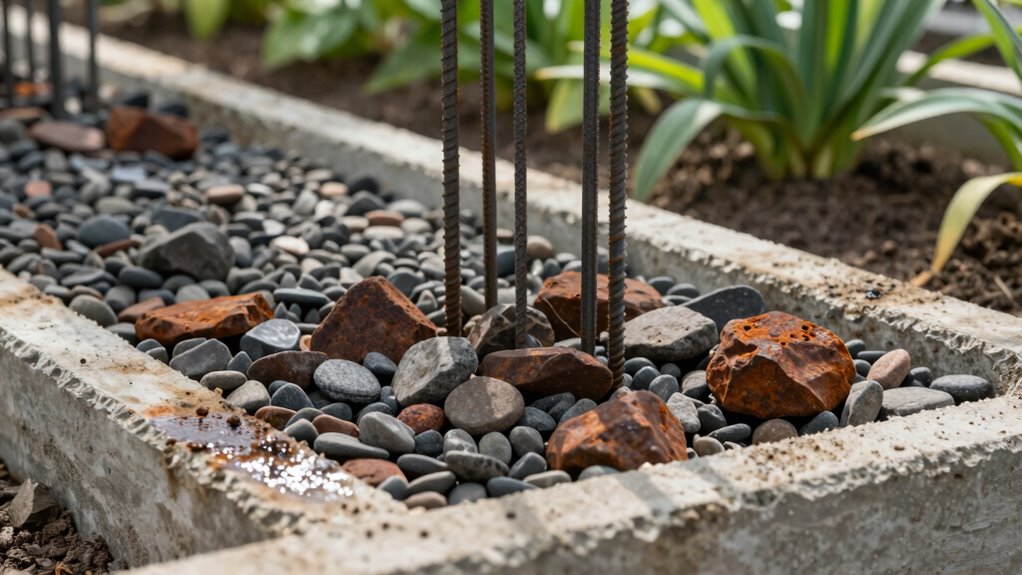
greenhouse foundation concrete slab
As an affiliate, we earn on qualifying purchases.
As an affiliate, we earn on qualifying purchases.
Why Your Greenhouse Foundation Matters for Stability
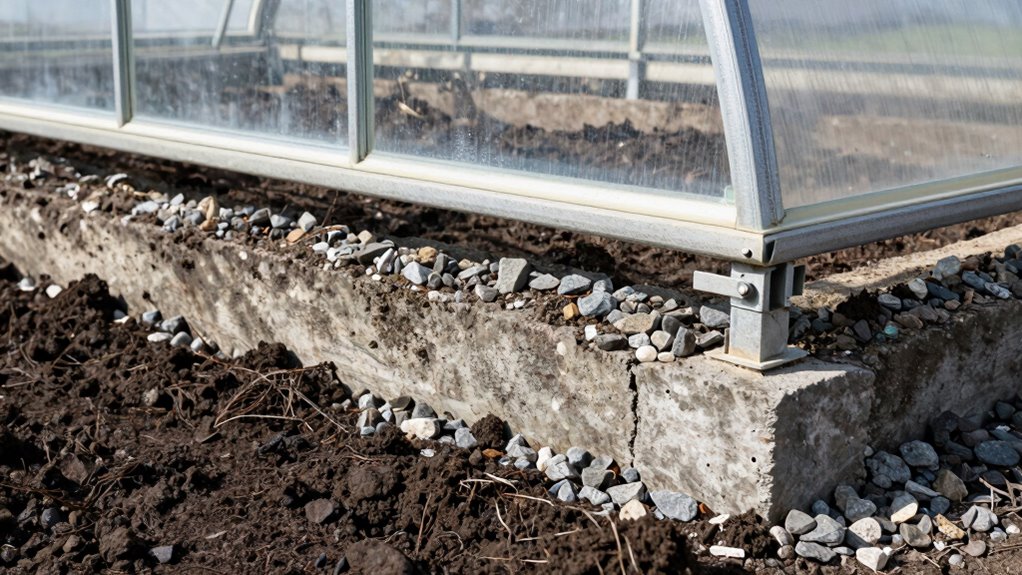
Have you ever wondered why some greenhouses stand firm for years while others struggle with shifting or collapsing? The answer lies in the foundation’s significance for stability. A well-designed foundation not only supports the structure but also influences its overall aesthetics, giving your greenhouse a clean, professional look. Construction techniques are essential here; using proper methods ensures the foundation is strong and durable, resisting soil movement and weather conditions. A solid foundation can also incorporate eco-friendly materials, which can enhance sustainability and reduce environmental impact. Proper construction methods are crucial to prevent issues such as soil erosion, which can compromise stability over time. Additionally, using quality materials can significantly enhance the longevity and stability of your greenhouse foundation. Poor construction choices can lead to uneven settling, causing damage over time. When you prioritize a solid foundation, you’re investing in your greenhouse’s longevity. It’s about more than just looks—it’s about creating a stable base that can withstand the test of time and environmental challenges, keeping your greenhouse secure and functional for years to come. Incorporating sustainable construction practices can further minimize environmental impact while ensuring durability.
Key Factors to Consider When Choosing a Foundation

When choosing a foundation, you need to take into account your soil type and how well it supports stability. Climate resilience is also essential, so your foundation can withstand local weather conditions. Additionally, your budget and material costs will influence the best options for your greenhouse. Considering structural stability is vital, especially for ensuring your greenhouse remains durable over time. It’s also important to evaluate how soil composition interacts with foundation materials to prevent shifting or settling. Incorporating knowledge of sound healing science can help in selecting materials that reduce vibrations and enhance longevity. Understanding vibration dampening techniques can further improve the durability and stability of your foundation in varying environmental conditions, especially when considering the environmental impact of different foundation materials.
Soil Type Compatibility
Choosing a foundation that suits your greenhouse begins with understanding your soil type, as it directly influences stability and longevity. Clay soils may require soil enhancement, such as adding gravel or sand, to improve drainage and reduce shifting. Sandy soils, on the other hand, often need stabilization techniques to prevent settling. Loamy soils are generally ideal, offering good fertility and stability. Consider fertilizer compatibility if you plan to incorporate soil nutrients directly into your foundation, as certain soils may react differently to amendments. Testing your soil before construction helps identify its characteristics and guides necessary modifications. Vetted soil testing methods can provide accurate insights into your soil composition. Properly matching your foundation to your soil type ensures your greenhouse remains level and secure over time, avoiding costly repairs or instability caused by soil misalignment.
Climate Resilience Needs
Considering your soil type is just the start; climate resilience also plays an essential role in selecting the right foundation. You need a foundation that withstands extreme weather, such as heavy rain, wind, or temperature fluctuations, to protect your greenhouse’s structure. You should also consider how exfoliation can help improve the resilience of your structure by reducing surface damage caused by weathering. If you plan to harness solar energy, ensuring stability and minimal shading is critical for maximum panels. Additionally, choose a foundation that minimizes pest entry points, reducing the need for pest control measures later. A durable foundation helps prevent shifting or cracking caused by ground movement or freeze-thaw cycles, ensuring your greenhouse remains secure and functional. Incorporating battery inverter generators can also support your energy needs during power outages, adding to your climate resilience strategies. Understanding ground stability is crucial, as it influences the longevity and safety of your greenhouse structure. Properly assessing soil drainage can help prevent water accumulation that may weaken the foundation over time. Recognizing how soil type impacts foundation performance can help you select the most suitable options for your specific conditions. By addressing these climate resilience needs, you’ll create a sturdy base that supports sustainable energy use and keeps pests at bay, safeguarding your investment for years to come.
Budget and Material Costs
Are budget and material costs the most critical factors in selecting a greenhouse foundation? Not only do these influence your overall expense, but they also determine the durability and suitability of your structure. When considering foundation materials, you should evaluate:
- Cost-effectiveness: Some materials, like concrete or treated wood, may cost more upfront but last longer.
- Availability: Local materials can reduce transportation costs, impacting your budget planning.
- Longevity: Investing in durable foundation materials saves money over time by reducing repairs or replacements. Understanding the environmental conditions where your greenhouse will be built helps in selecting a foundation that withstands environmental conditions and provides stability. Additionally, selecting eco-friendly or sustainable materials can contribute to overall environmental goals.
- Material properties: Understanding the specific material properties helps in selecting a foundation that withstands environmental conditions and provides stability. Considering material durability is essential, especially in areas prone to extreme weather or moisture, to ensure your greenhouse remains secure over the years.
Balancing these factors ensures you choose a foundation that fits your financial plan without sacrificing quality. Proper budget planning helps you avoid overspending and guarantees your greenhouse foundation remains stable and resilient.
How Foundation Type Affects Drainage and Insulation
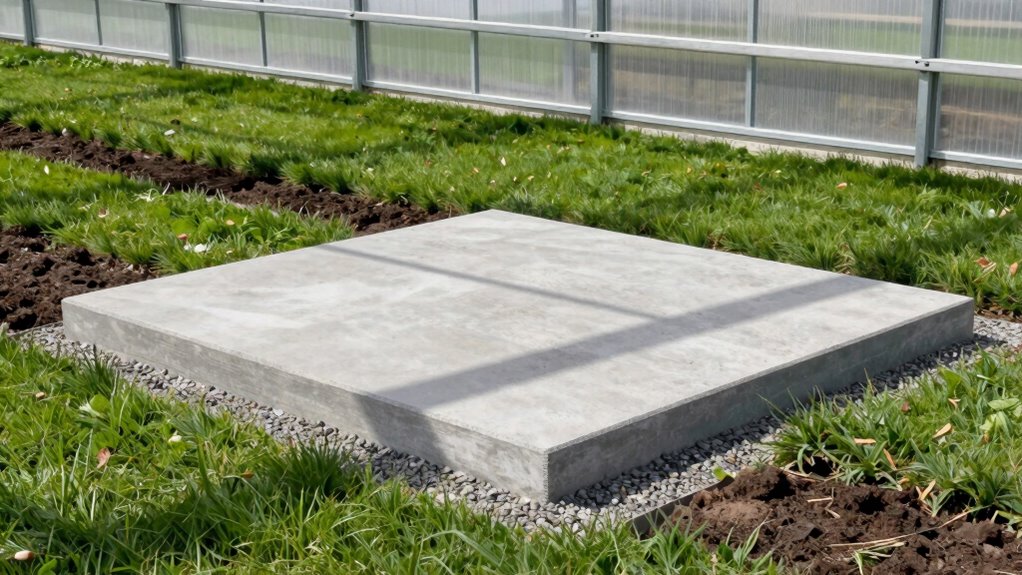
The type of foundation you select for your greenhouse directly influences how well it manages water drainage and retains heat. Foundation materials determine drainage efficiency; gravel or concrete slabs promote better water runoff, preventing pooling and dampness. Poor drainage can lead to moisture issues, damaging plants and structure. Additionally, selecting the right foundation can improve the overall durability of your greenhouse, especially when considering building materials market trends. Incorporating proper foundation design can further enhance water management and insulation performance. Proper foundation planning also involves understanding how different drainage techniques work to prevent water accumulation around your structure. For example, installing a drainage system can effectively channel excess water away from the foundation, reducing the risk of water damage. Likewise, your choice of foundation impacts insulation techniques. Insulated foundations, like foam board beneath concrete, help keep heat inside during cold months, reducing energy costs. Conversely, uninsulated foundations may allow heat to escape, making your greenhouse colder and increasing heating needs. By choosing a foundation with proper drainage properties and incorporating effective insulation techniques, you guarantee a stable environment that promotes healthy plant growth and energy efficiency.
Comparing Common Greenhouse Foundation Options
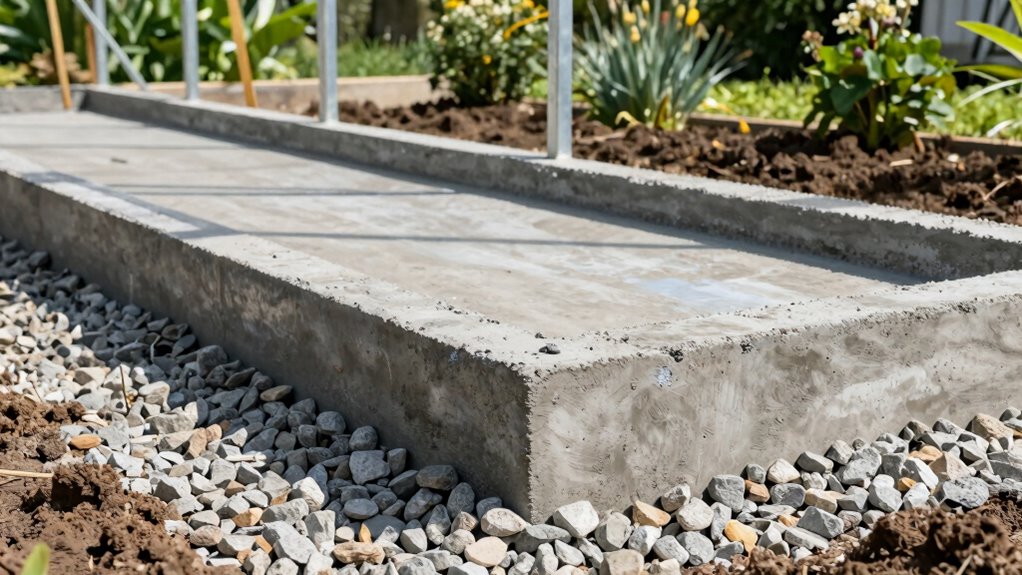
When choosing a foundation, you’ll want to think about the overall cost and how it fits into your budget, as well as how well the option suits your soil conditions. Ease of installation and ongoing maintenance also play a big role in making the best choice. By comparing these factors, you can select a foundation that balances affordability, stability, and ease of use.
Cost and Budget Considerations
Choosing the right foundation for your greenhouse involves balancing initial costs with long-term budget considerations. Your choice impacts not just expenses but also foundation aesthetics and whether you’ll need construction permits. Here are key points to deliberate on:
- Cost: Concrete slabs are pricier upfront but durable, while gravel bases are cheaper but may require more maintenance.
- Permits: Some foundations, like concrete or pier-and-beam, might need construction permits, adding to costs and planning time.
- Aesthetics: The foundation’s appearance influences overall greenhouse aesthetics, affecting visual appeal and resale value.
Ultimately, selecting a foundation aligns with your budget constraints and long-term goals, so weigh these factors carefully before building.
Soil Compatibility and Stability
Selecting a foundation that suits your soil conditions is essential to guarantee the stability and longevity of your greenhouse. Your soil’s health and nutrient balance directly influence how well the foundation performs over time. If your soil is loose or prone to shifting, you might need a more robust option like a concrete slab or pier foundation to prevent settling or movement. On the other hand, healthy, well-drained soil can support lighter foundations such as gravel beds or wooden frames. Ensuring compatibility means evaluating soil composition and stability before choosing your foundation. This avoids future issues like uneven settling or compromised structural integrity. By matching your foundation to your soil’s characteristics, you create a stable base that promotes healthy plant growth and long-term durability.
Installation and Maintenance Ease
Among the common greenhouse foundation options, ease of installation and ongoing maintenance vary considerably. Your choice of foundation materials impacts how simple or complex installation techniques will be, influencing your time and effort. For example:
- Concrete slabs are durable but require heavy equipment and precise work during installation, making maintenance straightforward but initial setup demanding.
- Wooden frames are easier to install with basic tools and less invasive, but they need regular upkeep to prevent rot and pests.
- Pier foundations involve minimal excavation, simplifying installation, though inspecting and maintaining piers can be more involved over time.
Choosing the right foundation depends on your skills, tools, and willingness to perform ongoing maintenance. Simpler installation techniques reduce upfront effort, while sustainable foundation materials ease long-term care.
Are Concrete Slab Foundations Right for Your Greenhouse?
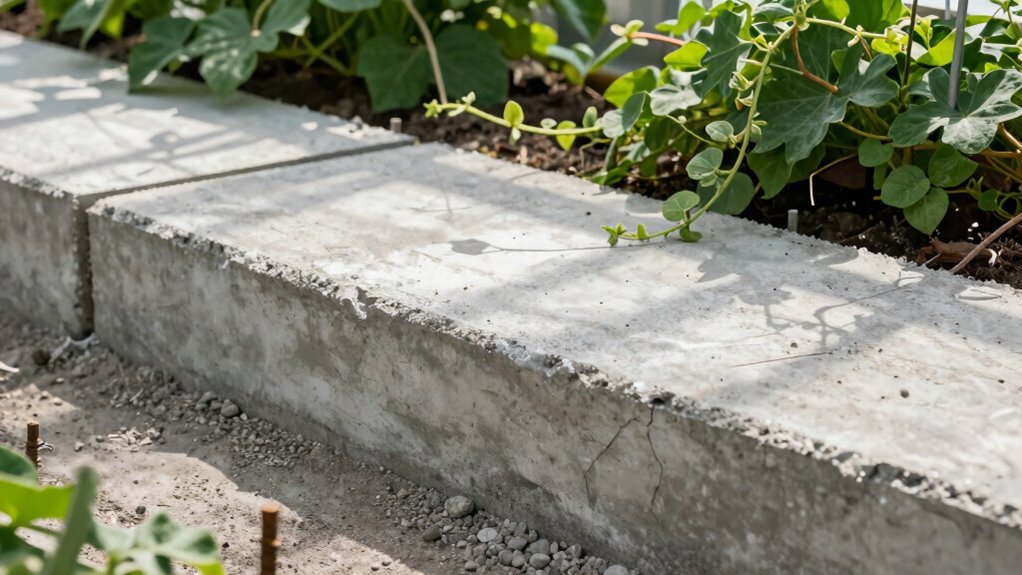
Are concrete slab foundations the best choice for your greenhouse? They offer durability and a clean look, but consider their limitations. If you’re inspired by historical structures or artistic designs, a slab provides a solid base that can support intricate features. However, slabs can trap moisture, leading to potential issues with plant health. They’re ideal for climates with minimal freeze-thaw cycles, but less suited for areas prone to shifting ground.
| Feature | Pros | Cons |
|---|---|---|
| Structural stability | Supports heavy or artistic designs | Moisture retention can be problematic |
| Longevity | Lasts decades with minimal upkeep | Not adaptable to ground movement |
| Aesthetic potential | Creates a sleek, modern look | Less flexible for creative layouts |
Evaluate your climate and design goals before choosing a concrete slab.
Is a Gravel Bed Foundation Suitable for Your Climate?
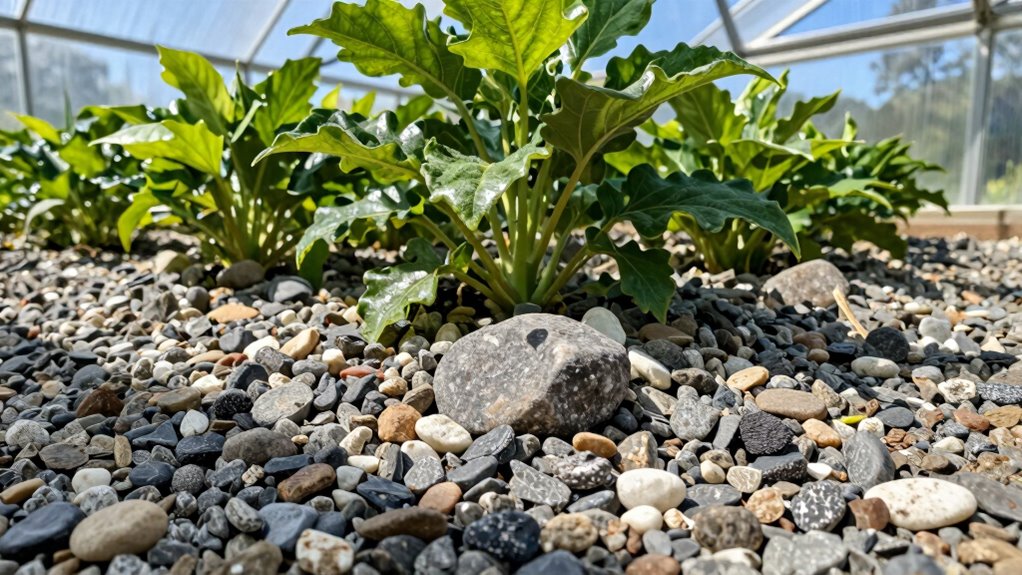
You need to evaluate if a gravel bed foundation works with your climate, especially regarding temperature fluctuations and moisture levels. Proper drainage and moisture control are vital to prevent water buildup that can harm your greenhouse structure. Additionally, make sure your soil provides enough stability and support to keep the gravel bed secure over time.
Climate Compatibility Considerations
Choosing a gravel bed foundation for your greenhouse depends heavily on your local climate conditions. You need to factor in how the foundation materials will handle temperature fluctuations and moisture levels, impacting climate adaptability. To determine if a gravel bed suits your climate, think about:
- Temperature Extremes: Gravel can freeze in very cold regions, causing shifting or cracking.
- Moisture Levels: High humidity or frequent rain can lead to erosion or instability in gravel foundations.
- Seasonal Changes: Rapid temperature shifts may affect gravel’s stability unless properly insulated or combined with other materials.
Drainage and Moisture Control
Considering the drainage and moisture control capabilities of a gravel bed foundation is essential to determine if it suits your climate. Gravel as a foundation material provides excellent drainage solutions, preventing water from pooling beneath your greenhouse. This reduces the risk of root rot and structural damage caused by excess moisture. If your climate experiences heavy rainfall or high humidity, a gravel bed can help keep your greenhouse dry and stable. However, in areas with freezing temperatures, drainage alone may not suffice, and additional insulation might be necessary. Assess your local weather patterns carefully. A well-designed gravel foundation not only improves moisture control but also enhances overall stability, making it a reliable choice when drainage solutions are a priority for your specific climate.
Soil Stability and Support
A gravel bed foundation can provide solid soil support, but its effectiveness depends heavily on the stability of your site’s ground. If your soil has poor stability, the foundation may shift or settle unevenly, risking structural issues. To guarantee proper support, check these factors:
- Soil fertility—healthy, fertile soil supports better drainage and stability.
- pH balance—ideal pH levels prevent soil compaction or erosion that could compromise support.
- Ground consistency—firm, well-drained soil minimizes movement and maintains foundation integrity.
If these conditions aren’t met, consider soil amendments or alternative foundation options. Proper assessment avoids future issues related to unstable soil, assuring your greenhouse remains sturdy and productive over time.
When to Consider Wooden or Pier Foundations
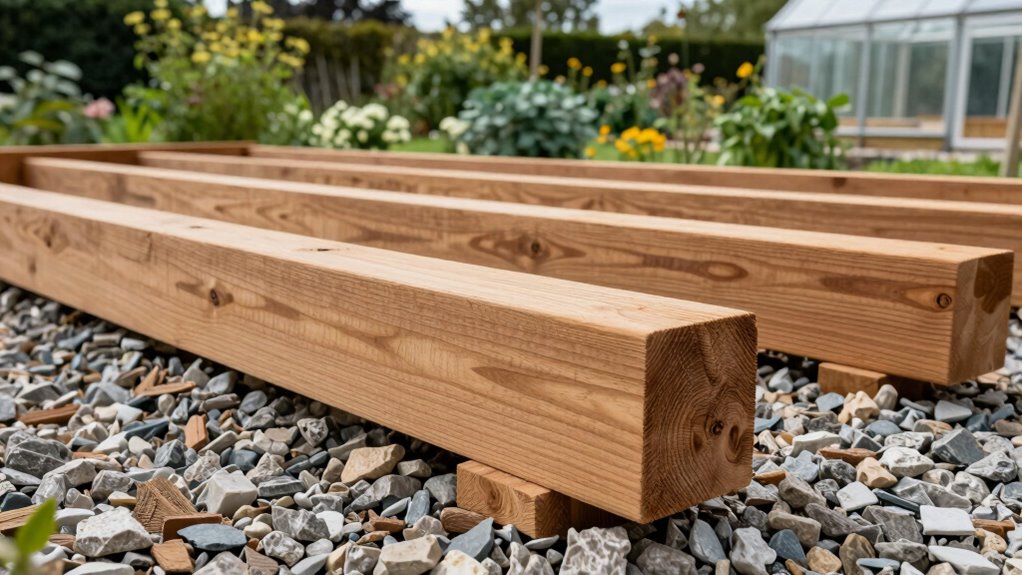
Wooden or pier foundations become a practical choice when your greenhouse is situated on uneven or poorly drained ground. These foundations elevate the structure, preventing water damage and providing stability on challenging terrain. Wooden framing is often used in pier construction, where vertical supports are driven into the ground, creating a level base. This approach allows for good airflow beneath the greenhouse and helps manage moisture issues. Pier construction is especially beneficial if the soil shifts or if you want a quick, cost-effective setup. You should consider these foundations if your site has inconsistent ground levels or drainage problems. They offer flexibility and durability, ensuring your greenhouse remains stable and functional regardless of ground conditions.
How Much Does a Greenhouse Foundation Cost?

The cost of a greenhouse foundation varies depending on the type you choose, the size of your structure, and the materials used. Generally, you can expect to spend between a few hundred to several thousand dollars. Basic concrete slab foundations tend to be more affordable, while custom pier or wooden foundations can increase costs. Keep in mind that a well-chosen foundation enhances garden aesthetics, creating a seamless look that complements your space. It also plays a key role in pest prevention by blocking entry points for unwanted visitors. Your options include:
- Concrete slabs: budget-friendly and durable
- Wooden frames: aesthetic appeal and easy installation
- Pier foundations: great for uneven terrain and added pest control
Your choice impacts both cost and the longevity of your greenhouse.
Tips for Installing Your Foundation Properly
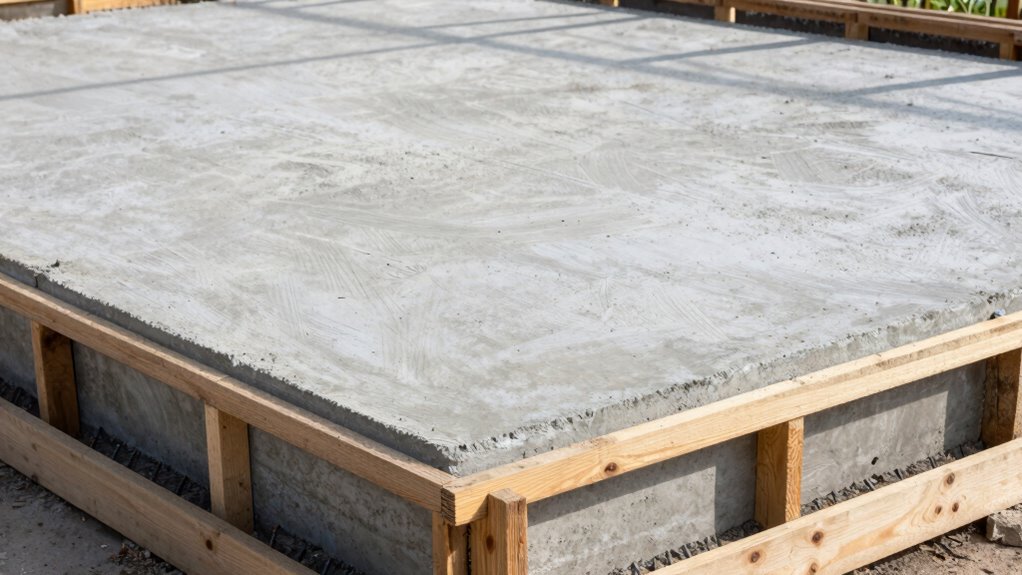
Are you ready to guarantee your greenhouse foundation is installed correctly? Proper installation is essential for stability and longevity. Use the right foundation materials, like concrete or treated wood, suited to your climate and soil type. Follow these key installation techniques:
| Step | Action | Tips |
|---|---|---|
| 1 | Prepare site | Clear debris and level soil |
| 2 | Build formwork | Ensure proper dimensions and support |
| 3 | Pour and cure | Use adequate concrete and allow proper curing time |
Choosing quality foundation materials and applying precise installation techniques prevent future issues. Measure carefully, double-check alignments, and don’t rush the process. Proper foundation installation sets the stage for a durable, secure greenhouse.
Maintaining Your Greenhouse Foundation for Longevity
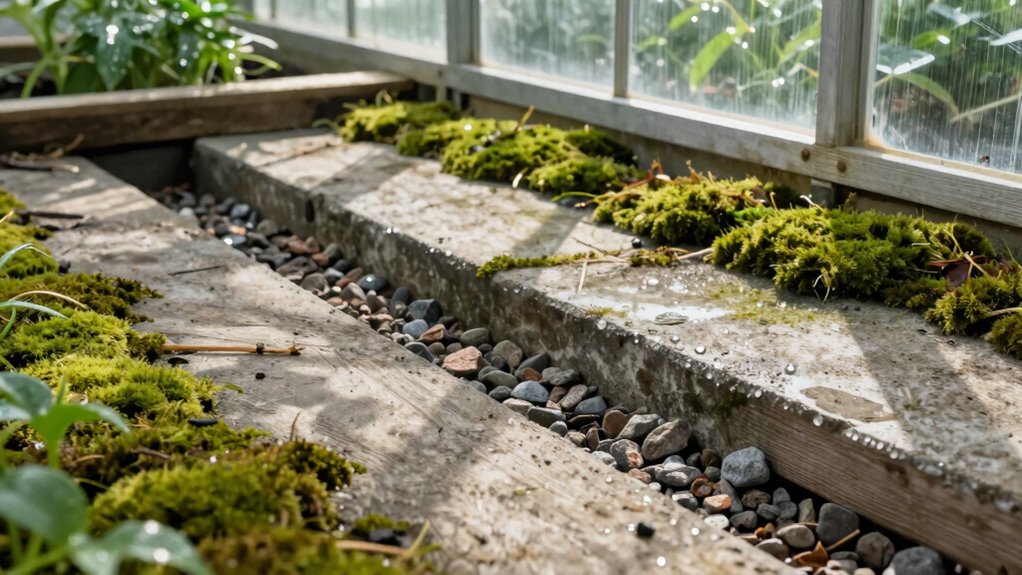
To guarantee your greenhouse remains sturdy and functional over time, regular maintenance of its foundation is essential. This guarantees foundation stability and supports construction safety. First, inspect the foundation for cracks or signs of shifting, addressing issues promptly to prevent further damage. Second, keep the area around the foundation clear of debris and vegetation, which can compromise stability. Third, schedule periodic professional assessments to detect hidden problems early. Proper drainage around your greenhouse also prevents water accumulation that could weaken the foundation. Regular upkeep not only prolongs your greenhouse’s lifespan but also maintains a safe environment for your plants and yourself, safeguarding your investment. Staying vigilant with maintenance guarantees your foundation stays strong and reliable for years to come.
Frequently Asked Questions
How Does Soil Type Influence Foundation Selection?
Soil type greatly influences your foundation choice because soil stability varies, affecting how well your greenhouse will stay secure. For example, clay soils can expand and contract, requiring a deeper or reinforced foundation, while sandy soils offer good drainage considerations but may need additional support. You should assess your soil’s stability and drainage to select the right foundation, ensuring your greenhouse remains sturdy and long-lasting regardless of soil conditions.
Can Foundation Choices Impact Greenhouse Pest Control?
Yes, your foundation choices can impact pest control in your greenhouse. A stable foundation prevents gaps and cracks where pests can enter, aiding pest prevention efforts. It also makes pesticide management more effective by providing a solid base for applying treatments evenly. By choosing the right foundation, you create a controlled environment that minimizes pest intrusions and enhances overall pest management, keeping your greenhouse healthier and more productive.
What Environmental Regulations Affect Foundation Installation?
Did you know that over 50 environmental regulations could affect your greenhouse’s foundation installation? You must consider these rules when selecting foundation materials, guaranteeing regulatory compliance. Local, state, and federal laws often govern soil disturbance, material runoff, and habitat protection. You need to research specific regional requirements to avoid penalties. By adhering to these regulations, you protect the environment and ensure your greenhouse foundation remains compliant and sustainable.
How Do Foundation Choices Affect Greenhouse Mobility?
Your foundation choices directly impact your greenhouse’s mobility and flexibility. Opting for a stable, well-anchored foundation provides excellent foundation stability, but it can limit mobility if you decide to relocate later. Conversely, using a lightweight or modular foundation enhances mobility flexibility, making it easier to move your greenhouse when needed. Balance these factors based on your long-term plans to guarantee your greenhouse remains both stable and adaptable.
Are There Eco-Friendly Foundation Options Available?
Yes, eco-friendly foundations are available. You can choose sustainable materials like recycled concrete, wood, or gravel, which reduce environmental impact. An eco-friendly installation often involves minimal disturbance to the land and uses methods that conserve resources. By selecting these options, you guarantee your greenhouse has a sustainable foundation, supporting eco-conscious gardening and construction practices while maintaining durability and stability for your structure.
Conclusion
Your greenhouse foundation isn’t just a base—it’s the secret weapon that can make or break your entire setup! Choosing the right foundation can mean the difference between a sturdy, long-lasting oasis or a wobbly, disaster-prone structure that crumbles at the first sign of trouble. Get it right, and you’ll be growing thriving plants for decades. Screw it up, and you’ll be stuck fixing a sinking, leaky nightmare for years. The foundation is your greenhouse’s destiny—choose wisely!
Halloween Picks
halloween
As an affiliate, we earn on qualifying purchases.