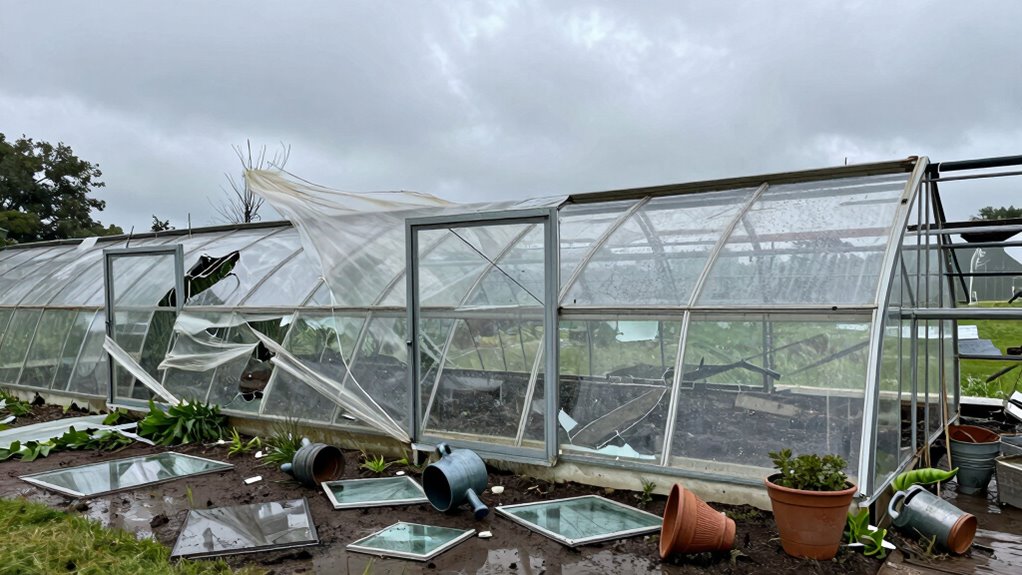

After every major storm, you should inspect your greenhouse for damage. Check the structure and support beams for bends, cracks, or warping, and remove any shattered glass carefully. Look for leaks and blockages in the roof, gutters, and drainage systems. Examine windows, doors, and vents for cracks or dislodgement, and test all electrical systems and watering equipment for proper function. Clearing debris and documenting damage now helps prevent further issues—continue to learn how to keep your greenhouse safe.

Get garden gear delivered free with Prime
- Fast, free delivery on millions of items
- Prime Video, Amazon Music and more included
- Member-only deals all year
Key Takeaways
- Check and repair any damage to the greenhouse frame, support beams, and structural joints for stability.
- Inspect roofing, gutters, and drainage systems for leaks, blockages, or debris obstructing proper water flow.
- Examine windows, doors, vents, and seals for cracks, dislodgement, or compromised weatherproofing.
- Test electrical systems, lighting, and irrigation components for damage or malfunction caused by the storm.
- Document visible damage and water intrusion, prioritizing repairs to ensure safety and structural integrity.
greenhouse glass replacement panels
As an affiliate, we earn on qualifying purchases.
As an affiliate, we earn on qualifying purchases.
Inspect the Greenhouse for Structural Damage and Broken Glass

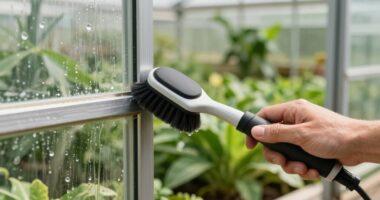
After a major storm, it’s crucial to carefully inspect your greenhouse for any structural damage or broken glass. Start with glass cleanup—remove shattered panes carefully to prevent injury and clear loose glass from the area. Check for missing or cracked panels, and note any glass shards that may pose hazards. Next, perform a thorough frame inspection. Look for bent, warped, or cracked support beams and framing members, as these compromise the greenhouse’s stability. Make certain all fasteners and joints are secure, and tighten or replace any damaged components. Addressing broken glass and potential frame issues promptly helps prevent further damage and maintains a safe environment for your plants. Always wear gloves and eye protection during this process for safety. Regular inspections also help identify microplastic contamination in dust that may accumulate after storms, ensuring healthier conditions for your plants. Conducting structural assessments regularly can help detect early signs of wear and tear, safeguarding your greenhouse’s longevity. For added durability, consider seasonal maintenance to prepare your greenhouse for future storms, and evaluate the integrity of the structure regularly to catch issues early.
Check the Frame and Support Beams for Bends or Cracks

Begin your inspection of the greenhouse frame by closely examining all support beams and framing members. Look for any bends, cracks, or warping that could compromise frame integrity or support stability. These issues can weaken the structure and lead to further damage. Use a flashlight to spot hidden cracks or dents that may not be immediately visible. Pay special attention to joints and connection points, as they’re critical for stability. To help you stay organized, here’s a quick checklist:
| Area to Check | What to Look For |
|---|---|
| Support Beams | Bends, cracks, warping |
| Joints & Connections | Loose fittings, signs of stress |
| Frame Corners | Cracks or misalignments |
| Overall Structure | Sagging or unusual shifts |
Ensuring the frame’s integrity is key to keeping your greenhouse safe and stable after a storm. Regular inspections help to identify potential vulnerabilities early, especially regarding structural support stability. Additionally, checking for damage caused by weather can prevent costly repairs later on. It’s also helpful to review the design features of your greenhouse that may influence its resilience to storms. Including assessments of material quality can further enhance your understanding of the structure’s durability. Conducting these inspections regularly will help maintain structural safety and extend the longevity of your greenhouse.
Look for Leaks and Blockages in the Roof and Gutters
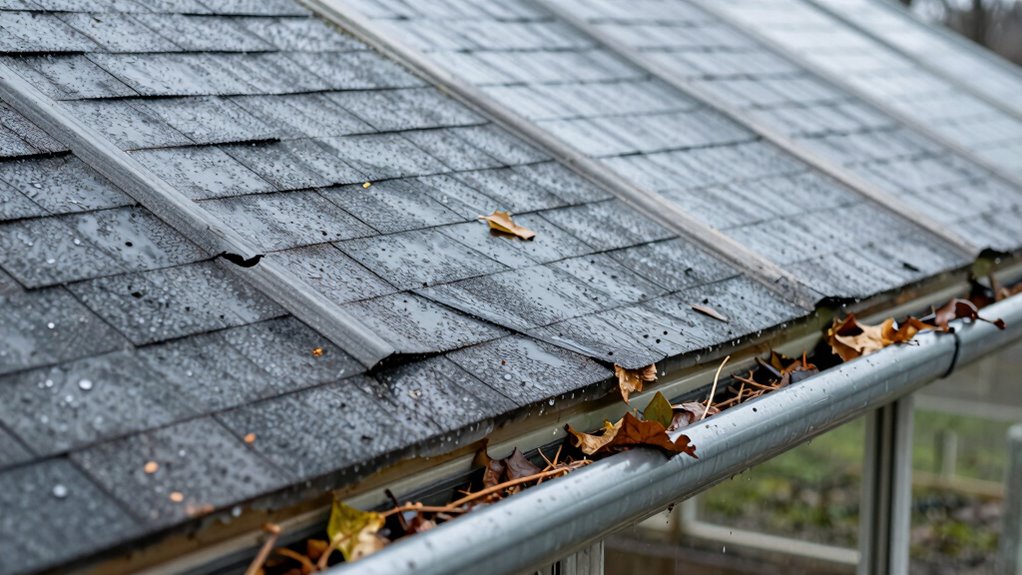
Storms can cause damage to your greenhouse’s roof and gutters, leading to leaks or blockages that may harm your plants and structure. You need to check for compromised roof integrity and clear gutter blockage to prevent water damage. Look for signs of leaking, such as water stains or drips inside the greenhouse. Also, inspect the gutters for debris or obstructions that could cause overflow during heavy rain. Ensuring the roof remains intact and gutters are free-flowing helps maintain the overall stability of your greenhouse. Additionally, paying attention to inclusive casting in the design of your greenhouse can help ensure it is accessible and functional for all users. Regular maintenance, including inspecting for storm damage, can prevent costly repairs and preserve your greenhouse’s health.
- Examine the roof surface for cracks, loose panels, or holes
- Clear debris and leaves from gutters and downspouts
- Check for sagging or misaligned gutter sections that might cause gutter blockage
Examine Windows, Doors, and Vents for Storm Damage

After a storm, carefully inspect your greenhouse’s windows, doors, and vents for any cracks or breaks. Make sure the seals are intact to prevent drafts and water leaks. Addressing these issues promptly keeps your greenhouse protected and functioning properly. Additionally, verifying the integrity of ventilation systems can help maintain optimal climate conditions inside your greenhouse. Observing and adjusting door swings and hinges ensures that access points continue to open smoothly and securely. Regularly checking seal integrity can prevent potential water damage and improve energy efficiency.
Check for Cracks or Breaks
Have you checked your greenhouse’s windows, doors, and vents for damage? Crack identification is essential after a storm to guarantee glass integrity and prevent further issues. Look closely for any visible cracks, chips, or breaks that could compromise your greenhouse’s structure. Small cracks can expand over time, weakening the glass and risking collapse or leaks. Pay attention to corners and edges, where damage is often more severe. Use a flashlight to spot hidden fractures in darker areas. Addressing cracks early helps maintain the overall stability of your greenhouse and protects your plants. Regular inspection after storms ensures you catch issues before they escalate, preserving the longevity and safety of your greenhouse’s glass components. Additionally, inspecting storm-related damage helps identify potential vulnerabilities that could lead to more significant problems if left unaddressed. Understanding weather impact can help you anticipate which parts of your greenhouse are most susceptible to damage in future storms. Recognizing the importance of storm preparedness can also guide you in making timely repairs and reinforcing weak areas.
Ensure Proper Sealing
Even a minor storm can disrupt the seals around your greenhouse’s windows, doors, and vents, leading to potential leaks and drafts. You need to carefully examine these areas for damage or gaps. Use sealing techniques like weatherproofing strategies to restore proper insulation and prevent water intrusion. Check for cracked or dislodged seals, and replace or reseal as necessary. Make sure all vents and openings close tightly to maintain temperature and humidity control. Applying weatherproofing strategies, such as weatherstripping or sealant, helps guarantee your greenhouse stays protected against future storms. Incorporating eco-friendly natural pools into your greenhouse design can also support sustainable practices during repairs. Regular inspections after storms will catch any issues early, saving you time and money. Proper sealing keeps your greenhouse safe, dry, and ready for the next weather challenge. Additionally, inspecting the structural integrity of your greenhouse can help identify any hidden damages that might not be immediately visible. Checking for regional weather impacts can assist in preparing your greenhouse for seasonal variations and extreme weather events. Being proactive about storm preparedness can further reduce potential damage and ensure your greenhouse remains resilient.
Test Your Irrigation and Watering Systems for Functionality

Storms can disrupt your greenhouse’s irrigation system, making it essential to verify that everything still functions properly. You should test your watering systems to guarantee proper irrigation calibration and confirm your watering schedule remains effective. Check all hoses, valves, and emitters for leaks or blockages that may have occurred during the storm. Run each zone to observe flow rates and adjust as needed to maintain consistent moisture levels. Confirm that timers and sensors operate correctly to prevent over- or under-watering. Regularly inspecting irrigation system components can help identify potential issues early and prevent costly repairs.
Look for Hidden Damage to Supports and Shelving
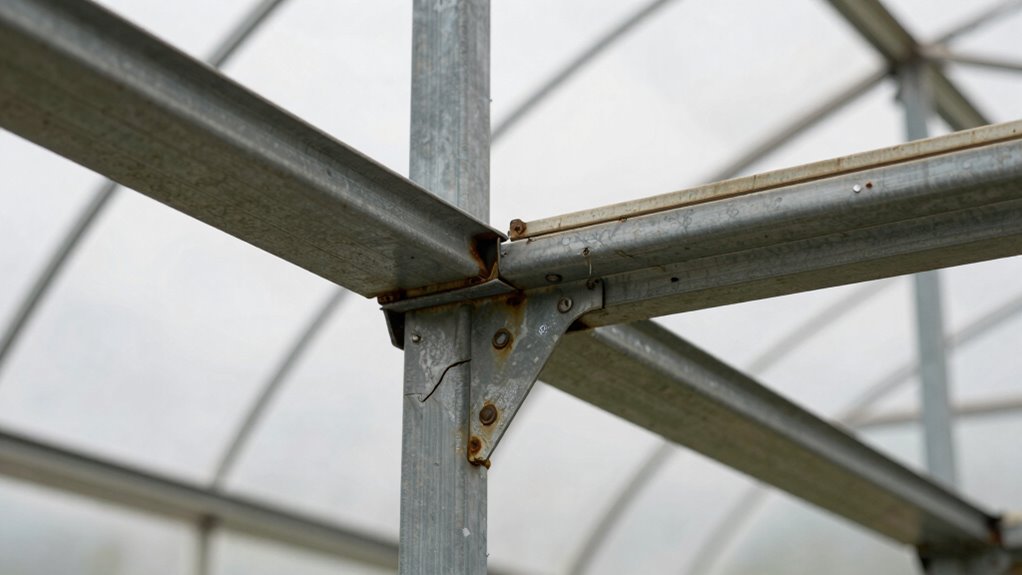
After a major storm, it’s essential to thoroughly inspect your greenhouse supports and shelving for hidden damage that may not be immediately visible. Look closely at support stability—any loosened or cracked joints can compromise the entire structure. Check for signs of warping, bending, or rust that could weaken support beams. For shelving integrity, examine for wobbling, sagging, or cracks in the shelves themselves. Even minor damage can lead to collapse under weight or cause plants to fall. Be meticulous, especially in corners and joints, as damage often hides there. Reinforce or replace compromised supports and shelving to maintain the safety and stability of your greenhouse. Ensuring these components are sound helps protect your plants and prevents future accidents. Heat buffering techniques can also help reduce stress on structural elements during temperature fluctuations.
Inspect Drainage and Ventilation Systems for Blockages
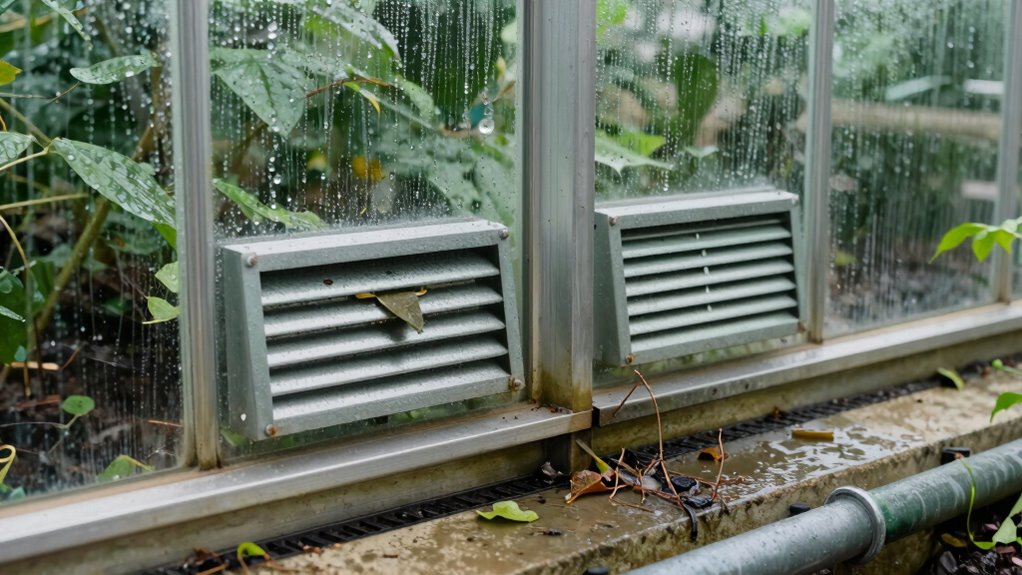
To keep your greenhouse functioning properly, it’s crucial to thoroughly inspect the drainage and ventilation systems for blockages. After a storm, debris like leaves or mud can clog drains, impairing soil aeration and causing water to pool. Check vents and exhaust fans for obstructions that restrict airflow, which can lead to excess humidity and promote pests. Confirm that drainage outlets are clear to prevent water damage and root rot. Also, inspect for signs of pest activity, as blocked ventilation can create favorable conditions for pests and mold. Regularly cleaning and clearing these systems helps maintain ideal airflow, reduces moisture buildup, and supports healthy plant growth.
- Clear drainage outlets and inspect for debris
- Remove obstructions from vents and exhaust fans
- Conduct pest inspection around ventilation areas
Ensure Electrical Components and Lighting Are Safe and Working
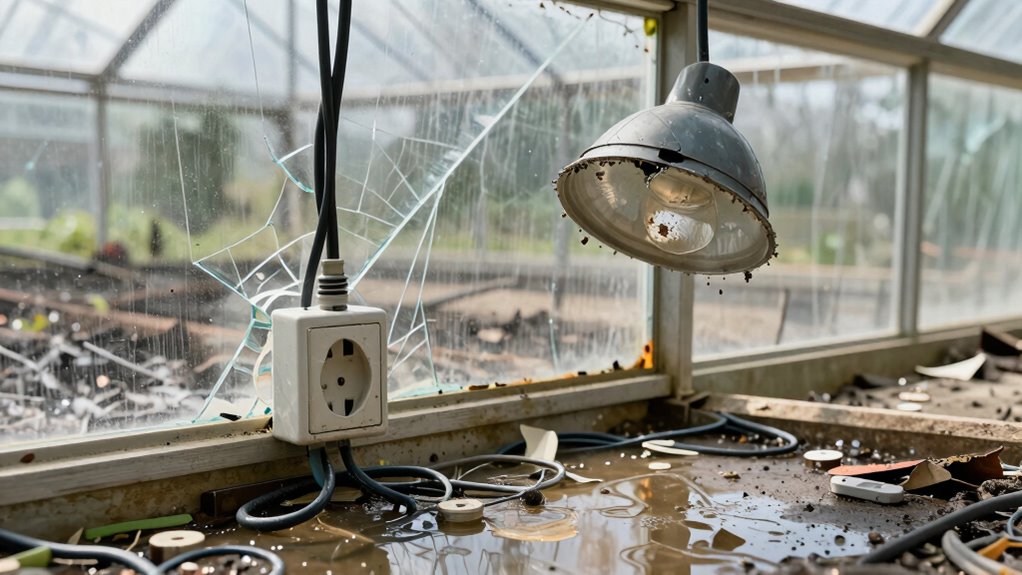
After a storm, you need to verify that your electrical components and lighting are still safe and functional. Check the wiring for any damage, test your lights to guarantee they turn on properly, and inspect all electrical connections for signs of wear or corrosion. Address any issues immediately to keep your greenhouse safe and operational.
Check Wiring Integrity
Storms can cause hidden damage to your greenhouse’s electrical system, so it’s essential to thoroughly check wiring integrity. Start by inspecting all wiring for visible signs of wear, fraying, or corrosion, ensuring wiring safety. Look for loose connections or exposed wires that could pose hazards. Conduct circuit testing to confirm that all electrical components function correctly and safely. Pay close attention to any flickering lights or irregularities, which might indicate underlying issues.
- Examine junction boxes and outlets for cracks or water intrusion
- Confirm that all wiring connections are secure and properly insulated
- Test circuit continuity with a multimeter to detect faults or breaks
Address any problems promptly to prevent electrical failures or safety hazards.
Test Lighting Functionality
Once you’ve checked the wiring for damage and secure connections, it’s important to verify that all lighting and electrical components are functioning correctly. Conduct a thorough lighting maintenance check by turning on each light fixture to ensure they operate smoothly. Look for flickering bulbs or dim lighting, which could indicate the need for bulb replacement. Inspect timers, switches, and control panels to confirm they respond properly. If any bulbs are burnt out or flickering, replace them promptly to maintain ideal light levels for your plants. Ensuring your lighting system works effectively not only supports plant growth but also prevents electrical issues. Regular testing after storms helps catch problems early, keeping your greenhouse safe and fully functional.
Inspect Electrical Connections
To guarantee your greenhouse remains safe and fully functional, it’s vital to thoroughly inspect all electrical connections. After a storm, check for damaged or loose wiring, which can compromise electrical safety. Make certain that all outlets, switches, and fixtures are secure and free of moisture or debris. Conduct a circuit inspection to identify any signs of corrosion or burn marks that could indicate overheating.
- Look for frayed or exposed wires that pose shock risks
- Test all lighting and electrical components to confirm proper operation
- Verify that weatherproof seals remain intact around outdoor connections
Maintaining diligent electrical safety helps prevent potential hazards. Addressing issues promptly ensures your greenhouse stays safe, efficient, and ready for planting.
Clear Debris and Check Water Drainage Paths
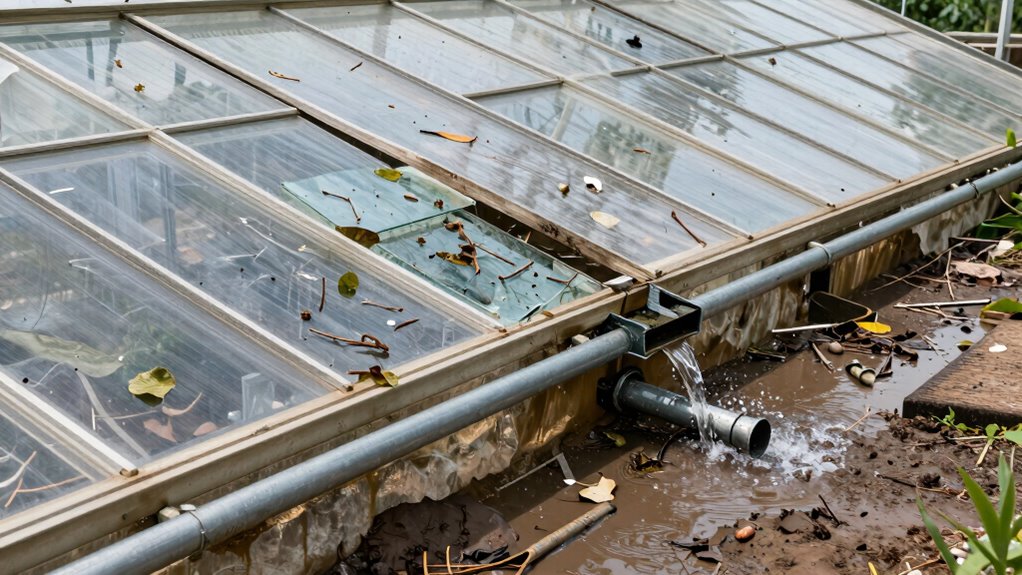
After a major storm, it’s crucial to clear away any debris that may have accumulated inside and around your greenhouse. Debris can block water drainage paths, leading to water pooling and potential flooding. Check all drainage channels and ensure they’re free of leaves, dirt, and other obstructions. Proper water flow prevents standing water, which can harm your plants’ health. Additionally, consider soil testing to assess moisture levels and nutrient runoff caused by heavy rain. Healthy soil promotes resilient plants, so address any drainage issues promptly. Clear debris from vents and roof openings to maintain airflow and prevent further damage. Taking these steps helps protect your greenhouse structure and supports ideal plant health after a storm.
Document Storm Damage and Plan Repairs
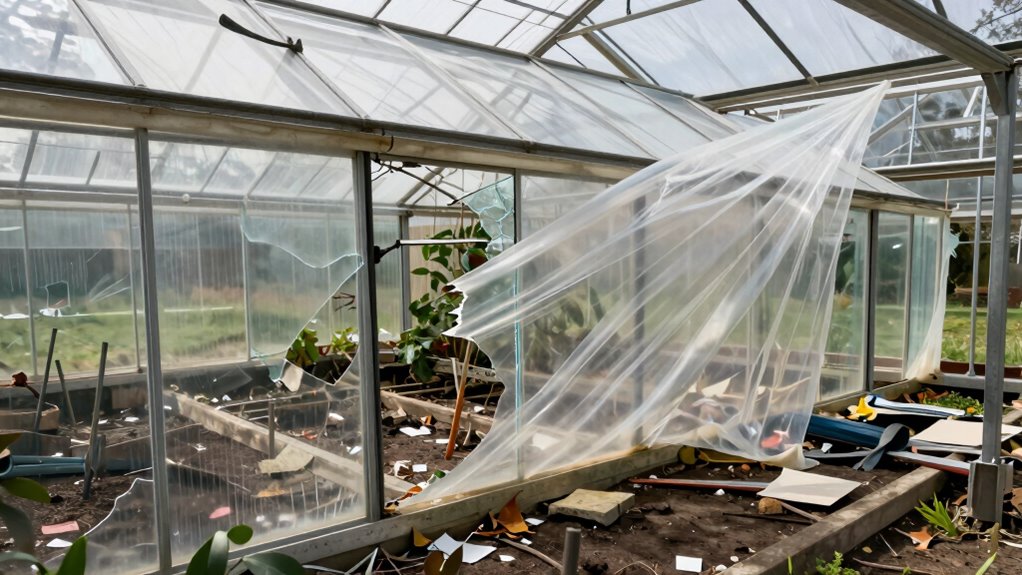
Documenting storm damage thoroughly is essential to understanding the full extent of the impact on your greenhouse. Take detailed photos and notes of structural issues, damaged panels, and water intrusion. This documentation forms the basis for effective storm recovery planning and helps prioritize repairs. Keep records organized for insurance claims and future reference. When planning repairs, consider greenhouse safety protocols to guarantee your safety and prevent further damage. Focus on evaluating critical components first, like the roof and framing, then move to minor repairs. Proper documentation guides your actions, ensuring repairs are complete and timely. Taking these steps helps you restore your greenhouse efficiently and safely, minimizing downtime and protecting your investment.
- Identify urgent repairs to guarantee safety and stability
- Consult professional contractors for complex damage
- Schedule regular inspections to prevent future issues
Frequently Asked Questions
How Can I Prevent Future Storm Damage to My Greenhouse?
To prevent future storm damage, focus on enhancing wind resistance and material reinforcement. Secure your greenhouse firmly to the ground and use sturdy, wind-resistant framing. Reinforce vulnerable areas with extra bracing or stronger materials, like polycarbonate panels instead of glass. Regularly inspect and tighten all fittings and anchors. Additionally, consider installing windbreaks or shields around your greenhouse to reduce wind impact, ensuring it stays resilient during severe storms.
What Safety Precautions Should I Take During Inspection?
Think of your safety gear as your shield during inspection. Always wear personal protective gear like gloves, goggles, and sturdy boots for a safe inspection. Make sure the greenhouse structure is stable before entering. Be cautious of broken glass, sharp metal, and loose components. Avoid overexertion, and work in good lighting. These precautions help you stay safe while thoroughly checking for damage, preventing injury and ensuring your greenhouse’s quick recovery.
How Often Should I Inspect My Greenhouse After a Storm?
After a major storm, you should inspect your greenhouse immediately, then again within 24 hours. Regular weather monitoring helps you prepare for such inspections, ensuring you catch potential damage early. Frequent checks are essential because storm conditions can weaken structural elements or cause debris buildup. Staying vigilant allows you to address issues promptly, minimizing damage and maintaining your greenhouse’s integrity and your storm preparedness.
What Signs Indicate Structural Weakness Beyond Visible Damage?
Think of your greenhouse as a fragile ship—you need to watch for signs of hidden leaks or shifts. If the foundation feels uneven or you notice cracks in the walls, it’s a red flag. Also, check for sagging or warping in the roof, which could compromise roof integrity. These signs often point to underlying weaknesses beyond what’s visible, so address them promptly to keep your greenhouse seaworthy.
How Do I Assess Damage to Greenhouse Plants After a Storm?
After a storm, you should carefully examine your greenhouse plants for damage. Check for broken or bent stems, uprooted plants, and signs of soil erosion that could weaken roots. Look for pest infestations, as storms can disturb pests hiding in the foliage. Remove damaged plants, reinforce soil stability, and treat any pests promptly. This helps your plants recover quickly and prevents further issues.
Conclusion
After every major storm, your greenhouse is battered like a fragile ship in a fierce storm. By thoroughly inspecting it, you protect your precious plants and guarantee your sanctuary remains resilient against nature’s fury. Don’t let hidden damage turn into a disaster—think of each repair as a shield guarding your green oasis. Stay vigilant, act promptly, and keep your greenhouse standing tall against whatever storms come your way. Your plants—and your peace of mind—depend on it.
Fall yard work Picks
leaf blowers
As an affiliate, we earn on qualifying purchases.