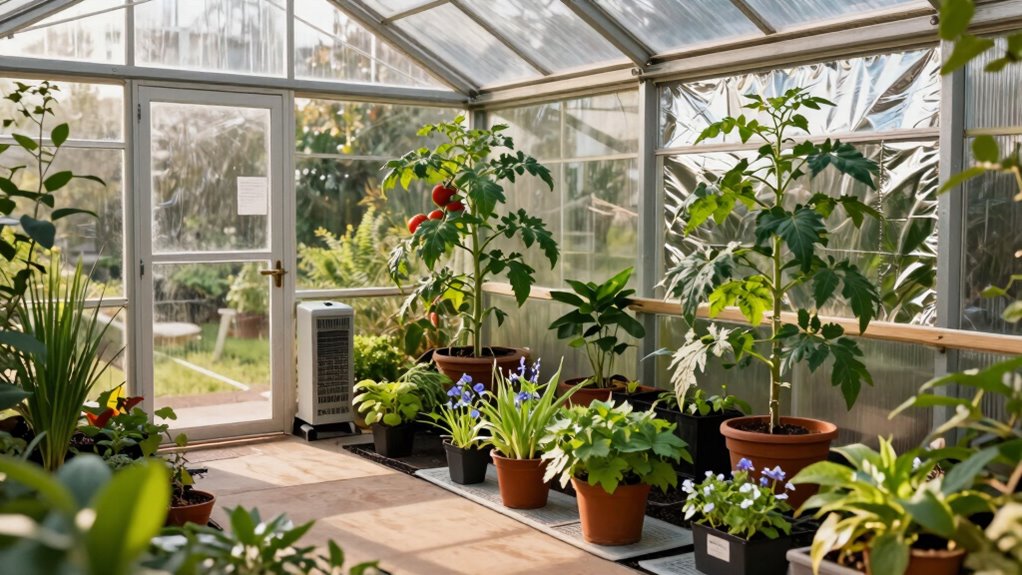

To layer heating strategies in your backyard greenhouse, start with insulation like thermal curtains to keep warm nights in and cold drafts out. Add thermal mass to absorb and store heat during the day, then use solar panels to generate renewable energy that power small heaters or fans. Combining these methods enhances efficiency and sustainability. If you want to discover how to optimize each layer for maximum warmth, keep exploring the best practices.

Get garden gear delivered free with Prime
- Fast, free delivery on millions of items
- Prime Video, Amazon Music and more included
- Member-only deals all year
Key Takeaways
- Combine solar-powered heaters with thermal curtains to maximize heat retention and reduce energy costs.
- Insulate the greenhouse with thermal mass and strategic barriers to minimize heat loss during colder months.
- Install solar panels on the roof to sustainably power fans or small heaters, enhancing overall efficiency.
- Close thermal curtains at night to trap heat and open them during sunny days for natural warming.
- Layer multiple strategies—solar energy, insulation, and heat retention techniques—for a resilient, cost-effective heating system.
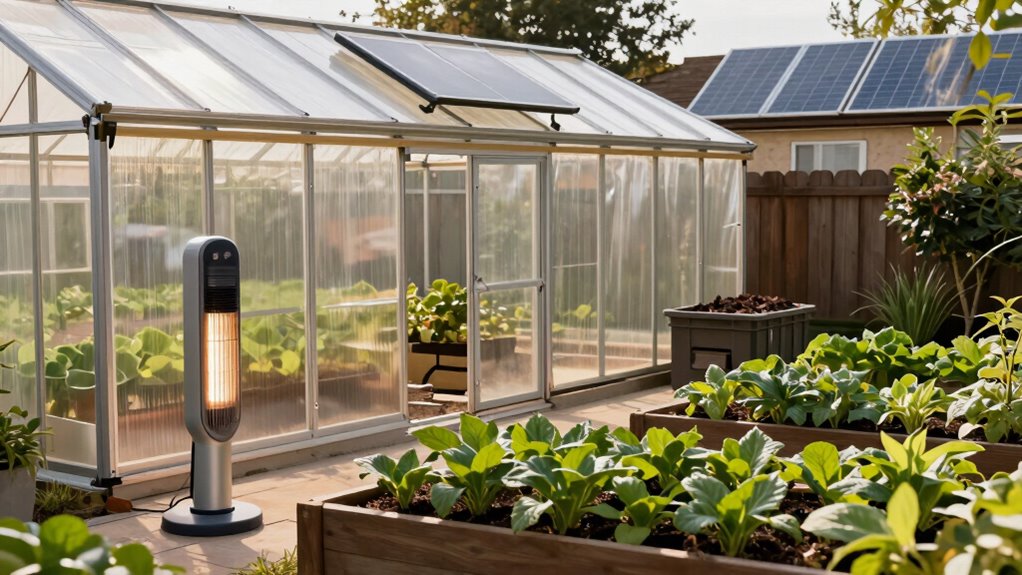
Heating a backyard greenhouse is indispensable for maintaining ideal conditions and extending your growing season, especially during colder months. To do this effectively, layering your heating strategies becomes imperative. One of the most sustainable and cost-effective methods involves using solar panels to power your greenhouse’s heating systems. Solar panels harness sunlight during the day, converting it into electricity that can run small heaters or fans. This not only reduces your reliance on grid electricity but also makes your greenhouse more eco-friendly. Installing solar panels on the roof of your greenhouse or nearby can generate enough power to operate supplementary heating devices, especially when combined with other insulation methods. By doing so, you create a renewable energy source that helps keep temperatures stable without skyrocketing your energy bills. Incorporating renewable energy sources into your setup further enhances the sustainability of your greenhouse heating approach.
Alongside solar-powered systems, thermal curtains form a critical layer in your heating strategy. These curtains are made from insulating materials that trap heat during the night and prevent cold drafts from entering during the day. You should close thermal curtains at night to retain the warmth accumulated during the day, especially when your solar-powered systems aren’t running. During the day, opening them in the sunlight allows the greenhouse to warm naturally, reducing the need for additional heating. When the sun sets or on particularly chilly days, pulling the curtains tight ensures minimal heat escapes. Combining thermal curtains with solar-powered heaters means you’re creating a barrier that keeps heat in while maximizing the energy collected from the sun. Additionally, understanding thermal mass principles can help you optimize heat retention by strategically placing heat-absorbing materials around your plants. Incorporating insulation techniques can further reduce heat loss and improve overall efficiency of your heating system.
As an affiliate, we earn on qualifying purchases.
Frequently Asked Questions
How Do I Prevent Heat Loss Through Greenhouse Vents?
To prevent heat loss through your greenhouse vents, start by installing vent insulation around the edges, which minimizes drafts. Additionally, use an automatic vent control system that closes vents when temperatures drop, maintaining consistent warmth. Regularly check and seal any gaps or leaks around the vents. These steps work together to keep heat inside, enhancing your greenhouse’s efficiency and protecting your plants from cold weather.
What’s the Most Cost-Effective Heating Option for Small Greenhouses?
The most cost-effective heating option for small greenhouses is a combination of space heaters and insulation techniques. Use energy-efficient heaters like ceramic or infrared models that target specific areas, reducing power consumption. Enhance insulation with bubble wrap, thermal curtains, and sealing gaps around vents and doors. This strategy maximizes energy efficiency, keeps heat in longer, and minimizes running costs, making it budget-friendly while maintaining ideal growing conditions.
How Often Should I Monitor Greenhouse Temperature During Winter?
You should monitor your greenhouse temperature at least once every few hours during winter to catch temperature fluctuations early. Keep an eye on thermostat placement, making sure it’s away from drafts or direct sunlight, as this affects readings. Regular checks help you maintain a stable environment, ensuring your plants stay healthy and your heating system works efficiently. Adjust your heater accordingly to prevent temperature swings and protect your greenhouse’s ecosystem.
Can Solar Heating Fully Sustain a Greenhouse’s Heating Needs?
Yes, solar heating can fully sustain your greenhouse’s needs if you incorporate passive solar techniques and thermal mass. Passive solar designs capture sunlight during the day, storing heat in materials like concrete or water tanks that release warmth at night. By effectively combining these strategies, you can maintain consistent temperatures, reduce reliance on supplemental heating, and create an energy-efficient environment for your plants year-round.
What Are the Best Practices for Safely Installing Heating Equipment?
Like Da Vinci’s meticulous sketches, you should carefully plan your heating setup. Start by following safety protocols—ensure all equipment is grounded and installed away from flammable materials. Use proper insulation techniques to prevent heat loss and avoid overheating. Secure all units firmly and check for leaks or electrical issues regularly. Prioritize safety above all, so your greenhouse stays warm and your plants thrive without risk.
Conclusion
By layering your heating strategies, you create a cozy sanctuary for your plants, much like a warm blanket on a chilly night. Combining passive methods, supplemental heat, and smart insulation guarantees consistent warmth and energy efficiency. Think of it as weaving a tapestry of comfort that adapts to changing weather. With this approach, your backyard greenhouse becomes a resilient oasis, nurturing growth year-round just as a well-crafted quilt keeps you warm through every season.
Halloween Picks
halloween
As an affiliate, we earn on qualifying purchases.