
To help hot greenhouses recover faster, you should use a combination of natural and mechanical ventilation. Strategically placed vents and windows on opposite sides promote cross-ventilation, flushing out hot, stagnant air. Exhaust fans kick in during peak heat, while circulation fans evenly distribute cooler air. Sensors can automate vent adjustments, optimizing airflow and humidity control. This integrated setup creates a self-regulating environment, ensuring your plants bounce back quickly. Keep going to discover more effective techniques.
Key Takeaways
- Use strategically placed vents and exhaust fans to quickly expel hot, stale air during peak heat.
- Incorporate natural cross-ventilation by opening side vents during cooler periods.
- Install sensors to automatically adjust vents and exhaust fans based on temperature and humidity levels.
- Combine natural airflow with mechanical circulation fans for even temperature distribution.
- Design the system to promote self-regulating airflow, enabling faster cooling and recovery from heat stress.
Have you ever wondered how proper ventilation can transform your greenhouse into a healthier, more productive environment? When you optimize your ventilation setup, you create a space where plants thrive, pests are kept at bay, and energy costs decrease. One of the key elements is ensuring natural airflow, which not only cools the space efficiently but also helps in maintaining consistent conditions. Good airflow prevents stagnant air pockets, reducing the risk of disease and promoting even temperature distribution. It’s essential to design your ventilation system so that fresh air circulates without creating drafts that might stress your plants.
Optimizing ventilation creates healthier, more productive greenhouses by promoting airflow, controlling pests, and reducing energy costs.
Humidity control plays a critical role in recovering from hot conditions quickly. When temperatures soar, excess moisture can accumulate, leading to an environment that encourages mold, mildew, and other problems. By integrating effective ventilation, you allow humid air to escape and replace it with drier, cooler air from outside. This process helps your greenhouse regain a balanced humidity level, which is indispensable for plant health. You should consider installing adjustable vents or exhaust fans that respond to temperature and humidity sensors, ensuring you can fine-tune the airflow as needed. Additionally, understanding how to manage airflow can improve overall climate regulation within your greenhouse. Proper airflow management also supports the prevention of disease, safeguarding your plants’ health. Utilizing natural ventilation methods can significantly reduce energy consumption and reliance on mechanical systems, making your greenhouse more sustainable and cost-effective.
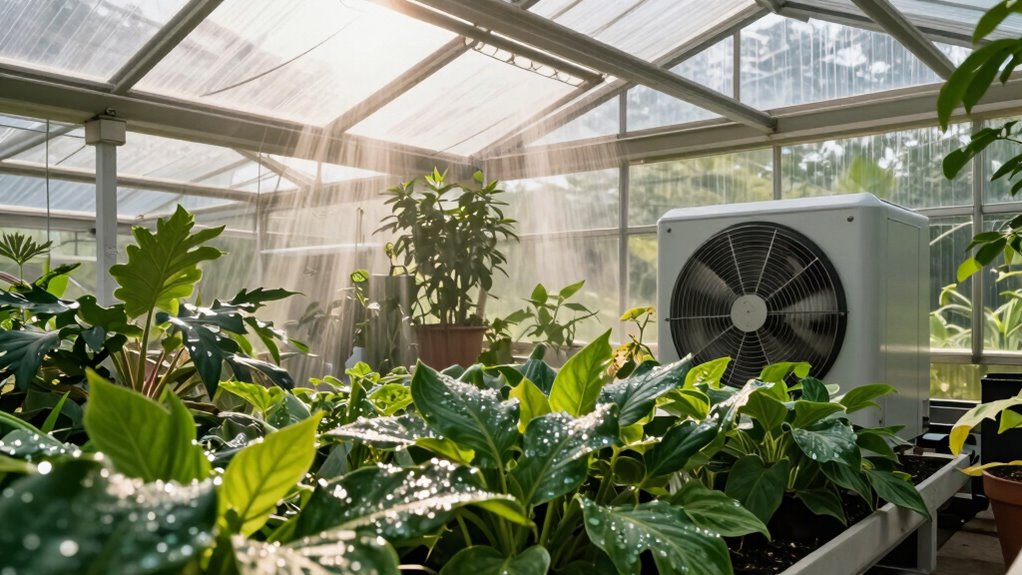
In hot weather, natural ventilation is your best friend because it leverages outside conditions to cool your greenhouse without relying solely on mechanical systems. Strategically placed vents or windows on opposite sides of your structure promote cross-ventilation, creating a steady flow of fresh air. When you open these vents at the right times—preferably during cooler parts of the day—you harness natural airflow to push out hot, stale air and draw in cooler, oxygen-rich air. This approach helps your plants recover faster from heat stress and keeps the environment comfortable.
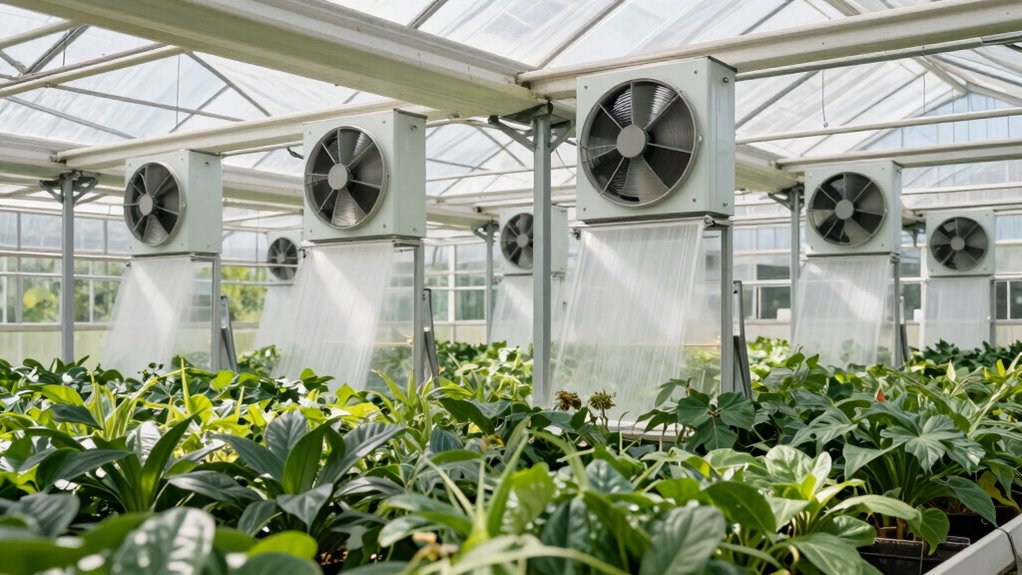
Mechanical ventilation, such as exhaust fans and circulation fans, complements natural airflow by providing control during periods of still air or extreme heat. When used together, these systems work harmoniously to regulate temperature and humidity. For example, activating exhaust fans during peak heat pulls out hot air, while circulation fans evenly distribute the cooler, conditioned air throughout your space. This combination minimizes temperature fluctuations and maintains a stable environment, enabling rapid recovery from heat spikes.
Ultimately, designing a ventilation setup that emphasizes natural airflow and humidity control ensures your greenhouse remains resilient against temperature swings. It allows your plants to recover faster after heat waves and keeps them healthier overall. With thoughtful placement of vents, use of sensors, and the right mechanical aids, your greenhouse becomes a self-regulating environment capable of supporting vigorous growth, even during the hottest days. Proper ventilation isn’t just about cooling; it’s about creating ideal conditions that promote plant vitality and productivity.

iLIVING 12" Wall Mounted Shutter Exhaust Fan, Automatic Shutter, with Thermostat and Variable Speed controller, 0.6A, 960 CFM, 1400 SQF Coverage Area Silver (ILG8SF12V-ST)
- High Airflow Capacity: 960 CFM for large spaces
- Automatic Shutter System: Ensures secure ventilation
- Variable Speed Control: Adjust airflow as needed
As an affiliate, we earn on qualifying purchases.
As an affiliate, we earn on qualifying purchases.
Frequently Asked Questions
How Often Should Greenhouse Ventilation Be Adjusted During Hot Days?
You should adjust your greenhouse ventilation frequently during hot days, especially when using shade cloths and exhaust fans. Check temperatures every 30 minutes and open or close vents as needed to maintain ideal conditions. When it gets really hot, increase ventilation by opening exhaust fans wider and adjusting shade cloths to reduce heat buildup. Staying proactive helps prevent heat stress, ensuring your plants stay healthy and thrive.
What Is the Ideal Humidity Level for Greenhouse Recovery?
Think of ideal humidity as the gentle breeze that cools a summer day—around 60-70%. Proper humidity control guarantees your greenhouse recovers faster, preventing stress on plants. Maintaining this range boosts ventilation efficiency, helping hot air escape and fresh air circulate. If humidity rises too high, plants may struggle, so monitor it closely. Keep it balanced, and your greenhouse will bounce back quickly and healthily.
Can Automated Ventilation Systems Save Energy?
Yes, automated ventilation systems can save energy by optimizing airflow and temperature control, reducing unnecessary fan or heater use. Automation benefits include precise adjustments based on real-time data, which prevents waste and maintains ideal conditions efficiently. By continuously monitoring environmental factors, you can prevent overheating or overcooling, leading to lower energy bills and a more sustainable greenhouse operation. This smart approach helps you save energy without sacrificing plant health.
How Does Ventilation Impact Plant Disease Prevention?
You might worry about controlling diseases in your greenhouse, but proper ventilation plays a vital role in disease prevention. By improving air circulation, you reduce humidity and damp spots where fungi and bacteria thrive. Good airflow helps dry plant surfaces quickly, lowering pathogen growth chances. With effective ventilation, you protect your plants from diseases, ensuring healthier growth and fewer losses, giving you peace of mind and a more productive greenhouse.
What Are the Costs Associated With Installing Advanced Ventilation?
You’ll find that installing advanced ventilation involves higher upfront costs compared to basic systems, but it offers better climate control and faster recovery. The cost comparison varies depending on greenhouse size and system complexity. You might face installation challenges, such as integrating new equipment with existing structures or ensuring proper airflow. However, the long-term benefits—reduced energy use and healthier plants—can outweigh initial expenses, making it a worthwhile investment.
Conclusion
So, next time your greenhouse feels like a sauna, just remember: a clever ventilation setup isn’t just about cooling—it’s your secret weapon to outsmart Mother Nature’s fiery temper. Who knew that a few well-placed fans could turn your sweating ordeal into a breezy triumph? With these tips, you’ll have your plants thriving faster than you can say “greenhouse glow,” proving that sometimes, a little ventilation is all it takes to beat the heat—literally.