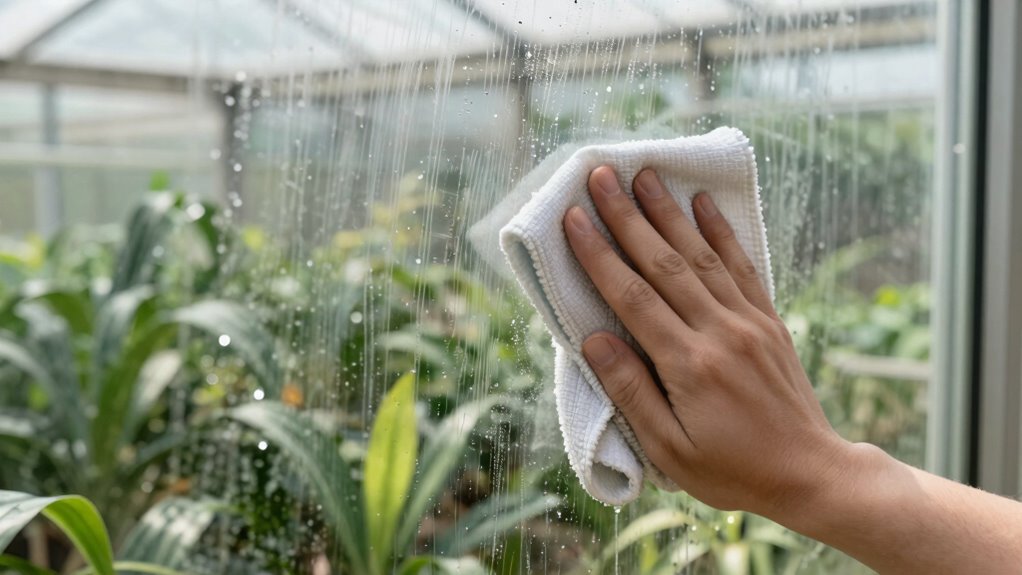
To clean your greenhouse panels without causing problems, use gentle methods like water mixed with mild soap or vinegar, and opt for soft cloths or sponges to avoid scratches. Regularly check for damage or pests while cleaning, and keep debris away from the panels to prevent pests and mold. Avoid harsh chemicals or abrasive tools that can harm the panels or block light. Proper maintenance and consistent schedules help guarantee your greenhouse stays healthy, and more tips lie ahead to keep everything in top shape.
Key Takeaways
- Use gentle cleaning solutions like water with mild soap or vinegar to avoid panel damage.
- Employ soft cloths or sponges to prevent scratching or abrasive wear.
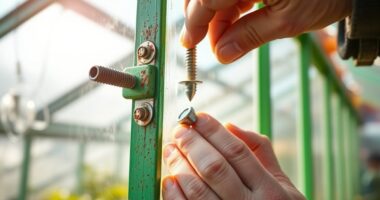
- Regularly inspect panels for cracks or damage and repair promptly to prevent pest entry.
- Schedule cleaning during low humidity periods to minimize mold and pest risks.
- Maintain good ventilation and remove debris around panels to reduce mold and pest buildup.

Keeping your greenhouse panels clean is essential for ensuring maximum light transmission and healthy plant growth. When panels are dirty or covered in grime, your plants don’t get the sunlight they need, which can stunt their development. Regular cleaning not only boosts plant health but also plays a vital role in pest prevention. Dust and debris can hide pests or create an environment conducive to mold and fungi. By maintaining clean panels, you reduce the risk of pests establishing themselves, making your greenhouse a less inviting place for unwanted visitors. Incorporating consistent panel maintenance schedules into your routine helps keep these issues manageable, preventing problems before they escalate.
Clean greenhouse panels for maximum light, healthier plants, and effective pest prevention. Regular maintenance is key.
When cleaning your panels, it’s important to choose the right methods. Avoid harsh chemicals or abrasive tools that could scratch or damage the surface, as damaged panels are more prone to dirt accumulation and can create entry points for pests. Instead, opt for gentle cleaning solutions like a mixture of water and a mild soap or vinegar. Use soft cloths or sponges to wipe the panels carefully, ensuring you remove all dirt, algae, or pollen. Regular cleaning sessions should be scheduled based on your local environment—more frequently in dusty or humid areas where grime builds up quickly. Establishing a panel maintenance schedule helps you stay consistent, reducing the chances of neglect and the problems that come with dirty panels.
To prevent issues from recurring, keep an eye out for early signs of pests or mold during your cleaning routines. If you notice any pests or mold, take immediate action to address the problem, because neglecting these signs can lead to infestations or plant diseases. Clean your panels at least once a month, but increase frequency during peak pest or mold seasons. When cleaning, also check for any damage or cracks that could compromise the panel’s integrity or allow pests to enter. Repair or replace damaged panels promptly to maintain an effective barrier against pests and environmental threats. Additionally, maintaining good indoor air quality helps reduce humidity and mold growth, further supporting your pest prevention efforts. Proper ventilation practices can also help circulate air and reduce dampness inside the greenhouse, which is essential for controlling moisture levels. Implementing preventative measures can further minimize the chances of pest and mold buildup, ensuring a healthier environment for your plants.
Finally, integrating pest prevention strategies into your cleaning routine enhances your greenhouse’s health. Remove fallen leaves, dead plant material, and debris from around the panels, as these can harbor pests and fungi. Keep your greenhouse well-ventilated and monitor humidity levels, because damp conditions foster mold and pest activity. Regular inspection routines, including checking for cracks and damage, are crucial for catching issues early before they become severe. Establishing a consistent maintenance schedule ensures that pests and mold are kept at bay, creating a healthier environment for your plants and ensuring they thrive with maximum sunlight and minimal pest issues.

TONYINGO 30 FT Reach Solar Panel Cleaning Brush Kit with 5-24 FT Telescopic Extension Pole, Water Fed Pole with Dual Action Flip-Lock & Screw Fixing Design, Ideal for Snow Removal, Windows, Boats, RVs
- Versatile Cleaning Kit: For solar panels, snow, windows, boats, RVs
- Extendable Telescopic Pole: Adjusts from 5 to 24 feet
- Secure Locking Mechanism: Flip-lock and screw fixing for stability
As an affiliate, we earn on qualifying purchases.
As an affiliate, we earn on qualifying purchases.
Frequently Asked Questions
Can I Use Vinegar to Clean Greenhouse Panels?
Yes, you can use vinegar to clean greenhouse panels. It’s effective for algae removal and helps keep pests at bay by removing residues that attract them. Mix equal parts vinegar and water, then gently scrub the panels with a soft cloth or sponge. This natural cleaner avoids harsh chemicals, protecting your plants while maintaining clear, light-permeable panels. Just rinse thoroughly to prevent streaks or residue buildup.
How Often Should I Clean Greenhouse Panels?
You should clean your greenhouse panels every 4 to 6 weeks to maintain ideal sunlight penetration and support plant growth. Regular cleaning prevents dirt, algae, and mineral buildup, which can reduce panel longevity. By staying consistent, you guarantee your greenhouse remains bright and efficient, allowing the maximum amount of sunlight to reach your plants. This simple routine helps preserve your panels and keeps your greenhouse thriving.
What Cleaning Tools Are Safest for Greenhouse Panels?
You should use soft, non-abrasive cleaning tools like soft microfiber cloths or sponge pads for safe scrubbing. Avoid harsh brushes that could scratch panels. Pair these with gentle cleaning solutions like diluted vinegar or mild soap to prevent damage. Always test a small area first, and use a spray bottle for even application. This approach guarantees effective cleaning while protecting your greenhouse panels from harm.
Will Cleaning Damage the Greenhouse Panels’ UV Coating?
You can rest assured that gentle cleaning won’t harm your greenhouse panels’ UV coating, ensuring their longevity. If you avoid abrasive tools and harsh chemicals, the UV coating remains protected, preserving the panel’s durability. Regular, careful cleaning helps maintain *ideal* light transmission without risking damage. Think of it as giving your panels a gentle spa treatment—preserving their protective layer while keeping them clear and effective for years to come.
How Do I Prevent Streaks After Cleaning?
To prevent streaks after cleaning, you should use proper cleaning techniques and avoid harsh scrubbing. Use a soft sponge or cloth and a gentle, non-abrasive cleaner, preferably one specifically designed for greenhouse panels. Rinse thoroughly with clean water, then dry with a microfiber cloth or squeegee to eliminate water spots. Consistent streak prevention practices like these guarantee your panels stay clear and maximize light transmission.
Conclusion
Keeping your greenhouse panels clean is crucial for peak plant growth. Regular cleaning prevents dirt buildup that can reduce light transmission by up to 30%, according to industry studies. By following proper cleaning techniques, you guarantee your plants receive the maximum sunlight they need. Remember, gentle methods are key—harsh scrubbing can damage panels and lead to costly repairs. Stay proactive with maintenance, and you’ll enjoy a thriving, healthy greenhouse environment all year round.