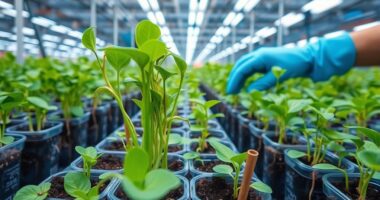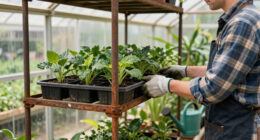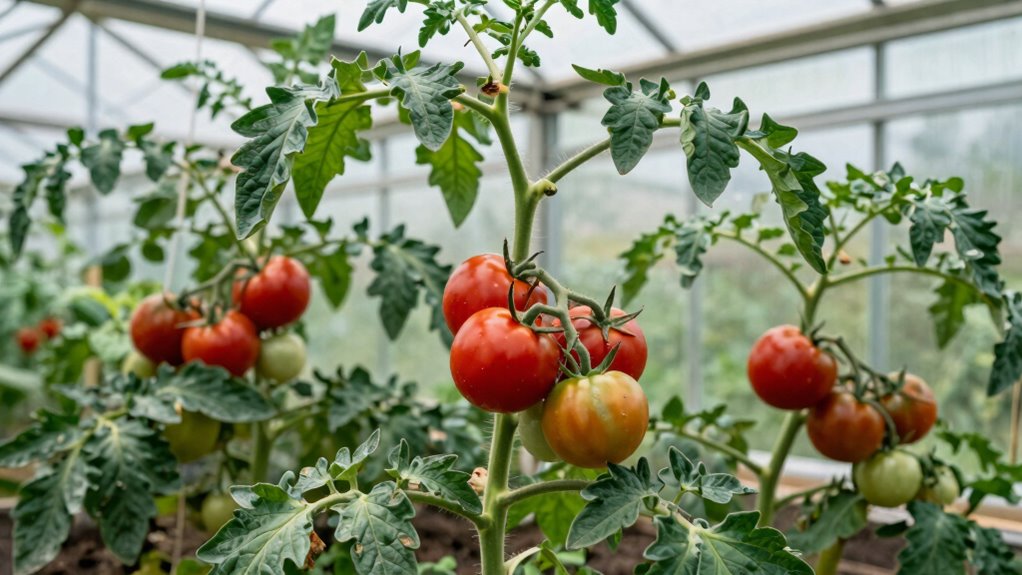
Greenhouse tomatoes tend to stretch, stall, or struggle mainly due to poor soil nutrition, inadequate drainage, pest infestations, or environmental fluctuations. If your plants lack key nutrients, they may grow taller without producing fruit. Poor drainage can lead to root problems, while pests weaken the plants and disrupt growth. Additionally, temperature swings and inconsistent light cause stress, making plants stall or struggle. Understanding these factors can help you improve your tomato growth—keep going to find out more.

Get garden gear delivered free — and shop member deals
- Fast, free delivery on millions of items
- Access to Prime Big Deal Days deals on October 6–7
- Prime Video, Amazon Music and more included
Key Takeaways
- Nutrient deficiencies or imbalances hinder proper growth, causing plants to stall or stretch in search of nutrients.
- Poor soil drainage and health increase stress, leading to root problems and reduced plant vigor.
- Pest infestations weaken plants, diverting energy from growth and causing stunted or uneven development.
- Environmental fluctuations like temperature and light extremes induce stretching or stalling.
- Inconsistent or excessive watering and ventilation stress the plants, impairing healthy growth.
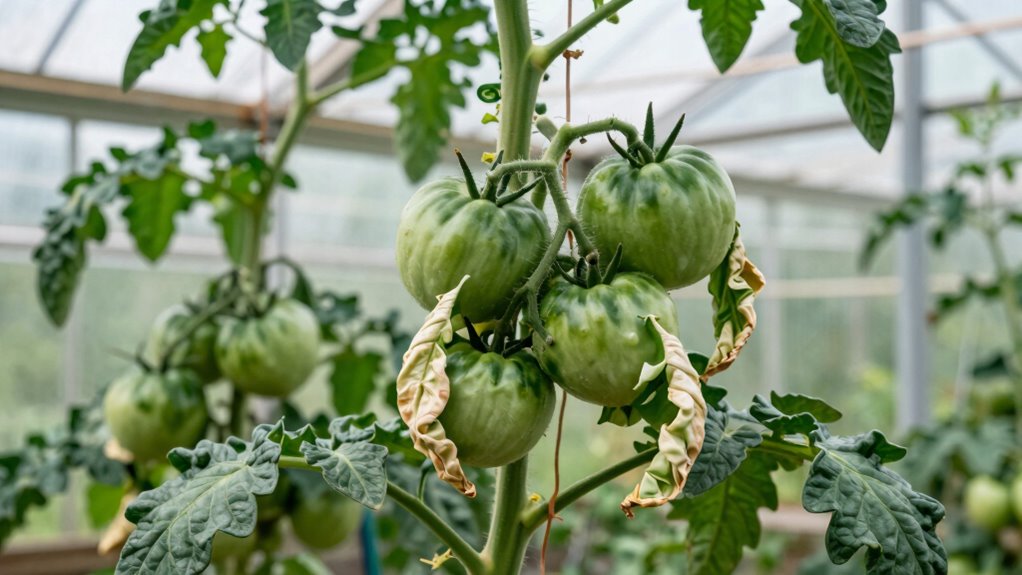
Growing tomatoes in a greenhouse offers many advantages, but it also comes with its own set of challenges. One common issue you might face is your plants stretching, stalling, or struggling to produce healthy fruit. These problems often stem from factors you can control, such as soil nutrition and pest management. If your tomato plants aren’t growing as expected, it’s crucial to evaluate these areas carefully.
First, consider soil nutrition. Tomatoes need a balanced supply of nutrients like nitrogen, phosphorus, and potassium to thrive. If the soil lacks these essentials or if they’re imbalanced, your plants may stretch excessively as they search for nutrients or stall altogether. Too little nitrogen can cause weak, spindly stems and slow growth, while too much may lead to lush foliage at the expense of fruit production. Poor soil nutrition also makes plants more vulnerable to pests and diseases, which is why maintaining indoor air quality is essential to reduce stress and improve plant health. To prevent this, regularly test your soil and amend it with appropriate fertilizers. Incorporate organic matter or use specialized tomato feeds to guarantee your plants receive a steady supply of crucial nutrients. Maintaining proper soil health encourages robust growth and helps your tomatoes reach their full potential. Additionally, ensuring proper soil drainage can prevent root diseases that hinder growth. A healthy soil environment supports biodiversity, which can naturally suppress pests and promote resilient plants. Practicing soil testing can help identify deficiencies or imbalances early on, allowing for targeted corrections.
Ensure balanced nutrients and regular soil testing for healthy, productive tomato plants in your greenhouse.
Pest management is another critical factor affecting your plants’ development. Pests such as aphids, whiteflies, and spider mites can weaken your tomato plants, causing them to stall or struggle to produce fruit. These pests feed on leaves, stems, and sometimes roots, draining essential resources and making plants more susceptible to diseases. If pests go unchecked, you might notice stunted growth or uneven ripening. Vigilant monitoring is key—inspect your plants regularly and take action at the first sign of pests. Use biological controls like beneficial insects, or apply organic insecticides that target pests without harming your plants or the environment. Keeping pests in check not only protects your plants but also reduces stress, allowing them to grow strong and produce abundant fruit.
Environmental factors also play a role in tomato growth. Ensure your greenhouse provides consistent temperature, humidity, and light levels. Fluctuations or extremes can cause plants to stretch in search of better conditions or stall due to stress. Proper ventilation and shading can help stabilize these conditions.
As an affiliate, we earn on qualifying purchases.
Frequently Asked Questions
Can Lighting Variations Affect Tomato Growth in a Greenhouse?
Yes, lighting variations can affect your greenhouse tomatoes’ growth. If light intensity drops, your plants might slow down or become leggy. Photoperiod adjustments, like changing day length, influence flowering and fruiting. Consistent, adequate lighting guarantees healthy growth, while fluctuations can cause stress or delays. By maintaining stable light levels and adjusting photoperiods appropriately, you help your tomatoes develop better, producing higher yields and healthier plants.
How Does Air Circulation Impact Tomato Development?
Did you know proper airflow can boost tomato yields by up to 30%? Air circulation impacts tomato development by reducing humidity and preventing diseases. With effective airflow, your greenhouse maintains consistent temperature and humidity levels, promoting healthy growth. Ventilation strategies like exhaust fans and side vents are essential for airflow optimization. By ensuring good air exchange, you help your tomatoes develop evenly, stay healthy, and resist pests and diseases.
Do Certain Greenhouse Materials Influence Tomato Stretching?
Yes, certain greenhouse materials can influence tomato stretching. For example, plastic films with poor insulation may cause temperature fluctuations, leading to plant stress and stretching. If you don’t address plant nutrient deficiencies or soil compaction caused by these materials, your tomatoes may struggle to develop properly. Proper ventilation and choosing the right materials help maintain stable conditions, preventing stretching and promoting healthy growth.
What Is the Role of Humidity in Tomato Growth Issues?
You might worry about controlling humidity, but it’s essential for healthy tomatoes. Humidity imbalance causes transpiration stress, which can lead to stunted growth or stalled fruit development. Too much humidity traps moisture, inviting diseases, while too little causes dehydration. By maintaining ideal humidity levels, you reduce stress on your plants, promote steady growth, and prevent issues like stretching or struggling. A balanced environment keeps your tomatoes thriving and productive.
Can Pests Cause Tomatoes to Stall or Struggle?
Yes, pests can cause your greenhouse tomatoes to stall or struggle. A pest infestation damages plants, reducing their ability to grow properly, while disease pressure weakens their health, leading to stunted growth or fruit development issues. When pests attack, they divert the plant’s resources, causing stress and slowing growth. Regular inspection and control measures are essential to prevent pest-related problems that hinder your tomato plants’ progress.
Conclusion
If you don’t stay vigilant, your greenhouse tomatoes could turn into wild, uncontrollable monsters that stretch to the heavens, stall in the blink of an eye, or struggle for life like underwater swimmers. Keep a close eye on their conditions, give them the right nutrients, and troubleshoot issues early. Otherwise, you might wake up one day to find your prized tomatoes have transformed into impossible, giant jungle vines—an epic battle you definitely don’t want to fight!
Fall yard work Picks
leaf blowers
As an affiliate, we earn on qualifying purchases.