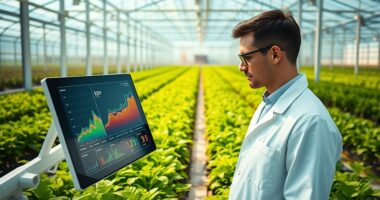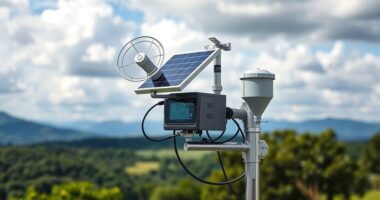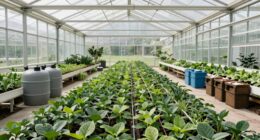
Better monitoring helps you make smarter decisions when buying a greenhouse. It allows you to precisely track climate conditions, soil moisture, and lighting, ensuring ideal plant growth. Automated systems can adjust temperature, humidity, and ventilation automatically, saving energy and reducing waste. With improved data, you can keep your plants healthy and reduce operational costs. If you want to discover more ways monitoring enhances your greenhouse, keep exploring how advanced tools can boost your success.
Key Takeaways
- Better monitoring enables precise environmental control, leading to healthier plant growth and improved crop yields.
- Enhanced data collection helps optimize energy use, reducing operational costs and environmental impact.
- Real-time alerts allow quick adjustments, preventing damage from temperature, humidity, or pest issues.
- Automated systems streamline maintenance, saving time and ensuring consistent greenhouse conditions.
- Monitoring insights support informed decision-making for sustainable resource management and long-term efficiency.
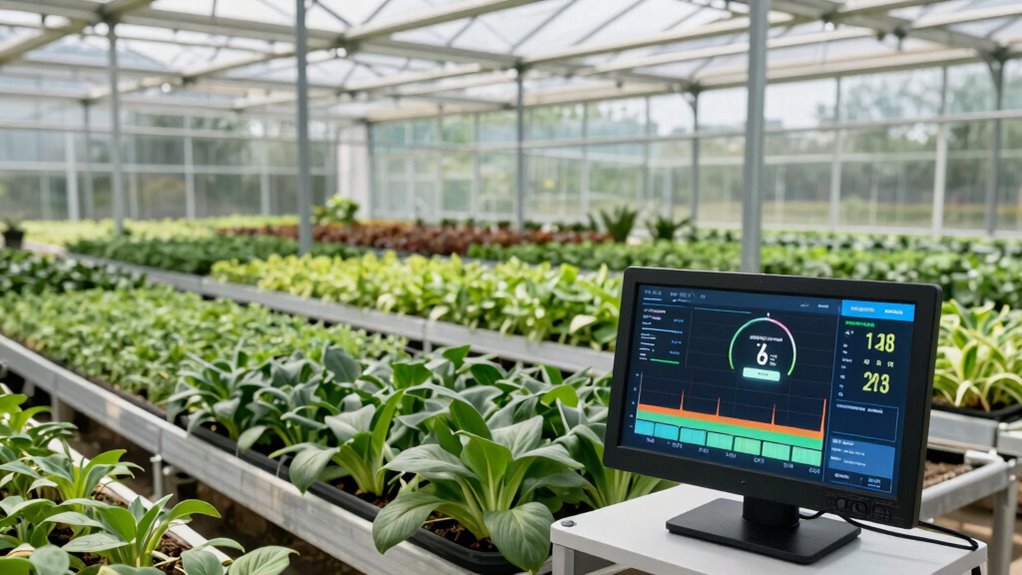
Choosing the right greenhouse can greatly influence your gardening success, so it’s essential to evaluate your specific needs and goals before making a purchase. When selecting a greenhouse, one key factor to consider is how well it integrates sustainable materials and promotes energy efficiency. These elements not only impact the environment but also affect your long-term operating costs and the overall health of your plants. Opting for structures built with sustainable materials, like recycled aluminum or responsibly sourced wood, helps reduce your carbon footprint. Additionally, energy-efficient features such as insulated panels, ventilation systems, and solar-powered lighting can notably lower your energy consumption, saving you money and reducing environmental impact.
Choose a greenhouse with sustainable materials and energy-efficient features to reduce costs and support environmental health.
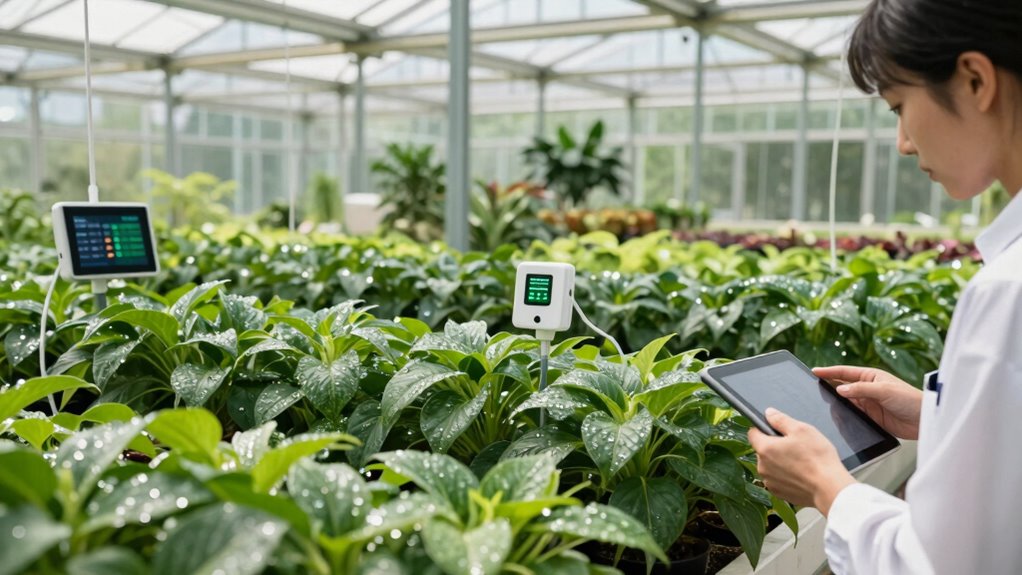
Monitoring plays a critical role in optimizing your greenhouse’s performance. Better monitoring allows you to track temperature, humidity, light levels, and soil moisture with precision. When you have accurate, real-time data, you can make informed adjustments that improve plant health and growth rates. For example, if your monitoring system detects temperature fluctuations, you can quickly activate heating or cooling systems to maintain ideal conditions. This proactive approach prevents stress on your plants and reduces waste, ensuring you’re using resources efficiently. Furthermore, monitoring helps you identify issues like pests or diseases early, enabling swift intervention before problems escalate.
Investing in advanced monitoring systems can also improve energy efficiency. Smart sensors can automate climate control processes, adjusting ventilation, shading, or heating based on the data they collect. This automation reduces unnecessary energy use, making your greenhouse more sustainable. When you understand your greenhouse’s specific needs through detailed monitoring, you can implement targeted strategies that enhance sustainability and energy savings. For example, you might optimize the use of natural sunlight through shading systems or ventilation, decreasing reliance on artificial lighting and climate control devices. Incorporating advanced monitoring technology can also streamline maintenance routines, saving time and labor costs over time. Additionally, integrating these systems with energy-efficient features allows for a more cohesive and environmentally conscious operation. Properly calibrated monitoring equipment can also provide insights into the performance of your systems, helping you identify areas for improvement. Employing sustainable monitoring practices can further reduce environmental impact by ensuring your systems are used optimally.
Ultimately, better monitoring empowers you to make data-driven decisions that enhance your greenhouse’s performance. It helps you maintain consistent conditions, which is essential for maximizing plant growth and health. When combined with a focus on sustainable materials and energy efficiency, improved monitoring creates a sustainable cycle of resource management. You’ll find yourself spending less on utilities, reducing waste, and cultivating healthier plants. This integrated approach not only benefits your gardening success but also aligns with environmentally conscious practices, making your greenhouse operation more sustainable and cost-effective over time. A comprehensive monitoring system can give you peace of mind knowing that your greenhouse is operating at peak efficiency while supporting sustainability goals.

LIOOBO 2sets Solar Powered Auto Greenhouse Window Opener Heat-Sensitive Roof Vent Kit for Dynamic Climate Control Multi-Window Support and Automated Ventilation in Large Greenhouses
- Multi-Window Support: Supports multiple windows for uniform ventilation
- Hands-Free Operation: Automatically opens and closes windows
- Integrated System: Compatible with existing automation controllers
As an affiliate, we earn on qualifying purchases.
As an affiliate, we earn on qualifying purchases.
Frequently Asked Questions
How Does Monitoring Impact Greenhouse Energy Efficiency?
Monitoring markedly boosts your greenhouse’s energy efficiency by allowing you to track plant health and water management precisely. When you stay aware of temperature, humidity, and water use, you can optimize conditions, reducing energy waste. This proactive approach helps prevent issues like overwatering or overheating, ensuring plants thrive with less energy. Ultimately, better monitoring leads to smarter energy use, saving costs while maintaining healthy, vibrant plants.
What Are the Cost Implications of Improved Monitoring Systems?
Improved monitoring systems can lead to significant cost savings by optimizing energy use and reducing waste, ultimately lowering operational expenses. However, you should also consider the investment risks involved, such as upfront costs and potential technology obsolescence. While the initial investment may seem high, the long-term benefits of better data insights often outweigh these risks, making it a smart move for sustainable and cost-effective greenhouse management.
How Often Should Greenhouse Monitoring Equipment Be Calibrated?
You need to calibrate your greenhouse sensors regularly—typically every three to six months—to guarantee data accuracy. But beware: neglecting sensor calibration can lead to inaccurate readings, jeopardizing your crop health. The right calibration schedule depends on your equipment and environment, so stay vigilant. Consistent calibration not only maintains precision but also helps you make better decisions, ultimately safeguarding your harvest and maximizing your investment.
Can Monitoring Systems Detect All Greenhouse Environmental Issues?
Monitoring systems can’t detect all greenhouse environmental issues due to sensor limitations and data accuracy challenges. You need to understand that sensors might miss subtle changes or fail under harsh conditions, which can impact the reliability of the data. To guarantee ideal plant growth, it’s crucial to supplement automated systems with manual checks and maintenance, recognizing that no system is entirely foolproof, and ongoing calibration helps improve sensor performance.
What Are the Best Practices for Integrating Monitoring Data?
Think of your monitoring system as a well-orchestrated symphony; each sensor must be in the right place. Proper sensor placement guarantees accurate data collection, while data integration combines multiple sources for a clear picture. Regularly review and calibrate your sensors, and use software that consolidates data seamlessly. This way, you make informed decisions, optimize conditions, and keep your greenhouse thriving.
Conclusion
By leveraging better monitoring, you can make smarter, swifter, and more confident greenhouse buying decisions. Improved data collection helps you assess needs accurately, identify potential issues early, and optimize your investment. With clearer insights, you avoid unnecessary costs, reduce risks, and guarantee your greenhouse’s success. Ultimately, better monitoring empowers you to choose wisely, act proactively, and cultivate a thriving environment—because informed decisions lead to better outcomes every time.