
In hydroponic systems, NFT offers rapid nutrient delivery through a continuous water flow, but it needs frequent checks to prevent clogging and flow disruptions. DWC provides a stable environment with roots submerged in oxygenated water, making it easier to maintain once set up, though it’s more susceptible to root rot if oxygen levels drop. Understanding these differences helps you choose the best system; exploring more reveals which suits your needs best.
Key Takeaways
- NFT offers rapid nutrient delivery through a continuous flow but is vulnerable to flow disruptions and clogging.
- DWC provides a stable root environment with consistent nutrient access, simplifying maintenance once established.
- NFT requires frequent monitoring of water flow and cleaning to prevent algae buildup and system failure.
- DWC’s oxygenated water reduces root rot risk but demands vigilant oxygen level management.
- Both systems need proper design and regular checks to prevent plant stress and disease development.

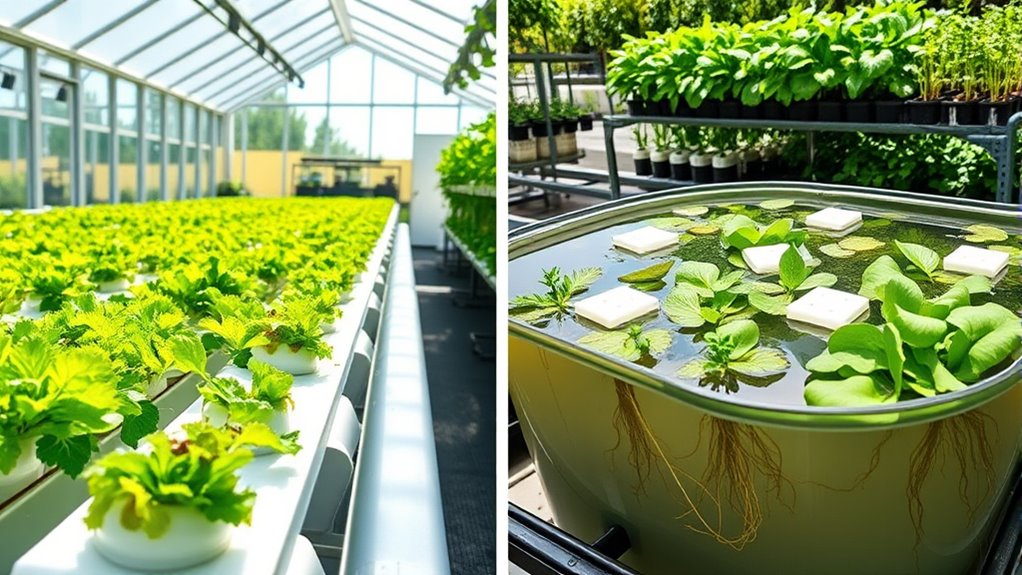
When choosing a hydroponic system for your garden, understanding the differences between Nutrient Film Technique (NFT) and Deep Water Culture (DWC) is crucial. Both systems deliver plant nutrition efficiently, but they approach it differently, affecting how you manage your setup and maintain plant health. NFT involves a thin film of nutrient-rich water constantly flowing over the roots, which sit in a slight incline. This method requires precise control of water flow and regular monitoring to guarantee plants get enough nutrients without risking root drying out. On the other hand, DWC suspends the roots directly in a deep, oxygenated nutrient solution, creating a stable environment that’s generally easier to manage once established. Your choice depends on how much effort you’re willing to put into system maintenance and how essential consistent plant nutrition is to your goals.
In terms of plant nutrition, NFT delivers nutrients in a continuous, always-moving stream, which can promote rapid growth if maintained properly. The constant flow ensures fresh nutrients reach the roots, but it also means any disruption—like a pump failure—can quickly deprive plants of essentials, stressing your crops. DWC provides a more stable environment since roots are submerged in a reservoir filled with oxygenated solution, which allows plants to access nutrients more consistently. This stability minimizes fluctuations in nutrient levels, making it easier to maintain ideal plant nutrition over time. Additionally, understanding hydroponic system design and how it impacts plant health can help optimize your setup for better yields. However, DWC requires careful attention to oxygen levels, as insufficient aeration can lead to root rot or other issues, especially if you neglect system maintenance.
System maintenance differs considerably between the two. NFT systems demand frequent checks of water flow, pump operation, and nutrient concentration to prevent clogging and ensure roots stay moist without drowning. You’ll need to clean channels regularly and watch for algae buildup, which can disrupt flow and nutrient delivery. DWC systems are generally simpler once set up; maintaining proper oxygenation through air stones and keeping the nutrient solution at appropriate levels are your main tasks. However, because the roots are submerged, you must be vigilant about oxygen levels and water quality to prevent disease. If neglected, DWC setups can become breeding grounds for pathogens, making regular system checks essential.
Frequently Asked Questions
Which System Requires Less Initial Setup Cost?
You’ll find that NFT systems typically require less initial investment compared to DWC setups. Their simpler design means you spend less on materials and equipment upfront. If budget is tight, you can explore financing options to cover costs. This makes NFT a more affordable choice for beginners or those looking to start small. Overall, NFT systems are a cost-effective way to get started with hydroponics without breaking the bank.
How Do Nutrient Delivery Rates Differ Between NFT and DWC?
You’ll find that nutrient delivery rates differ between NFT and DWC systems, impacting root zone management and nutrient absorption efficiency. With NFT, nutrients flow continuously over the roots, ensuring steady supply and high absorption efficiency. DWC, however, maintains a constant nutrient-rich water column, allowing roots to absorb nutrients directly from the solution. This difference influences how quickly plants access nutrients and how effectively they grow in each setup.
What Is the Best System for Beginners?
As a beginner, DWC is your best choice because it’s simpler to set up and maintain. You’ll benefit from consistent nutrient delivery and stable pH levels, making pH maintenance easier. Plus, DWC systems often have better lighting efficiency since roots are submerged, maximizing light exposure. This straightforward approach helps you learn hydroponics faster, reducing potential issues and ensuring healthier plant growth as you gain experience.
How Do These Systems Compare in Disease Resistance?
Think of these systems as shields against root disease; DWC offers a sturdier armor because its constant water oxygenation boosts pathogen resistance. NFT, with its shallow flow, can be more vulnerable to root issues if nutrients aren’t managed well. You’ll find DWC generally provides better resistance to root disease, making it a safer choice for beginners who want a more resilient system.
Can NFT or DWC Be Scaled for Commercial Farming?
Yes, you can scale NFT and DWC systems for commercial farming, but you’ll face scaling challenges like maintaining consistent nutrient delivery and managing higher startup costs. DWC systems often provide better oxygenation at large scales, making them economically viable for bigger operations. NFT systems, while efficient, require precise control and may be less adaptable to large-scale setups. Careful planning guarantees these systems remain profitable as they grow.
Conclusion
So, whether you favor the sleek, nutrient-film approach of NFT or the deep, oxygen-rich embrace of DWC, remember that both promise growth—though one might leave you hanging and the other fully submerged. Ironically, choosing the “better” system often depends on your patience and willingness to endure a few surprises. In the end, your plants will thrive, but don’t be surprised if your hydroponic journey keeps you constantly learning—just like any good experiment should.