
Many greenhouses still underuse vertical growing systems that can greatly boost your productivity and sustainability. By growing upward, you save valuable land space, improve soil health, and reduce pest and disease risks. Vertical setups also optimize environmental control, making plants healthier and more resistant. Despite these benefits, many still stick to traditional horizontal layouts. Keep exploring to discover how embracing vertical growth could transform your greenhouse operations and maximize your yields.

Get garden gear delivered free with Prime
- Fast, free delivery on millions of items
- Prime Video, Amazon Music and more included
- Member-only deals all year
Key Takeaways
- Many greenhouses rely on horizontal layouts, underutilizing vertical space for increased plant capacity.
- Vertical systems enhance soil preservation, yet many greenhouses still disturb soil through traditional ground-based cultivation.
- Improved pest and disease management via vertical setups are often overlooked in conventional greenhouse designs.
- Automated environmental controls in vertical systems optimize resource use but are not widely adopted in traditional greenhouses.
- Initial investment and mindset shifts hinder greenhouses from fully leveraging vertical growing’s long-term sustainability benefits.
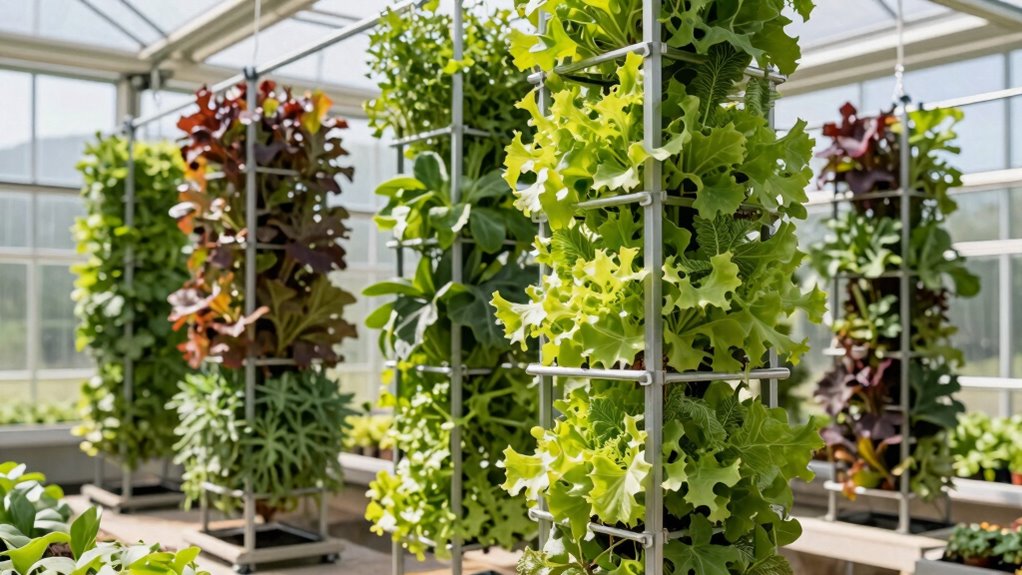
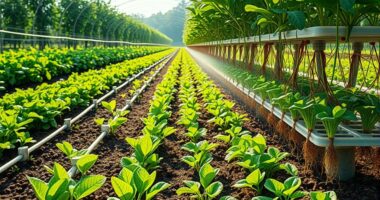
As urban spaces become more crowded, vertical growing offers a practical solution to maximize limited land. Instead of spreading out horizontally, you can stack plants upward, making the most of every inch available. This method isn’t just about saving space; it’s about creating a more efficient, sustainable growing environment. Greenhouses often stick to traditional horizontal layouts, but embracing vertical systems release advantages that many still overlook.
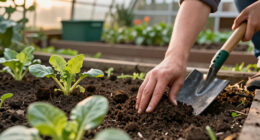
One of the key benefits of vertical growing is how it impacts soil health. When you grow vertically, you often reduce the amount of soil needed at ground level, which means less disturbance of the natural soil ecosystem. You can employ container systems or hydroponic setups that minimize soil contact altogether. This not only preserves existing soil health but also limits soil erosion and compaction. As a result, plants have better access to nutrients, and you can maintain a cleaner, more controlled environment that’s easier to manage and monitor for soil quality. Soil conservation is a crucial aspect of sustainable agriculture that vertical growing can support. Additionally, vertical systems can incorporate soil monitoring technologies to further enhance soil health management. Using innovative growing techniques, you can further optimize resource use and plant health in vertical systems. Incorporating environmental controls such as automated climate regulation can also help maintain ideal conditions, promoting healthier plant development and reducing resource waste.
Vertical growing reduces soil disturbance, preserves soil health, and creates a cleaner, more manageable environment for plants.
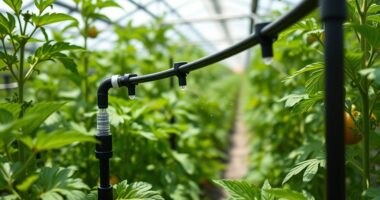
Pest management also becomes more manageable with vertical growing. Traditional horizontal greenhouses sometimes struggle with pest control because pests can hide in dense foliage or soil beds. With a vertical setup, you gain better visibility of your plants, making it easier to spot and address pest issues early. Many vertical systems incorporate integrated pest management strategies, such as physical barriers or biological controls, which are more effective when pests are easier to detect. Additionally, since vertical systems often use less soil and organic matter, the risk of soil-borne pests diminishes, reducing the need for chemical interventions that could harm beneficial insects or the environment.
Furthermore, with vertical growing, you can design your greenhouse to optimize airflow and light exposure. Better air circulation discourages fungal diseases and pests that thrive in stagnant, humid conditions. Enhanced light penetration promotes healthier plant growth, which naturally strengthens your plants’ defenses against pests. The combination of improved soil health, easier pest management, and optimized environmental conditions results in healthier crops and less reliance on pesticides. Incorporating electric-powered equipment can further streamline maintenance and enhance environmental control within vertical systems.
Despite these benefits, many greenhouses still rely on traditional methods, missing out on the efficiencies vertical growing offers. It requires an initial adjustment in mindset and some investment, but the long-term gains in soil health and pest control are well worth it. As you experiment with vertical systems, you’ll discover a more sustainable way to grow—one that conserves space, protects your plants, and simplifies maintenance. This approach not only boosts productivity but also aligns with the growing need for environmentally responsible agricultural practices.
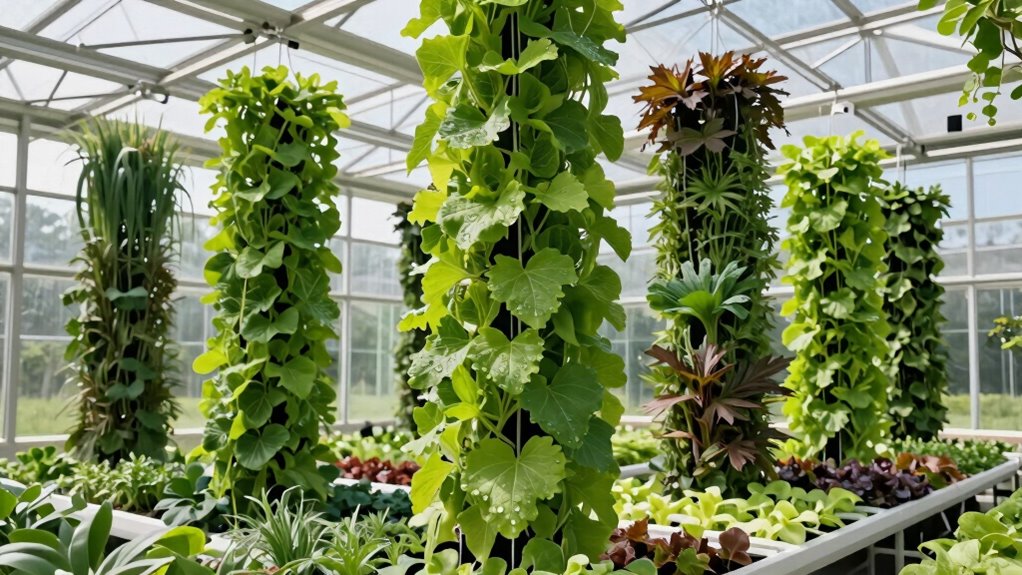
vertical hydroponic growing system
As an affiliate, we earn on qualifying purchases.
As an affiliate, we earn on qualifying purchases.
Frequently Asked Questions
What Are the Initial Costs of Implementing Vertical Growing Systems?
The initial costs of implementing vertical growing systems vary, but you should expect significant startup expenses. Conduct a thorough cost analysis to understand equipment, infrastructure, and installation costs. You’ll need to budget for vertical racks, automation, lighting, and climate control, which can be substantial. While the upfront investment is high, these systems offer long-term efficiency and increased yields, making the costs worthwhile if planned carefully.
How Does Vertical Growing Impact Greenhouse Energy Consumption?
You might think vertical growing increases energy use, but it actually cuts down on it. With better lighting efficiency, you need less artificial light, and water conservation reduces the need for frequent heating or cooling. By stacking plants vertically, you optimize space and energy, making your greenhouse more eco-friendly. So, instead of raising energy bills, vertical systems help you save power while boosting productivity.
Are Vertical Farms Suitable for All Crop Types?
Vertical farms aren’t suitable for all crop types, especially those requiring large root spaces or extensive outdoor conditions. You’ll find they work best for leafy greens, herbs, and some fruits, where crop diversity is manageable within stacked layers. Pest management becomes easier in vertical setups, reducing chemical use. However, you should evaluate each crop’s specific needs to guarantee compatibility with vertical farming’s space and climate controls.
What Maintenance Challenges Do Vertical Growing Systems Face?
You need to stay vigilant with vertical growing systems, or you’ll find yourself in hot water. Pest management becomes trickier as pests can hide in hard-to-reach spots, and maintaining structural stability is key to prevent collapses. Regular inspections, effective pest control measures, and reinforcing structures are essential. By staying proactive, you’ll keep your vertical farm running smoothly and avoid costly setbacks down the line.
How Can Vertical Farming Improve Overall Greenhouse Productivity?
Vertical farming boosts your greenhouse productivity by maximizing space and enabling crop diversity. You can grow more varieties in a smaller footprint, reducing land use and increasing yield. Vertical integration streamlines your operations, making harvesting, watering, and monitoring more efficient. This approach helps you optimize resources, cut costs, and produce higher-quality crops consistently, ultimately transforming your greenhouse into a more productive, sustainable, and profitable operation.
Conclusion
Imagine what could happen if you start harnessing vertical growing today. With each layer stacked higher, the potential for more crops, less space, and increased efficiency grows—but what’s holding you back? As the green revolution advances, the real question is: are you ready to discover the secrets of vertical farming before your competitors do? The future of greenhouses is waiting just above, and it’s up to you to seize it before it’s too late.
Columbus Day / Indigenous Peoples' Day Picks
long weekend sales
As an affiliate, we earn on qualifying purchases.