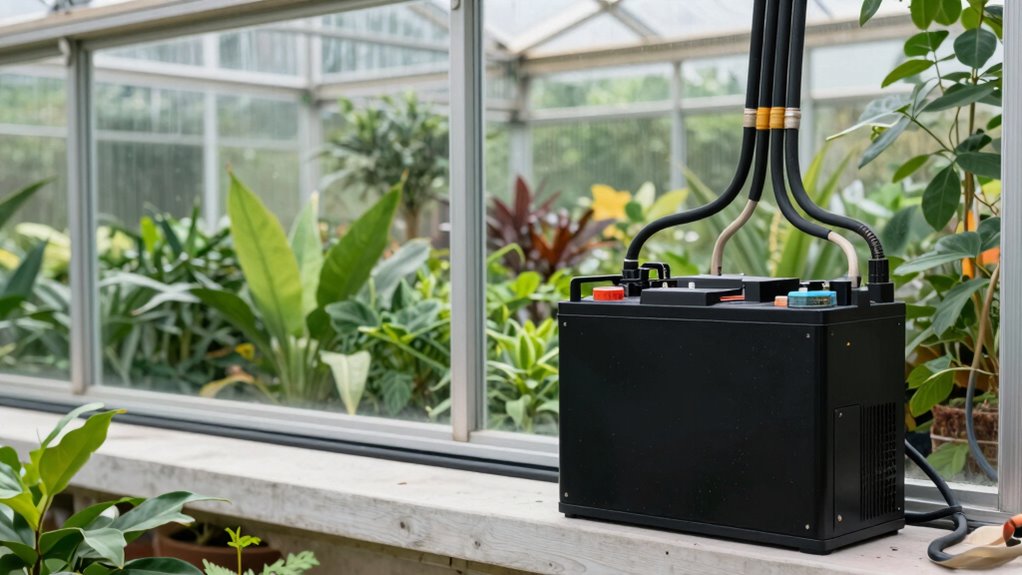

If you’re setting up a battery backup in your greenhouse, prioritize climate control and irrigation systems first. Maintaining consistent temperature and humidity is essential to prevent crop stress or loss during outages. Reliable watering keeps plants healthy and prevents drought damage. By ensuring these critical systems stay operational, you protect your investment and crop quality. Want to discover which other systems benefit from backup power? Keep exploring to find out more.
Key Takeaways
- Prioritize climate control systems to maintain optimal temperature and humidity for plant health.
- Backup irrigation systems to ensure consistent watering and prevent drought stress.
- Focus on essential lighting systems for photosynthesis and crop development.
- Integrate solar power to enhance energy resilience and reduce operational costs.
- Ensure sufficient battery capacity for extended outages, especially for critical environmental controls.
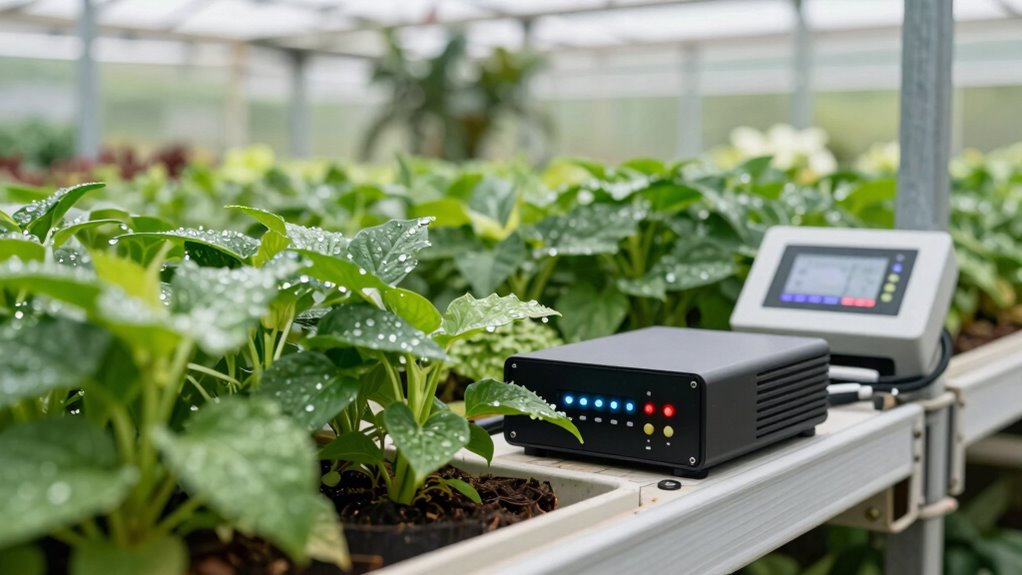
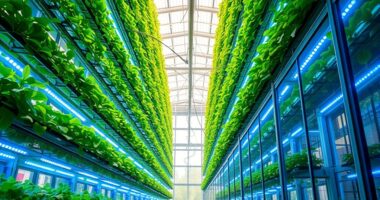
A greenhouse system on battery backup guarantees your plants stay healthy and productive even during power outages. When you rely on traditional power sources, a blackout can halt watering systems, climate controls, and lighting, risking crop loss. Investing in a battery backup guarantees continuous operation, maintaining ideal conditions regardless of grid stability.
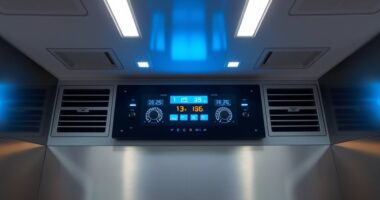
The first system you should prioritize for backup is your climate control system. Temperature regulation is essential for plant health, especially in extreme weather conditions. Without it, your crops could suffer from overheating or freezing, which can stunt growth or kill them outright. A battery backup for your climate control keeps fans, heaters, and air circulation running smoothly, giving you peace of mind that your plants are always in the right environment. This becomes even more critical if you’re operating a commercial greenhouse where consistent conditions translate directly into economic stability.
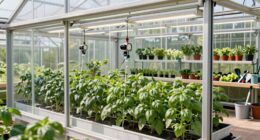
Next, consider your irrigation system. Watering is fundamental for plant growth, and interruptions can lead to drought stress or uneven moisture levels that compromise crop quality. A battery-backed irrigation system guarantees your plants receive consistent watering schedules, regardless of power disruptions. This prevents stress and helps you maintain ideal growth rates, reducing waste and improving yields. Ensuring your system is resilient and reliable through energy storage enhances overall operational stability. Additionally, incorporating smart monitoring technology can help optimize water and energy use, further increasing efficiency.
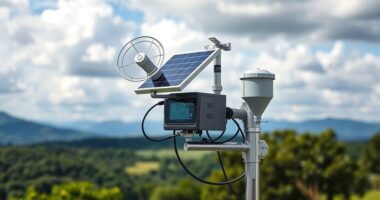
Incorporating solar integration into your backup plan enhances energy efficiency and sustainability. Solar panels can charge your batteries during sunny days, reducing reliance on grid power and lowering operational costs. By combining solar with battery storage, you create a resilient system that’s both eco-friendly and cost-effective. This setup allows your greenhouse to operate efficiently, even during prolonged outages, without draining your energy budget. Additionally, a well-designed system can help you maximize energy savings, making your greenhouse more sustainable in the long run.
Additionally, battery capacity plays a crucial role in ensuring your backup system can sustain your critical equipment during extended outages. Prioritizing these systems on battery backup is a smart move because they directly impact your crops’ health and your operational continuity. Climate control and irrigation are the backbone of a healthy greenhouse environment. Ensuring they’re always powered minimizes risks of crop failure and maximizes productivity. Plus, integrating solar energy makes your system more sustainable and cost-efficient in the long run.
greenhouse climate control battery backup
As an affiliate, we earn on qualifying purchases.
As an affiliate, we earn on qualifying purchases.
Frequently Asked Questions
How Long Can a Battery Backup Power a Greenhouse System?
A battery backup can power your greenhouse system for anywhere from a few hours to over a day, depending on your setup’s energy efficiency and solar integration. If your system is optimized for energy efficiency, it’ll last longer during outages. To maximize backup duration, choose energy-efficient equipment and make certain your solar integration is well-designed. This way, you keep your greenhouse running smoothly, even when the power’s out.
What Types of Batteries Are Best for Greenhouse Backup?
You should consider lithium-ion batteries for greenhouse backup, especially if you’re integrating solar power. For example, a solar-powered greenhouse in California uses lithium-ion batteries, which are efficient and have a longer lifespan. They also support sustainable practices through battery recycling, reducing environmental impact. Lithium-ion batteries offer reliable energy storage, ensuring your system stays operational during outages, making them the best choice for maintaining ideal growing conditions.
Is Battery Backup Cost-Effective for Small Greenhouses?
Battery backup can be cost-effective for small greenhouses, especially if you prioritize solar integration and energy efficiency. It helps prevent crop damage during power outages and reduces energy waste. While initial costs might seem high, the long-term savings on energy bills and improved system reliability make it worthwhile. By investing in a well-chosen backup system, you guarantee your small greenhouse remains productive and sustainable, even in emergencies.
How Often Should Battery Backups Be Maintained or Replaced?
You should check your battery backups regularly—at least every 6 to 12 months—and follow the manufacturer’s maintenance schedule. Battery lifespan varies, but most last between 3 to 5 years with proper care. Keep an eye on performance, and replace batteries when they no longer hold a charge effectively. Regular maintenance guarantees your greenhouse systems stay reliable during power outages, protecting your plants and investments.
Can Battery Backups Protect Against Power Surges or Outages?
Yes, battery backups protect your greenhouse systems against power surges and outages, ensuring continuous operation. With solar integration, you can rely on stored energy during outages, reducing downtime. This helps maintain your emergency protocols, especially during extreme weather or grid failures. By investing in a quality battery backup, you safeguard sensitive equipment and plants, keeping your greenhouse running smoothly and minimizing risks caused by unexpected power disruptions.
Conclusion
Prioritizing battery backups for your greenhouse systems can make all the difference during power outages. Imagine losing control of your climate or irrigation just when your plants need it most—that’s a risk you can avoid. Studies show that 60% of greenhouse operations experience outages annually, leading to significant crop losses. Installing battery backups guarantees you stay ahead of unpredictable disruptions, protecting your investments and maintaining ideal growth conditions. Don’t wait—secure your greenhouse today with reliable battery backup systems.