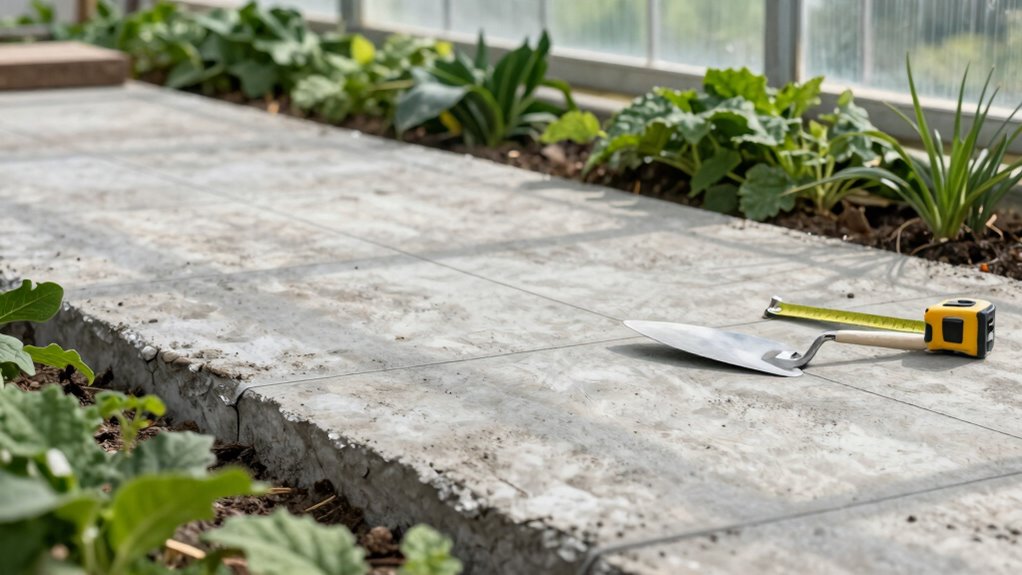
To prevent your greenhouse from settling, guarantee you start with a strong, stable foundation by properly compacting the soil, selecting the right materials, and planning drainage. Regular inspections and maintenance help catch issues early before they worsen. Avoid common mistakes like inadequate leveling or poor material choices. If you pay attention to foundation planning and upkeep, your greenhouse will stay steady and secure. Keep exploring for expert tips that can help you build a long-lasting, stable base.
Key Takeaways
- Conduct thorough soil testing to choose appropriate foundation materials and assess drainage needs.
- Ensure proper soil compaction and levelness during construction to prevent settling.
- Incorporate effective drainage strategies to reduce water accumulation and soil erosion.
- Regularly inspect the foundation for cracks, unevenness, or water pooling to catch issues early.
- Use durable, site-appropriate materials like concrete or treated wood to enhance long-term stability.
Why a Strong Foundation Prevents Greenhouse Settling
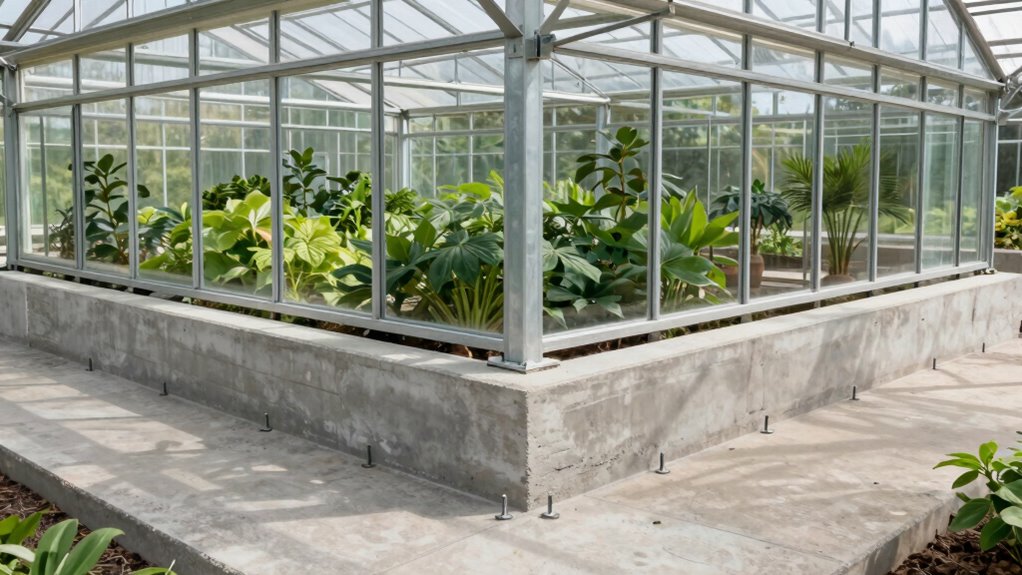
Have you ever wondered why some greenhouses remain stable over time while others develop uneven floors? The answer lies in soil compaction and foundation reinforcement. Proper soil compaction creates a solid, stable base, reducing the risk of shifting and settling. When soil isn’t compacted well, air pockets and loose material can cause uneven settling, leading to structural problems. Reinforcing the foundation strengthens it against natural earth movements, ensuring it stays level. A strong foundation distributes weight evenly, preventing the greenhouse from sinking or shifting as the soil settles. Incorporating landscaping techniques can further enhance natural stability and prevent erosion around the structure. Investing in soil compaction and foundation reinforcement early on provides a sturdy base that resists settling, saving you time, money, and frustration down the line. Understanding soil behavior can help anticipate and mitigate potential issues before they develop. Regular appliance testing of tools and equipment used during construction can also prevent future problems and ensure safety. Recognizing the importance of soil testing can be crucial for customizing your foundation approach and avoiding future problems. Additionally, using proper foundation materials can significantly improve long-term stability. It’s the key to long-lasting stability.
What to Consider When Planning Your Greenhouse Foundation

Planning your greenhouse foundation requires careful consideration of several key factors to guarantee long-term stability. First, conduct soil testing to assess its composition, drainage capacity, and load-bearing strength. Knowing your soil type helps determine the best foundation approach and whether additional reinforcement is needed. Next, choose appropriate foundation materials based on soil conditions and your budget. Concrete is common for its durability, but options like gravel or treated wood can work in specific scenarios. Consider the climate and how it might affect foundation performance over time. Proper planning involves evaluating these factors early, ensuring your foundation is suited to your site, which reduces the risk of settling or shifting later. Additionally, understanding digital concepts can help in monitoring your foundation’s stability over the years. Implementing soil analysis techniques can provide more precise data, leading to better foundation decisions. Utilizing soil testing methods can further optimize your foundation design by offering detailed insights into the soil’s properties. Incorporating innovative foundation techniques can also enhance stability, especially in challenging soil conditions. Being aware of drainage management strategies can prevent water-related issues that compromise foundation integrity. Thoughtful preparation now will help your greenhouse stay stable and secure for years to come.
How to Build a Stable Greenhouse Foundation
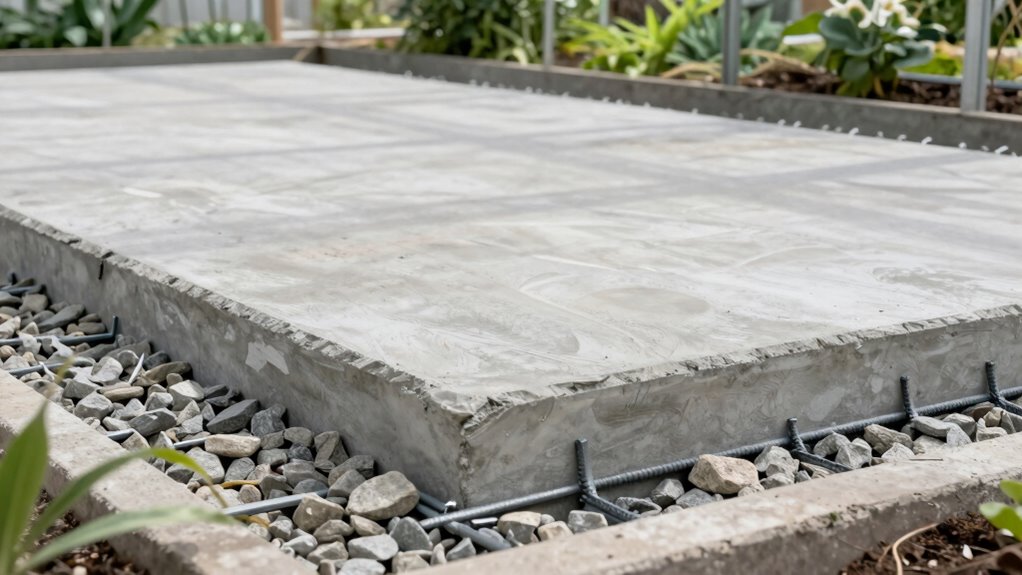
Building a stable greenhouse foundation begins with preparing a solid base that can support the weight and structure of your greenhouse over time. Start by guaranteeing proper soil compaction and levelness to prevent settling. Use a durable foundation material, like concrete or treated wood, to provide stability. When planning plant placement, consider ventilation strategies to promote airflow and reduce moisture buildup, which can affect foundation integrity. Proper layout allows for effective air circulation and minimizes pressure on the foundation. Incorporate the following table to help plan your setup:
| Aspect | Consideration |
|---|---|
| Soil Preparation | Compact soil to prevent shifting |
| Foundation Material | Use concrete, treated wood, or gravel |
| Plant Placement | Position plants for ideal airflow and access |
| Ventilation Strategies | Ensure sufficient airflow to prevent moisture accumulation |
| Levelness | Check for even surface to avoid uneven settling |
Additionally, ensuring adequate air circulation around the greenhouse can significantly reduce moisture issues that compromise the foundation’s stability. Proper soil preparation and foundation material choices are essential to long-term stability, especially in varying weather conditions.
Common Mistakes That Cause Greenhouse Settling
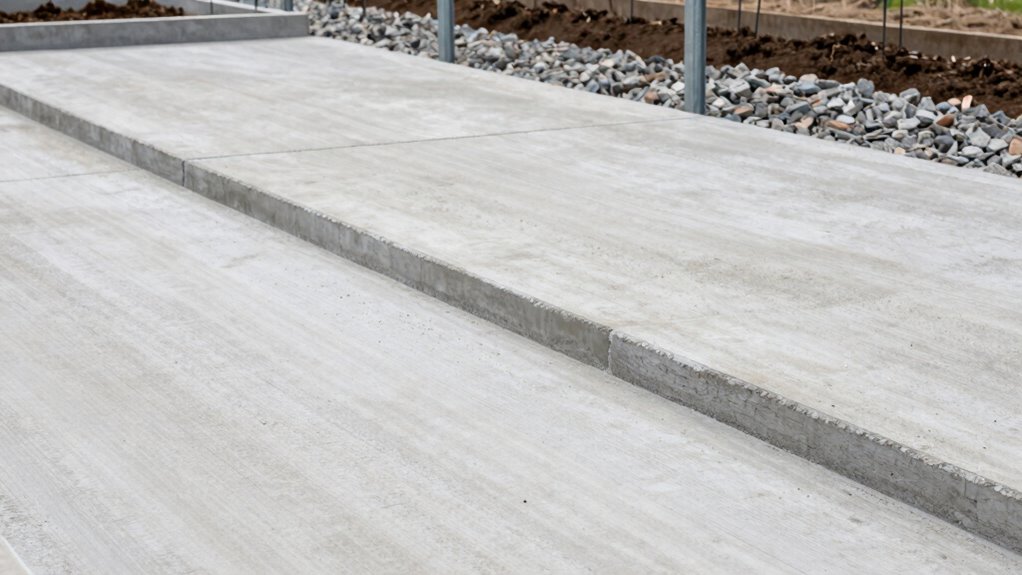
One of the most common reasons a greenhouse settles unevenly is due to overlooked mistakes during the construction process. Poor soil compaction can lead to uneven support, causing settling over time. Inadequate foundation leveling is another critical error—without a flat base, the structure shifts as the soil settles unevenly. Using top-quality outdoor materials can also enhance the durability and stability of your foundation over time. Be cautious of these mistakes:
Uneven greenhouse settling often results from poor soil compaction and inadequate foundation leveling during construction.
- Failing to properly compact soil before laying the foundation
- Overlooking the importance of precise foundation leveling
- Ignoring signs of soil movement or instability during construction. Regular soil testing can help identify potential issues early and prevent future problems. Ensuring proper soil preparation is essential to prevent future issues, as it directly impacts the foundation’s stability. It is also important to understand how soil stability impacts the long-term success of your greenhouse. Proper soil testing and analysis can help identify potential issues before construction begins. These errors compromise the stability of your greenhouse, increasing the risk of uneven settling. To prevent this, guarantee thorough soil compaction and meticulous foundation leveling during construction, creating a solid base that resists future shifting.
Choosing the Right Materials for Your Foundation
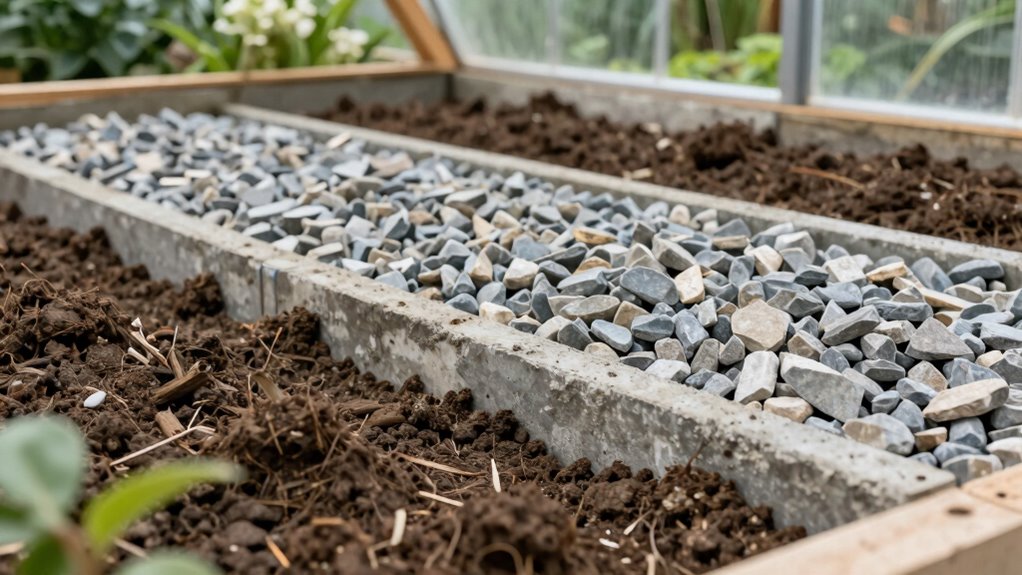
Are you selecting the best materials to guarantee a durable and stable greenhouse foundation? Choosing the right materials is essential for soil stabilization and ensuring long-term material durability. Opt for concrete or treated wood, which resist moisture and decay. Gravel or crushed stone can improve drainage and prevent settling. Selecting high-quality materials minimizes shifting over time and maintains stability. Consider environmental factors like moisture and soil type when making your choice. Use this quick reference:
| Material | Benefits |
|---|---|
| Concrete | High durability, excellent soil stabilization |
| Treated Wood | Resistant to decay, easy to install |
| Gravel/Crushed Stone | Improves drainage, prevents settling |
| Steel | Strong, long-lasting |
| Composite Materials | Resistant to weather, minimal maintenance |
Being aware of sustainable textile care practices can also inform eco-friendly material choices for your structures. Additionally, understanding material compatibility can help you select options that work well together and enhance the overall stability of your greenhouse. Incorporating soil testing can further ensure that your chosen materials are suited to your specific site conditions. Properly assessing site conditions is crucial for preventing future issues and ensuring long-term stability. Conducting thorough site analysis can provide valuable insights into environmental challenges before construction begins. Smart choices today secure your greenhouse’s stability tomorrow.
How to Inspect and Maintain Your Greenhouse Foundation

Regularly inspecting your greenhouse foundation helps catch issues early before they worsen. Look for cracks, uneven settling, or signs of moisture damage, and address problems promptly. Keeping up with preventative maintenance guarantees your foundation stays strong and your greenhouse remains stable. Using the right DIY tools can make inspections easier and safer. Additionally, understanding home theater fundamentals can help you create a comfortable environment for your gardening workspace or relaxation area. Incorporating smart design principles can also enhance the functionality and aesthetic appeal of your greenhouse environment.
Identifying Foundation Issues
How can you tell if your greenhouse foundation is starting to fail? Look for signs like uneven floors, cracked walls, or doors that don’t close properly. These issues often point to shifting or settling caused by changes in soil composition or inadequate drainage solutions. To identify problems early, check for:
- Soil that appears overly wet or dry, indicating poor drainage
- Cracks or gaps around foundation edges
- Sinking or uneven surfaces
Pay attention to how water moves around your greenhouse; poor drainage can lead to soil erosion or expansion, destabilizing the foundation. Regularly inspecting these signs helps you catch issues before they worsen, ensuring your greenhouse remains stable and productive. Proper understanding of soil composition and drainage solutions is essential for effective foundation maintenance.
Regular Inspection Techniques
To keep your greenhouse foundation in good shape, it’s essential to perform routine inspections that catch problems early. Start with soil testing around the foundation to identify shifts or compaction issues that could lead to settling. Regularly assess drainage around your greenhouse; poor drainage can cause water pooling, increasing pressure on the foundation. Check for signs of erosion or pooling water that might indicate drainage problems. Inspect the foundation for cracks, uneven settling, or movement, and note any changes over time. By maintaining a schedule for soil testing and drainage assessment, you can pinpoint issues before they escalate. These proactive steps help guarantee your foundation remains stable and your greenhouse stays secure against settling or shifting.
Preventative Maintenance Tips
Maintaining a solid foundation requires more than just periodic inspections; it involves proactive steps to prevent issues before they develop. Regularly perform soil testing to identify shifts or weaknesses that could lead to settling. Keep an eye on drainage patterns and assure water isn’t pooling near your greenhouse, which can erode or weaken the foundation. Proper foundation financing can also help you allocate funds for necessary repairs or reinforcements early on. Additionally, schedule routine checks for cracks or uneven areas, addressing problems promptly. To enhance your preventative maintenance, consider these steps:
- Conduct soil testing annually to monitor soil stability
- Reinforce vulnerable areas based on soil and inspection results
- Maintain proper drainage to prevent water-related foundation issues
Should You Call a Professional for Your Greenhouse Foundation?
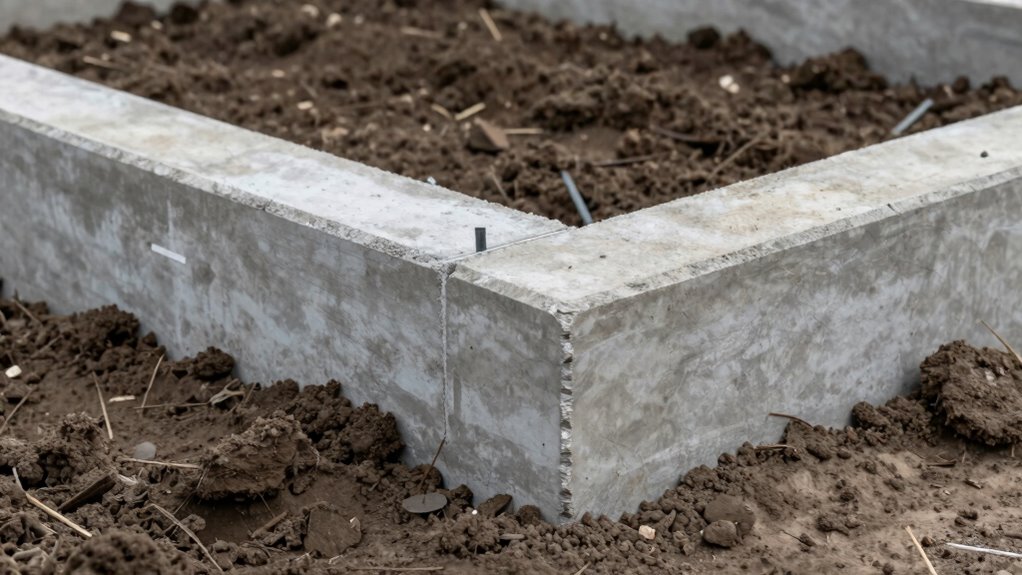
If you notice cracks, uneven settling, or water pooling around your greenhouse, it’s a sign something’s wrong with the foundation. Recognizing these issues early can save you time and money, but knowing when to call a professional is essential. Sometimes, expert help is the best way to guarantee your greenhouse stays stable and secure.
Recognizing Foundation Issues
How can you tell if your greenhouse foundation is in trouble? Signs include uneven floors, cracked walls, or doors that no longer close properly. These issues often point to soil stability problems or shifting foundation materials. Pay attention to:
- Visible cracks in the foundation or walls
- Doors and windows sticking or misaligning
- Sinking or uneven flooring
These symptoms suggest your foundation may be settling or experiencing movement, often caused by changes in soil conditions or poor foundation materials. Recognizing these early signs helps prevent more extensive damage. If you notice any of these issues, it’s wise to evaluate the stability of your soil and the integrity of your foundation materials. Addressing foundation problems promptly can save you time, money, and stress down the line.
When to Seek Experts
Even minor foundation issues can escalate quickly, so knowing when to call in a professional is essential. If you notice persistent settling, large cracks, or uneven floors, it’s time to seek expert help. Ignoring these signs can harm your garden aesthetics and threaten plant health. Professionals can assess the foundation’s stability and recommend proper repairs, preventing further damage.
| Issue | When to Act | Impact on Garden Aesthetics & Plant Health |
|---|---|---|
| Cracks in walls or floors | Immediate consultation needed | Detracts from visual appeal, risks root damage |
| Uneven surface | Consult a specialist promptly | Affects plant placement and growth |
| Water pooling | Seek expert advice quickly | Causes soil erosion, harms plants |
| Shifting or sinking | Call professionals without delay | Compromises greenhouse stability |
Frequently Asked Questions
How Long Does a Greenhouse Foundation Typically Last?
A greenhouse foundation typically lasts between 20 to 50 years, depending on the materials used and longevity factors. If you choose durable foundation materials like concrete or treated wood, you can expect a longer lifespan. Regular maintenance and addressing issues early also help extend its longevity. Proper installation and environmental conditions play an essential role, so investing in quality materials and upkeep guarantees your greenhouse remains stable for many years.
Can I Build a Foundation on Uneven or Sloped Ground?
Yes, you can build a foundation on uneven or sloped ground, but you need to guarantee slope stability first. Properly assess the slope and improve soil stability through soil compaction techniques to prevent shifting or settling. You might also need to install retaining walls or terraces to create a level base. Taking these steps helps you achieve a stable, durable foundation that keeps your greenhouse secure over time.
What Are the Signs of a Failing Greenhouse Foundation?
You’ll notice signs of a failing greenhouse foundation when soil stability worsens, causing the structure to shift or tilt. Cracks in walls or flooring, uneven door or window openings, and gaps between the foundation and greenhouse frame are common indicators. Check the foundation materials for deterioration or movement. If you see these signs, it’s essential to address soil stability issues promptly to prevent further damage and maintain a secure, level greenhouse.
How Does Climate Affect Foundation Choice?
Climate is the architect behind your foundation’s fate, shaping your choices like a master sculptor. You need to take climate adaptation into account when selecting foundation materials, ensuring they withstand your area’s weather patterns. In wetter climates, opt for moisture-resistant materials like concrete, while in colder zones, sturdy, insulated foundations prevent frost heave. Your goal is to create a resilient base that endures nature’s whims, safeguarding your greenhouse for years to come.
Are There Eco-Friendly Foundation Options Available?
Yes, eco-friendly foundation options are available for your greenhouse. You can choose sustainable materials like recycled concrete, hempcrete, or sustainably sourced wood, which support eco-conscious construction practices. These options reduce environmental impact and promote energy efficiency. By selecting such sustainable materials, you’re making a positive choice that benefits the planet while ensuring your greenhouse remains stable and durable over time.
Conclusion
By building a sturdy, well-planned foundation, you protect your greenhouse from settling struggles. Stay vigilant with inspections, select suitable materials, and steer clear of common mistakes. When in doubt, don’t hesitate to call a professional to secure your space. With careful crafting and consistent care, you’ll create a solid sanctuary that stands strong, safeguards your greens, and sustains your gardening goals — turning your greenhouse into a flourishing fortress of fruitful growth.