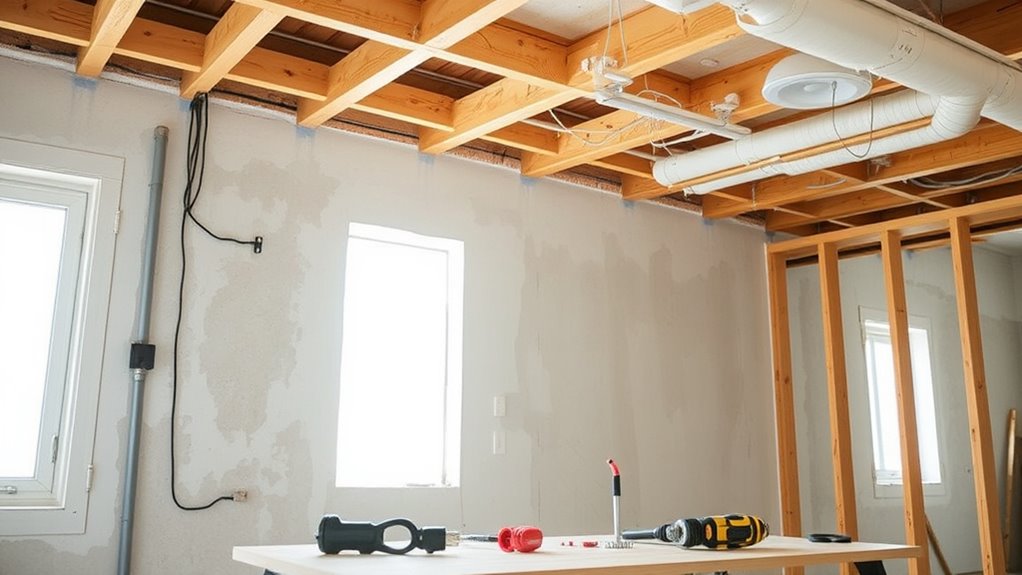

When planning your lighting and outlets, focus on creating a safe, functional space by choosing energy-efficient fixtures like LEDs and strategically placing outlets near key areas such as kitchens, seating, or workspaces. Use different lighting types and controls like dimmers to set the right mood and activity level. Guarantee outlets are accessible, include USB ports, and consider future needs. Keep safety in mind with tamper-resistant outlets. To discover more tips, continue exploring the essentials for a well-designed space.
Key Takeaways
- Match lighting fixture types and brightness to each room’s purpose for optimal function and ambiance.
- Strategically place outlets near work areas, furniture, and entertainment centers to enhance convenience and safety.
- Incorporate energy-efficient LED fixtures and smart controls to reduce utility costs and promote sustainability.
- Plan outlet locations and heights to support current and future device needs, including USB ports for charging.
- Use switches, dimmers, and proper fixture placement to improve space control, flexibility, and overall safety.
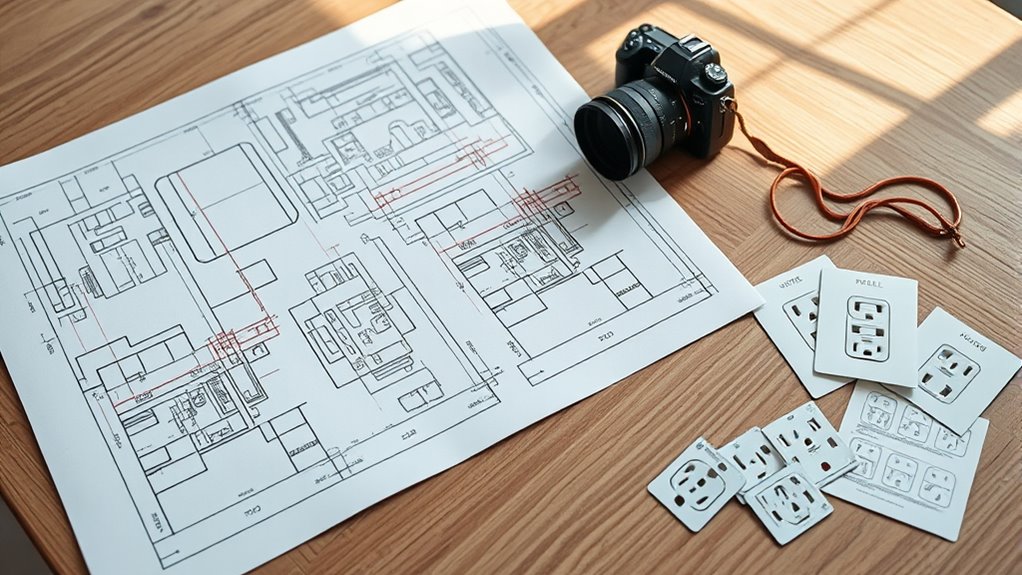
Proper lighting and electrical outlets are essential for creating a safe, functional, and comfortable space. When planning your lighting, consider incorporating energy efficient fixtures that reduce electricity consumption while providing ample illumination. These fixtures, such as LED bulbs and modern fixtures with smart controls, not only help lower your utility bills but also contribute to a more sustainable environment. Think about the purpose of each room and select fixtures that match the activity. For example, bright, focused lighting works well in kitchens and workspaces, while softer, ambient lighting creates a cozy atmosphere in living rooms and bedrooms. Position your fixtures thoughtfully to avoid shadows and glare, ensuring the space is both practical and inviting. Additionally, choosing fixtures that are compatible with dimmers can enhance mood and flexibility in lighting schemes.
Electrical outlets are just as important as lighting in creating a functional environment. Proper outlet placement strategies are crucial for convenience and safety. You should plan outlets around the room’s layout, making sure they are accessible without creating clutter or tripping hazards. In kitchens, outlets should be positioned above countertops for appliances, while in living rooms and bedrooms, outlets should be placed near seating and furniture for easy access to charging devices and electronics. Don’t forget to include enough outlets for your needs—consider future devices and appliances you might add later. Installing extra outlets in strategic locations can save you from the hassle of extension cords and power strips, which can be safety hazards. Considering outlet safety features like tamper-resistant outlets can further protect household members, especially children.
When planning your outlets, think about the overall flow of the space. For example, in a home office, outlets should be near desks and workstations, while in a media room, outlets should be placed near entertainment centers and seating areas. Use outlet placement strategies that enhance convenience without compromising safety. For instance, installing outlets at different heights can accommodate wall-mounted TVs or artwork, and adding USB ports can provide direct charging options for devices. Also, consider the placement of switches and dimmers to control lighting effectively, further improving your space’s functionality.
Frequently Asked Questions
How Many Outlets Are Needed per Room for Optimal Convenience?
You should install at least one outlet every 12 feet along walls for maximum convenience and to meet electrical codes. Consider outlet placement near desks, beds, and entertainment centers to reduce extension cord use. Be mindful of circuit capacity; avoid overloading outlets by spreading high-power devices across multiple circuits. This ensures safe, reliable power access without tripping breakers, making your space both functional and safe.
What Are the Best Locations for Installing Dimmer Switches?
You should place dimmer switch placement in key areas like the living room, dining room, and bedrooms where adjustable lighting enhances comfort and ambiance. The ideal dimmer locations include near seating areas, over dining tables, and bedside. Install them at a height that’s easy to access, typically about 48 inches from the floor. This ensures you can easily control lighting levels, creating a cozy atmosphere whenever you need it.
How Can I Prevent Electrical Overloads in My Home?
You can prevent electrical overloads by ensuring your circuit breaker is properly rated for your home’s electrical demand. Regularly check that no circuits are overloaded with too many devices. Use surge protection devices to guard against voltage spikes, which can damage your wiring and appliances. Distribute high-power appliances across different circuits, and avoid plugging multiple heavy-duty devices into a single outlet. These steps help keep your electrical system safe and reliable.
Are There Code Restrictions for Outdoor Lighting Installations?
Yes, there are code restrictions for outdoor lighting installations. You need to follow local electrical codes, which specify proper placement, weatherproof fixtures, and GFCI protection for outdoor outlets. You must use approved landscape lighting and verify outdoor outlets are installed at safe heights and locations. Always check with your local building department before installing outdoor lighting, so your setup complies with safety standards and prevents potential hazards.
What Are the Latest Energy-Efficient Lighting Options Available?
You should consider smart bulbs and LED fixtures for the latest energy-efficient lighting options. Smart bulbs let you control lighting remotely and customize settings, saving energy. LED fixtures consume less power, last longer, and provide bright, versatile illumination. Both options are highly efficient, environmentally friendly, and compatible with smart home systems, making them ideal choices for reducing energy costs and enhancing your home’s lighting flexibility.
Conclusion
Planning your lighting and electrical outlets carefully can make your space both functional and stylish. Did you know that properly placed outlets can increase your home’s value by up to 10%? By considering your daily needs now, you prevent the hassle of future upgrades. Remember, a well-thought-out electrical plan isn’t just about convenience—it’s about creating a safe, efficient living environment that supports your lifestyle for years to come.