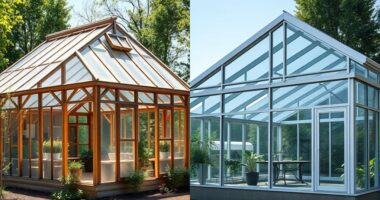
To create a custom greenhouse workstation, start by evaluating your gardening goals and designating specific zones for tasks like seed starting, potting, and soil prep. choose durable, eco-friendly materials for work surfaces, and organize tools with labeled storage. Add personalized touches with DIY decor, efficient lighting, and ventilation. Set up watering systems, plan your budget carefully, and regularly maintain and improve your setup. If you keep exploring, you’ll find plenty of tips to make it truly unique.
Key Takeaways
- Designate specific zones for different tasks, optimizing layout for efficiency and ease of access.
- Use personalized DIY decor and recycled materials to add a unique, handcrafted feel.
- Select durable, sustainable materials that reflect your style and withstand environmental conditions.
- Incorporate custom storage solutions and adjustable lighting to tailor the workspace to your needs.
- Budget strategically, balancing quality and affordability to create a functional, personalized greenhouse environment.
Assess Your Gardening and Workspace Needs

Before building your greenhouse workstation, you need to clearly understand your gardening goals and workspace requirements. Consider what plants you want to grow and how much space each needs. Think about your soil preparation needs—will you need areas for mixing soil or storing compost? Pest control is also essential; identify common pests and plan for easy access to pest management tools. Determine if you require dedicated zones for transplanting, potting, or seed starting. Assess how much workspace you need for containers, trays, and tools. By understanding these needs upfront, you’ll create a functional layout that streamlines tasks and minimizes clutter. Additionally, staying informed about market trends and insights can help you anticipate seasonal challenges and opportunities for your gardening activities. This clarity guarantees your workstation supports efficient gardening and keeps pests under control, leading to healthier plants and a more enjoyable gardening experience.
Choose the Best Materials for Your Greenhouse Workspace

Choosing the right materials for your greenhouse workspace sets the foundation for a durable, functional area that lasts. Opt for surfaces like stainless steel or treated wood, which resist moisture and pests, aiding in pest control. Smooth, easy-to-clean workbenches support plant propagation and prevent disease spread. Consider transparent materials like polycarbonate for natural light, promoting healthy plant growth. Incorporating material durability into your choices ensures your workspace remains effective over time. Additionally, selecting materials with UV resistance can help prevent degradation from sunlight exposure, extending the lifespan of your work surfaces.
Plan an Efficient Layout for Your Greenhouse
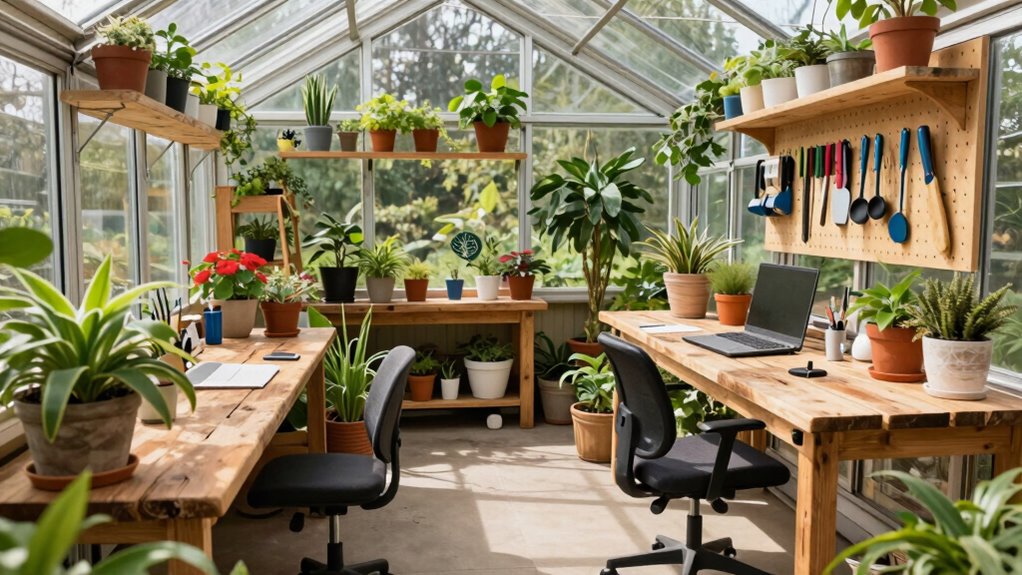
Designing an efficient greenhouse layout starts with understanding how to optimize space for plant growth, workflow, and accessibility. Arrange areas to streamline plant propagation, making space for seed-starting stations, cuttings, and rootings close to your main workspace. Keep pest management zones separate, such as compost bins or quarantine sections, to prevent infestations from spreading. Place frequently used tools and supplies within easy reach to minimize movement. Consider pathways that allow smooth circulation, reducing congestion and making maintenance easier. Group plants by their needs, like light and watering, to improve growth conditions. An organized layout not only enhances productivity but also simplifies monitoring for pests and diseases, ensuring you keep your greenhouse healthy and efficient. Incorporate a knife-first approach to trimming and harvesting tools to improve efficiency and safety. Additionally, understanding the role of contrast ratio in projectors can help you evaluate the best lighting conditions for your workspace, reducing glare and improving visibility. Proper sound therapy techniques can also be integrated into relaxation areas within your greenhouse to promote well-being. Moreover, paying attention to space utilization ensures every inch of your greenhouse is functional and contributes to a more sustainable operation.
Select Tools and Organize Storage Solutions
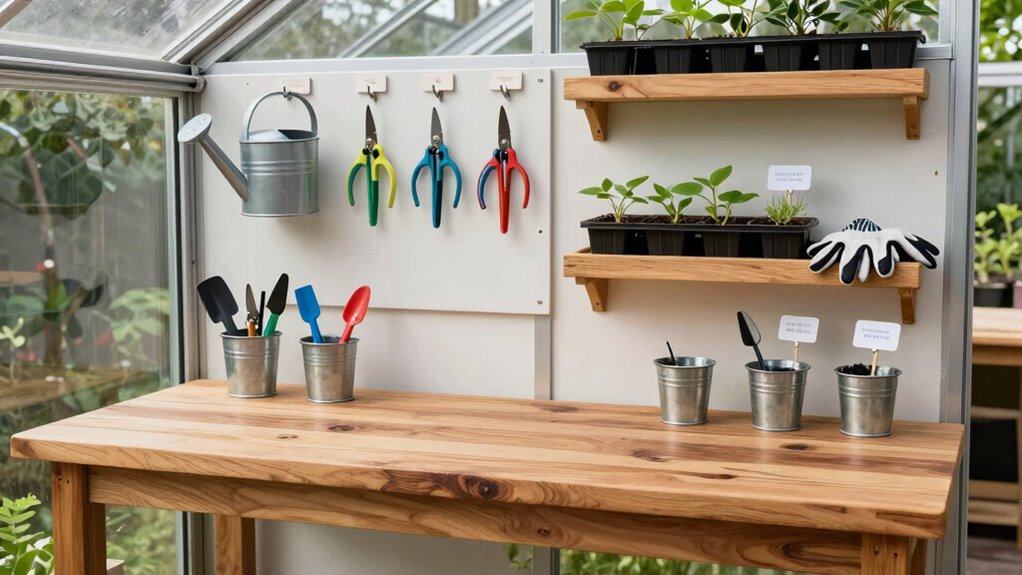
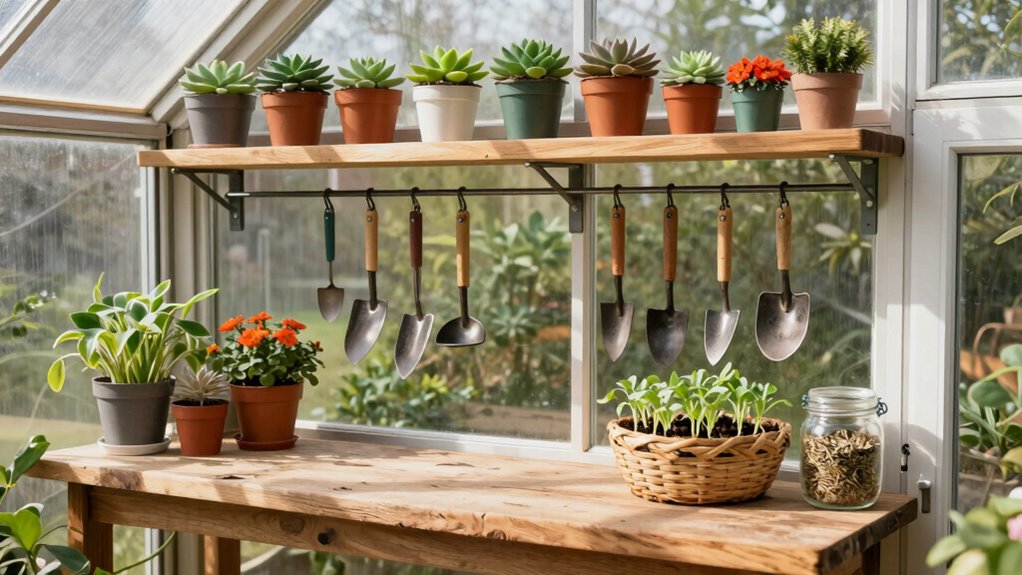
Once you’ve mapped out an efficient layout, the next step is to select the right tools and organize your storage solutions. Start by choosing essential gardening tools like pruners, trowels, and watering cans, ensuring they’re durable and easy to access. Focus on tool organization by using wall-mounted racks, pegboards, or labeled bins to keep everything tidy and within reach. Clear storage solutions help prevent clutter and save time when you need specific items. Consider stacking shelves or drawer systems for smaller tools and supplies. Regularly evaluate your storage setup to make sure it stays functional as your needs evolve. Incorporating ergonomic organization principles can further enhance your efficiency and comfort. Effective tool organization and smart storage solutions create a streamlined workspace, making your greenhouse more efficient and enjoyable to work in.
Add Lighting and Ventilation for Healthy Plants
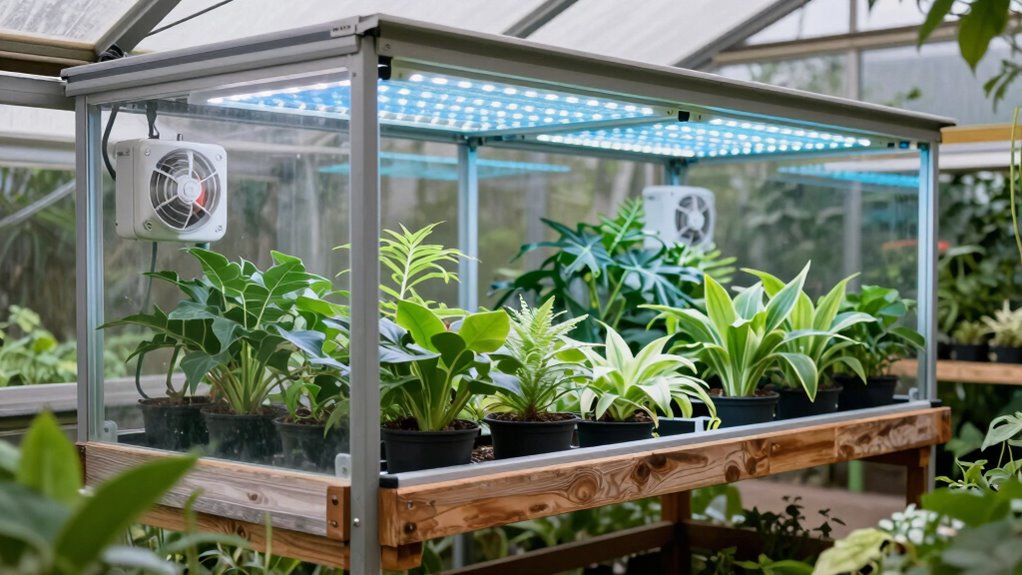
Adding proper lighting and ventilation is crucial for maintaining healthy, thriving plants in your greenhouse. Adequate light guarantees ideal growth, while proper airflow prevents disease and promotes strong stems. Installing LED grow lights allows you to supplement natural sunlight, especially during cloudy days or winter months. Exhaust fans help circulate air, control humidity, and keep temperatures in check. To maximize efficiency, consider positioning lights at appropriate heights and using timers. Guarantee exhaust fans are powerful enough to refresh the air regularly without creating drafts. Good lighting and ventilation create a balanced environment that encourages healthy plant development. Regularly monitoring indoor air quality can help identify potential issues that might affect plant health. Additionally, understanding the importance of environmental conditions can help you optimize your greenhouse setup for peak plant performance. Ensuring proper climate control can further enhance plant growth and health within your workspace. Maintaining consistent temperature and humidity levels is essential for preventing stress and ensuring optimal plant development. Implementing air circulation strategies can significantly reduce the risk of mold and pests, promoting a healthier growing environment.
Personalize Your Greenhouse With DIY Decor
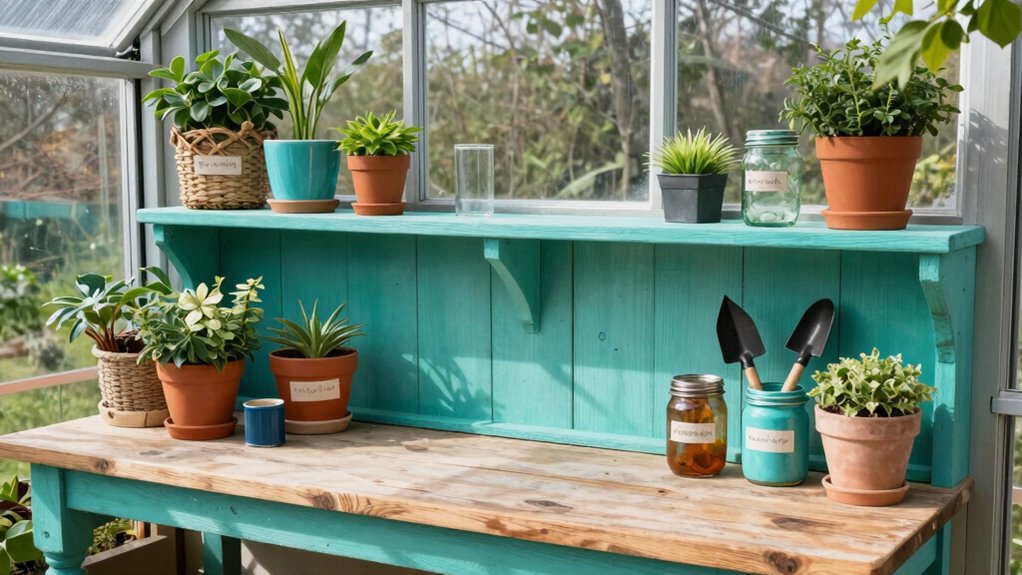
You can make your greenhouse uniquely yours with creative DIY decor ideas that reflect your style. Using recycled materials not only adds charm but also promotes sustainability. Get inspired to transform your space into a personalized oasis with simple, eco-friendly projects. Incorporating sustainable practices into your decor choices can further enhance the environmental benefits of your greenhouse. Additionally, aligning your decor strategies with personal finance planning principles can help you manage your project costs effectively and stay within your budget. Exploring portable power solutions can ensure your DIY projects and lighting remain functional and energy-efficient, even off-grid. Integrating smart home technology can also streamline automation and enhance the overall efficiency of your greenhouse workspace.
Creative Decor Ideas
Personalizing your greenhouse with DIY decor transforms it from a simple plant space into a cozy, inspiring retreat. You can enhance garden aesthetics and add decorative accents that reflect your style. Consider creating hanging terrariums with glass jars or repurposing vintage frames for plant displays. Incorporate colorful plant labels or painted stones to make organization fun. Adding handcrafted wall art or botanical prints brings personality and charm. String lights or fairy lights create a warm ambiance, perfect for relaxing evenings. These creative decor ideas help you craft a unique environment that motivates your gardening efforts and makes your workspace more inviting. With a little effort, your greenhouse becomes more than just a workstation — it becomes a personalized sanctuary.
Use Recycled Materials
Using recycled materials is an effective way to personalize your greenhouse while also being environmentally friendly. You can repurpose old wood, glass jars, and metal scraps to create unique décor that reflects your style. For example, turn discarded wooden pallets into shelves or plant stands, or use recycled glass bottles as watering globes. This approach promotes sustainable design by reducing waste and giving new life to items you might otherwise throw away. Incorporating sustainable practices into your design not only benefits the environment but also inspires creativity. Incorporating electric bikes and other eco-friendly tools can help you maintain your greenhouse sustainably. Incorporate recycled materials into your workstation’s structure or decorative elements to make it truly custom. Not only does this save money, but it also adds character and charm. Embracing recycled materials allows you to craft a functional, eco-conscious space that’s as inviting as it is sustainable. Additionally, upcycling techniques can enhance the durability and aesthetic appeal of your DIY projects. Using recycled materials also encourages innovative problem-solving, leading to more unique and personalized creations. Incorporating recycled building materials can further strengthen your project’s environmental benefits and durability.
Set Up Watering and Maintenance Systems
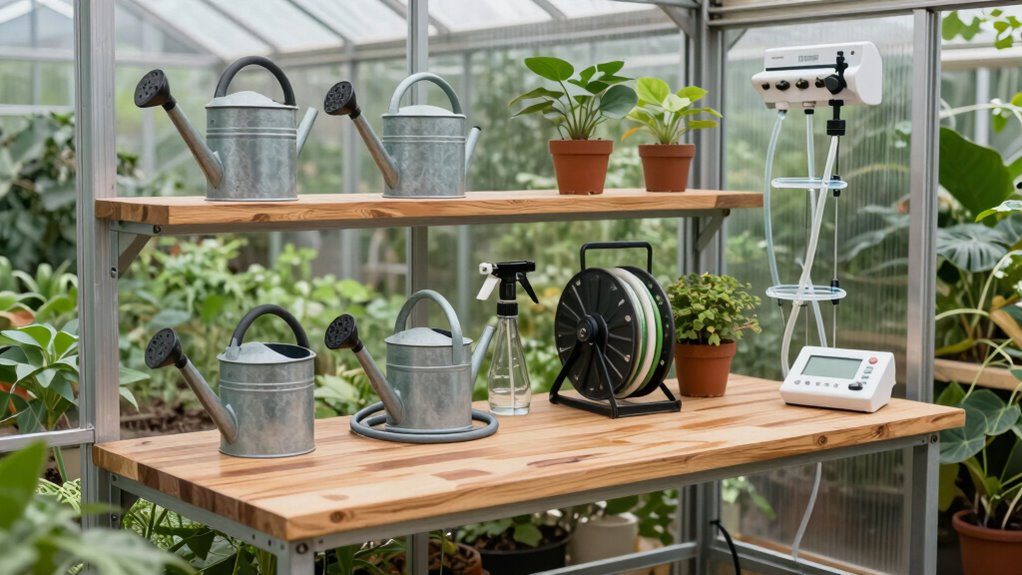
Establishing an efficient watering and maintenance system is essential to keeping your greenhouse thriving. A well-planned watering schedule ensures your plants get consistent moisture, preventing over- or under-watering. Creating a maintenance checklist helps you stay on top of tasks like cleaning filters, checking for pests, and inspecting equipment. To make this process seamless, consider installing drip irrigation or self-watering containers that reduce manual effort. Regularly monitor humidity and temperature levels to maintain ideal growing conditions. Keep tools organized and accessible to streamline routine tasks. Incorporate sensors or timers to automate watering and other maintenance routines, saving you time and effort. Paying attention to storage systems can further enhance your organization and efficiency, making routine tasks easier and more effective. Staying proactive with your watering schedule and maintenance checklist fosters a healthy, productive greenhouse environment.
Plan Your Budget for a Custom Greenhouse Workspace
To create an effective greenhouse workspace, you need to estimate material costs accurately and plan your budget accordingly. Allocate funds with flexibility in mind so you can adjust as you discover additional needs or unexpected expenses. This approach guarantees your project stays on track without overspending. Incorporating car protection accessories can also help safeguard your tools and equipment from environmental damage, ensuring longevity and efficiency. Additionally, considering mind-body healing techniques can promote well-being during your project and help manage stress throughout the process.
Estimating Material Costs
Estimating material costs is a crucial step in planning your custom greenhouse workspace, as it helps you set a realistic budget and avoid unexpected expenses. To guarantee cost-effective planning, consider sourcing affordable yet durable materials and exploring options for sustainability considerations, such as recycled or eco-friendly supplies. Accurate estimates involve listing all necessary components—frames, glazing, shelving, and tools—and researching current prices. Be sure to include potential extras for repairs or modifications. Keep track of costs to identify areas where you might save without compromising quality. By doing this, you’ll create a budget that balances affordability with longevity, ensuring your workspace remains functional and sustainable. Proper estimation is the foundation for a successful, personalized greenhouse that fits your needs and budget.
Allocating Budget Flexibly
Have you considered how to keep your budget flexible as you plan your custom greenhouse workspace? Budget flexibility allows you to adapt as you identify unexpected costs or new ideas. Start by diversifying your funding sources—savings, small loans, or grants—to avoid relying on a single stream. Prioritize essential items but leave room for upgrades or add-ons later. Use the table below to allocate funds across key areas:
| Area | Estimated Cost | Flexible Buffer |
|---|---|---|
| Structural Materials | $2,000 | $200 |
| Ventilation & Fans | $500 | $50 |
| Shelving & Storage | $300 | $30 |
| Tools & Accessories | $200 | $20 |
Adjust these as needed, keeping your options open for a truly custom, functional workspace.
Maintain and Evolve Your Greenhouse Setup
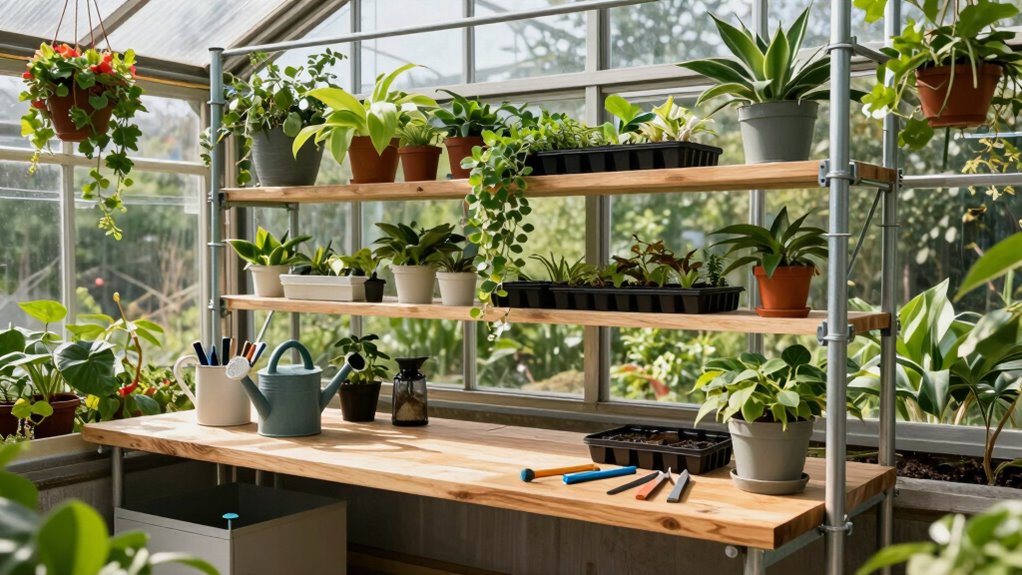
Regularly maintaining your greenhouse guarantees it continues to function efficiently and supports healthy plant growth. To stay ahead, you should regularly inspect for pests and implement effective pest management strategies that minimize chemical use. Evolving your setup involves adopting sustainable practices, like composting and water recycling, to reduce environmental impact. Keep your equipment in top shape and update tools as needed to improve efficiency. Track your plant progress and adjust environmental controls to optimize growth conditions. Additionally, stay informed about new greenhouse technologies and techniques that can enhance productivity.
- Schedule routine inspections for pests and damage
- Incorporate eco-friendly pest management methods
- Upgrade tools and automation systems periodically
- Adjust environmental controls based on seasonal changes
Frequently Asked Questions
How Can I Optimize Airflow to Prevent Mold and Pests?
To optimize airflow and prevent mold and pests, focus on effective ventilation strategies like installing exhaust fans, ridge vents, and adjustable vents. Regularly open windows and vents to promote air circulation. Good airflow discourages moisture buildup and pest habitat development, helping keep your greenhouse dry and healthy. Consistent monitoring and maintaining proper ventilation are essential for pest prevention and reducing mold risk, ensuring your plants stay thriving and pest-free.
What Safety Measures Should I Consider During Construction?
Like a knight preparing for battle, you should prioritize tool safety and proper material disposal during construction. Wear protective gear, such as gloves and goggles, to prevent injuries. Keep your workspace organized, and handle tools with care. Dispose of waste materials responsibly to prevent hazards. Ensuring safety measures are in place minimizes risks, helping you build a sturdy, secure greenhouse workstation that’s both functional and safe for ongoing use.
How Do I Select Environmentally Friendly Materials?
To select environmentally friendly materials, you should prioritize sustainable insulation options like recycled denim or cellulose, which reduce environmental impact. Use eco-friendly paints that are low in VOCs to minimize indoor pollution. When choosing other materials, look for those certified organic or sustainably sourced. This approach guarantees your workstation is both eco-conscious and healthy, supporting sustainable building practices while creating a comfortable, personalized workspace.
Can I Incorporate Renewable Energy Sources Into My Greenhouse?
Yes, you can incorporate renewable energy sources into your greenhouse. Installing solar power panels allows you to harness sunlight for electricity, powering fans, grow lights, or water pumps. Additionally, wind energy turbines can generate electricity on windy days, reducing reliance on external power grids. Combining these renewable sources creates a sustainable, eco-friendly environment, lowering your carbon footprint and making your greenhouse more energy-efficient and self-sufficient.
What Are the Best Ways to Monitor Plant Health Remotely?
You can monitor plant health remotely by setting up smart sensors that track soil moisture, temperature, and humidity, helping with plant watering and pest control. Use cameras to observe plant conditions and identify pest issues early. Connect these devices to your smartphone or computer for real-time updates, so you can quickly respond to watering needs or pest problems, ensuring your plants stay healthy without constant manual checks.
Conclusion
Creating a custom greenhouse workstation lets you grow healthier plants and enjoy gardening more. Think of it like tuning a musical instrument; with careful planning and personalized touches, your space becomes perfectly suited to your needs. Just as a well-crafted tool enhances craftsmanship, your customized setup boosts your gardening success. Embrace the process, stay flexible, and watch your green oasis flourish, proving that a thoughtfully designed workspace truly makes all the difference.