
To save your back, set your potting bench height around your waist, typically between 36-42 inches, based on your natural standing position. Measure from the floor to your waist, then adjust so you can work comfortably without bending or reaching. An ergonomic height keeps your spine straight and reduces strain during gardening tasks. If you’d like to discover more tips to protect your back while gardening, keep exploring this guide.
Key Takeaways
- Measure from floor to your waist, ideally between 36-42 inches, to ensure ergonomic comfort during gardening tasks.
- Adjust the bench height to match your natural standing or working position, reducing unnecessary bending or reaching.
- Incorporate adjustable or customizable features to accommodate different tasks and prevent long-term back strain.
- Keep tools and supplies within easy reach at the bench height to minimize twisting and stretching.
- Test different heights during extended use to find the most comfortable position that supports proper posture.
Why Choosing the Correct Potting Bench Height Matters for Your Back
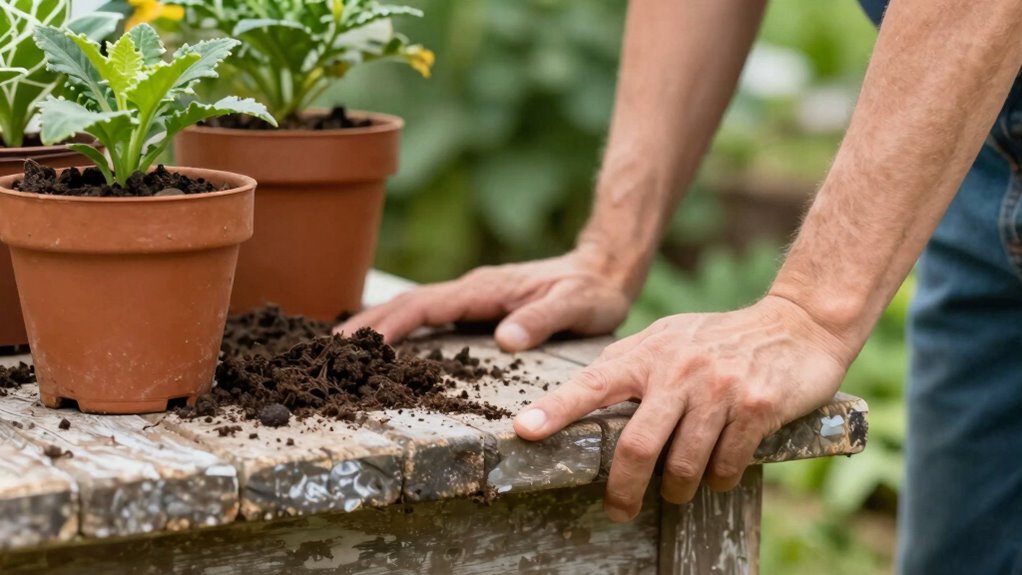
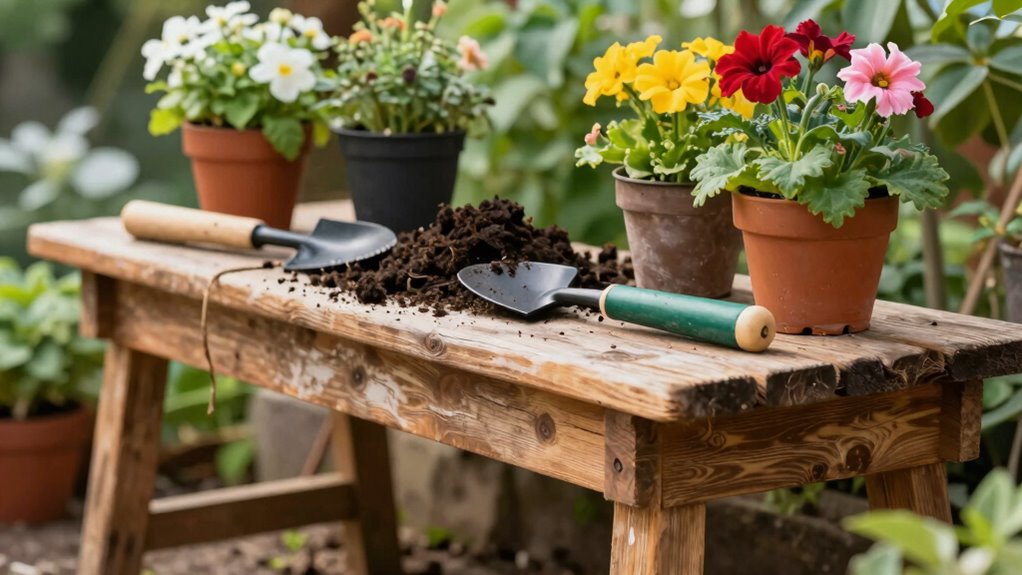
Choosing the right potting bench height is essential because it directly affects how comfortably you work and how much strain your back endures. Good garden ergonomics means you’ll avoid unnecessary bending or reaching, reducing fatigue and injury. When your bench is at the proper height, you can focus on your tasks without discomfort, making gardening more enjoyable. Plus, an appropriately sized bench improves tool storage, keeping everything within easy reach. When tools are stored at a comfortable height, you spend less time searching and more time planting or repotting. This setup minimizes awkward postures and helps you work efficiently, protecting your back in the long run. Additionally, considering garden ergonomics when selecting your bench height ensures a more comfortable and sustainable gardening experience. A well-designed work surface also encourages better planting posture, contributing to your overall wellness during gardening. Incorporating ergonomic principles into your setup can further enhance your gardening comfort and efficiency. Recognizing the importance of proper tool placement can make a significant difference in reducing repetitive strain and enhancing your gardening experience.
How to Measure Your Ideal Potting Bench Height for Comfort

To find your ideal potting bench height, start by considering your natural working position and comfort. Think about your height and how much you prefer to bend or stand while working. Adjusting the height to match your personal comfort factors guarantees you can work efficiently without straining your back. Incorporating ergonomic design principles can further enhance your comfort and prevent fatigue during extended gardening sessions. Additionally, understanding waterproof materials can help ensure your bench remains durable and suitable for outdoor use. Considering outdoor-friendly features can also improve the longevity and functionality of your potting bench in various weather conditions. Recognizing the importance of adjustable features can allow for flexibility as your gardening needs change over time. To optimize your workspace, selecting ergonomically designed furniture can promote better posture and reduce discomfort during prolonged periods of use.
Ideal Working Height
Ever wonder how to find the perfect height for your potting bench? The ideal working height should keep your back straight and reduce strain. To determine this, stand naturally with your arms relaxed at your sides, then measure from the floor to about waist level—usually between 36 and 42 inches. Consider your soil mixture and plant selection; if you prefer mixing soil or handling larger plants, a slightly higher surface may be more comfortable. Adjust the height so you can work without bending or reaching excessively. If you often work seated, a lower height might be better. Customizing your potting bench to fit your body guarantees comfort and efficiency, making gardening more enjoyable and less taxing. Proper ergonomics can further enhance your comfort and prevent injury during extended gardening sessions. Additionally, choosing a height aligned with industry standards, such as those recommended by Gold IRA markets, can ensure your workspace remains ergonomic and safe over time. Incorporating creative storytelling into your gardening routines can also inspire more engaging and enjoyable gardening experiences. Considering the back-friendly design of your workspace can help prevent long-term strain and discomfort, especially when using unique and wicked planters that may require different handling techniques.
Personal Comfort Factors
Since comfort varies from person to person, it’s important to personalize your potting bench height by paying attention to how you feel during work. Your ideal height should support both your body and your gardening style. To find this, consider these factors:
- Posture and Back Comfort: Adjust so your hands can work comfortably without bending or reaching too much, reducing strain.
- Tool Organization: Guarantee tools are within easy reach, minimizing unnecessary movement and keeping your workspace efficient.
- Garden Aesthetics: Choose a height that complements your garden’s visual appeal while making your workspace inviting.
- Safety Considerations: Ensure your work surface is at a height that minimizes muscle strain, especially when handling heavy or awkward tools.
- Personal Comfort Factors: Since comfort varies from person to person, it’s helpful to measure your ideal height by testing different levels and noting how your body responds during extended gardening sessions.
Are Adjustable Potting Benches Better for Your Back?
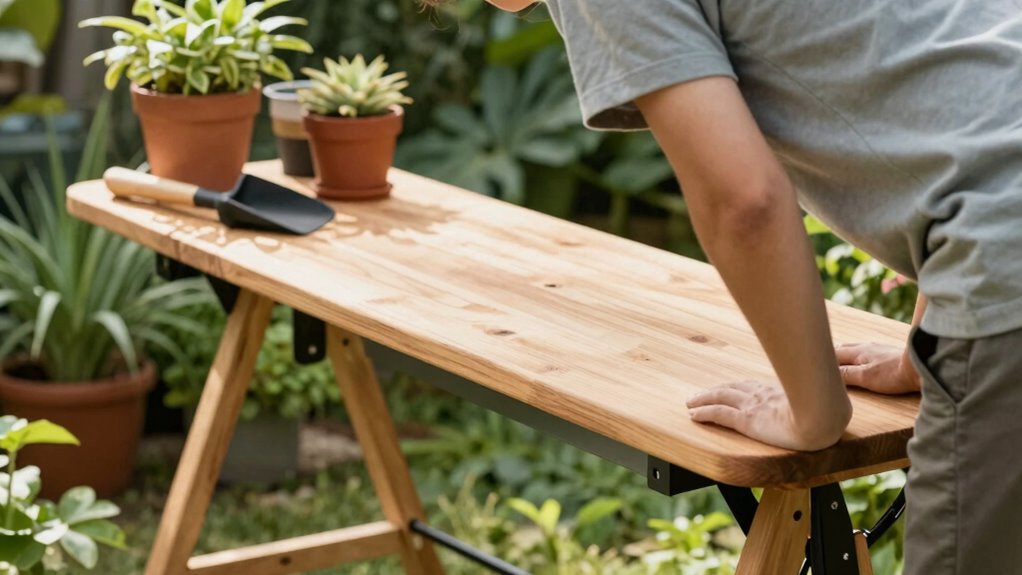
Adjustable potting benches can be a game-changer for your back, especially if you spend a lot of time gardening. They allow you to customize the height, reducing strain and preventing aches. This flexibility helps you find the perfect working position, whether you prefer to stand or sit, which enhances your comfort and productivity. An adjustable bench also improves garden aesthetics by creating a tidy, organized workspace. You can easily set up designated spaces for tools, keeping everything within reach and avoiding clutter. This organization minimizes unnecessary movement and back strain. Incorporating ergonomic principles into your gardening setup can further support your posture and comfort. Additionally, choosing the right bench height is crucial for maintaining good posture and avoiding long-term injuries. Understanding the significance of garden design can help you create a functional and inspiring outdoor space. Selecting the appropriate garden tools can also make your gardening tasks easier and reduce physical strain. Overall, adjustable potting benches support better posture, reduce fatigue, and make gardening more enjoyable, especially if you’re committed to maintaining a healthy back during long planting sessions. Incorporating art and culture into your garden design can also inspire creative arrangements and unique features that reflect your personal style.
Common Mistakes When Setting Up Your Potting Bench and How to Avoid Them

One common mistake is choosing a potting bench height that doesn’t suit your body, leading to discomfort and inefficiency. Overlooking ergonomic design principles can cause strain and make gardening less enjoyable. To avoid this, prioritize proper height and ergonomic features when setting up your workspace. Incorporating ergonomic principles can further enhance comfort and reduce the risk of strain during gardening tasks. Additionally, considering body mechanics can help you make adjustments that support your posture and prevent long-term injuries. Paying attention to repetitive motions during gardening can also help prevent fatigue and musculoskeletal issues, ensuring a more comfortable gardening experience.
Incorrect Height Choices
Choosing the wrong height for your potting bench can make gardening more frustrating than it needs to be. If it’s too high, you’ll strain your back when planting or repotting. If it’s too low, you might bend over constantly, causing discomfort. Common mistakes include:
- Setting the bench too high, disrupting your garden decor aesthetic and making plant storage awkward.
- Choosing a height that’s too low, leading to unnecessary bending and back pain.
- Ignoring your height and workspace needs, which results in frequent adjustments or discomfort.
To avoid these mistakes, measure your standing height and consider how you’ll use the space. A proper height supports comfort, enhances your garden decor, and keeps plant storage accessible without strain.
Overlooking Comfort Factors
Overlooking comfort factors is a common mistake that can turn potting into an exhausting chore. If you disregard how your bench height affects your posture, you risk back strain and fatigue. Don’t forget to take into account garden aesthetics—your bench should complement your outdoor space while being functional. When setting up, think about plant selection too; taller plants may require a higher surface, while delicate seedlings benefit from a lower, more accessible height. An ergonomic setup minimizes bending and reaching, making your potting sessions more enjoyable and less tiring. Adjust your bench height based on your height and the types of plants you’re working with. Paying attention to comfort ensures you stay motivated and safe, transforming potting into a pleasant activity rather than a back-breaking task.
Top Tips for Protecting Your Back While Gardening
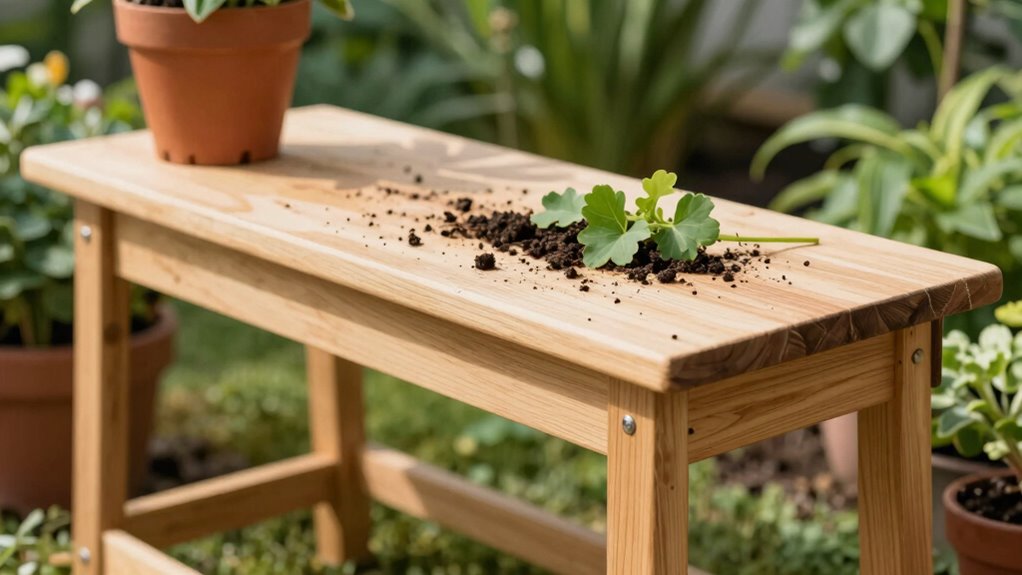
To safeguard your back while gardening, it’s crucial to pay attention to your posture and movements. Start with proper soil preparation by loosening soil on a raised surface to avoid bending over. When selecting plants, choose those suited for your environment to minimize strenuous digging and bending.
Here are top tips:
- Use ergonomic tools and keep your tools close to your body to reduce reach and strain.
- Incorporate a potting bench at an appropriate height to prevent bending, especially during soil preparation.
- When planting, kneel on pads or use a stool to keep your back straight instead of bending at the waist.
Following these tips helps keep your back healthy and makes gardening more enjoyable.
FAQs About Potting Bench Height and Back Safety
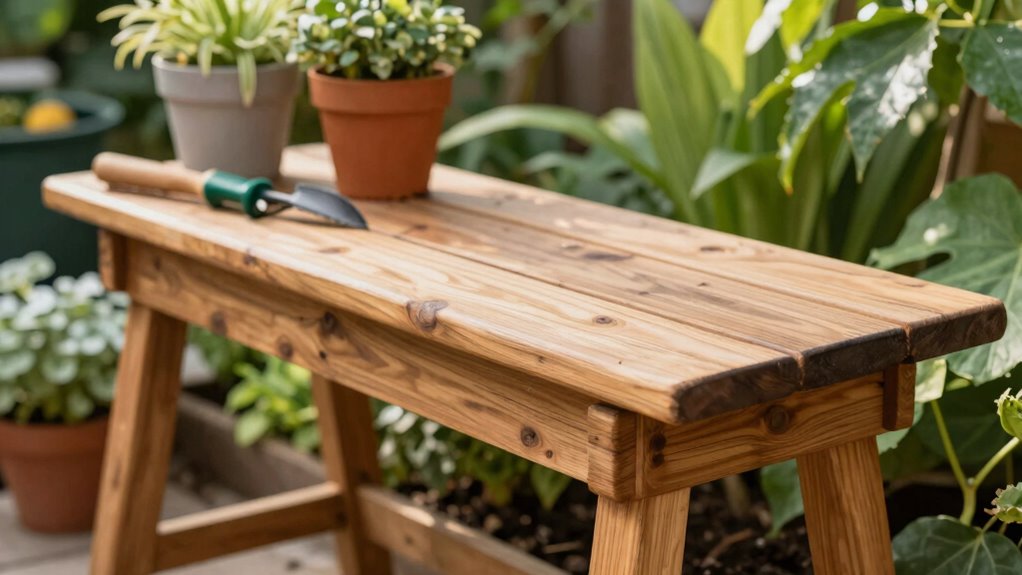
Understanding the ideal height for your potting bench can considerably reduce back strain during gardening. If you’re designing your garden, consider how the bench’s height fits into your overall garden design and daily tasks. A properly sized bench helps you maintain good posture, preventing aches and injuries. Many ask if adjustable height benches are worth it; they can be, especially for different tasks or multiple users. Also, think about tool storage—keeping tools within easy reach minimizes bending and twisting. When setting your bench height, guarantee it allows you to work comfortably while standing or sitting. Proper height not only protects your back but also makes gardening tasks more efficient. Prioritize your comfort to enjoy gardening without unnecessary pain.
Frequently Asked Questions
Can the Height of My Potting Bench Affect Plant Health?
Yes, the height of your potting bench can affect plant health. If it’s too high or low, it may hinder proper soil drainage, leading to waterlogged roots and root rot. An appropriately elevated bench also makes pest prevention easier by keeping plants off the ground, reducing access for pests. Plus, an ergonomic height helps you work comfortably, encouraging better care and healthier plants overall.
What Materials Are Best for Ergonomic Potting Benches?
For ergonomic potting benches, choose materials that offer durability and aesthetic appeal. Hardwood like cedar or teak withstands weather and provides a sturdy surface, reducing strain. Metal options like galvanized steel are durable and easy to clean, but may lack warmth. Composite materials combine durability with attractive finishes, making your workspace both functional and visually pleasing. Select based on your climate, style preference, and how much effort you’re willing to invest in maintenance.
How Often Should I Adjust My Potting Bench Height?
You should adjust your potting bench height whenever you’re tired of bending over or struggling with tool storage and soil management. Ironically, the best time is before discomfort starts—think of it as preventing backaches rather than curing them. Regular tweaks guarantee ergonomic comfort, keeping your back happy. So, check your posture often, and don’t wait until soil spills or tools fall—adjust the height proactively for a pain-free gardening experience.
Are There Specific Height Recommendations for Different Gardener Heights?
Yes, there are specific height recommendations for different gardener heights to optimize garden ergonomics. For best comfort, customize your potting bench to match your height—generally, a height of 28-36 inches works well for most. Taller gardeners may prefer higher benches, while shorter ones benefit from lower surfaces. Adjustments guarantee you avoid strain and work more efficiently, making bench customization essential for a comfortable, ergonomic gardening experience.
Does Using a Footstool Improve Back Safety During Potting?
Using a footstool definitely improves back safety during potting. Imagine reducing strain and preventing aches—it’s possible with just a simple step. Footstool benefits include elevating your working height, which minimizes bending and awkward postures. This keeps your back aligned and reduces fatigue. So, if you want to work comfortably and avoid back pain, a footstool isn’t just a luxury—it’s a game-changer that keeps you safer while gardening.
Conclusion
Choosing the right potting bench height is like planting a sturdy tree—your back finds its anchor and grows strong with care. When you set it just right, gardening becomes a gentle breeze, not a storm. Remember, your comfort is the foundation of every bloom you nurture. So, stand tall with confidence, knowing your perfect height keeps your back protected and your gardening journey flourishing like a well-tended garden in full bloom.