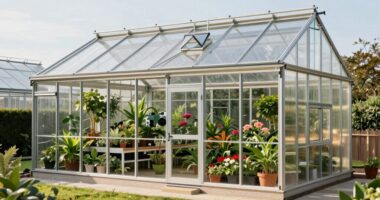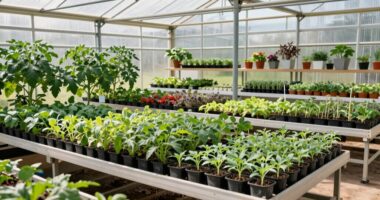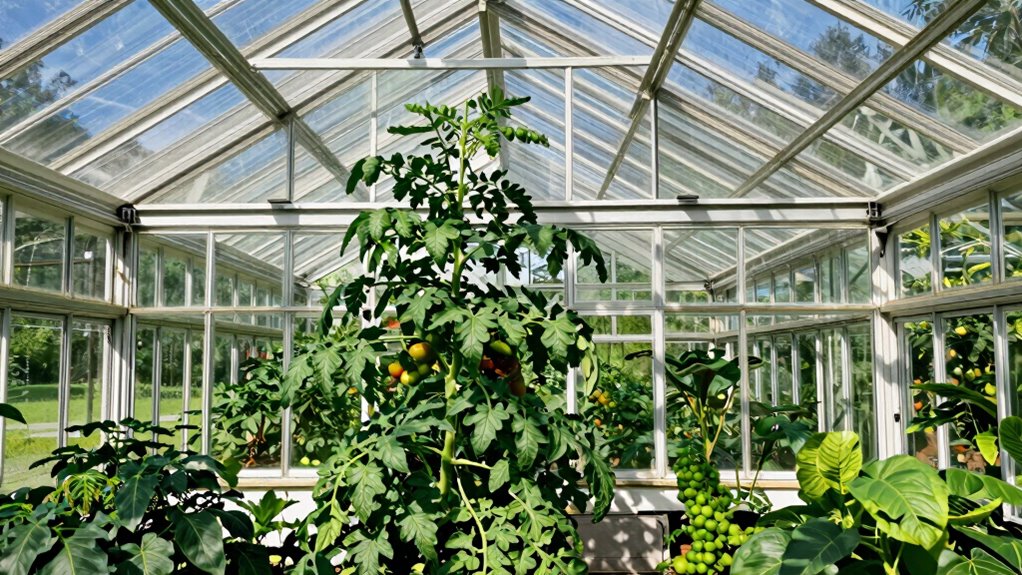

Many gardeners ignore the critical headroom rule when buying a greenhouse, which can lead to limited plant growth, poor airflow, and structural problems. Without enough height, your plants may become cramped, and environmental control—like temperature and humidity—becomes difficult. You might also risk damaging materials or facing costly repairs. To guarantee your greenhouse functions well, learn how to measure and plan the right headroom for your setup—more details ahead will help you make the best choice.
Key Takeaways
- Most buyers overlook adequate headroom, risking restricted plant growth and poor environmental control.
- Underestimating necessary height leads to cramped spaces, limiting plant development and airflow.
- Failing to account for mature plant height causes future growth issues and structural strain.
- Ignoring potential expansion or adjustable options reduces long-term flexibility and garden versatility.
- Proper headroom planning ensures better climate regulation, durability, and overall garden success.
Why Is Headroom Important When Buying a Greenhouse?

Have you ever considered why headroom matters when buying a greenhouse? Adequate headroom considerably impacts climate control, as it allows better air circulation and temperature regulation inside. When your greenhouse has enough space above, it prevents overheating or excessive humidity, creating a healthier environment for your plants. Additionally, headroom influences material durability; taller structures experience less strain on their frames and coverings, reducing wear over time. Without enough space, materials may warp or weaken faster, leading to costly repairs or replacements. Ensuring proper headroom helps you maintain a stable climate and prolongs the lifespan of your greenhouse materials, making it a smart investment for both plant health and structural integrity. Recognizing the importance of space planning can help optimize your greenhouse’s long-term performance and adaptability. Proper structural design also plays a crucial role in supporting the overall stability and longevity of your greenhouse. Moreover, understanding ventilation needs is essential for maintaining optimal growing conditions in relation to headroom. Adequate headroom also facilitates easier maintenance and inspection, ensuring your greenhouse remains in good condition over the years.
What Happens If My Greenhouse Has Too Little Headroom?
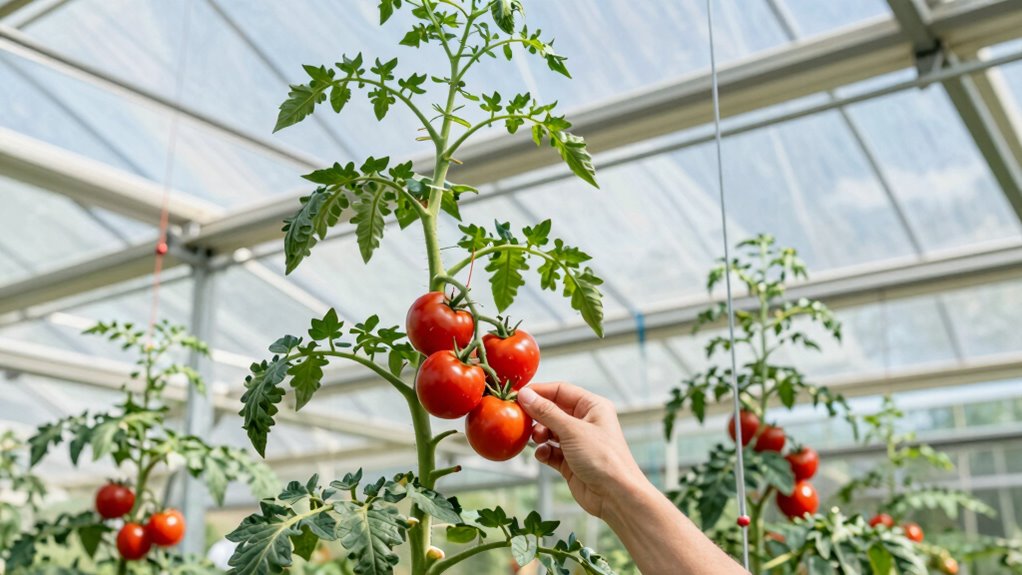
If your greenhouse has too little headroom, your plants won’t have enough space to grow properly, which can stunt their development. You’ll also face a higher risk of damage to plants or structures when working inside, since low ceilings make it easier to accidentally bump into things. Plus, maintenance becomes more difficult, as reaching certain areas or performing repairs is much more challenging. Additionally, inadequate headroom can limit your ability to incorporate sound healing practices or other therapeutic elements that require space for movement or equipment. Having sufficient headroom can also improve the overall contrast ratio and image quality if you’re using projectors or display systems within your greenhouse, enhancing your visual environment. Proper humidity control can also be harder to manage in cramped spaces, potentially leading to issues like mold or pests. Furthermore, proper ventilation is essential for maintaining optimal growing conditions, which becomes more difficult with limited space. Ensuring adequate headroom also allows for better air circulation, promoting healthier plant growth and reducing disease risk.
Restricted Plant Growth Space
When your greenhouse lacks sufficient headroom, plants can quickly become stunted or overcrowded because they don’t have enough space to grow upward. This restricted growth hampers their development, leading to smaller, less vigorous plants that struggle to reach their full potential. Limited space also impacts garden aesthetics, making your greenhouse look cluttered and less appealing. Additionally, poor headroom can hinder greenhouse ventilation, causing humidity levels to rise and creating an environment prone to disease. Without proper airflow, plants may develop mold or rot, further reducing growth. To maintain healthy, lush plants and a visually pleasing greenhouse, it’s essential to provide adequate headroom, ensuring they have enough space to flourish and that airflow remains ideal.
Increased Risk of Damage
A greenhouse with insufficient headroom increases the risk of structural damage, especially during harsh weather or when moving tall plants. Low ceilings can cause strain on the frame, making it more vulnerable to wind or snow loads. This damage can compromise your greenhouse’s stability and longevity. Additionally, limited height hampers proper airflow, affecting garden aesthetics by making the space feel cramped and less inviting. Poor airflow also reduces energy efficiency, as it hampers temperature regulation and increases heating costs. When headroom is too tight, you may find yourself constantly struggling with repairs or risking collapse. To protect your investment and maintain a healthy, attractive garden environment, it’s essential to choose a greenhouse with adequate height to reduce these risks.
Difficult Maintenance Access
Limited headroom makes maintenance tasks more challenging and time-consuming. When your greenhouse lacks sufficient height, reaching vents, cleaning glass panels, or adjusting equipment becomes awkward and frustrating. Ventilation challenges increase, as poor airflow can lead to uneven temperatures and humidity problems. You might struggle to open roof vents or install fans effectively, affecting plant health. Also, low headroom can compromise structural stability if the framework isn’t designed to handle added weight or wind pressure properly. These issues can cause ongoing maintenance headaches and safety concerns. Ultimately, inadequate headroom forces you to work in cramped conditions, risking damage to plants and equipment, and making routine upkeep much more difficult. Proper headroom ensures easier access, better airflow, and a safer, more stable structure. Understanding the importance of structural integrity helps prevent potential hazards related to insufficient headroom.
How Do I Measure the Right Headroom for My Plants?
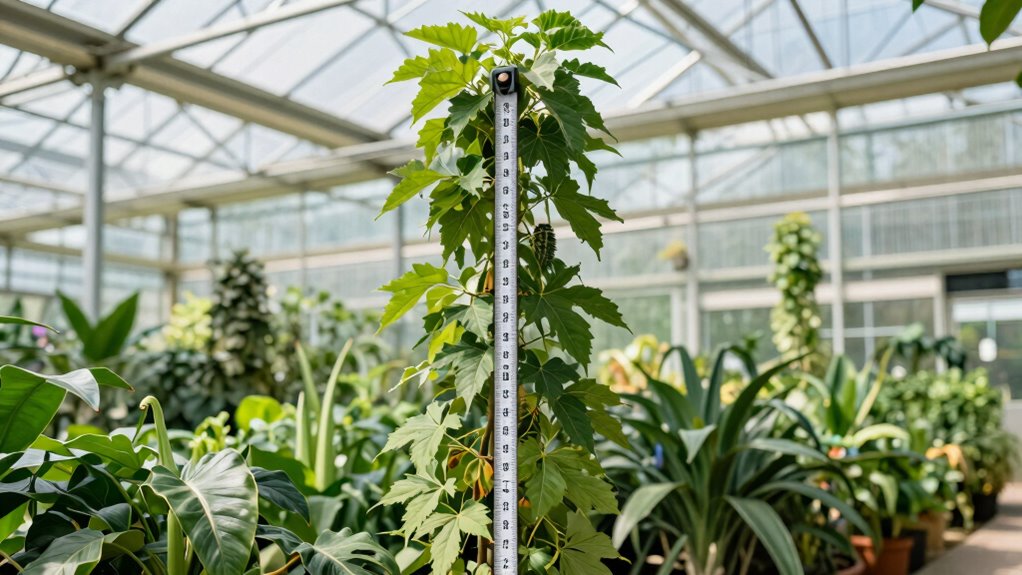
To find the right headroom, start by measuring the maximum height of your plants at full growth. It’s smart to add a few extra feet to give your plants room to grow and stay healthy. This way, you’ll guarantee your greenhouse provides enough space for your plants to thrive.
Consider Plant Growth Height
Measuring the right headroom for your plants starts with understanding how tall they will grow throughout their lifecycle. Consider the mature height of your plants, including any potential for vertical growth. Proper soil preparation guarantees healthy roots and supports ideal growth, which can influence how tall your plants become. When planning space, account for plants that may stretch or grow taller with proper care. Additionally, leaving enough headroom helps prevent pests that thrive in crowded, humid conditions, as good airflow is essential for pest control. Keep in mind that some plants may need extra space during flowering or fruiting stages. Accurately estimating their full height ensures your greenhouse provides enough vertical room, promoting healthy growth and preventing overcrowding. Being aware of airless paint spraying tips and gear can help you maintain a clean environment, reducing the risk of mold or pests that might affect your plants. Incorporating waterpark amenities into your planning can also encourage proper humidity control, benefiting your plants’ development. Considering the conversion tools available can assist in accurately planning space in different measurement units, ensuring optimal headroom for your plants.
Allow Extra Space
How can you guarantee your plants have enough room to grow without feeling cramped? Allow extra space when measuring headroom—it’s crucial for healthy growth, improved garden aesthetics, and effective climate control. Leave at least a foot of clearance above the tallest plant to prevent overcrowding and ensure proper airflow. This extra space helps regulate temperature and humidity, making your greenhouse more comfortable for plants and you. Consider this emotional impact: AI-driven data analytics can assist in monitoring plant health and optimizing space utilization. Additionally, incorporating landscaping principles can enhance the natural beauty and functionality of your greenhouse environment. Paying attention to plant growth patterns ensures your setup accommodates future development and avoids unnecessary reconfigurations. Being mindful of growth habits allows you to plan for space changes over time and maintain a healthy, thriving greenhouse. Regularly evaluating your body jewelry measurements can help ensure your plants have the right space as they mature, preventing damage and promoting overall health.
What Factors Affect How Much Headroom I Need?
Several factors influence the amount of headroom you need in your greenhouse, and understanding them can help you make the right choice. Your garden design plays a role, as the layout and height of surrounding structures can impact airflow and accessibility. Greenhouse ventilation is also vital; if you plan on growing tall plants or using equipment that emits heat, you’ll need extra headroom to guarantee proper air circulation and temperature regulation. Consider how much space you require for routine maintenance and plant growth, especially if you plan to work inside regularly. Additionally, think about future expansion or changes in your gardening plans. All these factors combine to determine the best headroom, ensuring your greenhouse functions efficiently and comfortably. Proper home safety measures can also help prevent accidents and create a more secure environment inside your greenhouse. Being aware of ventilation needs can further enhance the overall climate control within your space. Moreover, choosing a greenhouse with adequate structural integrity is essential to withstand extreme weather conditions and prevent failures. Ensuring proper maintenance practices can extend the lifespan of your greenhouse and keep it safe for year-round gardening. Incorporating material quality considerations, such as UV resistance and durability, can also influence the longevity and safety of your greenhouse.
How Can I Calculate the Perfect Headroom for My Greenhouse?
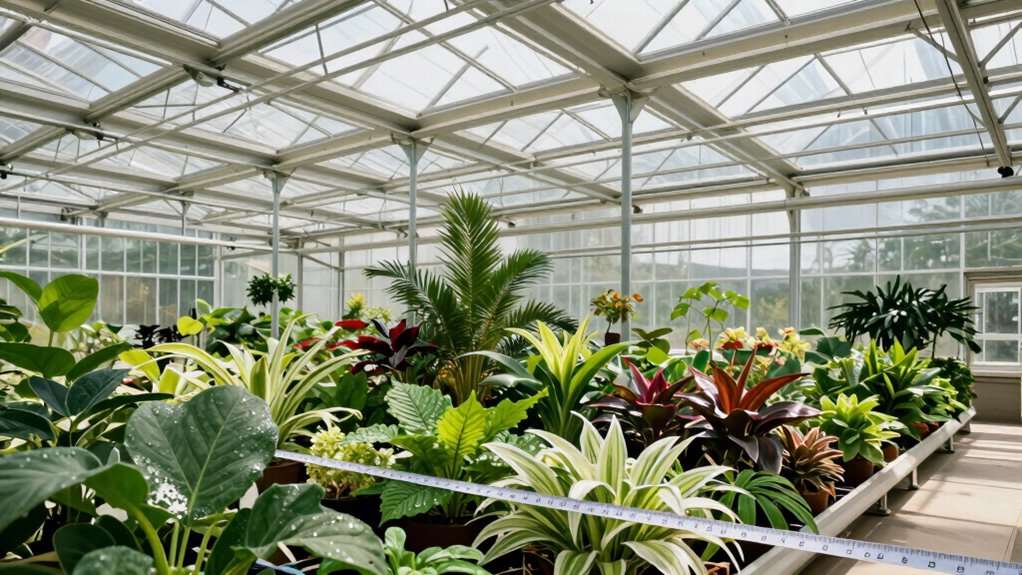
To determine the ideal headroom for your greenhouse, start by evaluating the types of plants you’ll grow and the equipment you’ll use. Taller plants or hanging tools, like grow lights, require extra space to prevent crowding. Consider your greenhouse ventilation needs, which rely on sufficient headroom to promote airflow and prevent overheating. For garden aesthetics, aim for a height that balances functionality with visual appeal, creating an inviting space. Measure the tallest plant or equipment you expect to use, then add a few extra feet to accommodate growth and airflow. Keep in mind that too little headroom can hinder ventilation and plant development, while too much can look unbalanced. Proper calculation ensures your greenhouse is both practical and visually pleasing. Additionally, understanding anti-fatigue mats and standing desk gear can help create a comfortable workspace within your greenhouse, especially if you’ll be spending extended periods tending to your plants.
What Is the Ideal Headroom for Different Gardening Setups?
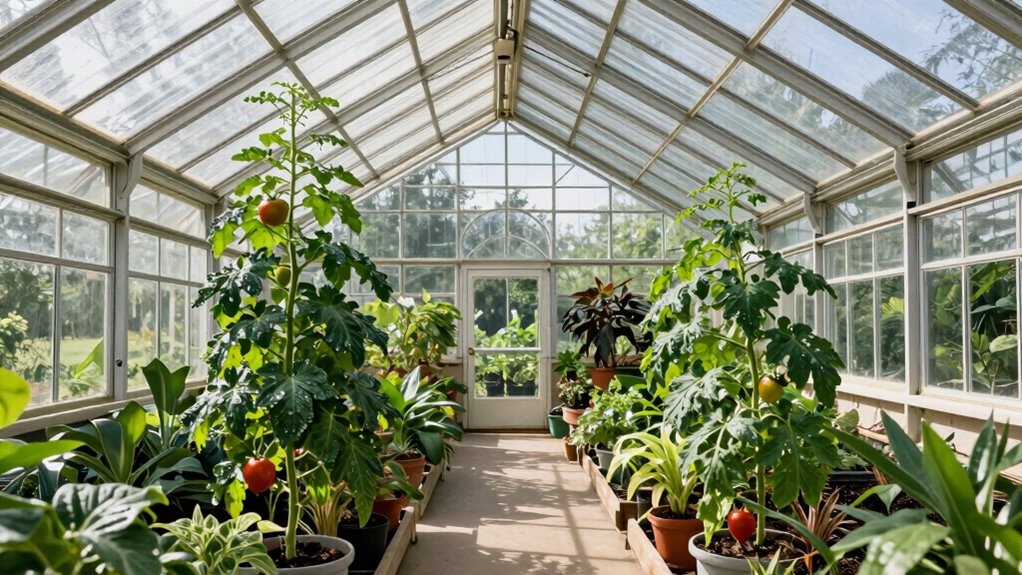
The ideal headroom for your gardening setup depends on the types of plants you plan to grow and the equipment you’ll use. For delicate plants or taller species, like tomatoes or melons, aim for at least 6 to 8 feet of clearance to prevent damage and allow easy access. If your garden design includes taller shelving or hanging tools, add extra height accordingly. Climate considerations also matter; in colder regions, taller greenhouses help maintain better airflow and temperature control. For smaller, container-based setups, lower ceilings around 6 feet may suffice, but always consider future growth. Ultimately, your headroom should balance the needs of your plants, the equipment, and the overall garden design, ensuring ideal growth conditions without sacrificing accessibility.
What Common Mistakes Should I Avoid About Headroom?
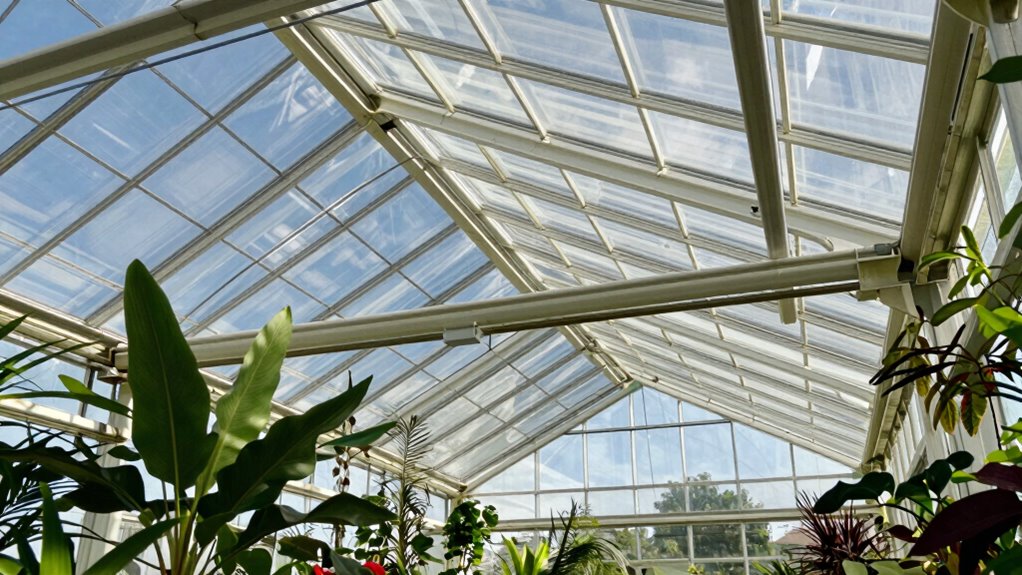
One common mistake is underestimating the importance of adequate headroom, which can lead to cramped conditions and hinder plant growth. Poorly planned headroom can disrupt your garden design, making the greenhouse feel crowded and limiting space for taller plants. It also affects greenhouse ventilation, as insufficient height can restrict airflow, leading to heat buildup and humidity issues. Avoid this mistake by accurately measuring plant heights and considering future growth when choosing your structure. Remember, proper headroom promotes healthy plant development and better climate control. If you overlook this aspect, you risk compromising plant health and making ventilation less effective. Always prioritize sufficient headroom to guarantee effective garden design and a well-ventilated environment that supports your gardening goals.
How Can I Adjust or Expand Headroom As My Garden Grows?
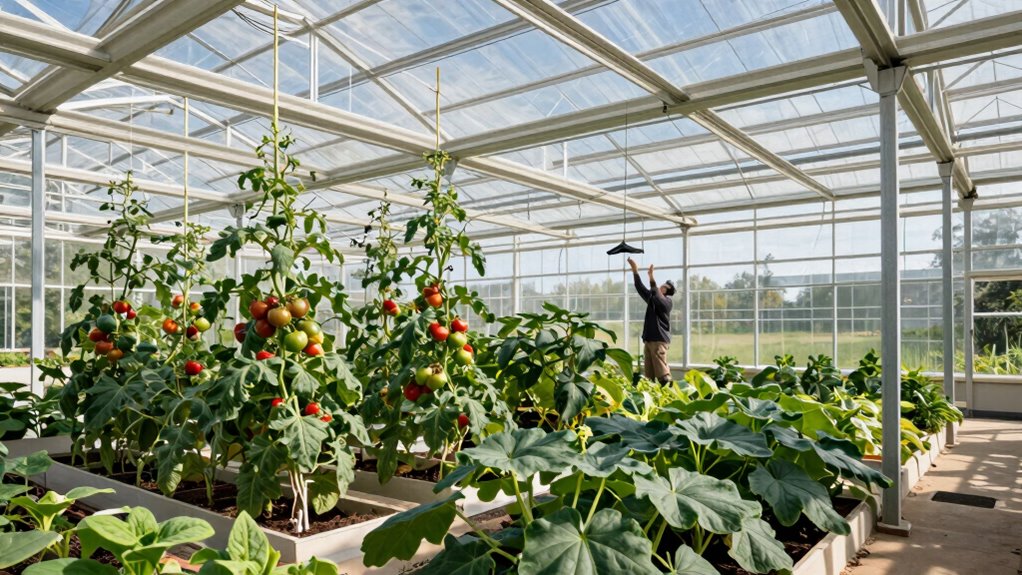
As your garden expands and your plants grow taller, it’s essential to find ways to adjust or increase your greenhouse’s headroom to accommodate these changes. To do this effectively, consider modifications that enhance garden aesthetics and improve greenhouse ventilation. You might add adjustable roof vents or raise the entire structure on a foundation or platform. Alternatively, installing retractable roof panels allows flexibility as your plants need more space. Here’s a quick overview:
| Adjustment Method | Benefits | Considerations |
|---|---|---|
| Raise the entire structure | Maximizes headroom, preserves aesthetics | Structural modifications required |
| Add adjustable vents | Improves ventilation, adds headroom | Cost and installation effort |
| Use retractable panels | Flexible, preserves garden look | Maintenance and sealing needed |
| Build on a raised foundation | Increases height, boosts airflow | Foundation stability |
| Reconfigure interior layout | Maximize space, improve aesthetics | Plant placement adjustments |
Frequently Asked Questions
Can Headroom Influence Greenhouse Temperature Regulation?
Yes, headroom can influence greenhouse temperature regulation. When you have adequate headroom, it improves airflow and allows for better thermal insulation, preventing heat loss. This extra space also contributes to greater structural stability, reducing temperature fluctuations caused by wind or weather. So, ensuring enough headroom helps you maintain a more consistent temperature inside, making your greenhouse more energy-efficient and comfortable for plants.
Does Headroom Impact Ventilation Efficiency in a Greenhouse?
Yes, headroom impacts ventilation efficiency by enhancing air circulation in your greenhouse. Higher ceilings allow warm, stale air to rise and escape more easily, promoting better airflow. This improved air movement helps regulate temperature and humidity, reducing the risk of pests and mold. With proper headroom, you’ll find it easier to maintain a healthy environment, making pest control more effective and your plants happier.
How Does Headroom Affect Light Penetration for Plants?
Increasing headroom improves light penetration for your plants by allowing more natural light to reach lower leaves, promoting better growth. Higher ceilings enhance light diffusion, reducing shadows and ensuring even distribution across your greenhouse. This setup creates an ideal environment for healthy plant growth, especially for taller plants or those requiring more light. So, when you prioritize headroom, you’re boosting light availability and fostering a more productive, vibrant greenhouse.
Are There Specific Headroom Guidelines for Different Plant Types?
Think of your greenhouse as a stage for your plants’ growth. Specific headroom guidelines depend on plant height and desired growth space. For taller plants like tomatoes or cucumbers, aim for at least 6-8 feet of headroom, while shorter plants like herbs need less. Adjust your greenhouse height accordingly to give each plant enough room to thrive, ensuring healthy growth and peak light penetration.
Can Adjustable Headroom Features Save Space and Costs?
Adjustable headroom features can definitely save space and costs by allowing you to customize your greenhouse based on your plant needs and seasonal changes. Design variations, like retractable roofs or movable panels, give you flexibility without needing a larger structure. Material choices, such as lightweight aluminum or durable polycarbonate, also make these features more practical and cost-effective, helping you maximize space while maintaining ideal growing conditions.
Conclusion
Don’t overlook the headroom rule when selecting your greenhouse; it’s the backbone of healthy plant growth. By paying attention to your plants’ needs and future expansion plans, you’ll avoid costly mistakes and keep your garden thriving. Remember, a little foresight goes a long way—think of it as planting seeds for success. When you get the headroom right, you’ll be well on your way to a lush, productive garden that grows with you.