To maximize space in your backyard greenhouse, choose a shape that fits your area, like lean-to or hoop, and arrange plants vertically using hanging planters and tiered shelving. Use reflective colors to brighten the space and narrow pathways for easy access without clutter. Incorporate vertical storage and multi-purpose furniture to keep the floor clear and boost productivity. Continue exploring these strategies to transform your greenhouse into a space-efficient, thriving oasis.
Key Takeaways
- Use vertical planting methods like hanging planters and tiered shelving to maximize growing area without expanding footprint.
- Design narrow, well-placed pathways (at least 24 inches wide) to optimize movement and space utilization.
- Choose space-efficient greenhouse shapes (lean-to, hoop, gable) based on available area and climate considerations.
- Organize plants by height and grouping for easy access and better light distribution, minimizing shading and maintenance time.
- Incorporate multi-purpose furniture and vertical storage solutions to free up floor space and streamline operations.
How to Maximize Your Small Backyard for a Greenhouse

Even if your backyard is small, you can still create a productive greenhouse by smartly utilizing every inch. Focus on compact, vertical planting to maximize space, and choose a color scheme that reflects light, making the area feel larger and more inviting. Light colors like white or pastel shades can help brighten the space and improve plant visibility. To prevent pests, implement effective pest control strategies such as physical barriers, companion planting, or natural repellents. Regularly inspect plants and maintain cleanliness to keep pests at bay. Additionally, incorporating light-reflective colors into your design can further enhance brightness and open up the space. Using pest control strategies effectively can help protect your plants from common issues and ensure a healthy greenhouse environment. Proper space optimization techniques are essential for making the most of limited area. By thoughtfully selecting color schemes and staying vigilant with pest control, you optimize your small backyard for a thriving greenhouse, turning even the tiniest space into a lush, productive oasis. Moreover, exploring innovative gardening methods can provide additional ways to maximize yield in confined spaces.
Pick the Best Greenhouse Shape for Your Space

Choosing the right greenhouse shape depends on how your space fits and what benefits or limitations each form brings. Consider whether a lean-to, hoop, or traditional design works best for your yard’s size and layout. Knowing these shape benefits and drawbacks helps you pick a structure that maximizes your gardening potential. Incorporating smart design principles can further enhance your greenhouse’s comfort and efficiency. Additionally, considering projector technology can optimize your setup for weather forecasts, educational displays, or entertainment, making your greenhouse a multifunctional space. Integrating home automation can also improve climate control and energy efficiency within your greenhouse environment, and understanding cultural content can inspire your gardening and decoration choices. Exploring space-saving techniques ensures you make the most of limited areas while maintaining optimal growing conditions.
Space Compatibility Tips
Selecting the right greenhouse shape depends on how well it fits your available space and your gardening goals. To maximize space, consider how different shapes support companion planting, which can improve plant health and growth. For example, narrow, elongated structures work well for cultivating rows of herbs or vegetables, making efficient use of narrow areas. Additionally, choose a shape that minimizes pest management challenges; compact designs reduce hiding spots for pests and make inspections easier. If you have limited space, a lean-to greenhouse can attach to an existing structure, saving room. Think about airflow and accessibility — shapes that allow good circulation help prevent disease and make pest control simpler. When planning your layout, also consider cabling solutions to ensure proper lighting and irrigation setups that support healthy plant development. Incorporating space efficiency strategies can further optimize your greenhouse layout, especially when working within tight constraints. Properly designing your greenhouse with shape considerations in mind can significantly enhance energy efficiency and climate control within your space. Additionally, selecting a suitable greenhouse shape can enhance overall energy efficiency and climate control within your space. Understanding climate control techniques specific to your chosen shape can help maintain optimal growing conditions year-round.
Shape Benefits and Drawbacks
Different greenhouse shapes offer distinct advantages and challenges, so it’s important to weigh their benefits against potential drawbacks to find the best fit for your space. Shape variations impact both functionality and structural stability.
- Gable-shaped greenhouses are popular for their simplicity and strong structural stability, making them suitable for colder climates. They often feature a peaked roof that efficiently sheds snow and rain, enhancing durability during harsh weather. Proper design considerations can further improve their resilience in various conditions. Additionally, their vertical walls provide more interior space, which can be beneficial for maximizing plant growth.
- Lean-to models save space by attaching to existing structures but may have limited headroom and ventilation options. Proper placement and design are crucial to ensure adequate airflow and light exposure for healthy plant growth.
- Hoop or Quonset shapes maximize space and are easy to assemble, though they may be less durable and require extra reinforcement in high winds. Their curved design distributes stress evenly, but additional anchoring might be necessary in windy areas. Understanding structural stability can help you choose the most durable design for your environment.
- Regular practice and visual cues can enhance your understanding of climate considerations, helping you select the best greenhouse shape to withstand local weather conditions, ensuring your plants thrive year-round. Being aware of local weather patterns can guide you in choosing the most suitable shape for durability and longevity.
Choosing the right shape depends on your climate, available space, and desired durability, ensuring your greenhouse remains stable and efficient.
Design a Layout That Saves Space and Boosts Productivity
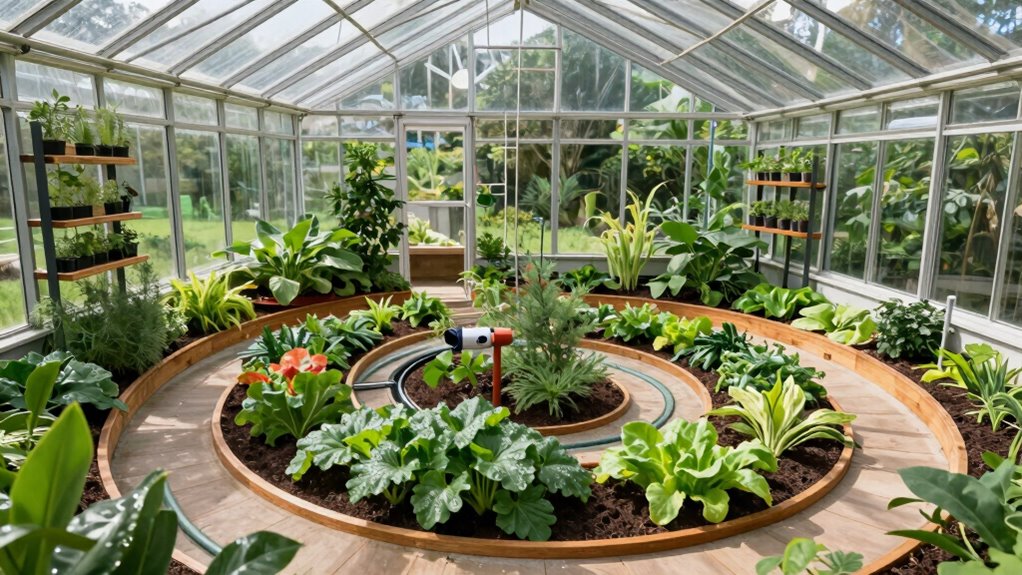
To maximize space and increase productivity in your backyard greenhouse, careful layout design is essential. Start by organizing your planting beds to allow easy access for soil amendments and pest control. Place taller plants or structures along the north side to prevent shading shorter crops. Use narrow pathways to save space while ensuring you can tend to plants comfortably. Incorporate designated areas for soil amendments, making it easy to maintain healthy, productive soil. Keep pest control supplies nearby to quickly address issues without disrupting your workflow. Group similar plants to streamline watering and care routines, reducing wasted movement. Additionally, consider implementing a space-efficient layout that optimizes your available area for maximum yield. Designing with ergonomic principles in mind can further improve comfort and efficiency for your gardening tasks. Incorporating smart furniture such as adjustable worktables or storage solutions can also enhance your setup. Applying space optimization techniques can help you make the most of every square foot in your greenhouse. A well-planned layout minimizes wasted space, speeds up maintenance, and enhances overall productivity, helping you get the most from your greenhouse. Emphasizing creative storytelling in your gardening journey can also inspire innovative layout ideas and foster a deeper connection to your gardening space.
Use Vertical Growing Strategies to Expand Your Options
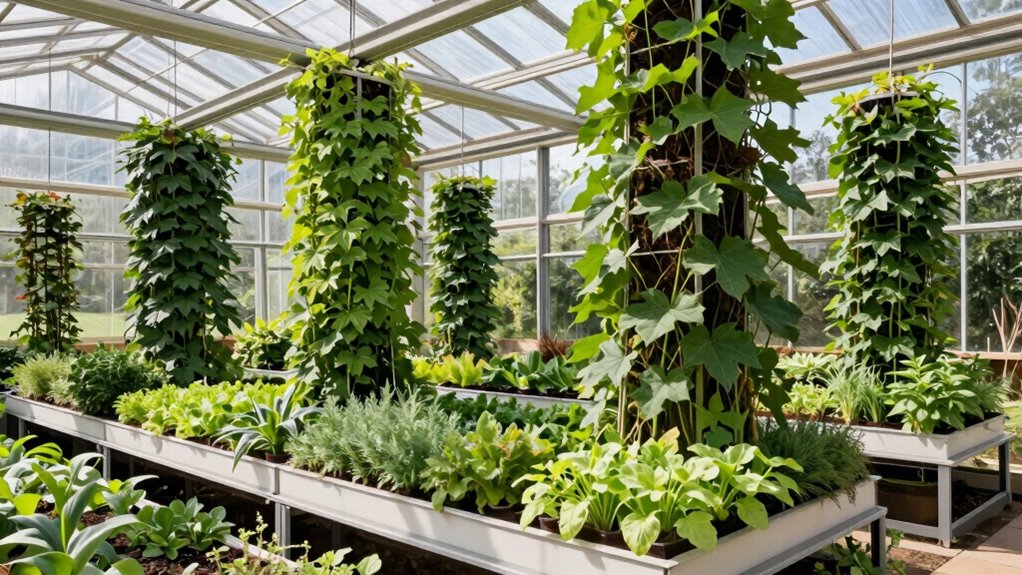
Vertical growing strategies can markedly expand your planting space and boost your greenhouse’s productivity. By using these techniques, you maximize every inch of your setup. Consider these options:
Maximize space and boost productivity with vertical growing strategies for a more efficient greenhouse.
- Hang hanging planters from the ceiling to free up floor space while growing herbs or trailing plants.
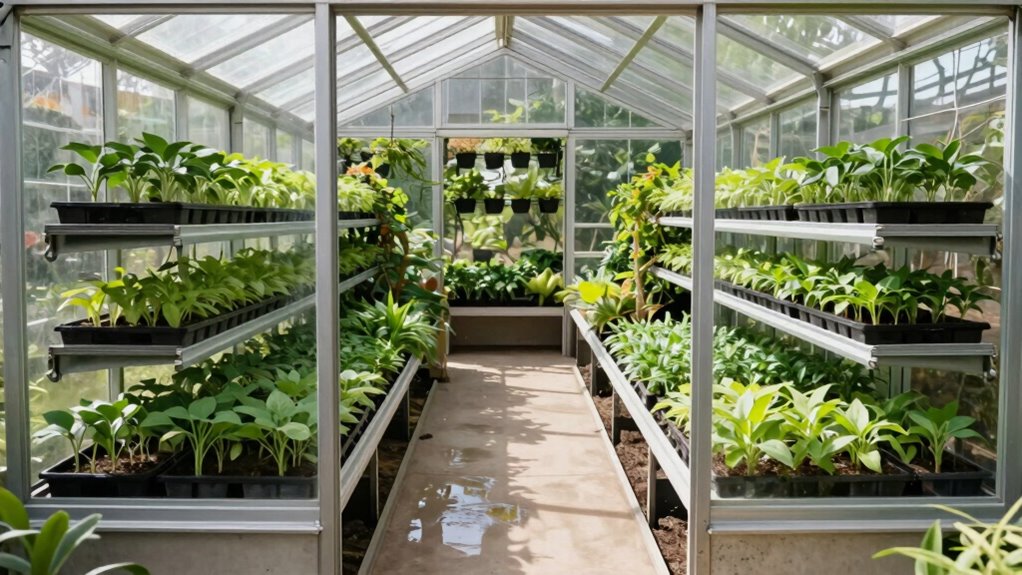
- Install tiered shelving to create multiple levels for seedlings, vegetables, or flowers, making efficient use of vertical height.
- Combine both methods to optimize space, placing hanging planters above tiered shelves for a layered, organized look.
- Using ergonomic handles on tools can make maintenance of your vertical setups more comfortable and efficient.
- Incorporating space-saving techniques such as these not only increases your planting capacity but also enhances airflow and accessibility.
These strategies not only increase your planting capacity but also improve airflow and accessibility. Implementing vertical solutions helps you grow more in less space, making your greenhouse more productive and easier to maintain.
Create Easy-to-Access Pathways Without Cluttering

Creating easy-to-access pathways in your greenhouse is essential for efficient work and hassle-free maintenance. Choose durable pathway materials like gravel, pavers, or compacted soil that can withstand moisture and foot traffic. Keep pathways wide enough—at least 24 inches—to guarantee comfortable navigation and accessibility considerations for all users. Arrange pathways to minimize turns and dead ends, allowing smooth movement between different sections. Use clear, unobstructed routes that connect key areas such as watering stations, planting beds, and tools. Avoid clutter by reserving central pathways for main access and using smaller side paths for secondary routes. This setup maximizes space while maintaining functionality, making it easier to tend plants without tripping or bumping into obstacles.
Incorporate Storage Solutions to Keep Floor Space Clear
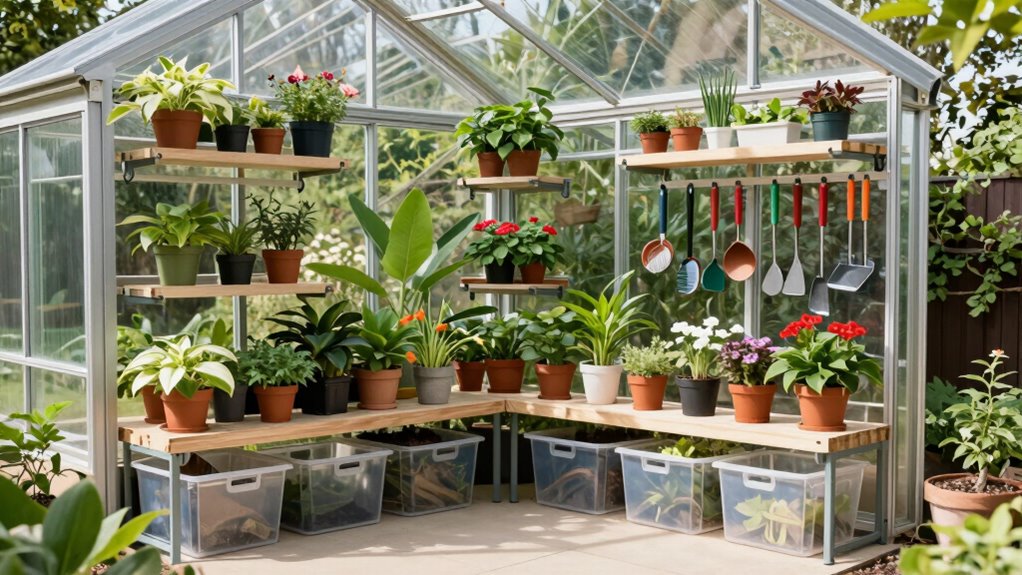
To maximize your greenhouse space, consider vertical storage options like shelves or wall-mounted racks. Multi-purpose furniture, such as benches with built-in compartments, helps keep your floor clear while providing functionality. These solutions make it easier to organize tools and supplies, giving your greenhouse a tidy, efficient layout.
Optimize Vertical Storage Options
Maximizing vertical storage is essential for keeping your greenhouse floor clear and functional. To do this effectively, consider these options:
- Install vertical shelving along walls to store tools, pots, and seedlings, freeing up valuable floor space.
- Use hanging planters for trailing plants, which adds greenery without cluttering the ground.
- Incorporate wall-mounted hooks or racks for smaller tools and supplies, keeping essentials within reach but out of the way.
Use Multi-Purpose Furniture
Using multi-purpose furniture is a smart way to keep your greenhouse organized and maximize available space. Choose pieces that combine storage with functionality, like benches with built-in shelves or tables that double as plant stands. These options improve space compatibility, allowing you to store tools, pots, and supplies without cluttering your floor. Compact furniture helps you utilize every inch efficiently, freeing up space for your plants to thrive. Look for foldable or stackable furniture to easily reconfigure your layout as needed. By integrating multi-purpose furniture into your greenhouse, you’ll maintain a tidy environment and create more room for growth. Ultimately, this approach simplifies maintenance while making your greenhouse more functional and accessible.
Frequently Asked Questions
What Materials Are Best for a Durable Backyard Greenhouse?
You should choose durable materials like galvanized steel for framing and polycarbonate panels for the walls and roof. These materials resist rust and harsh weather, ensuring longevity. When selecting plants, consider pest prevention by choosing resistant varieties and using screens or netting. This combination keeps your greenhouse sturdy and pest-free, making your space efficient and productive. Proper materials and plant choices help your backyard greenhouse last and thrive for years.
How Much Sunlight Does My Greenhouse Need Daily?
Think of your greenhouse as a sunflower seeking sunlight; it needs about 6 to 8 hours of daily light exposure to thrive. Most plants require this amount of sunlight to grow strong and healthy. Guarantee your greenhouse gets ample direct sunlight, ideally morning to late afternoon, to meet sunlight requirements. Adjust positioning or add supplemental grow lights if natural light falls short, ensuring your plants flourish regardless of the season.
Can I Automate Watering and Climate Control in a Small Greenhouse?
Yes, you can automate watering and climate control in a small greenhouse. Installing automated watering systems guarantees your plants get consistent moisture, while climate control systems regulate temperature and humidity automatically. These systems can be tailored to your greenhouse’s size and needs, saving you time and effort. With proper setup, you’ll maintain ideal growing conditions year-round, making your gardening more efficient and enjoyable without sacrificing space or plant health.
What Are Cost-Effective Options for Building a Backyard Greenhouse?
You can build a cost-effective backyard greenhouse by choosing simple materials like PVC or recycled wood, which keep costs low. Incorporate vertical gardening to maximize space and solar heating for energy efficiency. These options not only save money but also boost your greenhouse’s productivity. Combining affordable construction with smart design makes it easier to enjoy fresh plants year-round without breaking the bank.
How Do I Ensure Proper Ventilation in a Compact Greenhouse?
To guarantee proper ventilation in your compact greenhouse, you should prioritize good air circulation and humidity control. Install exhaust fans or roof vents to promote airflow, and consider using oscillating fans to circulate air evenly. Keep humidity levels in check by opening vents or windows when needed, and avoid overcrowding plants. Proper ventilation prevents mold, pests, and maintains a healthy environment, ensuring your plants thrive.
Conclusion
By applying these space-saving strategies, you’re well on your way to transforming your backyard into a thriving greenhouse. But don’t forget—the true secret lies in your unique layout and how you adapt these ideas. Will you discover an innovative solution that maximizes every inch? Keep experimenting, stay inspired, and watch your green oasis flourish beyond your wildest dreams. The next breakthrough could be just around the corner—are you ready to uncover it?