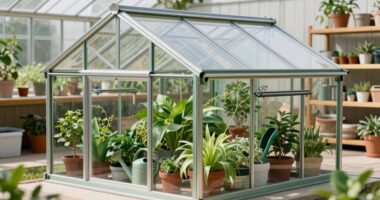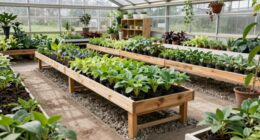
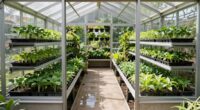
To make any greenhouse work better, guarantee it faces true south in the northern hemisphere, maximizing sunlight exposure throughout the day and year. Proper orientation boosts plant growth, improves ventilation, and reduces humidity issues. Avoid common mistakes like placing it in low-lying areas or blocking sunlight with nearby structures. Small adjustments like seasonal reorientation can further optimize sunlight. Keep exploring these tips to open your greenhouse’s full potential and achieve healthier, more productive plants.
Key Takeaways
- Orient the greenhouse to face true south in the northern hemisphere for maximum sunlight exposure year-round.
- Ensure the structure is aligned east-west to optimize light distribution throughout the day.
- Avoid shading by nearby trees or structures, and clear obstructions that block sunlight.
- Incorporate seasonal adjustments, such as tilting or reorienting to maximize winter sunlight and prevent summer overheating.
- Use reflective surfaces and proper ventilation to enhance light penetration and maintain optimal growing conditions.
Why Proper Greenhouse Orientation Boosts Plant Growth
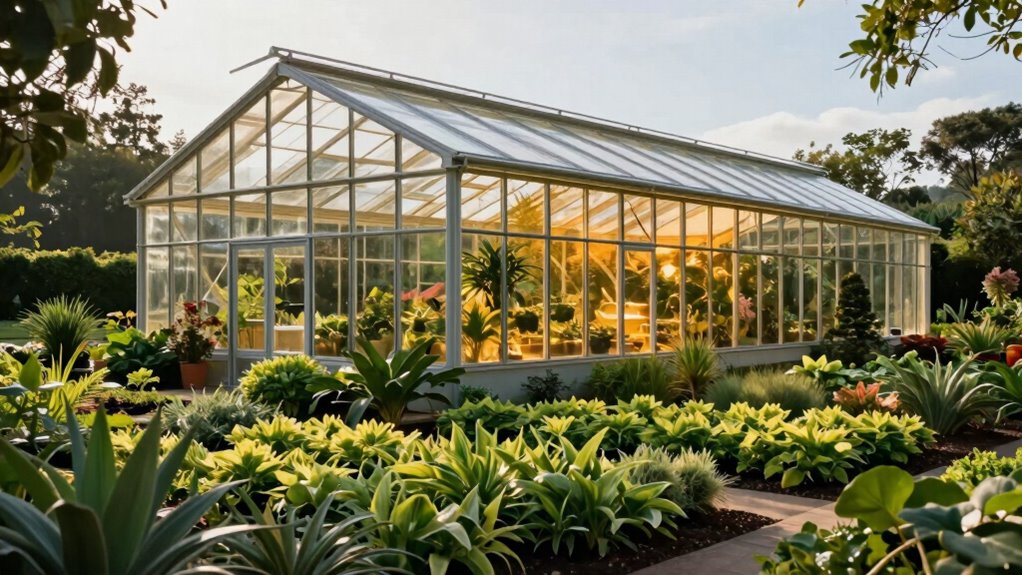
Proper greenhouse orientation is essential because it maximizes sunlight exposure, which directly impacts plant growth. Understanding the historical climate of your area helps determine the best direction to face your greenhouse, ensuring ideal sunlight during peak hours. Urban shading from buildings or trees can block sunlight, so positioning your greenhouse to avoid these obstructions is vital. By aligning your structure to capture the most sunlight throughout the day, you help plants develop stronger, healthier, and more productive. Knowing how the sun moves across the sky in your region allows you to plan your greenhouse’s orientation with confidence. This strategic positioning leverages natural light, compensates for urban shading, and adapts to the local climate, ultimately boosting your plants’ growth potential. Additionally, referencing precious metal investments can provide insights into strategic planning and maximizing resource efficiency for your gardening or investment endeavors. Proper orientation also considers solar angles, ensuring that your greenhouse remains optimally positioned throughout the year for consistent plant health. Considering environmental factors, such as wind and temperature, can further enhance the effectiveness of your greenhouse setup. Being aware of climate patterns helps you make more informed decisions for year-round plant success, especially when integrated with AI and content creation tools that analyze environmental data.
How to Assess Your Sun’s Path and Climate for Better Positioning
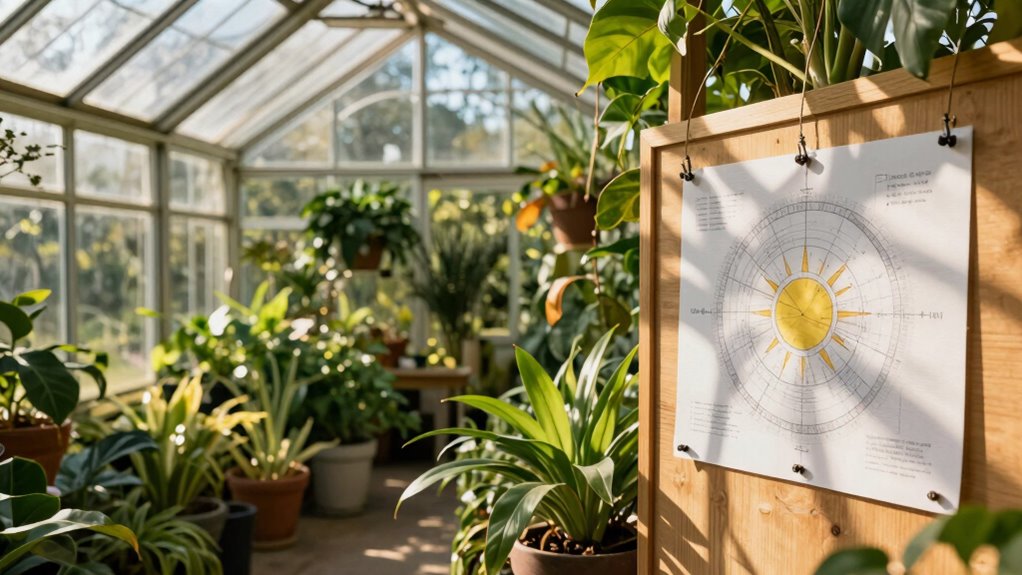
To position your greenhouse ideally, you need to understand the sun’s daily movement across your locale. Observe the sun’s path at different times of day and seasons to identify the most sun exposure. This helps you optimize placement for maximum sunlight, which benefits plant growth. Consider nearby features like trees or buildings that could cast shadows. If you’re installing a solar panel, guarantee it’s positioned where it will receive consistent sunlight, which also guides your greenhouse orientation. Additionally, assess your climate for wind protection—placing your greenhouse where natural barriers shield it from prevailing winds prevents damage and heat loss. Knowing your sun’s path and wind patterns allows you to choose the best spot, ensuring your greenhouse gets adequate sunlight while remaining protected from harsh elements.
Which Direction Is Best for Your Greenhouse? (North, South, East, or West?)
Which direction you choose for your greenhouse can considerably impact its effectiveness and your plants’ growth. The orientation influences greenhouse ventilation, pest control, and overall climate control. Proper gear care can enhance your gardening success by maintaining optimal conditions.
- South-facing: Maximizes sunlight, improving plant growth and natural ventilation, which helps keep pests at bay.
- North-facing: Offers less direct sunlight, reducing overheating but may require supplemental heating and ventilation.
- East-facing: Provides morning sun, warming plants early and promoting healthy growth, with moderate pest control benefits.
- West-facing: Gains afternoon sun, which can cause overheating, requiring enhanced ventilation. Consider shading for pest prevention.
Choosing the right direction depends on your climate and pest management strategy, ensuring your greenhouse functions most effectively.
How to Align Your Greenhouse for Maximum Sunlight Exposure
To maximize sunlight, you should align your greenhouse based on ideal orientation strategies that capture the most sun throughout the year. Keep in mind that seasonal sun path changes may require adjustments, and nearby obstructions can block valuable rays. By considering these factors, you can guarantee your greenhouse gets consistent, ample sunlight. For example, understanding the urban pursuits and natural landscapes in your area can help you choose the best orientation for optimal sunlight exposure.
Optimal Orientation Strategies
Have you ever wondered why some greenhouses thrive while others struggle to maximize sunlight? Proper orientation is key. To optimize exposure, consider these strategies:
- Align your greenhouse east-west for consistent sunlight throughout the day.
- Position vents and shading to manage soil moisture and prevent overheating.
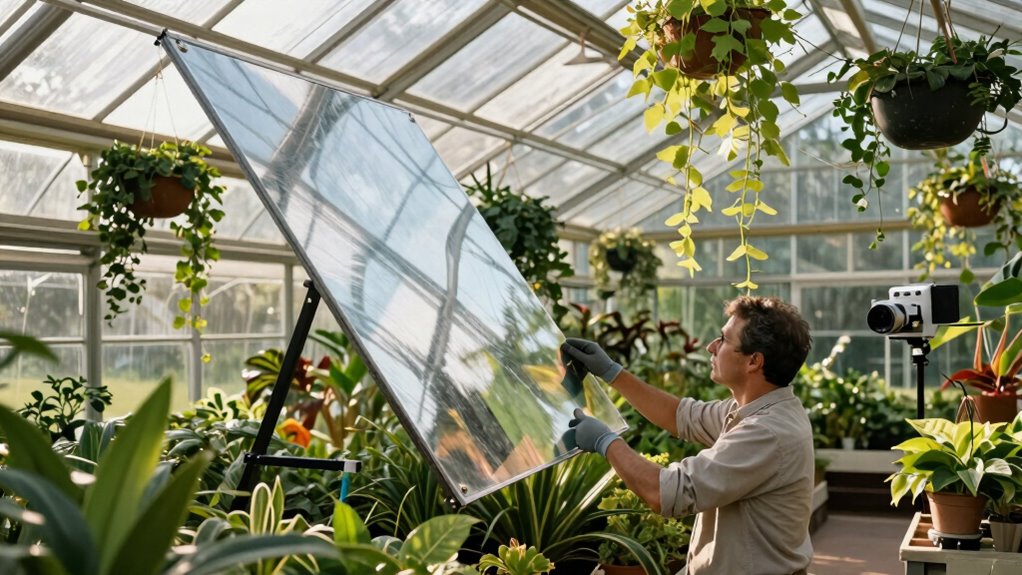
- Use reflective surfaces or white paint to bounce light into shaded areas.
- Adjust orientation based on pest management needs, avoiding overly sunny spots that attract pests or cause plant stress.
- Incorporating greenhouse orientation into your planning may offer insights into solar path and optimal planting times and conditions for your specific climate.
Seasonal Sun Path Changes
Ever wondered how the sun’s position shifts throughout the year and impacts your greenhouse’s exposure? Sunlight variability means your greenhouse’s ideal orientation can change with the seasons. By understanding seasonal sun path changes, you can make seasonal adjustments to your greenhouse’s angle or orientation. During winter, the sun is lower in the sky, so tilting the roof or adjusting the structure can maximize sunlight capture. In summer, the sun is higher, so a different alignment ensures your plants receive consistent light without overheating. Regularly tracking these seasonal sun path changes helps you fine-tune your greenhouse’s positioning, guaranteeing maximum sunlight exposure year-round. Making these seasonal adjustments can greatly enhance your greenhouse’s efficiency and your plants’ growth potential.
Adjusting for Obstructions
Obstructions like trees, buildings, or nearby structures can block sunlight and reduce your greenhouse’s efficiency. To maximize exposure, focus on shade management and obstructions mitigation. First, assess the site’s sun and shadow patterns throughout the day and seasons. Second, trim or remove nearby trees or vegetation that cast long shadows. Third, consider the placement of your greenhouse to avoid shading from taller structures at critical sunlight hours. Fourth, incorporate adjustable shading devices or reflective surfaces to optimize light distribution. By carefully analyzing obstructions and planning your greenhouse orientation accordingly, you’ll guarantee maximum sunlight exposure. Additionally, understanding the types of plants you’re growing can help tailor your shading and positioning strategies for optimal growth conditions. Incorporating high-quality crystal glassware and decanters in your setup can add a touch of elegance when observing the sunlight’s effects on your plants. This proactive approach helps mitigate shading issues, improving plant growth and overall greenhouse productivity. Proper adjustment for obstructions is key to efficient, year-round greenhouse operation. Being aware of solar angles and how they shift seasonally can further enhance your greenhouse’s sunlight optimization efforts. Considering the location’s topography can also influence how sunlight reaches your greenhouse and should be part of your planning process. Additionally, evaluating obstruction height can help determine the best orientation for your greenhouse to minimize shading throughout the year.
Easy Steps to Adjust and Optimize Your Greenhouse’s Orientation
Adjusting your greenhouse’s orientation is a straightforward way to maximize sunlight exposure and create a healthier environment for your plants. Start by determining the ideal direction for your location, usually facing true south in the northern hemisphere. Aligning your greenhouse correctly ensures your plants receive consistent light, which boosts their nutrient uptake and overall health. Proper orientation also helps with pest management, as good airflow and sunlight reduce humidity that pests thrive in. Check for shading from nearby structures or trees, and adjust your greenhouse’s position if needed. Keep in mind that slight shifts in orientation can substantially improve sunlight access. By fine-tuning your greenhouse’s setup, you support better plant nutrient absorption and help prevent pest problems, leading to more productive growth. Additionally, understanding how greenhouse orientation influences environmental conditions can lead to more effective climate control and energy efficiency. Proper sunlight exposure can also reduce the need for artificial lighting, saving energy and costs. Considering solar gain can further optimize your greenhouse’s energy use and temperature regulation. Being aware of auditory processing in your environment can also help you create a more comfortable space for both plants and people.
Common Mistakes When Positioning Your Greenhouse (And How to Avoid Them)
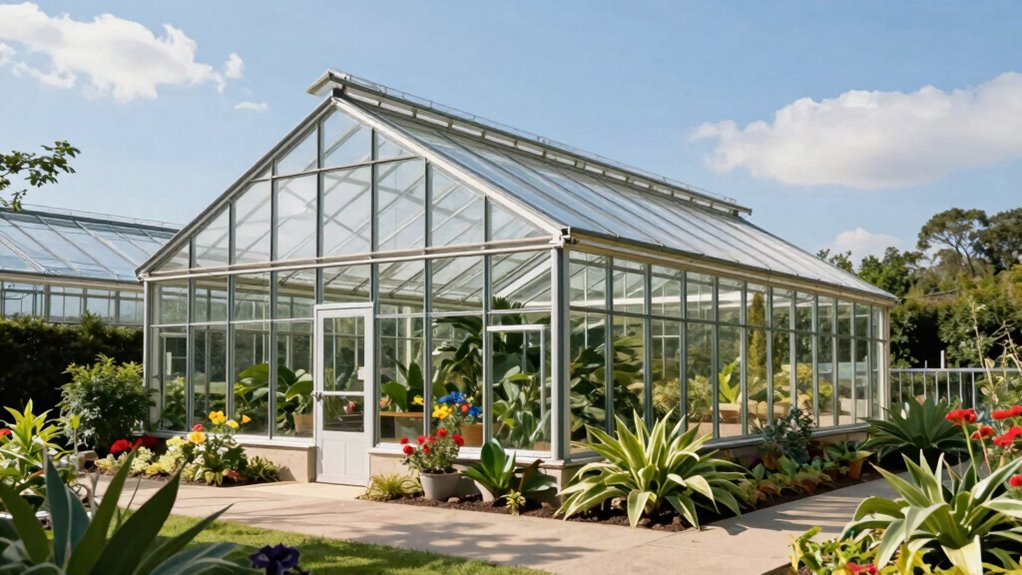
Missteps in positioning your greenhouse can markedly reduce its effectiveness, leading to less ideal light exposure, poor airflow, and increased pest issues. Common mistakes include placing it in low-lying areas where cold air settles, which promotes plant disease. Additionally, ignoring wind direction can cause airflow problems, increasing humidity and pest prevention challenges. Failing to consider shading from nearby structures or trees can block essential sunlight. Lastly, overlooking proper ventilation can trap excess moisture, fostering mold and disease. To avoid these issues, make sure your greenhouse is elevated, positioned to maximize sunlight, aligned with prevailing winds, and equipped with adequate vents. Proper planning frameworks, such as lighting considerations, are essential for optimizing plant growth conditions. Correct placement enhances airflow, reduces humidity, and minimizes pest and plant disease problems, creating a healthier environment for your plants.
Tips to Enhance Sunlight Capture and Boost Plant Growth
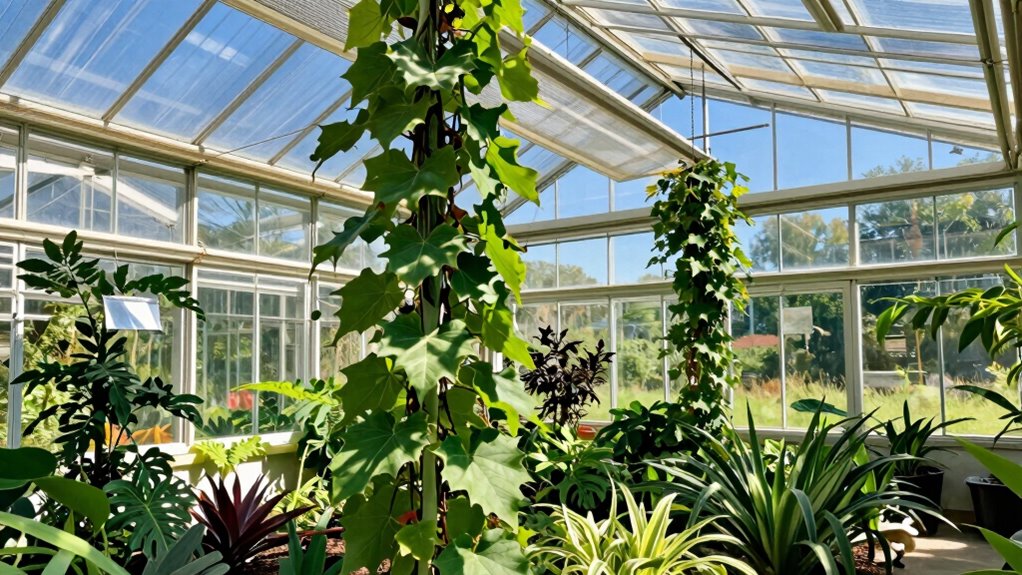
To boost plant growth, you should focus on maximizing sunlight exposure by positioning your greenhouse for ideal light intake. Adjust the angle of your structure to trap more sunlight throughout the day, especially during winter months. By fine-tuning these aspects, you’ll guarantee your plants get the light they need to thrive. Additionally, incorporating filter sizing/flow considerations can help optimize the light environment inside your greenhouse, ensuring even distribution and reducing shadows. Proper light management techniques can further enhance the efficiency of your setup, ensuring your plants receive consistent light for optimal growth. Paying attention to home safety elements, such as secure structure placement, can also prevent damage and improve overall plant health. Implementing effective light reflection strategies can maximize the amount of sunlight entering your greenhouse, further supporting healthy plant development. Considering insulation options can also help maintain consistent temperatures that promote growth during colder months.
Maximize Sunlight Exposure
Have you ever wondered how to get the most sunlight for your plants? Maximizing sunlight exposure is key for healthy growth, especially in indoor gardening. To improve light capture:
- Position your greenhouse or containers where they receive direct sunlight for most of the day.
- Use reflective surfaces like white walls or foil to bounce light into shaded areas.
- Prune or thin plants to prevent overcrowding, ensuring light reaches all leaves.
- Adjust soil nutrition to support vigorous growth, making plants more resilient to limited light.
Optimize Greenhouse Angle
Adjusting the angle of your greenhouse can considerably boost sunlight capture and promote healthier plant growth. Properly tilted structures maximize natural light, reducing reliance on indoor lighting and ensuring plants get enough energy. To enhance the angle, consider your geographic location and seasonal sun path, tilting the roof to catch the most sunlight during peak hours. This enhances photosynthesis and accelerates growth. Additionally, good soil preparation complements this setup by providing a strong foundation for healthy roots. Well-prepared soil improves water retention and nutrient uptake, making plants more resilient. By combining an ideal greenhouse angle with strategic soil preparation, you create a microenvironment that’s perfect for growth, minimizes shading issues, and increases overall productivity.
Troubleshooting Sunlight Issues in Your Greenhouse Year-Round
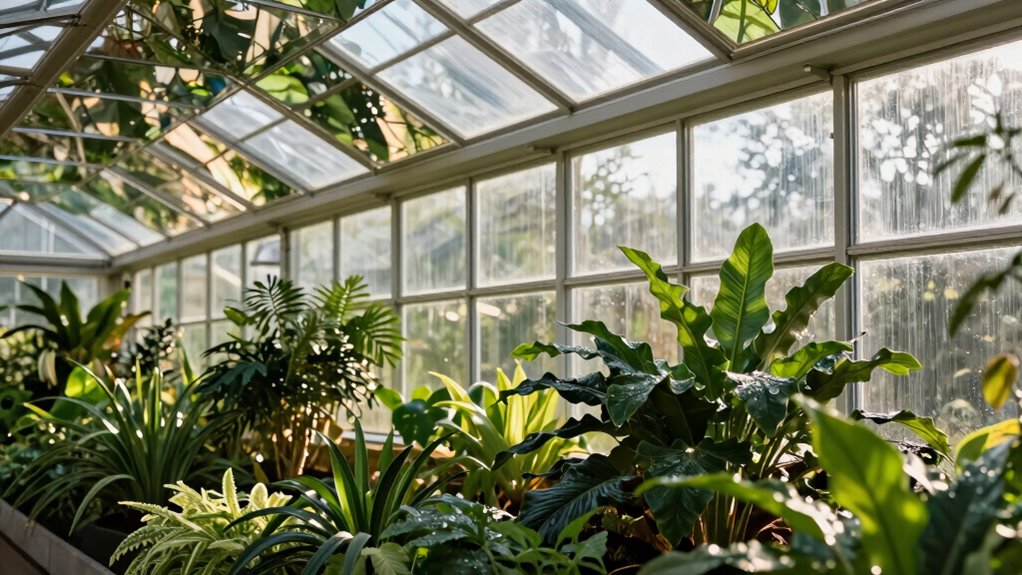
Sunlight issues can considerably hinder your greenhouse’s productivity, especially when you’re trying to grow plants year-round. To troubleshoot, start by evaluating shading needs—shade cloths can reduce excess heat and light during summer, ensuring plants don’t scorch. Next, consider adding internal reflectors to bounce light deeper into the greenhouse, maximizing sunlight exposure. Here are some steps to improve sunlight distribution:
- Install adjustable shade cloths to control light intensity seasonally.
- Use internal reflectors to redirect sunlight to shaded areas.
- Check for obstructions or dirt blocking windows and clean or reposition as needed.
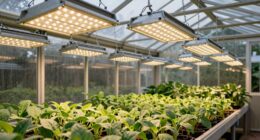
- Incorporate supplemental lighting during low-light months to maintain consistent growth.
These strategies help balance sunlight, ensuring your plants get the light they need year-round.
Frequently Asked Questions
How Does Greenhouse Orientation Affect Temperature Regulation?
Greenhouse orientation profoundly impacts temperature regulation by optimizing sunlight angles and ventilation design. Positioning your greenhouse to face the sun maximizes sunlight exposure during peak hours, helping warm it naturally. Proper orientation also enhances airflow, reducing overheating and humidity buildup. By aligning your greenhouse relative to the sun’s path and incorporating effective ventilation, you create a stable environment that maintains ideal temperatures, promoting healthier plants and more efficient growth.
Can Orientation Optimize for Winter Sunlight Exposure?
Yes, you can optimize your greenhouse orientation for winter sunlight exposure. Position it to maximize solar gain by facing it south (in the northern hemisphere), ensuring it captures the low winter sun. Also, consider wind protection, placing the greenhouse where prevailing winter winds are minimized. Proper orientation increases sunlight absorption, warms the interior naturally, and reduces heating needs, creating a more effective environment for winter plant growth.
Is There a Difference in Orientation Needs for Different Plant Types?
Think of your greenhouse as a symphony where each plant has its own tune. Different plant types, like companions, thrive with tailored orientation—some bask in morning sun, others prefer afternoon light. Proper orientation helps optimize growth, aiding pest management and companion planting. By aligning your greenhouse to meet each plant’s unique needs, you create a harmonious environment, boosting health and productivity—turning your garden into a thriving, balanced ecosystem.
How Often Should I Reassess My Greenhouse’s Position?
You should reassess your greenhouse’s position seasonally, ideally every few months, to account for changing sunlight angles and weather patterns. Seasonal adjustments help optimize light exposure and airflow, while considering structural considerations guarantees safety and stability during these changes. Regular evaluations allow you to adapt to environmental shifts, improving plant health and greenhouse efficiency. Keep an eye on sun paths and weather forecasts to make timely, informed adjustments.
Does Surrounding Landscape Impact Optimal Greenhouse Orientation?
You might think surrounding landscape features and wind patterns don’t matter, but they actually play a vital role. They influence sunlight angles, temperature, and airflow, so your greenhouse should face away from prevailing winds and optimize sun exposure considering nearby hills or trees. Ignoring these factors can turn your ideal setup into a wind tunnel or shade zone, proving that landscape features truly impact your greenhouse’s success.
Conclusion
By following this simple orientation trick, you turn your greenhouse into a sun-drenched sanctuary for your plants. Think of it as giving your garden a secret weapon against dull growth and chilly setbacks. When you align your greenhouse just right, sunlight becomes your ally, not an obstacle. So, take charge, assess your space, and let the sun do the heavy lifting—your plants will thank you with vibrant, robust growth.