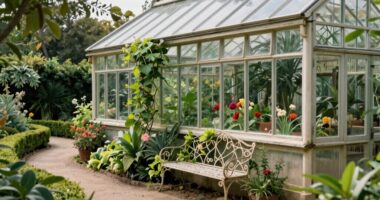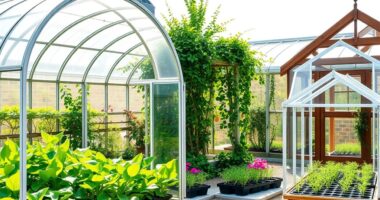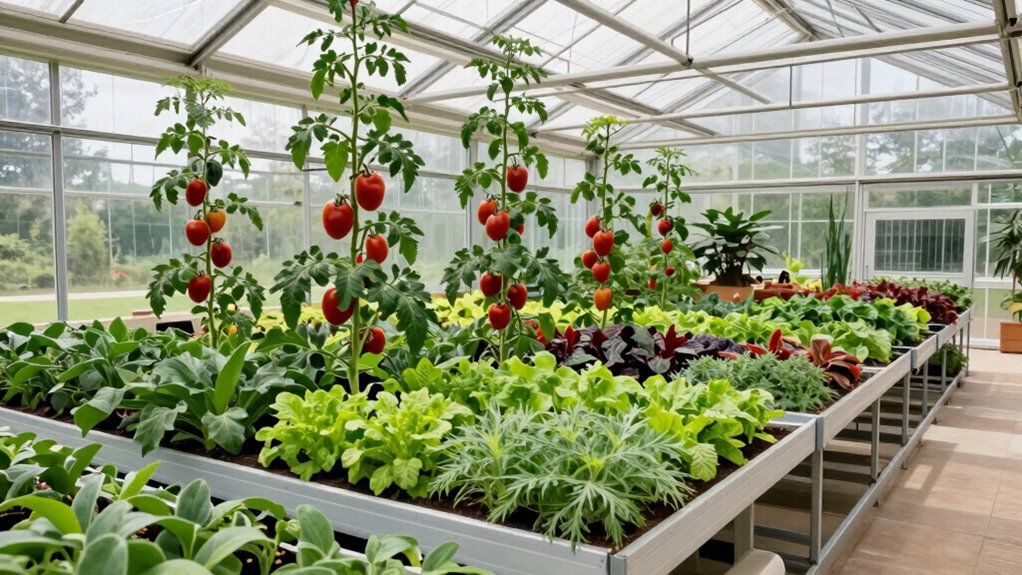

To prevent greenhouse regret, the key rule is to organize plants based on their light requirements within distinct zones. By matching plant needs with the appropriate sunlight exposure, you guarantee healthy growth and reduce future adjustments. Group similar plants together, leave space for expansion, and consider environmental factors like heat and ventilation. Following this rule helps create a balanced, efficient space that supports long-term success. Keep going to discover more ways to optimize your greenhouse design.
Listen free for 30 days with Audible
Thousands of audiobooks and originals — cancel anytime.
As an affiliate, we earn on qualifying purchases.
Key Takeaways
- Match plant placement to their specific light requirements to optimize growth and minimize future adjustments.
- Organize plants into distinct light zones based on sunlight exposure for better health.
- Group similar light-demanding plants together for efficient watering and maintenance.
- Leave adequate space for plant growth to prevent crowding and airflow issues.
- Consider environmental factors like heat and ventilation when planning zones for long-term success.
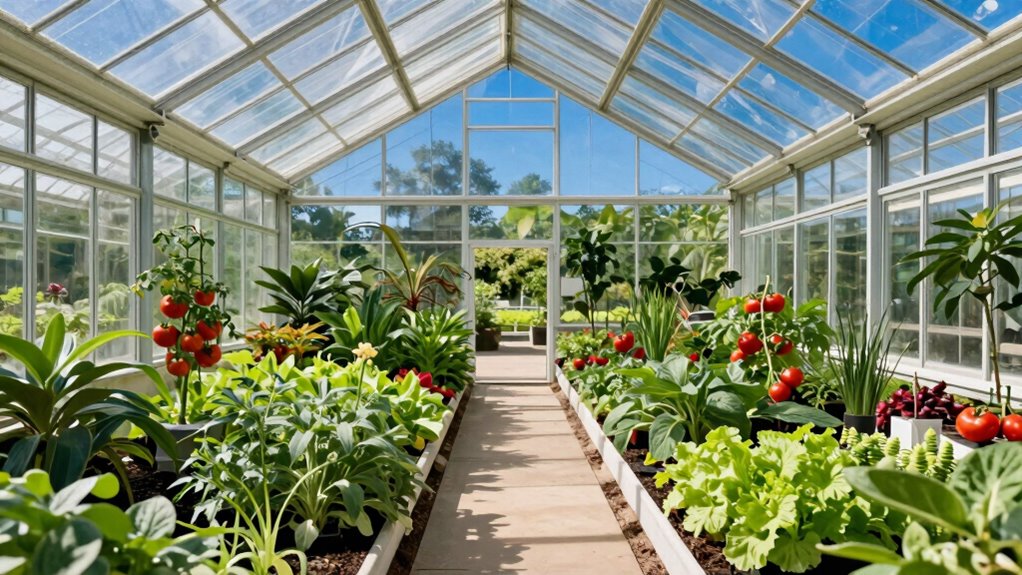
When designing a greenhouse, applying a simple space-planning rule can save you from future regret and costly modifications. The key is to think carefully about plant placement and how it interacts with lighting zones. Your goal should be to organize your space so that each plant gets the right amount of light without interfering with others. This approach ensures your plants thrive and reduces the need to rearrange or redesign later on.
Start by dividing your greenhouse into distinct lighting zones based on sunlight exposure. Some areas will receive full sun, while others may only get partial or indirect light. Once you identify these zones, you can plan plant placement accordingly. Place sun-loving plants in the brightest zones, near windows or open areas, where they’ll get ample direct light. Shade-tolerant plants should go in less exposed zones to prevent sunburn or stress. This strategic placement minimizes the risk of overexposure or insufficient light, both of which can stunt growth or cause disease.
Divide your greenhouse into light zones and place sun-loving plants in bright areas, shade-tolerant plants in shaded zones.
Avoid the mistake of scattering plants randomly across the space. Instead, group plants with similar light requirements together. This not only simplifies watering and care routines but also keeps your greenhouse organized. For example, placing high-light plants together allows you to tailor watering schedules and prevent overwatering or underwatering. When you consider plant placement in relation to lighting zones, you create a natural flow that supports healthy growth and makes maintenance easier. Incorporating a thoughtful layout can further enhance your space’s efficiency and aesthetic appeal. Additionally, understanding plant growth stages helps in planning for future needs and adjustments. Being aware of plant compatibility can also prevent issues related to pests and diseases from spreading between different plant groups.
Another crucial aspect is to think about future growth. When planting, leave enough space for plants to expand without crowding each other. Overcrowding can block light and hinder airflow, leading to disease and poor health. By planning your plant placement with growth in mind, you prevent the need for disruptive transplanting down the line. This foresight keeps your greenhouse efficient and reduces the risk of regret over cramped, poorly planned layouts. Additionally, considering the growth potential of your plants helps in designing a more sustainable and adaptable environment.
Integrating the concept of lighting zones into your space plan also means considering how heat and ventilation affect plant health. Certain zones might require additional fans or shade cloths to maintain optimal conditions. When you organize your greenhouse with these factors in mind, you set yourself up for long-term success. Your plants will grow stronger, and you’ll enjoy a more manageable, enjoyable gardening environment.
In essence, the one space-planning rule that prevents greenhouse regret is to thoughtfully match plant placement with lighting zones. By doing so, you create a balanced, efficient, and adaptable space that supports healthy growth and minimizes future adjustments. Paying attention to these lighting zones and plant needs ensures your greenhouse remains sustainable and productive over time. It’s a simple step that can make a significant difference in the sustainability and success of your greenhouse.
greenhouse plant light zone dividers
As an affiliate, we earn on qualifying purchases.
As an affiliate, we earn on qualifying purchases.
Frequently Asked Questions
How Does Climate Influence Greenhouse Space Planning?
Climate considerably influences your greenhouse space planning by requiring climate adaptation strategies and environmental considerations. You need to design your greenhouse to withstand local weather patterns, whether that’s intense heat, cold, or humidity. By understanding these climate factors, you can optimize plant placement, insulation, and ventilation, ensuring your greenhouse remains efficient and sustainable. This proactive approach helps prevent future regrets, making your space more resilient and aligned with environmental conditions.
What Are Common Mistakes in Greenhouse Layout Design?
You often make layout mistakes by neglecting proper plant spacing, which can lead to overcrowding and poor airflow. You might also misplace lighting, causing uneven growth or insufficient light for certain plants. To avoid these errors, plan your greenhouse with adequate plant spacing to promote healthy development, and position lighting thoughtfully to guarantee even distribution. This careful planning helps prevent greenhouse regret and optimizes plant health and yield.
How Can I Future-Proof My Greenhouse Design?
To future-proof your greenhouse, prioritize flexible design that accommodates vertical farming systems, maximizing space efficiency. Incorporate renewable energy sources like solar panels to reduce reliance on external power. Visualize your layout with modular components, allowing easy upgrades or expansions down the line. By planning for scalability and sustainability now, you’ll create a resilient greenhouse that adapts to future innovations, saving you time and money while supporting eco-friendly growth.
What Materials Are Best for Long-Term Greenhouse Durability?
You should choose materials with high durability factors like polycarbonate or tempered glass for your greenhouse. Polycarbonate offers impact resistance and UV protection, making it a long-lasting choice, while tempered glass provides superior strength and clarity. Consider factors like weather resistance, ease of maintenance, and cost when selecting materials. Proper material selection guarantees your greenhouse remains resilient over time, reducing repairs and replacement, and safeguarding your investment for the long haul.
How Do I Optimize Airflow in a Small Greenhouse?
To optimize airflow in a small greenhouse, you should implement effective ventilation strategies like installing exhaust fans and adjustable vents, ensuring consistent air circulation. Position intake vents low and exhaust vents high to promote natural convection. Use oscillating fans to enhance airflow, especially during cloudy days. Regularly monitor and adjust these systems to prevent overheating and humidity buildup, creating an ideal environment for your plants while reducing the risk of pests and diseases.
Conclusion
By following this simple space-planning rule, you can avoid costly greenhouse regrets and guarantee your plants thrive. Did you know that improper space allocation can reduce plant growth by up to 30%? That’s a huge loss for your garden’s potential. So, take the time to plan your greenhouse layout carefully. It’s a small step that makes a big difference, helping you enjoy a lush, productive space without future regrets.
Fall yard work Picks
leaf blowers
As an affiliate, we earn on qualifying purchases.