
TL;DR

Get garden gear delivered free with Prime
- Fast, free delivery on millions of items
- Prime Video, Amazon Music and more included
- Member-only deals all year
Despite rising interest, there is no scientific evidence that bird feeders can reliably predict storms. This trend reflects public curiosity, but experts warn against trusting feeders for weather forecasting. The idea remains a myth, with no confirmed link between bird behavior at feeders and imminent severe weather.
Recent online searches and social media discussions have seen a surge of interest in the idea that bird feeders can predict approaching storms. However, experts confirm that there is no scientific evidence supporting this claim, and it remains a myth. This trend highlights public curiosity about weather prediction methods outside traditional meteorology, but the notion that bird behavior at feeders can foretell severe weather is unfounded.
While some anecdotal reports suggest that unusual bird activity at feeders—such as sudden silence or frantic feeding—might precede storms, scientists emphasize that these behaviors are not reliable indicators of upcoming severe weather. According to ornithologists and meteorologists, bird responses to weather changes are complex and influenced by various factors, but they do not serve as accurate or consistent signals of storms.
The current spike in interest appears to be driven by social media posts and online searches, with many users sharing stories or images claiming that their birds reacted before a storm. Despite this, experts caution that such observations are coincidental and lack scientific validation. No peer-reviewed studies have demonstrated a direct link between bird feeder activity and imminent storms.
Environmental scientists note that weather prediction relies on advanced tools such as radar, satellite imaging, and atmospheric models. Bird behavior, while sensitive to weather changes, is too variable and context-dependent to be used as a forecasting tool. Relying on bird activity for storm prediction could lead to false alarms or missed warnings, posing risks to safety.
Why the Storm-Feeding Myth Persists
This trend reveals a broader public interest in alternative weather prediction methods and the desire for simple, natural signals. It also underscores the importance of relying on scientifically validated tools for weather safety. Believing in unproven methods may lead to complacency or misjudgment during severe weather events, emphasizing the need for accurate information from official sources.
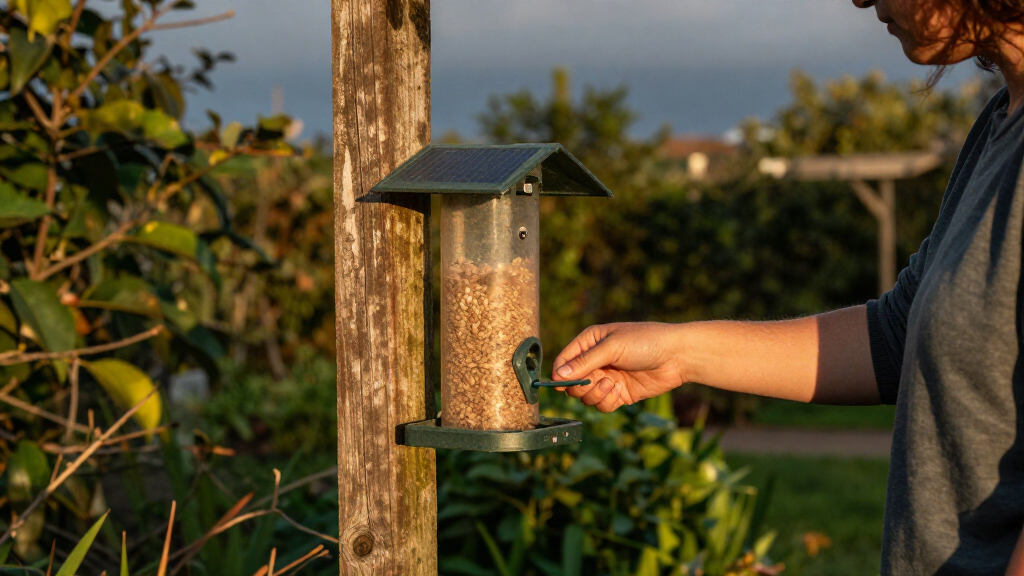
bird feeder with weather monitoring
As an affiliate, we earn on qualifying purchases.
As an affiliate, we earn on qualifying purchases.
Origins of the Storm Prediction Myth
The idea that bird behavior can predict storms is not new but has gained renewed attention due to social media and online communities sharing anecdotal stories. Historically, some cultures and early naturalists observed bird responses to weather changes, but these observations were not scientifically rigorous or consistent enough to serve as reliable indicators. Modern meteorology has developed precise tools that outperform anecdotal cues, making the myth outdated and unsupported by evidence.
Recent search trends indicate that interest in this topic is rising, potentially fueled by a combination of curiosity, misinformation, and the appeal of natural solutions. However, experts emphasize that these stories are often based on coincidence rather than causation, and should not influence weather safety decisions.
What Remains Unclear About Bird Behavior and Storms
It is not yet clear why some people perceive a link between bird activity and weather changes, or whether any subtle, scientifically unrecognized patterns exist. Research into bird responses to atmospheric conditions continues, but current evidence does not support their use in forecasting storms.Next Steps in Understanding Bird Responses to Weather
Scientists plan to continue studying bird behavior in relation to atmospheric changes, but there is no indication that these behaviors can be used for weather prediction. Public education efforts are likely to focus on dispelling myths and promoting reliance on proven meteorological tools. Monitoring social media trends may help authorities address misinformation and improve public understanding of weather safety.
Key Questions
Can bird feeders really predict storms?
No, there is no scientific evidence that bird feeders can predict storms. Bird behavior is influenced by many factors, but it does not reliably indicate approaching severe weather.
Why do people believe birds can predict weather?
Historical observations and anecdotal stories have led some to believe in a link between bird activity and weather changes. Social media amplifies these stories, despite the lack of scientific support.
What should I rely on for weather warnings?
Official weather forecasts from meteorological agencies, radar, satellite data, and weather alerts are the most reliable sources for storm warnings. Do not depend on bird activity or folklore.
Are there any scientific studies on this topic?
While some studies have examined bird responses to atmospheric conditions, none have established a reliable link to storm prediction. Current scientific consensus dismisses the idea as a myth.
Could future research change this understanding?
It is unlikely that future research will find a practical way to use bird behavior for storm prediction, given the current understanding of atmospheric science and ornithology.
Source: rss
Halloween Picks
halloween
As an affiliate, we earn on qualifying purchases.