TL;DR

Get garden gear delivered free with Prime
- Fast, free delivery on millions of items
- Prime Video, Amazon Music and more included
- Member-only deals all year
A Gardener’s Path report describes three ways to overwinter banana plants where outdoor cold can damage them: grow them in containers and move them indoors, protect in-ground plants with mulch, or dig up and store their rhizomes. The right approach depends on the plant, available storage and local winter temperatures; most bananas are cold-sensitive, though some varieties tolerate colder conditions.
Gardener’s Path has outlined three ways to protect banana plants through winter: bring container-grown plants indoors, insulate in-ground plants with mulch, or dig up and store their rhizomes. The guidance matters to gardeners in cold-winter areas because most banana plants are vulnerable to frost and sustained low temperatures, although the report notes that cold tolerance varies by variety.
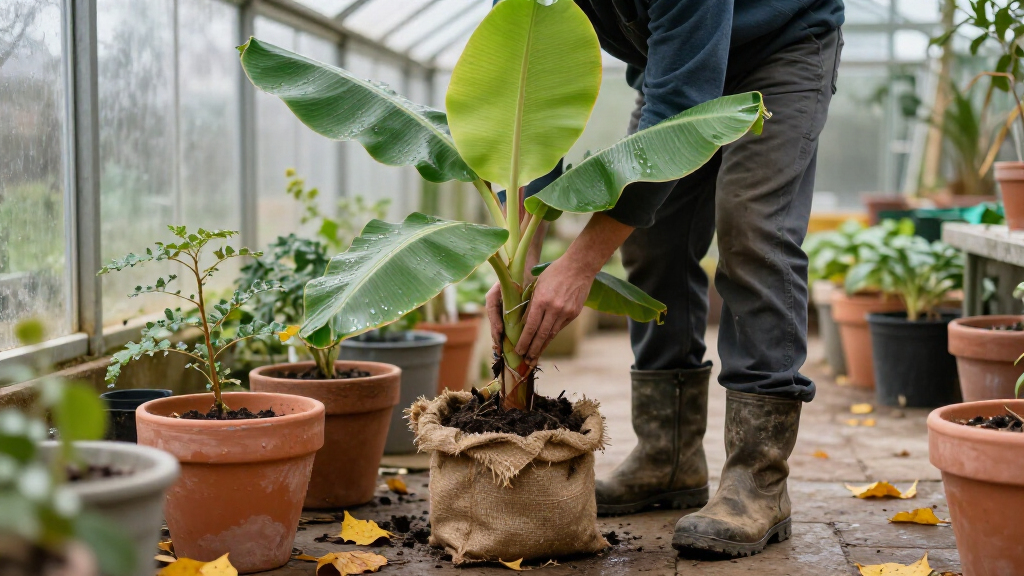
For container growing, the report recommends choosing a dwarf variety and moving the pot inside as outdoor temperatures fall. In a sunny indoor spot, gardeners can keep the soil moist but not soggy and expect slower growth. For a cool, dark storage space kept at about 40 to 50°F, the plant can be cut back to roughly six inches, watered sparingly and allowed to go dormant. The source says to resume normal watering and move it outdoors only after temperatures rise and frost risk has passed.
For a plant growing in the ground, one option is to cut it to about four to six inches above the soil and cover the base with at least a foot of leaves, straw or other mulch. The report identifies the underground rhizome, or corm, as the part gardeners are trying to protect. As an alternative to cutting the plant down, it describes building a wire cage around the pseudostem and filling it with packed leaves or straw. The above-ground portions left exposed may be lost.
A third method is to dig up the plant before the first frost, keeping a root ball with at least six to eight inches of soil around the stem, and store it in a cellar or similar place at a steady 45 to 50°F. The report advises placing the root ball in slightly moist sand and not watering during dormancy. It says plants can be replanted after frost danger has passed. Storage conditions and the plant’s size affect which method is practical.
Protecting Rhizomes Through Winter
The methods address a central risk for gardeners: cold can injure leaves and, under sustained severe conditions, kill the underground growth from which a banana plant can regrow. Protecting the rhizome may allow an in-ground plant to return in spring even if its foliage or exposed stem is lost. Container storage and lifting the plant provide alternatives for gardeners who cannot insulate it in place or want to keep a tender variety.
The choice also affects the amount of work involved. Moving a pot requires suitable indoor space; mulching requires enough insulation around the plant; digging and storing requires handling a substantial root ball. The report offers options rather than a single method that applies to every garden, and gardeners should account for their local temperatures and the plant’s variety.
banana plant container indoor grow kit
As an affiliate, we earn on qualifying purchases.
As an affiliate, we earn on qualifying purchases.
Banana Plants and Cold Limits
Bananas are members of the genus Musa; despite their common name, the source explains that they are herbaceous plants, not trees. Their apparent trunks are pseudostems formed from layered leaves. The report says leaf growth stops at around 55°F, leaves can be damaged at 32°F, and rhizomes may die after sustained temperatures of 22°F or lower.
Those figures describe general cold sensitivity, not a guarantee for every plant or garden. Gardener’s Path notes that some varieties are more cold-tolerant: it cites Japanese fiber banana, Musa basjoo, as hardy to USDA Zones 5 or 6 when cut back and protected with mulch. Most bananas, by contrast, prefer warmer conditions, and the article presents winter protection as an option for gardeners outside the warmest growing areas.
Local Conditions Shape the Choice
The supplied report does not give a publication date or address conditions for individual gardens. Exact winter survival cannot be inferred from the general temperature figures alone: variety, the duration of cold, site conditions and the quality of protection can all affect outcomes. The source also does not specify a single indoor humidity or watering schedule that suits every container-grown plant.
Its methods should be read as general gardening guidance, not a guarantee that every plant will survive. Gardeners should check the hardiness and care needs of their own variety, along with local frost timing, before choosing whether to shelter, mulch or lift it.
Resume Care After Frost Risk
For plants stored indoors or in a cool space, the report’s next step is to wait until temperatures climb and frost danger has passed before moving them outdoors or replanting them. Remove protective cages and mulch from in-ground plants as warm weather returns and new growth appears. Dead material can be trimmed, and watering can resume as the plant begins growing again.
Gardeners planning for winter can first decide where a plant will spend the cold months, then prepare it before the first frost where the chosen method requires it. The source provides no forecast or local planting dates, so timing will depend on conditions in each area.
Key Questions
Can banana plants survive winter outdoors?
Some varieties tolerate colder conditions, but the report says most banana plants are cold-sensitive. It describes insulating in-ground plants with mulch to protect the rhizome; survival depends on the variety, temperatures and duration of cold.
How much mulch should go around an in-ground banana plant?
After cutting the plant to about four to six inches above ground, the report recommends piling on at least one foot of leaves, straw or other mulch. A cage filled with packed leaves or straw is another method it describes.
Where should a dormant banana plant be stored?
The report recommends a cool, dark location. For container plants stored dormant, it gives a range of about 40 to 50°F; for dug-up plants, it suggests a cellar or similar area at a steady 45 to 50°F.
When should I bring a banana plant back outside?
Wait until temperatures rise and all risk of frost has passed, according to the report. Remove mulch or storage protection as warm weather returns, and resume watering or replanting as appropriate.
Source: rss
Columbus Day / Indigenous Peoples' Day Picks
long weekend sales
As an affiliate, we earn on qualifying purchases.