
TL;DR

Get garden gear delivered free with Prime
- Fast, free delivery on millions of items
- Prime Video, Amazon Music and more included
- Member-only deals all year
Garden experts suggest pairing two bold perennials to craft an attractive, low-maintenance late-season border. The trend is gaining interest, though specific plant choices are still being discussed. This approach offers a simple way to enhance garden aesthetics with minimal effort.
Garden enthusiasts and landscape professionals are increasingly recommending the pairing of two bold perennials to create a visually striking late-season border that requires minimal maintenance. This trend, observed across gardening communities, emphasizes simplicity and impact, making it accessible for gardeners of all skill levels.
While specific plant combinations are still being discussed, experts note that pairing certain perennial species with strong foliage and vibrant blooms can produce an eye-catching border that lasts into late autumn. The focus is on plants that offer structural interest, color, and texture, even as the season wanes.
Garden designers and horticulturists suggest that combining a tall, architectural perennial with a low-growing, colorful one can achieve a balanced and professional appearance. The trend appears to be driven by a desire for low-effort, high-impact planting schemes that extend garden interest beyond summer.
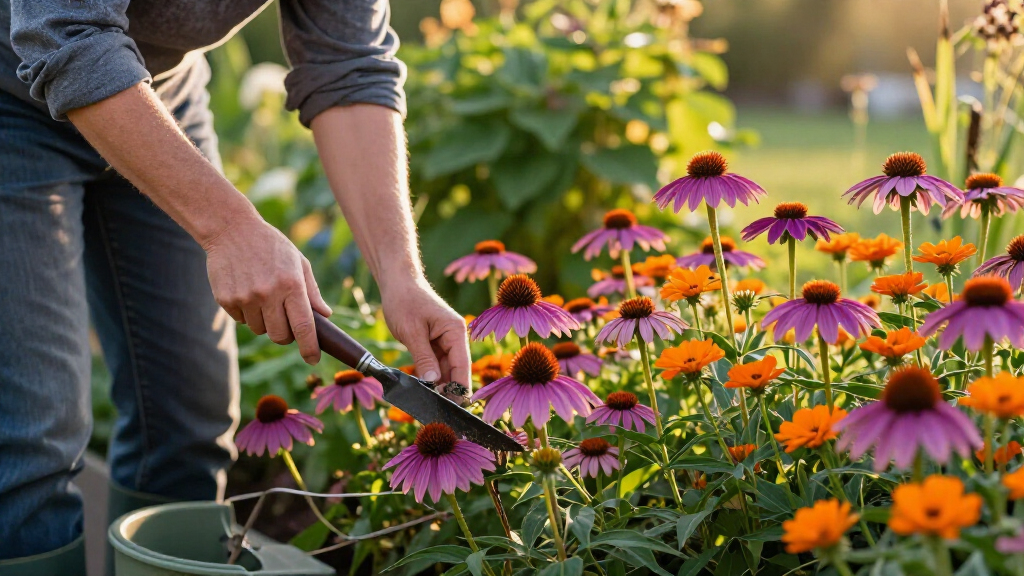
Although the exact plant pairings are not yet finalized, early indications point to the popularity of pairing a bold, spiky perennial such as ornamental grasses or agastache with a vibrant, late-blooming perennial like sedum or helenium. These combinations are praised for their durability and visual appeal during the late growing season.
Why Gardeners Are Turning to Bold Perennial Pairings
This trend matters because it offers gardeners an easy way to enhance the visual appeal of their gardens during a time when many plants are fading. The use of bold perennials can create a sense of structure and vibrancy that elevates garden design without requiring extensive maintenance or complex planting schemes.
For landscape professionals, this approach provides a reliable method for achieving a polished, professional look with minimal effort, which is especially valuable in commercial or public gardens. As interest in sustainable and low-maintenance gardening grows, such plant pairings could become standard practice for creating impactful late-season borders.
ornamental grasses for late-season garden border
As an affiliate, we earn on qualifying purchases.
As an affiliate, we earn on qualifying purchases.
Emerging Interest in Late-Season Perennial Combinations
The idea of pairing perennials for late-season interest is not new, but recent online searches and garden media coverage suggest a spike in interest around combining bold, structural plants for this purpose. Gardeners are increasingly seeking ways to extend color and visual interest into autumn, especially in regions with shorter growing seasons.
While specific plant choices remain under discussion, the trend appears to be influenced by a broader movement toward low-maintenance, high-impact planting schemes that can be achieved with minimal effort. Historically, late-season planting has focused on annuals or single-species borders, but the current interest is shifting toward strategic perennial pairings.
It is worth noting that the trigger for this surge in interest is unconfirmed, and plant selection recommendations are still evolving based on regional climate and individual garden conditions.
Unconfirmed Plant Pairings and Regional Suitability
Specific plant combinations are still being refined, and regional climate factors may influence which pairings work best. The exact species and varieties recommended for this trend have not been officially announced, and gardeners are advised to consult local horticultural resources.
It is also unclear whether this approach will be widely adopted or remain a niche trend, as more data and expert endorsements are needed to validate the effectiveness of particular plant pairings across diverse environments.
Next Steps for Gardeners and Landscape Professionals
Gardeners should monitor updates from horticultural sources and experiment with pairing bold perennials suited to their local climate. Garden centers and nurseries may begin offering specific plant combinations promoted for late-season borders.
Further research and case studies are expected to emerge, providing more detailed guidance on optimal species pairings and planting techniques. Meanwhile, gardeners are encouraged to try their own combinations to achieve a professional look with minimal effort.
Key Questions
Which perennials are best for late-season borders?
While specific recommendations are still being developed, plants like sedum, helenium, agastache, and ornamental grasses are commonly suggested for late-season interest due to their vibrant blooms and structural qualities.
How do I choose the right plant pairing for my garden?
Consider plants’ height, color, bloom time, and tolerance to your climate. Combining tall, structural plants with colorful, low-growing species can create a balanced, professional appearance.
Is this trend suitable for small gardens?
Yes, strategic plant pairings can be adapted for small spaces by selecting compact varieties and focusing on focal points to maximize visual impact without overcrowding.
When should I plant these perennials for best late-season effect?
Plant in early spring or early fall, allowing enough time for roots to establish before the cooler weather and late-season blooms.
Source: rss
Fall yard work Picks
leaf blowers
As an affiliate, we earn on qualifying purchases.